
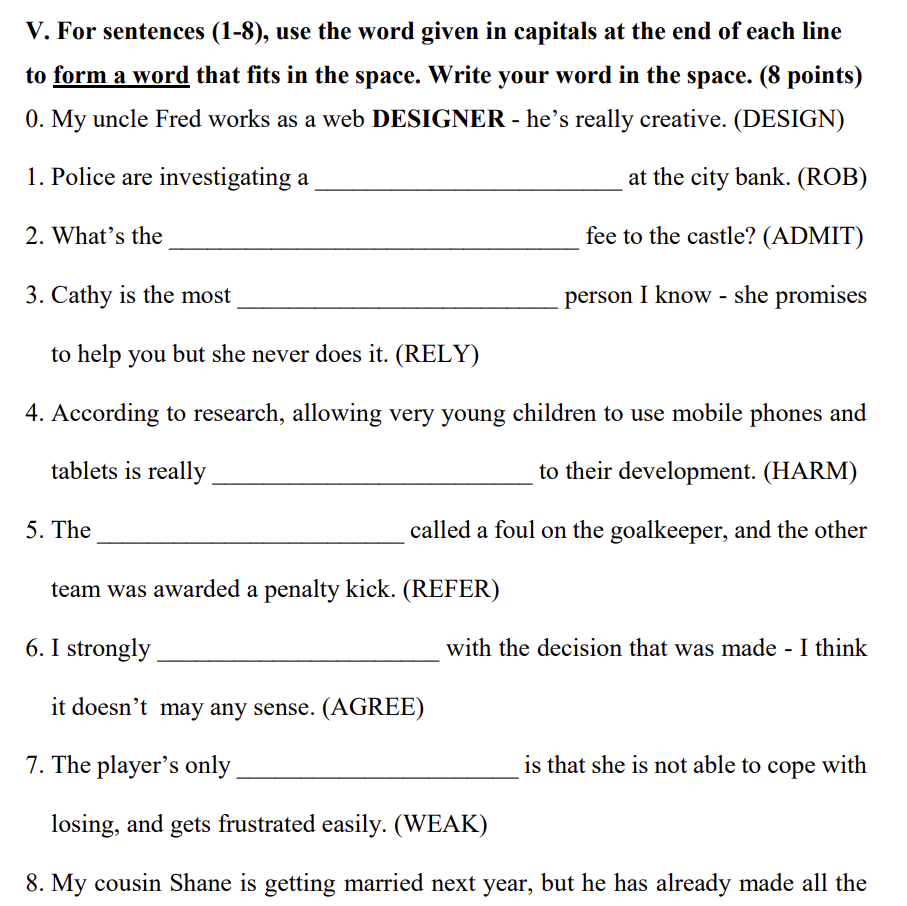
0. My uncle Fred works as a web __________________ – he’s really creative. (DESIGN)
designer
Uzasadnienie: Potrzebujemy rzeczownika oznaczającego zawód. „Designer” to osoba, która projektuje – tu: strony internetowe.
1. Police are investigating the __________________ of the car in the dark. (ROB)
robbery
Uzasadnienie: „Robbery” to rzeczownik oznaczający przestępstwo – „kradzież”. Forma pasuje do kontekstu śledztwa.
2. What’s the __________________ reason people flee to the castle? (ADMIT)
✅ admitted Uzasadnienie: „Admitted” to przymiotnik utworzony od czasownika „admit”, oznaczający „przyznany” lub „uznany”. Pasuje do kontekstu: „uznany powód”.
3. Cathy is the most __________________ person I know – she promises to help but she never does it. (RELY)
unreliable
Uzasadnienie: Przymiotnik „reliable” oznacza „godny zaufania”. Przedrostek „un-” tworzy przeciwieństwo: „unreliable” – „niegodna zaufania”.
4. According to research, allowing very young children to use mobile phones and tablets is really __________________ to their development. (HARM)
harmful
Uzasadnienie: Przymiotnik „harmful” oznacza „szkodliwy”. Tworzymy go od rzeczownika „harm” + końcówka „-ful”.
5. The __________________ called a foul on the goalkeeper, and the other team was awarded a penalty kick. (REFER)
referee
Uzasadnienie: „Referee” to rzeczownik oznaczający sędziego sportowego. Forma pasuje do kontekstu meczu piłkarskiego.
6. I strongly __________________ with the decision that was made – I think it doesn’t make any sense. (AGREE)
disagree
Uzasadnienie: Czasownik „agree” oznacza „zgadzać się”. Przedrostek „dis-” tworzy przeciwieństwo: „disagree” – „nie zgadzam się”.
7. The player’s only __________________ is that she is not able to cope with losing, and gets frustrated easily. (WEAK)
weakness Uzasadnienie: „Weakness” to rzeczownik oznaczający „słabość”, utworzony od przymiotnika „weak” + końcówka „-ness”.
8. My cousin Shane is getting married next year, but he has already made all the __________________. (ARRANGE)
arrangements
Uzasadnienie: „Arrangements” to liczba mnoga rzeczownika „arrangement” – „ustalenia, przygotowania”. Pasuje do kontekstu organizacji ślubu.