
Categories
Category: Lekcje klasa 6
Categories
BE GOING TO – wyjaśnienie
Klasa 6
„Be going to” używamy, kiedy mówimy o planach lub intencjach na przyszłość. To znaczy: co zamierzamy zrobić.
⭐ Co oznacza „be going to”?
- I’m going to… → Zamierzam…
- He’s going to… → On zamierza…
- They’re going to… → Oni zamierzają…
Używamy, gdy:
- mamy plan,
- mamy intencję,
- coś jest prawie pewne, bo już o tym zdecydowaliśmy.
📌 Budowa (bardzo prosta!)
✔️ 1. Twierdzenia (positive)
osoba + am/is/are + going to + czasownik
- I am going to play football.
- She is going to visit her grandma.
- They are going to watch a film.
❌ 2. Przeczenia (negative)
osoba + am/is/are + not + going to + czasownik
- I’m not going to eat pizza.
- He isn’t going to buy a new phone.
- We aren’t going to go to school tomorrow.
❓ 3. Pytania (questions)
Am/Is/Are + osoba + going to + czasownik…?
- Are you going to study
- Is she going to cook dinner
- Are they going to travel
Odpowiedzi:
- Yes, I am. / No, I’m not.
- Yes, she is. / No, she isn’t.
🧩 Kiedy używamy „going to”?
- plany na przyszłość
- decyzje podjęte wcześniej
- przewidywania oparte na dowodach (np. Look at the clouds! It’s going to rain.)
🎯 Mini‑ćwiczenie dla klasy 6
Uzupełnij:
- I ___ going to visit my friend.
- She ___ going to buy a dress.
- ___ you going to play tennis
- They ___ going to watch TV.
- He ___ going to clean his room.
Odpowiedzi:
- am
- is
- Are
- are
- is
📘 Notatka do zeszytu (krótka, gotowa)
BE GOING TO – plany na przyszłość
- am/is/are + going to + czasownik
- używamy do planów i intencji
- przeczenia: am/is/are not going to
- pytania: Am/Is/Are… going to…?
Categories
Past Simple – wyjaśnienie
Klasa 6
Past Simple to czas przeszły, którego używamy, gdy mówimy o czynnościach zakończonych w przeszłości.
⭐ Kiedy używamy Past Simple?
- gdy mówimy, co zrobiliśmy wczoraj,
- co stało się w zeszłym tygodniu,
- co wydarzyło się w konkretnym momencie przeszłości.
Przykłady:
- I watched a film yesterday.
- She played football last Saturday.
- They visited their grandparents two days ago.
📌 Jak budujemy Past Simple?
✔️ 1. Czasowniki regularne (regular verbs)
Dodajemy -ed:
- play → played
- watch → watched
- open → opened
Uwaga na pisownię:
- stop → stopped
- study → studied
✔️ 2. Czasowniki nieregularne (irregular verbs)
Trzeba je zapamiętać – mają specjalną formę w Past Simple:
- go → went
- have → had
- see → saw
- make → made
- eat → ate
🧩 Zdania twierdzące (positive)
osoba + czasownik w Past Simple
- I watched a cartoon.
- She went to school.
- They played a game.
❌ Zdania przeczące (negative)
Używamy didn’t + czasownik w formie podstawowej (bez -ed!)
- I didn’t watch the news.
- He didn’t go to the park.
- We didn’t eat pizza.
Typowy błąd uczniów: ❌ I didn’t watched ✔️ I didn’t watch
❓ Pytania (questions)
Did + osoba + czasownik podstawowy
- Did you watch the film
- Did she play tennis
- Did they go to the zoo
Odpowiedzi:
- Yes, I did.
- No, I didn’t.
🕒 Określenia czasu w Past Simple
- yesterday
- last week / last month / last year
- two days ago
- in 2020
- when I was a child
🎯 Mini‑ćwiczenie dla klasy 6
Uzupełnij:
- I ___ a sandwich yesterday. (eat)
- She ___ TV last night. (watch)
- They ___ to the museum. (go)
- ___ you play football yesterday
- ___ he see the film
Odpowiedzi:
- ate
- watched
- went
- Did
- Did
📘 Notatka do zeszytu
Past Simple – czas przeszły
- regular verbs → + -ed
- irregular verbs → specjalna forma (went, saw, ate…)
- przeczenia: didn’t + czasownik podstawowy
- pytania: Did…?
Categories
MUST – wyjaśnienie
Klasa 6
MUST to czasownik modalny, którego używamy, żeby powiedzieć, że coś jest obowiązkiem albo że trzeba coś zrobić.
⭐ Co oznacza MUST?
- must = musisz / trzeba
- mówi o silnym obowiązku, zasadach, regułach, nakazach
📌 Jak budujemy zdania?
✔️ Zdania twierdzące (positive)
osoba + must + czasownik (bez -s, bez to)
- You must do your homework.
- I must go now.
- Students must listen to the teacher.
❌ Przeczenia (negative)
must not = mustn’t → nie wolno
- You mustn’t run in the corridor.
- He mustn’t eat in class.
- They mustn’t touch the animals.
Uwaga: mustn’t to zakaz, nie „nie musisz”! „Nie musisz” = don’t have to (inny temat).
❓ Pytania (questions)
Must + osoba + czasownik…?
- Must we wear uniforms
- Must I clean my room
Odpowiedzi:
- Yes, you must.
- No, you mustn’t.
🧩 Kiedy używamy MUST?
- zasady w szkole
- nakazy w domu
- obowiązki
- instrukcje
- sytuacje, gdy coś jest bardzo ważne
Przykłady:
- You must be quiet.
- You must wash your hands.
- You must stop at a red light.
🎯 Mini‑ćwiczenie
Uzupełnij:
- You ___ be kind.
- Students ___ talk during a test. (zakaz)
- ___ I do this exercise
- They ___ wear helmets.
Odpowiedzi:
- must
- mustn’t
- Must
- must
📘 Notatka do zeszytu
MUST – obowiązek
- must + czasownik → musisz / trzeba
- mustn’t → nie wolno
- pytania: Must I…? Must we…?
Categories
There was / There were
Klasa 6
To bardzo prosty temat. Uczniowie szybko go łapią, bo działa prawie tak samo jak there is / there are, tylko w czasie przeszłym.
⭐ Co oznacza?
- There was = było (jedna rzecz)
- There were = były (więcej niż jedna rzecz)
Używamy, gdy mówimy, co znajdowało się w jakimś miejscu w przeszłości.
📌 Kiedy używamy?
- żeby powiedzieć, co było w pokoju, w mieście, w szkole, w parku
- żeby opisać sytuację w przeszłości
🧩 Twierdzenia (positive)
| Liczba | Forma | Przykład |
|---|---|---|
| pojedyncza | there was | There was a cat in the garden. |
| mnoga | there were | There were two books on the table. |
❌ Przeczenia (negative)
- There wasn’t = nie było (1 rzecz)
- There weren’t = nie było (wiele rzeczy)
Przykłady:
- There wasn’t a computer in my room.
- There weren’t any students in the classroom.
❓ Pytania (questions)
W pytaniach was / were idzie na początek:
- Was there a dog
- Were there any chairs
Odpowiedzi:
- Yes, there was. / No, there wasn’t.
- Yes, there were. / No, there weren’t.
🎯 Mini‑ćwiczenie
Uzupełnij:
- ________ ________ a cinema in my town.
- ________ ________ any people at the bus stop.
- ________ there a cat in the garden
- ________ there any shops
Odpowiedzi:
- There was
- There weren’t
- Was
- Were
📘 Notatka do zeszytu (krótka, gotowa)
There was / There were – czas przeszły
- There was – jedna rzecz
- There were – wiele rzeczy
- Przeczenia: wasn’t / weren’t
- Pytania: Was there…? / Were there…?
Categories
Past Simple – czasownik be
Klasa 6
W przeszłości czasownik be ma dwie formy:
- was – dla I, he, she, it
- were – dla you, we, they
To wszystko! Tylko dwie formy.
📌 Kiedy używamy?
Gdy mówimy, gdzie ktoś był, jaki był, w jakim stanie, co było w przeszłości.
- I was tired yesterday.
- She was at school.
- They were in the park.
🧩 Twierdzenia (positive)
| Osoba | Forma |
|---|---|
| I | was |
| he / she / it | was |
| you / we / they | were |
Przykłady:
- I was at home.
- She was happy.
- They were late.
❌ Przeczenia (negative)
Dodajemy not:
- was not = wasn’t
- were not = weren’t
Przykłady:
- I wasn’t at school.
- He wasn’t hungry.
- We weren’t in the cinema.
❓ Pytania (questions)
W pytaniach was / were idzie na początek:
- Was he at home
- Were they tired
- Was it cold yesterday
Odpowiedzi:
- Yes, he was. / No, he wasn’t.
- Yes, they were. / No, they weren’t.
🎯 Mini‑ćwiczenie dla klasy 6
Uzupełnij:
- I ___ at school yesterday.
- They ___ in the garden.
- She ___ at home.
- ___ you tired
- ___ he happy
Odpowiedzi:
- was
- were
- was
- Were
- Was
📘 Notatka do zeszytu (krótka, gotowa)
Past Simple – be
- was → I, he, she, it
- were → you, we, they
- wasn’t / weren’t – przeczenia
- Was…? / Were…? – pytania
Categories
How much…?
Klasa 6
„How much…?” używamy, kiedy pytamy o CENĘ.”
🧠 Krótka, jasna definicja
How much…? = Ile to kosztuje? To pytanie stosujemy z rzeczami policzalnymi i niepoliczalnymi, ale zawsze chodzi o cenę.
📌 Budowa pytania
- How much…
- is / are (w zależności od liczby)
- przedmiot
- ?
🛍️ Przykłady (proste, klasowe)
- How much is this book? – Ile kosztuje ta książka.
- How much are these pencils? – Ile kosztują te ołówki.
- How much is the sandwich? – Ile kosztuje kanapka.
- How much are the headphones? – Ile kosztują słuchawki.
🧩 Uwaga na liczbę pojedynczą i mnogą
- is → gdy pytamy o jedną rzecz How much is the T‑shirt?
- are → gdy pytamy o więcej niż jedną rzecz How much are the shoes?
💬 Jak odpowiadamy?
- It’s 10 pounds. – To kosztuje 10 funtów.
- They’re 25 euros. – One kosztują 25 euro.
Categories
Comparisons
Klasa 6
Comparative Adjectives
📌 1. Po co używamy comparisons?
Używamy ich, gdy porównujemy dwie osoby, rzeczy lub zwierzęta.
- A dog is faster than a turtle.
- My house is bigger than your house.
📌 2. Jak tworzymy stopień wyższy?
✔️ 1‑sylabowe przymiotniki → dodajemy -er
- tall → taller
- old → older
- fast → faster
- small → smaller
❗ Uwaga na pisownię:
- big → bigger (podwajamy spółgłoskę)
- easy → easier (y → i)
✔️ Dłuższe przymiotniki → używamy more
- beautiful → more beautiful
- interesting → more interesting
- expensive → more expensive
📌 3. Jak budujemy zdania porównujące?
✔️ A is (adjective + -er / more adjective) than B.
- Tom is taller than Ben.
- This book is more interesting than that book.
- My bike is faster than your bike.
📌 4. Wyjątki (irregular adjectives)
- good → better
- bad → worse
- far → farther / further
📌 5. Najważniejsze słowo: THAN
Zawsze używamy than, gdy porównujemy dwie rzeczy.
- She is older than her sister.
- This dog is fatter than that cat.
1. The man with the moustache is older than the boy in the stroller.
Mężczyzna z wąsami jest starszy niż chłopiec w wózku.
2. The tall muscular man is taller than the woman next to him.
Wysoki, umięśniony mężczyzna jest wyższy niż kobieta obok niego.
3. The girl is faster than the man standing next to her.
Dziewczynka jest szybsza niż mężczyzna stojący obok niej.
4. The woman in the pink dress is more beautiful than the muscular man.
Kobieta w różowej sukience jest piękniejsza niż umięśniony mężczyzna.
5. The dog is fatter than the birds in the park.
Pies jest grubszy niż ptaki w parku.
Klasa 6
📌 1. Present Simple — mówimy o rzeczach stałych i powtarzalnych
Używamy go, gdy mówimy o:
✔️ czynnościach regularnych
- I get up at 7.
- She plays tennis every weekend.
✔️ nawykach, rutynie
- They walk to school every day.
✔️ faktach, prawdach ogólnych
- Water boils at 100°C.
- Cats like milk.
✔️ upodobaniach
- I like pizza.
- He doesn’t enjoy horror films.
🔧 Budowa
- I/you/we/they + verb
- he/she/it + verb + -s
❗ Przeczenia i pytania
- I don’t play chess.
- Does she like maths?
📌 2. Present Continuous — mówimy o tym, co dzieje się TERAZ
Używamy go, gdy mówimy o:
✔️ czynnościach w tej chwili
- I am doing my homework now.
- She is talking on the phone at the moment.
✔️ sytuacjach tymczasowych
- We are staying with our grandparents this week.
✔️ planach na najbliższą przyszłość
- They are meeting after school.
- I am going to the cinema tomorrow.
🔧 Budowa
am/is/are + verb + -ing
❗ Przeczenia i pytania
- I’m not watching TV now.
- Is he reading a book?
🆚 3. Najważniejsze różnice
| Present Simple | Present Continuous |
|---|---|
| rutyna | czynność w toku |
| fakty | sytuacje tymczasowe |
| upodobania | plany na najbliższą przyszłość |
| he/she/it + -s | am/is/are + -ing |
| always, often, usually | now, at the moment, today |
🎯 4. Jak rozpoznać czas?
Present Simple → słowa:
- always
- often
- usually
- every day/week
- sometimes
Present Continuous → słowa:
- now
- at the moment
- today
- this week
1. I like chocolate.
I do not like chocolate.
2. I am riding my bike.
I am not riding my bike.
3. He reads comics.
He doesn’t read comics.
4. She goes to my school.
She does not go to my school.
5. You are watching TV.
You are not watching TV.
6. The dog is sleeping.
The dog is not sleeping.
1. What time do you usually get up?
I usually get up at 7 o’clock.
2. When do you usually tidy up your bedroom and how long does it take?
I usually tidy up my bedroom on Saturdays, and it takes about 15 minutes.
3. What are you wearing today?
Today I’m wearing a T‑shirt, jeans and sneakers.
4. What are you doing at the weekend?
At the weekend I’m visiting my friends and going for a walk.
Categories
TV and film
Klasa 6
Categories
Transport
Klasa 6
Categories
Keeping healthy
Klasa 6
Categories
Dangerous sports
Klasa 6
Categories
Jobs
Klasa 6
Would to słowo, które nie ma jednego stałego tłumaczenia — zależy od kontekstu. Najczęściej pomaga tworzyć grzeczne prośby, mówić o przyszłości w przeszłości oraz w zdaniach warunkowych (o czym uczniowie dowiedzą się później). Na razie w klasie 6 najważniejsze są dwa użycia:
1. Grzeczne prośby i pytania — “Would you like…?”
Używamy, gdy grzecznie coś proponujemy lub pytamy, czy ktoś czegoś chce.
| Angielski | Polski |
|---|---|
| Would you like some tea? | Czy chciałbyś/chciałabyś herbaty? |
| Would you like to play football? | Czy chciałbyś zagrać w piłkę? |
| I would like a sandwich, please. | Poproszę kanapkę. (dosłownie: Chciałbym kanapkę) |
👉 Would like = chciałbym / chciałabyś — to grzeczniejsza wersja słowa “want” (chcieć).
2. Skrót ‘d
W mowie i piśmie często skracamy would do ‘d:
- I would like → I’d like
- She would like → She’d like
Prosta zasada do zapamiętania
👉 would like = grzeczne “chciałbym”
👉 działa jak “chciałbym” + rzeczownik LUB “chciałbym” + to + czasownik
Przykłady:
- I’d like a pizza. → Chciałbym pizzę.
- I’d like to go home. → Chciałbym pójść do domu.
- Would you like to dance? → Czy chciałbyś zatańczyć?
Ważne: would ≠ want
- want = chcę (bardziej bezpośrednio, mniej grzecznie): I want a pizza.
- would like = chciałbym (grzeczniej, bardziej uprzejmie): I would like a pizza, please.
Categories
Looks and personality
Klasa 6
Ta osoba ma długie, jasne włosy i niebieskie oczy. Ta osoba jest miła i cierpliwa. Kto to jest?
This person has got long fair hair and blue eyes. This person is nice and patient. Who is it?
Ta osoba jest wysoka i ma zielone oczy oraz krótkie, ciemne, kręcone włosy. Ta osoba jest zawsze punktualna. Kto to jest?
This person is tall and has got green eyes and short dark curly hair. This person is always punctual. Who is it?
Categories
Family
Klasa 6
Tekst:
My family is small. I’ve got one brother. I haven’t got any cousins. I’ve got one grandma and two grandads.
Wersja 1:
My family is big. I’ve got two sisters. I’ve got a lot of cousins. I’ve got two grandmas and one grandad.
Wersja 2:
My family is small. I haven’t got any brothers or sisters. I’ve got one cousin. I’ve got one grandma and one grandad.
Wersja 3:
My family is big. I’ve got one brother and one sister. I’ve got three cousins. I’ve got two grandmas and two grandads.
Categories
Meeting people
Kangaroos live in Australia. They are the only big animals in the world that hop to move from place to place. They have big hind legs and feet and a long strong tail that helps them keep their balance.
Kangury żyją w Australii. Są jedynymi dużymi zwierzętami na świecie, które przemieszczają się skacząc. Mają duże tylne nogi i stopy oraz długi, silny ogon, który pomaga im utrzymać równowagę.
Categories
Białowieża Forest
Klasa 6
Białowieska Puszcza
Białowieska Puszcza to bardzo duży i stary las, który leży na terenie Polski i Białorusi. Jest jednym z największych i najcenniejszych lasów w Europie. Część puszczy znajduje się w Polsce i nazywa się Białowieski Park Narodowy. Można tam wejść tylko z przewodnikiem, aby chronić przyrodę.
Las jest wyjątkowy, ponieważ rośnie tu od czasów końca epoki lodowcowej. Oznacza to, że wiele roślin i zwierząt żyje tu w naturalnych warunkach, prawie bez wpływu człowieka.
Najbardziej znanym zwierzęciem puszczy jest żubr – największy ssak lądowy w Europie. Żubry są pod ochroną, ponieważ kiedyś było ich bardzo mało. Podczas II wojny światowej wojska niemieckie zabiły wiele żubrów, dlatego później trzeba było je ponownie sprowadzić i chronić.
W puszczy żyją także inne zwierzęta, takie jak wilki, rysie, jelenie, łosie oraz wiele gatunków ptaków. To świetne miejsce dla osób, które lubią obserwować przyrodę. Organizowane są tu specjalne wycieczki, na których można zobaczyć rzadkie ptaki i zwierzęta.
Białowieża Forest
Białowieża Forest is a very big and old forest in Poland and Belarus. It is one of the most famous forests in Europe. The Polish part of the forest is called Białowieża National Park. People can enter this part only with a guide, because the forest is protected.
The forest is special because it has existed since the end of the Ice Age. Many plants and animals live here in natural conditions, without much human influence.
The most famous animal in the forest is the European bison. It is the biggest land animal in Europe. Bison are protected because many of them were killed in the past. During World War II, German soldiers killed a lot of bison, so later people had to bring them back and take care of them.
Other animals living in the forest include wolves, lynxes, deer, elk, and many different birds. Białowieża Forest is a great place for people who like nature. Visitors can join special birdwatching trips to see rare birds.
Questions
Where is Białowieża Forest located?
What is the Polish part of the forest called?
Why can people enter Białowieża National Park only with a guide?
Since when has the forest existed?
Why is Białowieża Forest special?
What is the most famous animal living in the forest?
Why are European bison protected?
What happened to many bison during World War II?
Name two predators that live in the forest.
Name two large herbivores that live in the forest.
Why is the forest a good place for people who like nature?
What can visitors do if they want to see rare birds?
Which two countries share Białowieża Forest?
What makes the forest natural and wild?
Why did people have to bring bison back after the war?
Answers
Białowieża Forest is located in Poland and Belarus.
The Polish part is called Białowieża National Park.
People can enter only with a guide because the forest is protected.
The forest has existed since the end of the Ice Age.
It is special because many plants and animals live there in natural, wild conditions.
The most famous animal is the European bison.
Bison are protected because many of them were killed in the past.
During World War II, German soldiers killed many bison.
Two predators are wolves and lynxes.
Two large herbivores are deer and elk.
It is a good place for nature lovers because many wild animals and birds live there.
Visitors can join birdwatching trips to see rare birds.
Poland and Belarus share Białowieża Forest.
The forest is natural and wild because it has existed since the Ice Age and people changed it very little.
People had to bring bison back because their population became very small after the war.
Grammar – ważne elementy z tekstu
Present Simple
Używany do opisywania faktów i stałych informacji. Białowieża Forest is a very big and old forest. Many animals live in natural conditions.
Passive Voice (strona bierna)
Używana, gdy ważniejsza jest czynność niż wykonawca. Bison are protected. Many bison were killed during World War II.
Present Perfect – krótkie użycie w tekście
Pokazuje, że coś zaczęło się w przeszłości i trwa do dziś. The forest has existed since the end of the Ice Age.
Past Simple – wydarzenia historyczne
German soldiers killed many bison.
Comparatives / Superlatives
one of the most famous forests
the biggest land animal in Europe
Pronunciation
Trudniejsze wyrazy
Forest – /ˈfɒrɪst/ – nie czytamy „fo-rest”
Białowieża – /bʲa.woˈvʲe.ʐa/ (przybliżenie angielskie) Belarus – /ˌbeləˈruːs/
national – /ˈnæʃənəl/ – „sz” w środku
protected – /prəˈtektɪd/
European – /ˌjʊərəˈpiːən/ – „piːən” na końcu
bison – /ˈbaɪsən/ – „baj-sen”
species – /ˈspiːʃiːz/ – „sziiz” lynx – /lɪŋks/ elk – /elk/ guide – /ɡaɪd/ – „gajd”
rare – /reə(r)/ – trudna samogłoska
wildlife – /ˈwaɪldlaɪf/
Understanding the text
Możliwe trudności
• „Has existed since…” Może być trudne – oznacza, że coś zaczęło się dawno temu i trwa do dziś.
• „Natural conditions” Znaczy: środowisko bez dużego wpływu człowieka.
• „Protected by law” Zwierzyna jest chroniona – nie wolno jej zabijać ani niepokoić.
• „Birdwatching trips” Specjalne wycieczki, podczas których obserwuje się ptaki.
• „The biggest land animal in Europe” „Land animal” = zwierzę lądowe.
• „Share the forest between two countries” Las leży na terenie dwóch państw.
• „Little human influence” Człowiek prawie nie zmienił tego miejsca.
• „Rare birds / rare animals” „Rare” = rzadkie, trudne do zobaczenia.
Categories
Famous people – quiz(2)
Klasa 6
Who wrote the fairy tale The Little Mermaid?
Hans Christian Andersen
Hans Christian Andersen was a writer from Denmark. He wrote many well‑known fairy tales, like The Little Mermaid. He is famous because children all over the world read his stories.
The Brothers Grimm
The Brothers Grimm were two German writers, Jacob and Wilhelm. They collected old folk tales and wrote them down. Many of their stories, like Cinderella and Snow White, are still popular today. They are famous because they saved traditional fairy tales.
Who made the first flying machine?
The Lumière Brothers
The Lumière brothers were inventors from France. They created one of the first film cameras and showed some of the first movies. Their short films were very simple but exciting for people at that time. They are famous because they helped start modern cinema.
The Wright brothers
The Wright brothers were inventors from the United States. They built the first successful airplane in 1903. They are famous because they started the age of flying.
Who wrote the children’s book Alice’s Adventures in Wonderland?
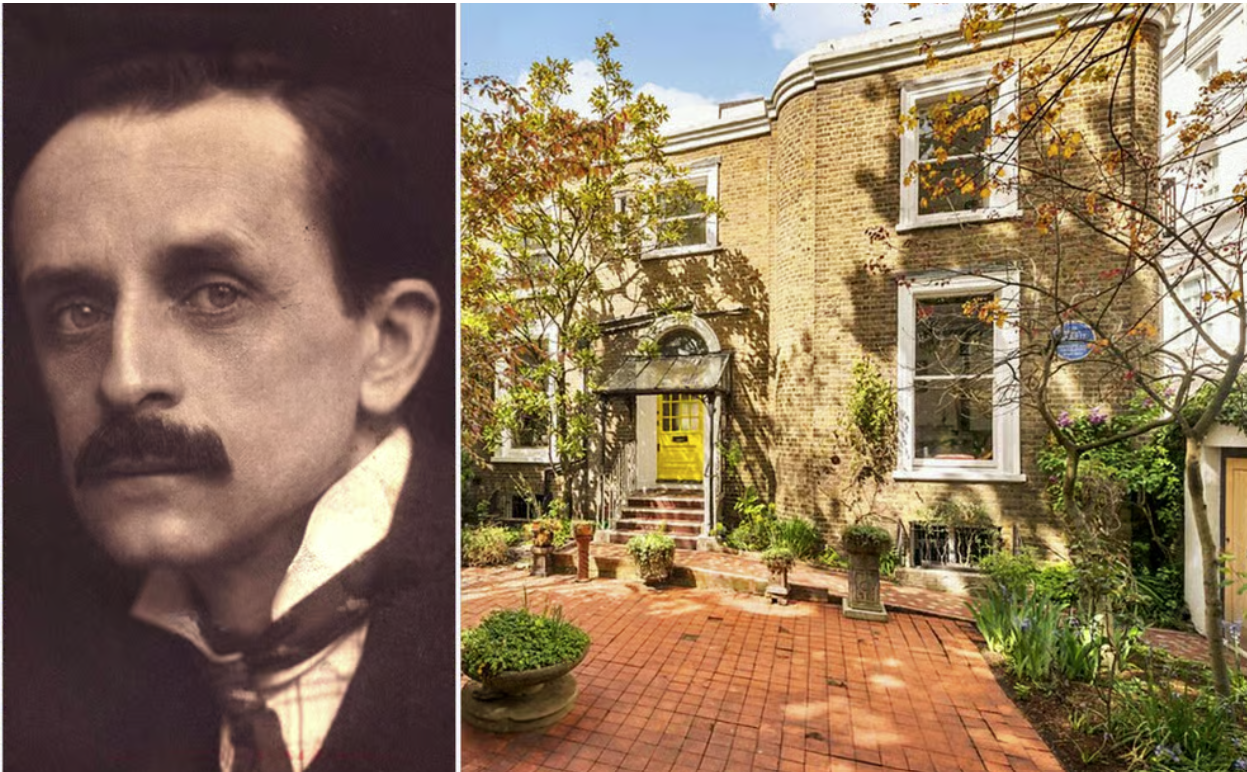
J. M. Barrie
J. M. Barrie was a Scottish writer. He wrote the story of Peter Pan, a boy who never grows up. His book is full of adventure and magic. He is famous because Peter Pan became one of the most loved characters in children’s literature.
Lewis Carroll
Lewis Carroll was an English writer and mathematician. He wrote Alice’s Adventures in Wonderland. He is famous because he created a magical and imaginative world for children.
Categories
Famous people – quiz
Klasa 6
Who thought of the theory of relativity?
a Albert Einstein b Alfred Nobel
Albert Einstein
Albert Einstein was a famous scientist from Germany. He created the theory of relativity. His ideas changed how people understand time and space. He is famous because his work was very important for science.
Pytania
Who was Albert Einstein?
Where was he from?
What did he create?
What is the theory of relativity?
What did his ideas change?
What do people understand better because of his ideas?
Why is Albert Einstein famous?
Why was his work important for science?
What two things does the text mention: time and what else?
Did Einstein’s work change science?
Answers
Albert Einstein was a famous scientist.
He was from Germany.
He created the theory of relativity.
It is a theory that explains time and space.
His ideas changed how people understand time and space.
People understand time and space better because of his ideas.
He is famous because his work was very important for science.
His work was important because it changed science.
The text mentions time and space.
Yes, Einstein’s work changed science.
Gramatyka
Past Simple – czas przeszły prosty
W tekście pojawiają się podstawowe formy przeszłe:
- was – był
- created – stworzył
- changed – zmieniły
Past Simple opisuje fakty z przeszłości:
- Albert Einstein was a famous scientist.
- He created the theory of relativity.
Present Simple – czas teraźniejszy prosty
Używany do faktów, które są nadal prawdziwe:
- is – jest
- people understand – ludzie rozumieją
Przykłady:
- He is famous because…
- People understand time and space.
„Because” – wyrażanie przyczyny
Słowo because oznacza „ponieważ” i łączy zdania:
- He is famous because his work was very important.
Podstawowe słownictwo naukowe
Do zrozumienia tekstu potrzebne są znaczenia kilku kluczowych słów:
- scientist – naukowiec
- theory – teoria
- ideas – pomysły
- time and space – czas i przestrzeń
- important – ważny
Konstrukcja „how people understand…”
To zdanie podrzędne wyjaśniające jak coś się dzieje:
- how people understand time and space
How = „jak”.
Przymiotniki opisujące cechy
W tekście pojawiają się przymiotniki opisujące osobę i jej pracę:
- famous – sławny
- important – ważny
Alfred Nobel
Alfred Nobel was a scientist and inventor from Sweden. He invented dynamite, which was used in building and construction. Later, he created the Nobel Prizes to reward people for important work. He is famous because these prizes are known all over the world.
Questions
Who was Alfred Nobel?
Where was he from?
What did he invent?
What was dynamite used for?
What did Alfred Nobel create later in his life?
Why did he create the Nobel Prizes?
Why is Alfred Nobel famous today?
What are the Nobel Prizes known for?
Are the Nobel Prizes known all over the world?
What kind of work do the Nobel Prizes reward?
Answers
He was a scientist and inventor.
He was from Sweden.
He invented dynamite.
It was used in building and construction.
He created the Nobel Prizes.
To reward people for important work.
He is famous because he created the Nobel Prizes.
They are known for rewarding important work.
Yes, they are known all over the world.
They reward people for important work.
Gramatyka
Past Simple – czas przeszły prosty
W tekście pojawiają się podstawowe formy przeszłe:
- was – był
- invented – wynalazł
- was used – był używany
- created – stworzył
Past Simple opisuje fakty z przeszłości:
- Alfred Nobel was a scientist and inventor.
- He invented dynamite.
Strona bierna – Passive Voice
W tekście występuje prosta forma bierna:
- was used – „był używany”
Używana, gdy ważniejsze jest działanie niż wykonawca:
- Dynamite was used in building and construction.
Present Simple – czas teraźniejszy prosty
Używany do faktów, które są nadal prawdziwe:
- is famous – jest sławny
- are known – są znane
Przykłady:
- He is famous because…
- These prizes are known all over the world.
„Because” – wyrażanie przyczyny
Słowo because oznacza „ponieważ” i łączy zdania:
- He is famous because these prizes are known all over the world.
Podstawowe słownictwo naukowe i opisowe
Do zrozumienia tekstu potrzebne są znaczenia kilku kluczowych słów:
- scientist – naukowiec
- inventor – wynalazca
- dynamite – dynamit
- building / construction – budownictwo
- prizes – nagrody
- important work – ważna praca
Przymiotniki opisujące cechy
W tekście pojawiają się przymiotniki opisujące osobę i jej osiągnięcia:
- famous – sławny
- important – ważny
Who was the first man to walk on the moon?
Neil Armstrong
Neil Armstrong was an American astronaut. He was the first man to walk on the Moon in 1969. He said a very famous sentence about a “small step”. He is famous because he made history in space exploration.
Yuri Gagarin
Yuri Gagarin was a Russian cosmonaut. He was the first man to travel into space in 1961. His flight lasted only 108 minutes, but it was a huge achievement. He is famous because he opened the door to human space travel.
Who painted the picture called the Mona Lisa?
Pablo Picasso
Pablo Picasso was a Spanish painter. He created many different styles of art, including Cubism. His paintings are colourful and very unique. He is famous because he changed modern art.
Leonardo da Vinci
Leonardo da Vinci was an Italian painter and inventor. He painted the Mona Lisa, one of the most famous paintings in the world. He liked to study nature and machines. He is famous because he was a great artist with many talents.
Categories
Famous people
Klasa 6
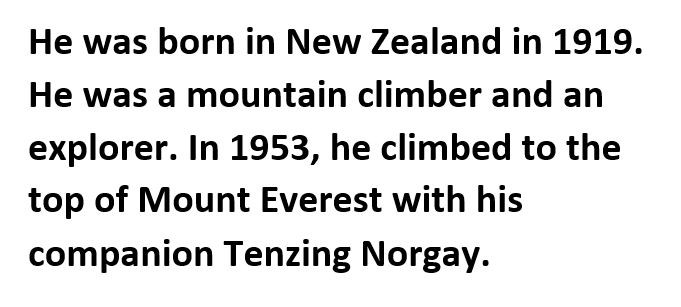
Sir Edmund Hillary
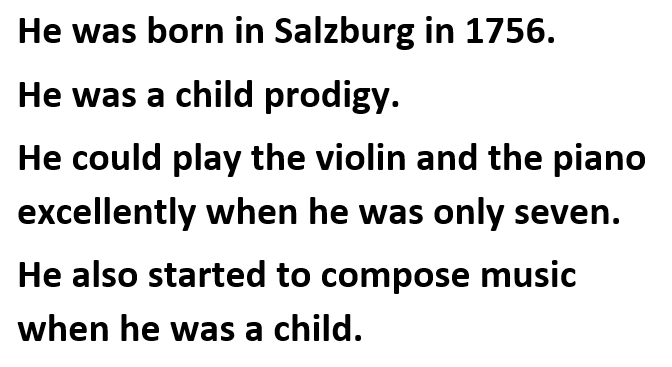
Wolfgan Amadeus Mozart
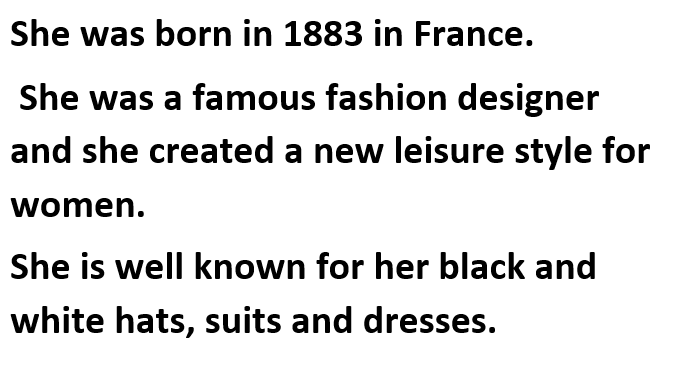
Coco Chanel
Sir Edmund Hillary
He was born in New Zealand.
He was born in 1919.
He was a mountain climber and an explorer.
He climbed to the top of Mount Everest.
Tenzing Norgay climbed Mount Everest with him.
He came from New Zealand.
He was a mountain climber and an explorer.
He reached the top of Mount Everest.
His climbing companion was Tenzing Norgay.
He climbed Mount Everest in 1953.
Wolfgan Amadeus Mozart
He was born in Salzburg.
He was born in 1756.
He was a child prodigy.
He could play the violin and the piano.
He was seven years old when he could play them excellently.
He started composing music when he was a child.
He could play the violin and the piano at the age of seven.
Yes, he was very talented as a child.
His birthplace was Salzburg.
He started composing music when he was a child.
Coco Chanel – odpowiedzi
She was born in France.
She was born in 1883.
She was a famous fashion designer.
She created a new leisure style for women.
She introduced a new leisure style for women.
She is well known for her black and white hats, suits and dresses.
Her famous hats, suits and dresses were black and white.
Yes, she was a famous fashion designer.
She was born in France.
She designed hats, suits and dresses for women.
Categories
Come rain or shine (1,2,3)
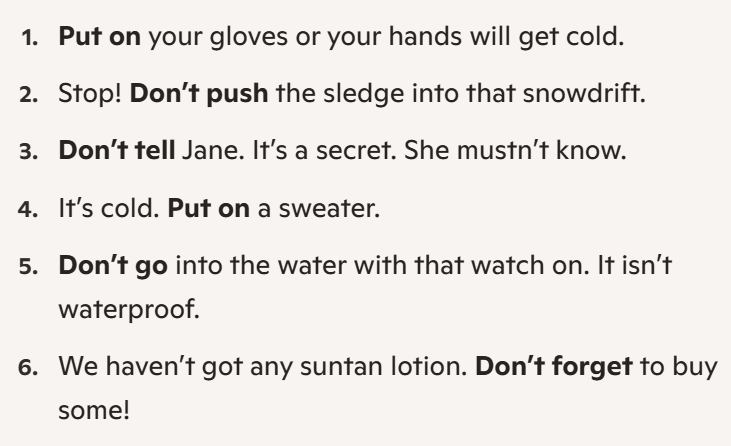
NOTATKA GRAMATYCZNA
Konstrukcja „It’s + -ing” (Present Continuous dla pogody)
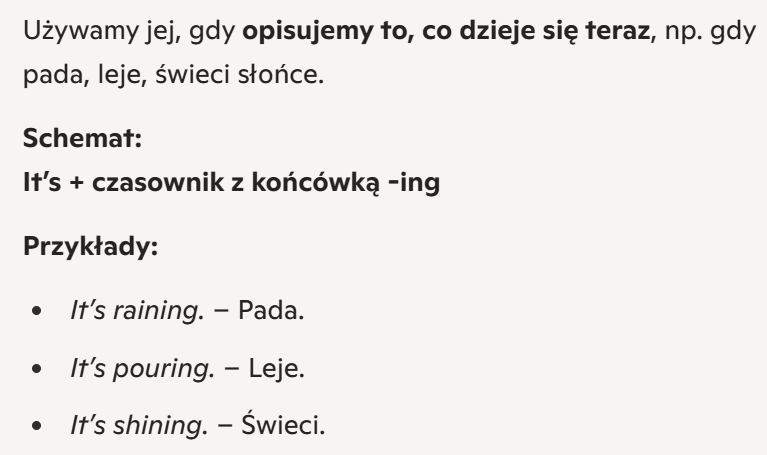
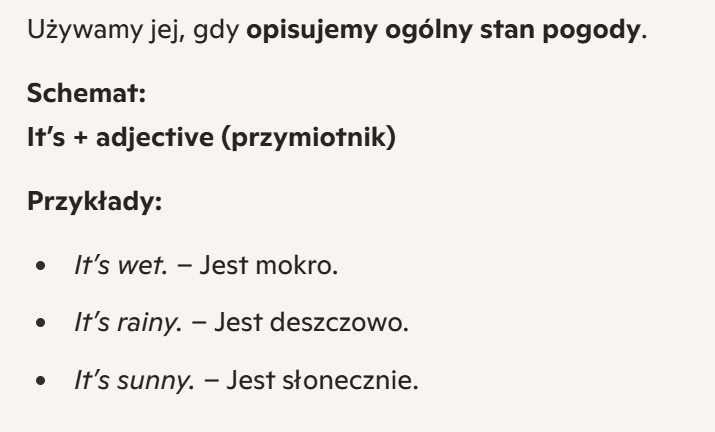
Konstrukcja „It’s + przymiotnik” (opis pogody)
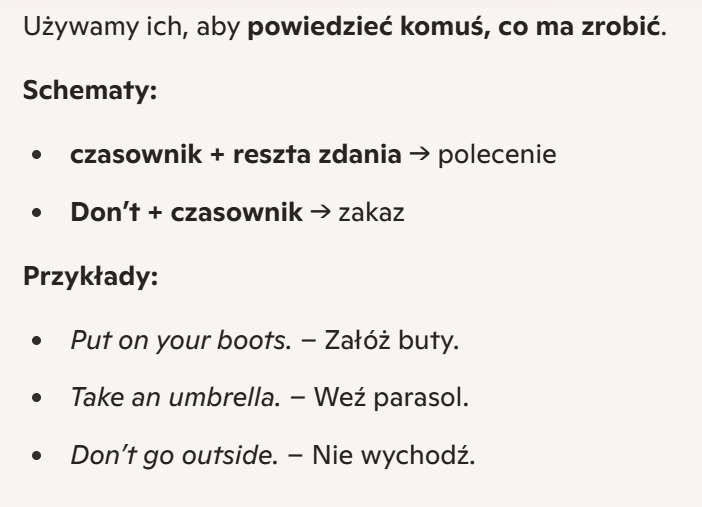
Polecenia i rady (imperatives)
Categories
Come rain or shine
Klasa 6 GRAMATYKA
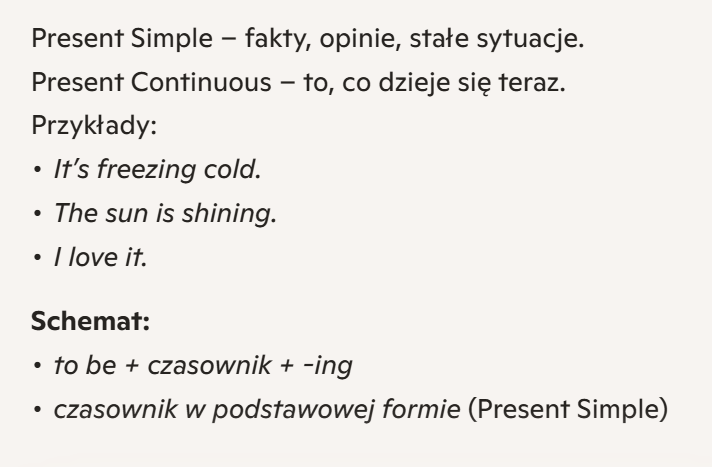
Present Simple & Present Continuous
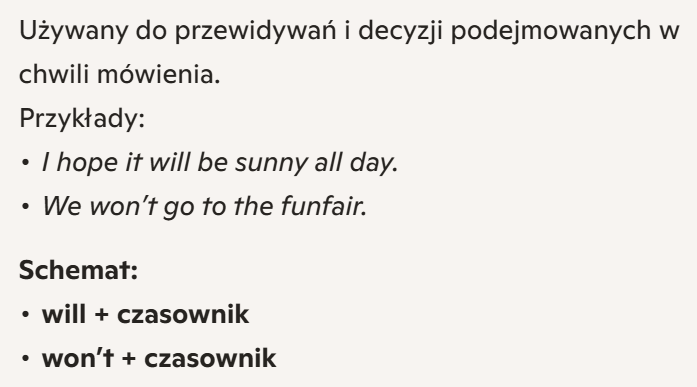
Future with WILL
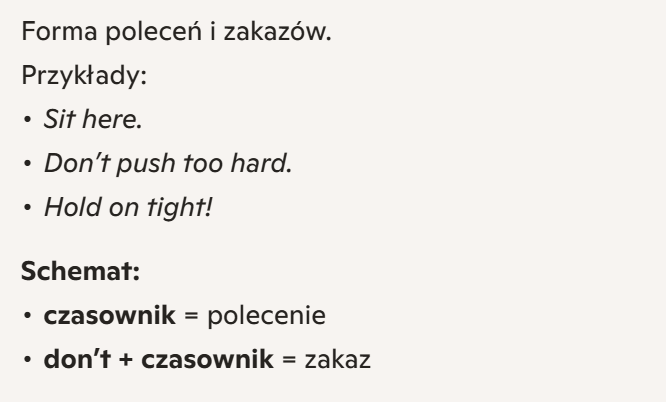
Imperative
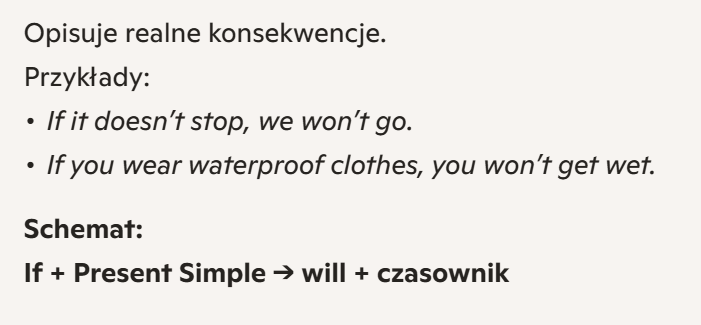
First Conditional
Weather expressions
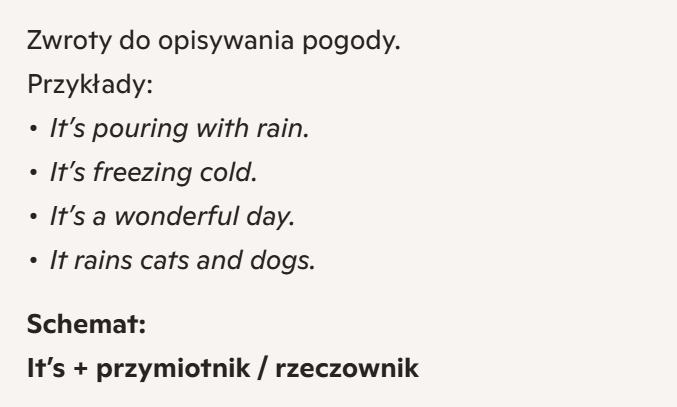
Słownictwo i kolokacje
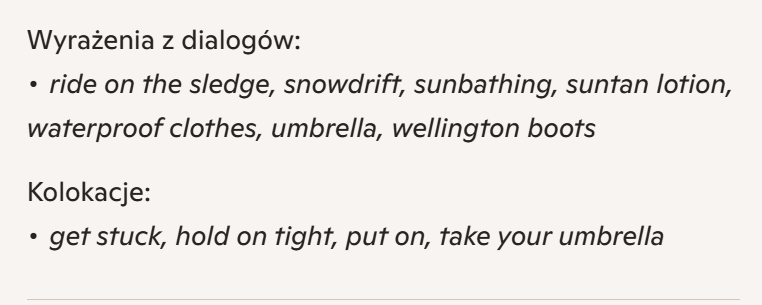
Zaimki osobowe i dzierżawcze
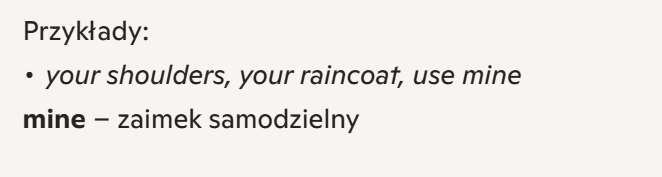
Klasa 6 WYMOWA
Trudne dźwięki
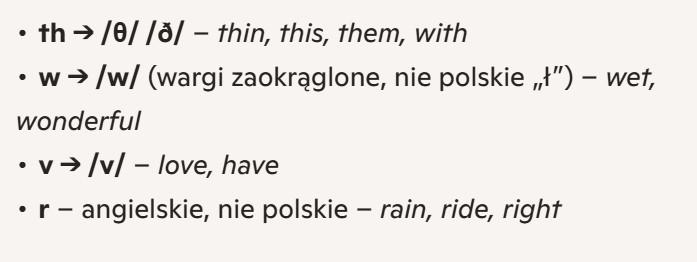
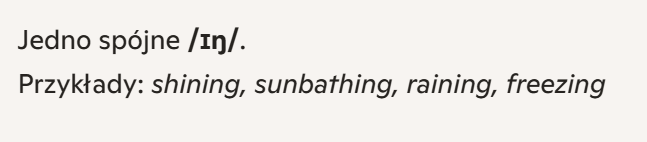
Końcówka -ing
Contractions

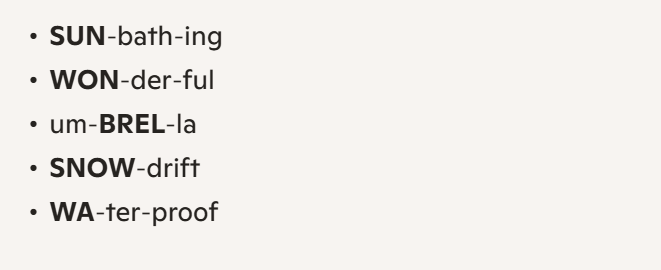
Akcent wyrazowy
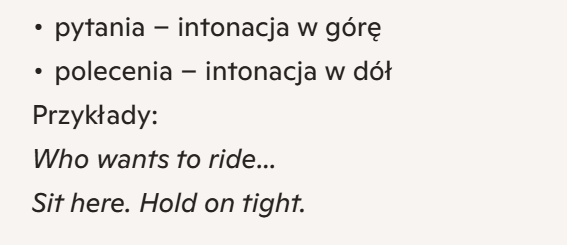
Intonacja
Connected speech
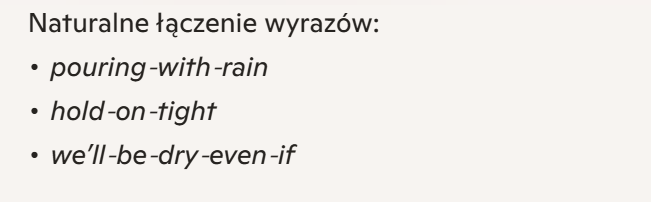
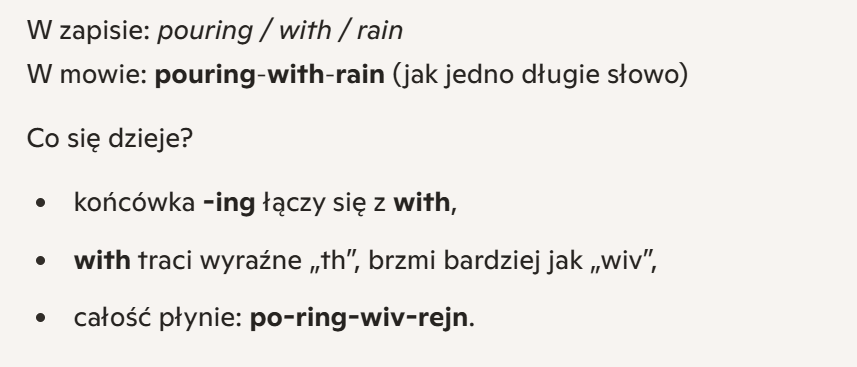
pouring with rain
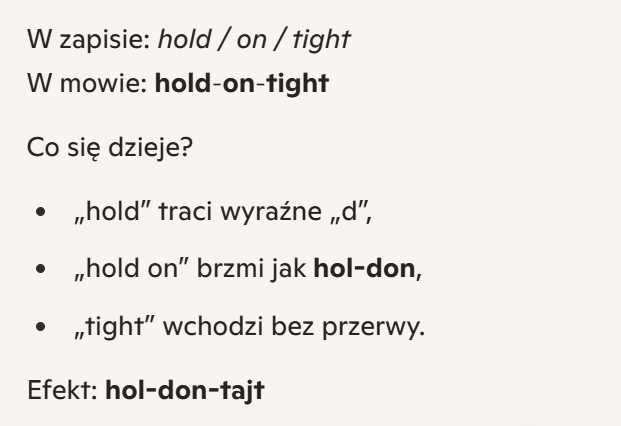
hold on tight
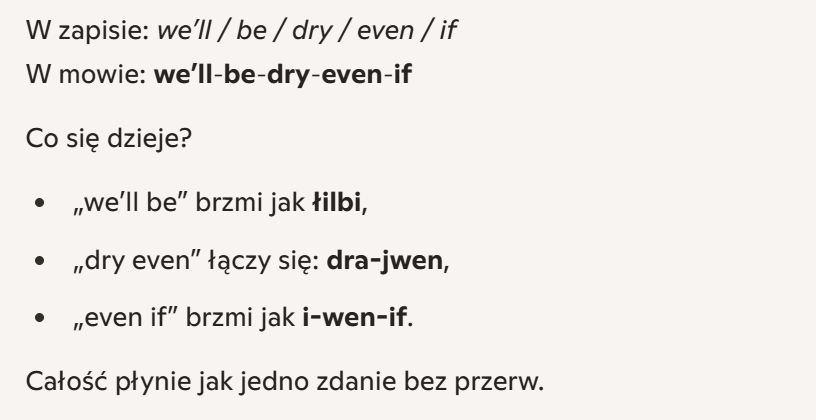
we’ll be dry even if
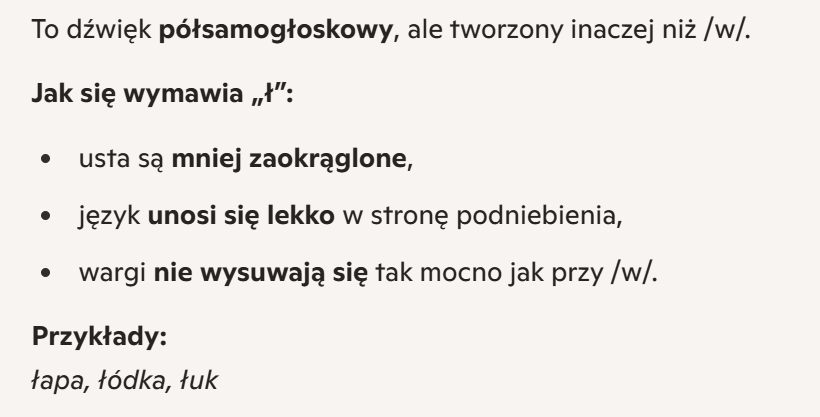
/w/ – angielskie „w”
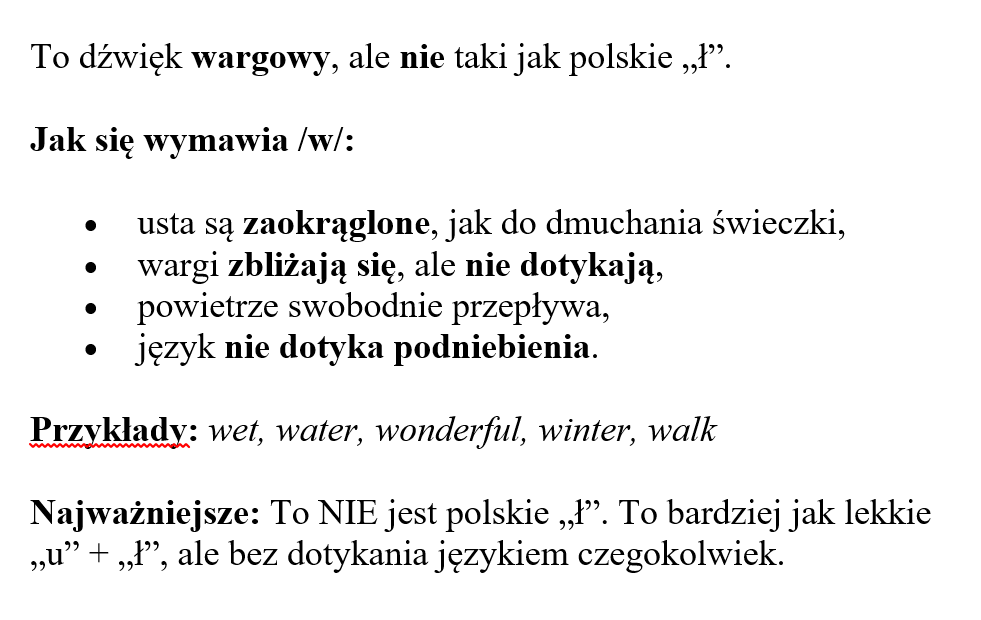
Polskie „ł”
Categories
Come rain or shine
Klasa 6 Czy deszcz, czy słońce.
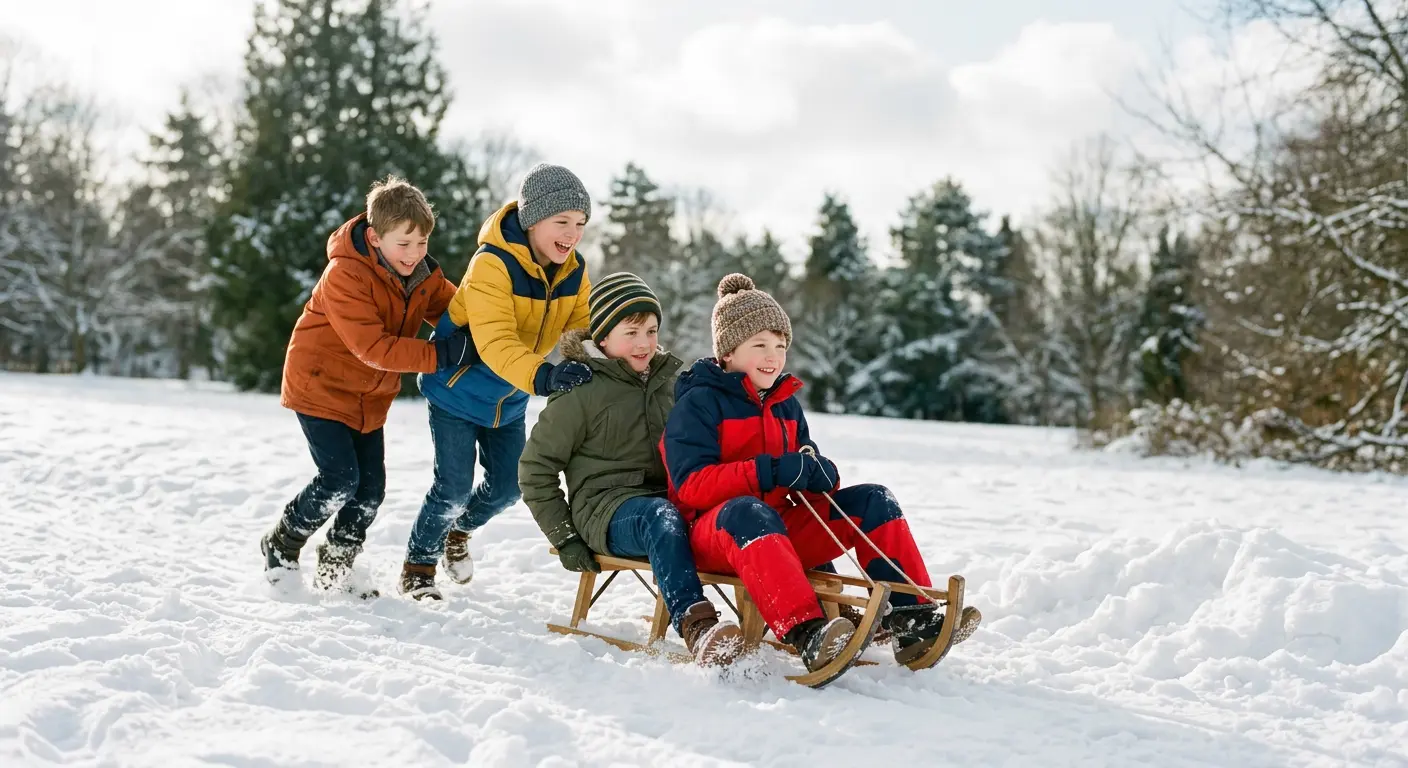
– Who wants to ride on the sledge next?
– I do! This snow is brilliant! It’s freezing cold, but I love it!
– Sit here, Jonas. Bob, sit behind him.
– OK. Don’t push too hard. We don’t want to get stuck in that snowdrift again!
– Too late! Let’s push them, Harry! Hold on tight!
Categories
Ants are amazing insects.
Klasa 6
Ants are amazing insects.
There are over 12,000 kinds of ants around the world. They have six legs, big heads and strong jaws. They are very strong – they can lift and carry things which are much heavier than their own body.
Ants belong to the same group of insects as wasps and bees.
Their homes are called nests. Ant nests are usually underground in the soil, but some ants live in trees.
The most important ant is the queen. She has thousands of eggs.
The ants we usually see are the workers – they look for food, look after the baby ants, build and look after the nest and do many other jobs.
Ants use chemical substances to communicate. These substances can tell other ants where danger or food is.
Ants usually eat seeds and other insects. Army ants even eat birds and small mammals.
The ant in the photo is a leaf‑cutter ant. These ants live in South and Central America. They cut leaves with their jaws, but they don’t eat them. They carry them to their nests and use them to grow food!
Categories
First Conditional
Klasa 6
First Conditional – klasa 6
Używamy First Conditional, gdy mówimy o realnej przyszłości – o sytuacjach, które mogą się wydarzyć, jeśli spełni się warunek.
1. Kiedy używamy First Conditional?
- Mówimy o przyszłości.
- Warunek musi się najpierw spełnić.
- Wynik jest możliwy, ale nie pewny.
- Przykład: If it rains, we will stay at home.
2. Budowa zdania – schemat
IF + Present Simple, WILL + bezokolicznik
- If + warunek – If it rains
- will + verb – we will stay at home.
Przykłady:
- If it rains, we will stay at home.
- If you study, you will pass the test.
- We will stay at home if it rains.
3. Tabela – dwie części zdania
| Część zdania | Czas | Przykład |
|---|---|---|
| IF + warunek | Present Simple | If you study |
| wynik | will + verb | you will pass. |
4. Przykładowe zdania (klasa 6)
- If it rains, we will stay at home.
- If you study hard, you will get a good mark.
- If you don’t hurry, you will miss the bus.
- If I’m tired, I will go to bed early.
- If we finish the project, the teacher will be happy.
- If you eat too much, you will feel sick.
- If she forgets her homework, she will get a minus.
- If they win the match, they will celebrate.
- If you help me, I will help you.
- If he doesn’t clean his room, his mom will be angry.
5. Typowe błędy
-
❌ If it will rain, we will stay at home.
✔️ If it rains, we will stay at home. -
❌ If you will help me, I will help you.
✔️ If you help me, I will help you. - Po IF nie używamy WILL.
6. Mini‑ćwiczenie
Uzupełnij zdania:
- If you ______ (be) late, the teacher ______ (be) angry.
- If it ______ (snow), we ______ (make) a snowman.
- If I ______ (finish) my homework, I ______ (play) games.
- If they ______ (not study), they ______ (fail) the test.
- If we ______ (go) to the shop, we ______ (buy) snacks.
7. Krótka ściąga
IF + Present Simple → WILL + bezokolicznik
Mówimy o przyszłości, która jest możliwa.
First Conditional – zdania z tłumaczeniem
If it rains, we will stay at home.
Jeśli będzie padać, zostaniemy w domu.If you study hard, you will get a good mark.
Jeśli będziesz się uczyć, dostaniesz dobrą ocenę.If you don’t hurry, you will miss the bus.
Jeśli się nie pospieszysz, spóźnisz się na autobus.If I’m tired, I will go to bed early.
Jeśli będę zmęczony, pójdę spać wcześniej.If we finish the project, the teacher will be happy.
Jeśli skończymy projekt, nauczyciel będzie zadowolony.If you eat too much, you will feel sick.
Jeśli zjesz za dużo, poczujesz się źle.If she forgets her homework, she will get a minus.
Jeśli zapomni pracy domowej, dostanie minusa.If they win the match, they will celebrate.
Jeśli wygrają mecz, będą świętować.If you help me, I will help you.
Jeśli mi pomożesz, ja pomogę tobie.If he doesn’t clean his room, his mom will be angry.
Jeśli nie posprząta pokoju, jego mama będzie zła.If we go to the park, we will play football.
Jeśli pójdziemy do parku, zagramy w piłkę.If you drink this tea, you will feel better.
Jeśli wypijesz tę herbatę, poczujesz się lepiej.If the weather is nice, we will have a picnic.
Jeśli pogoda będzie ładna, zrobimy piknik.If she studies, she will pass the test.
Jeśli będzie się uczyć, zda test.If you don’t wear a coat, you will get cold.
Jeśli nie założysz kurtki, zmarzniesz.If you call me later, I will tell you everything.
Jeśli zadzwonisz do mnie później, powiem ci wszystko.If we leave now, we will catch the train.
Jeśli wyjdziemy teraz, zdążymy na pociąg.If he eats breakfast, he will have more energy.
Jeśli zje śniadanie, będzie miał więcej energii.If they don’t stop talking, the teacher will get angry.
Jeśli nie przestaną rozmawiać, nauczyciel się zdenerwuje.If you practise every day, you will improve.
Jeśli będziesz ćwiczyć codziennie, zrobisz postępy.If she takes an umbrella, she won’t get wet.
Jeśli weźmie parasolkę, nie zmoknie.If we don’t hurry, we will be late.
Jeśli się nie pospieszymy, spóźnimy się.If you open the window, the room will get cold.
Jeśli otworzysz okno, pokój zrobi się zimny.If he studies more, he will understand the lesson.
Jeśli będzie więcej się uczyć, zrozumie lekcję.If they invite me, I will come.
Jeśli mnie zaproszą, przyjdę.If you touch the dog gently, it will be friendly.
Jeśli pogłaszczesz psa delikatnie, będzie przyjazny.If we buy tickets today, we will save money.
Jeśli kupimy bilety dzisiaj, zaoszczędzimy pieniądze.If she doesn’t eat lunch, she will be hungry later.
Jeśli nie zje lunchu, będzie później głodna.If you close the door quietly, nobody will hear you.
Jeśli zamkniesz drzwi cicho, nikt cię nie usłyszy.If it gets dark, we will turn on the lights.
Jeśli się ściemni, włączymy światła.
Categories
Zadania
Klasa 6
Categories
That’s rubbish
Pollution is a serious problem for the environment. It puts plants and animals in danger. Conservationists say that something must be done.
Rubbish is one of the problems. When you drive in the countryside, you see rubbish on the sides of the road. When you go for a walk in the woods, you see litter from picnics on the grass. When you look in rivers, you see plastic or glass drink bottles, cans and wrappers in the water.
Rubbish not only looks horrible, but it is also dangerous for the environment. Lots of wild animals get injured or trapped because of litter. They can also get sick from eating it by mistake. Toxins from litter pollute water that the animals drink, and they get into the soil.
The result is that many plants and animals die because the rubbish and pollution kill them. So if you care about the environment, don’t drop litter. Don’t throw it away carelessly. Remember to sort your rubbish and put it in the recycling bins. If we recycle more, there will be less rubbish in the world.
Looking after the environment starts at home. If everyone does something, the world will be a better place.
Streszczenie
Zanieczyszczenie środowiska jest poważnym problemem i zagraża roślinom oraz zwierzętom. Wiele osób uważa, że trzeba zacząć działać. Jednym z największych problemów są śmieci. Widać je przy drogach, w lasach i w rzekach — plastikowe i szklane butelki, puszki czy papierki.
Śmieci nie tylko brzydko wyglądają, ale są też niebezpieczne. Dzikie zwierzęta mogą się zranić, zaplątać albo zachorować, gdy przypadkowo je zjedzą. Toksyczne substancje z odpadów zanieczyszczają wodę i glebę, co prowadzi do śmierci wielu roślin i zwierząt.
Dlatego ważne jest, aby nie śmiecić, nie wyrzucać odpadów byle gdzie, segregować je i wrzucać do odpowiednich pojemników. Jeśli będziemy więcej recyklingować, śmieci będzie mniej. Dbaniem o środowisko powinniśmy zajmować się już w domu — jeśli każdy zrobi coś małego, świat stanie się lepszym miejscem.
Klasa 6
Klasa 6
Zero Conditional – Zerowy tryb warunkowy
Zero Conditional opisuje fakty, reguły i sytuacje zawsze prawdziwe. Używamy go, gdy wynik jest pewny.
1. Kiedy używamy Zero Conditional?
Używamy go, gdy mówimy o prawdach ogólnych, naukowych faktach, zasadach i rutynowych reakcjach.
Pokaż przykłady
If you heat water, it boils. – Jeśli podgrzewasz wodę, ona wrze.
Uzasadnienie: fakt naukowy, zawsze prawdziwy.
If you mix red and blue, you get purple. – Jeśli zmieszasz czerwony i niebieski, otrzymasz fioletowy.
Uzasadnienie: stała zasada.
If you don’t water plants, they die. – Jeśli nie podlewasz roślin, one umierają.
Uzasadnienie: naturalna konsekwencja.
If it rains, the grass gets wet. – Jeśli pada, trawa robi się mokra.
Uzasadnienie: logiczny, pewny skutek.
If you touch fire, you get burned. – Jeśli dotkniesz ognia, oparzysz się.
Uzasadnienie: zawsze prawdziwa reakcja.
2. Budowa Zero Conditional
W obu częściach zdania używamy Present Simple.
Pokaż schemat
If + Present Simple, Present Simple
If you study, you learn. – Jeśli się uczysz, uczysz się (zdobywasz wiedzę).
Uzasadnienie: ogólna zasada.
If people exercise, they feel better. – Jeśli ludzie ćwiczą, czują się lepiej.
Uzasadnienie: powtarzalna zależność.
3. Kiedy NIE używamy Zero Conditional?
Nie używamy go do mówienia o przyszłości, planach czy sytuacjach jednorazowych.
Pokaż przykłady błędów
❌ If it rains, we will stay home. – To nie Zero Conditional (to First Conditional).
✔ If it rains, the grass gets wet. – Zero Conditional, bo to fakt.
❌ If I see Tom today, I tell him.
✔ If I see Tom today, I will tell him. – przyszłość → First Conditional.
4. Typowe zastosowania
Pokaż listę
• fakty naukowe
• prawa natury
• instrukcje i przepisy
• reakcje organizmu
• ogólne zasady i reguły
• powtarzalne skutki
5. Krótka ściąga
Pokaż ściągę
Zero Conditional = zawsze prawda
If + Present Simple, Present Simple
Używamy do faktów, zasad i naturalnych konsekwencji.
Categories
Susie’s blog -chunks of words
Klasa 6
Categories
Susie’s blog
Klasa 6
Some facts about my favourite tree.
Smell that bush!
Those that fly and crawl.
Patience pays off.
Categories
WORD LIST 8
Klasa 6
Categories
Writing a “Lost” Announcement
Klasa 6
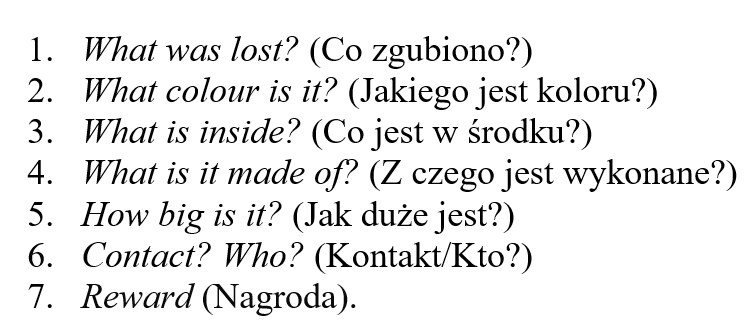
Kluczowe pytania, na które musi odpowiedzieć
dobre ogłoszenie
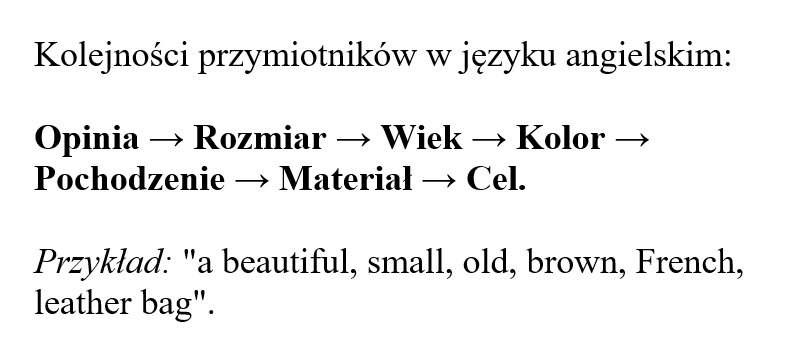
Kolejności przymiotników w języku angielskim
Kolejność przymiotników (OSASCOMP)
Pamiętaj o tej kolejności, opisując zgubę:
1. Opinia (nice)
2. Rozmiar (big)
3. Wiek (old)
4. Kolor (red)
5. Materiał (metal)
Przykład: A beautiful (1), small (2), new (3), black (4), leather (5) wallet.
Kolejność przymiotników (OSASCOMP)
Pamiętaj o tej kolejności, opisując zgubę:
1. Opinia (nice)
2. Rozmiar (big)
3. Wiek (old)
4. Kolor (red)
5. Materiał (metal)
Przykład: A beautiful (1), small (2), new (3), black (4), leather (5) wallet.
Przykład ogłoszenia
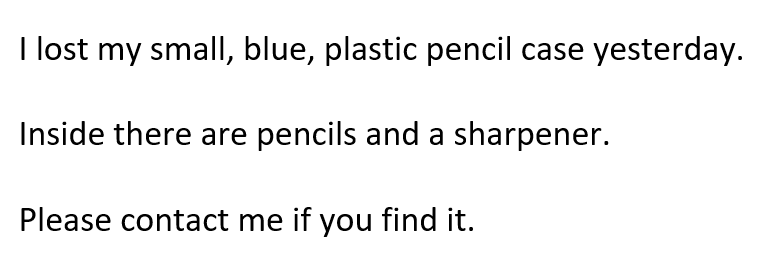
Użyteczna lista
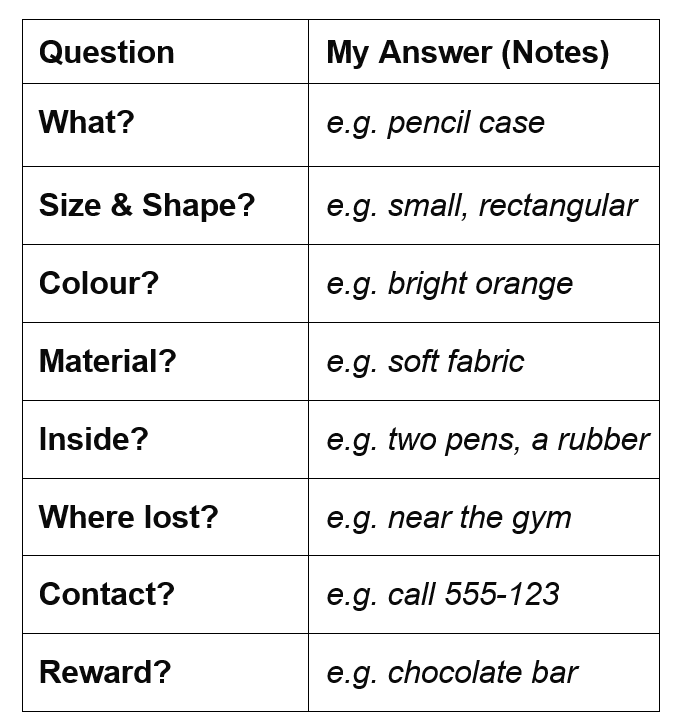
Przykład ogłoszenia
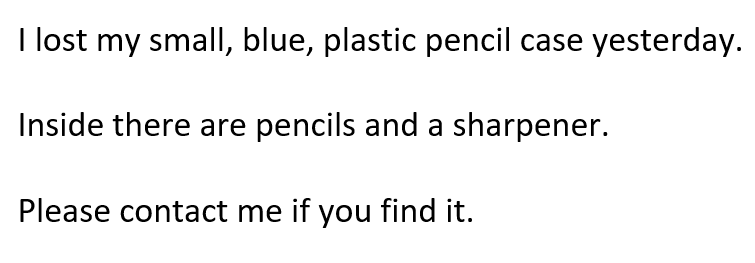
Zadanie: Uporządkuj przymiotniki
Jak poprawnie opisać ten przedmiot? (leather / black / cool / small) bag
OSASCOMP

Categories
🕵️ Mystery Object Challenge
Klasa 6
Object 1 of 20
🕵️ The Great Vocabulary Mystery
Use the words from your list to guess the item!
Categories
Klasa 6 – Przykładowy test
It’s a Material World
TEST: It’s a Material World
Klasa 6 | Czas: 30 min
Imię i nazwisko: _______________________________
I. VOCABULARY
1. Podpisz ilustracje (6 pkt):
- 🎧 Słuchawki:
- 🔦 Latarka:
- ✂️ Nożyczki:
- 📑 Zszywacz:
- 👛 Portmonetka:
- ✉️ Koperta:
2. Uzupełnij zdania (wood, leather, shiny, plain, stiff, round):
- Good quality furniture is made of .
- You can print both and matt photos.
- Ann prefers clothes.
- Tom has a square table, whereas I have a one.
- Your new shoes look beautiful.
- I did not sleep well and my neck is .
II. GRAMMAR
3. Wstaw ‘for’ lub ‘since’ (5 pkt):
- Katja has studied English three months.
- Steve has had his motorbike 2011.
- I have lived in Spain many years.
- Mark has worked there a few years.
- I haven’t seen them Friday.
4. Wybierz poprawną formę (5 pkt):
- I my keys last month.
- your jeans?
- My grandparents out last month.
- We three times.
- Adam a scooter last month.
III. READING
Jeremy is responsible for the on-line school noticeboard. There are four categories: ‘Help wanted’, ‘Pets’, ‘For sale’, and ‘Looking for’.
- What is Jeremy responsible for?
- Name two categories on the noticeboard:
- When is Jeremy the busiest?
IV. WRITING
6. Napisz ogłoszenie o zgubionym piórniku (6 pkt).
Uwzględnij: co zgubiłeś, kolor, materiał, co jest w środku oraz kontakt do Ciebie.
Categories
Present Perfect – for, since
Klasa 6 – gramatyka
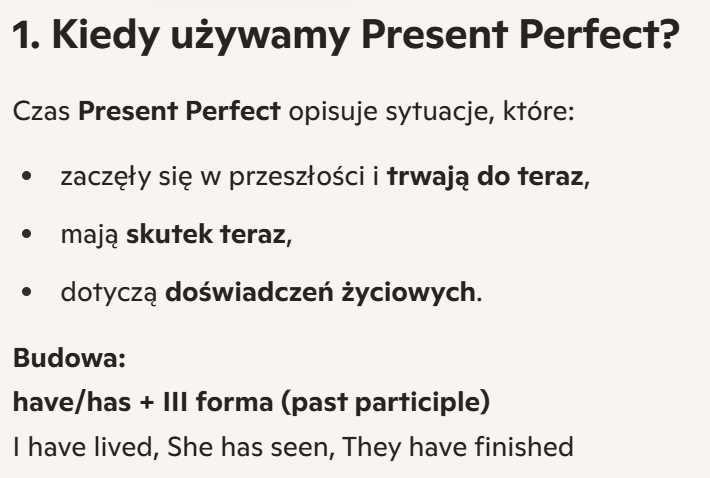
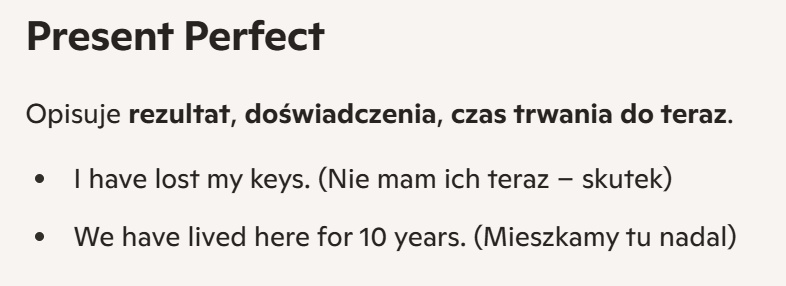
Kiedy używamy Present Perfect?
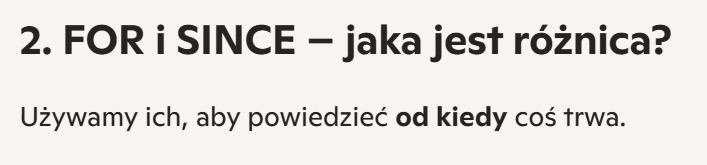
FOR i SINCE – jaka jest różnica?
Present Perfect vs Past Simple vs Present Simple
Present Perfect
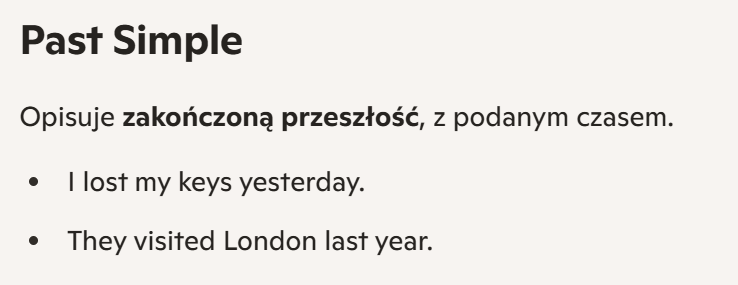
Past Simple
Present Simple
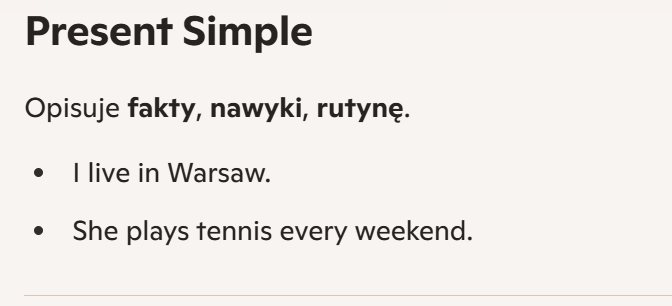
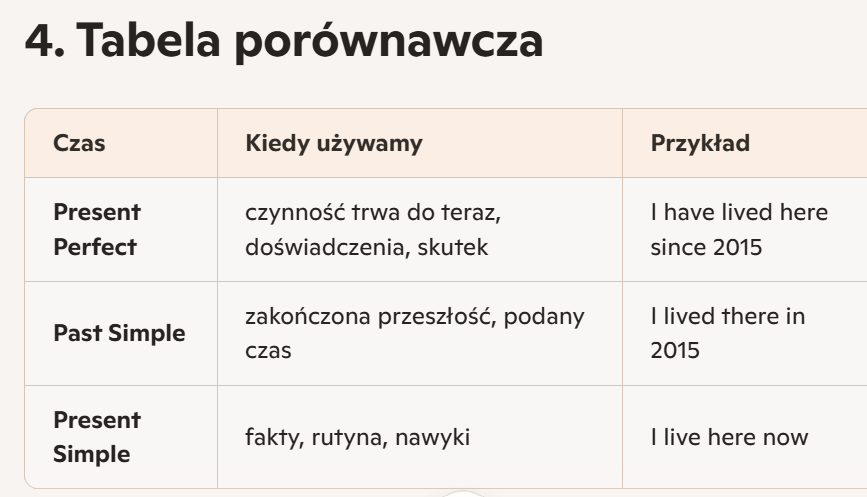
Tabela porównawcza
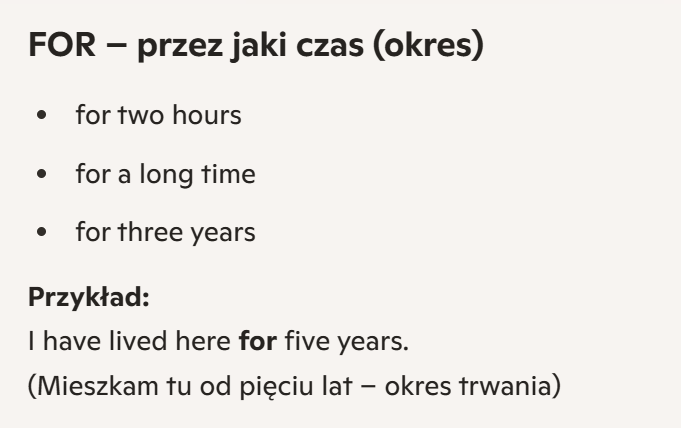
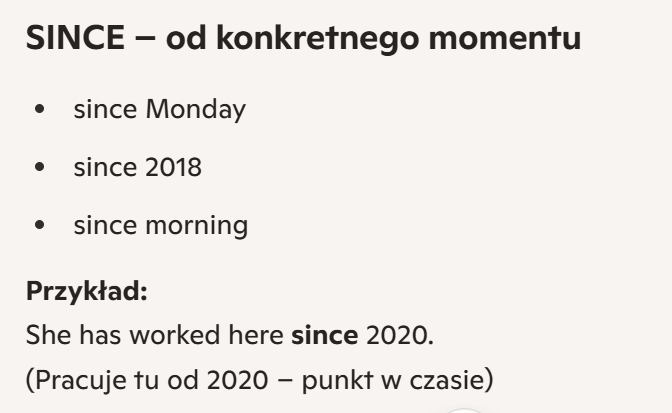
Kiedy używamy since, a kiedy for?
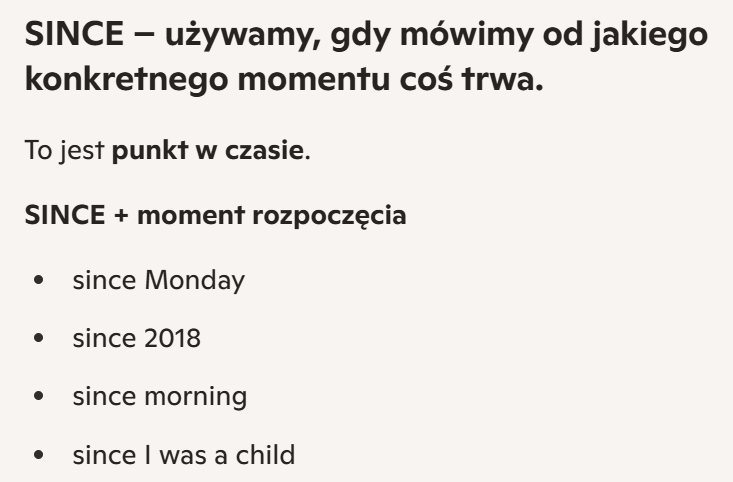
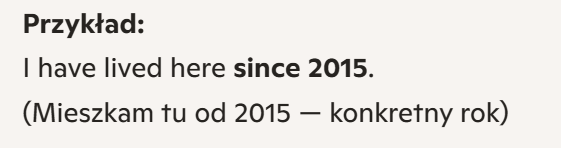
SINCE
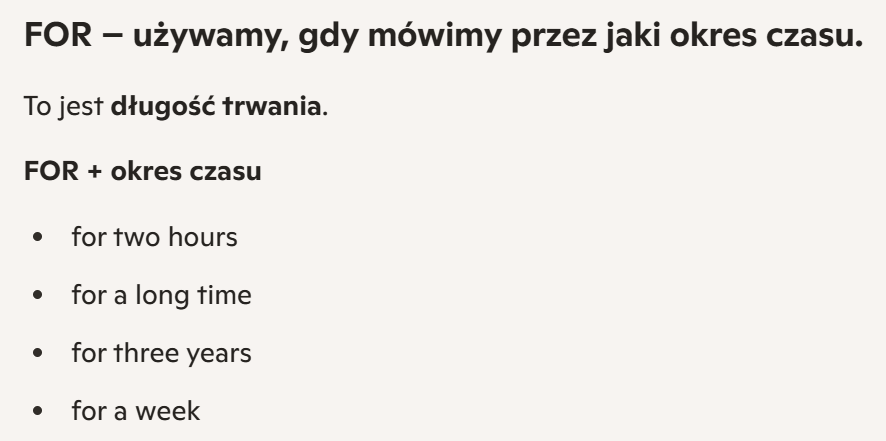
FOR
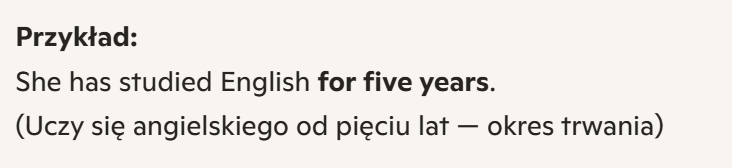
Proste podsumowanie
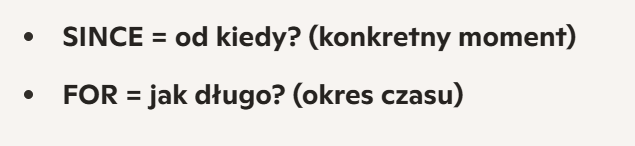
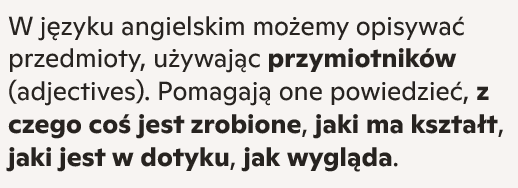
Jak opisywać przedmioty po angielsku
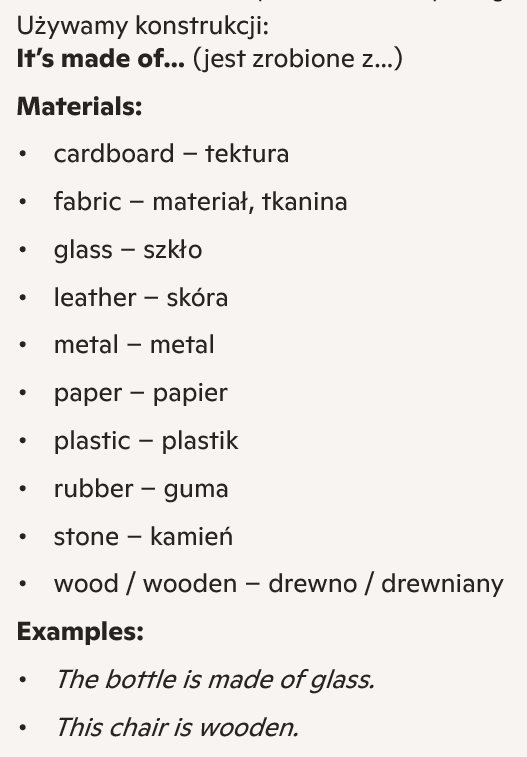
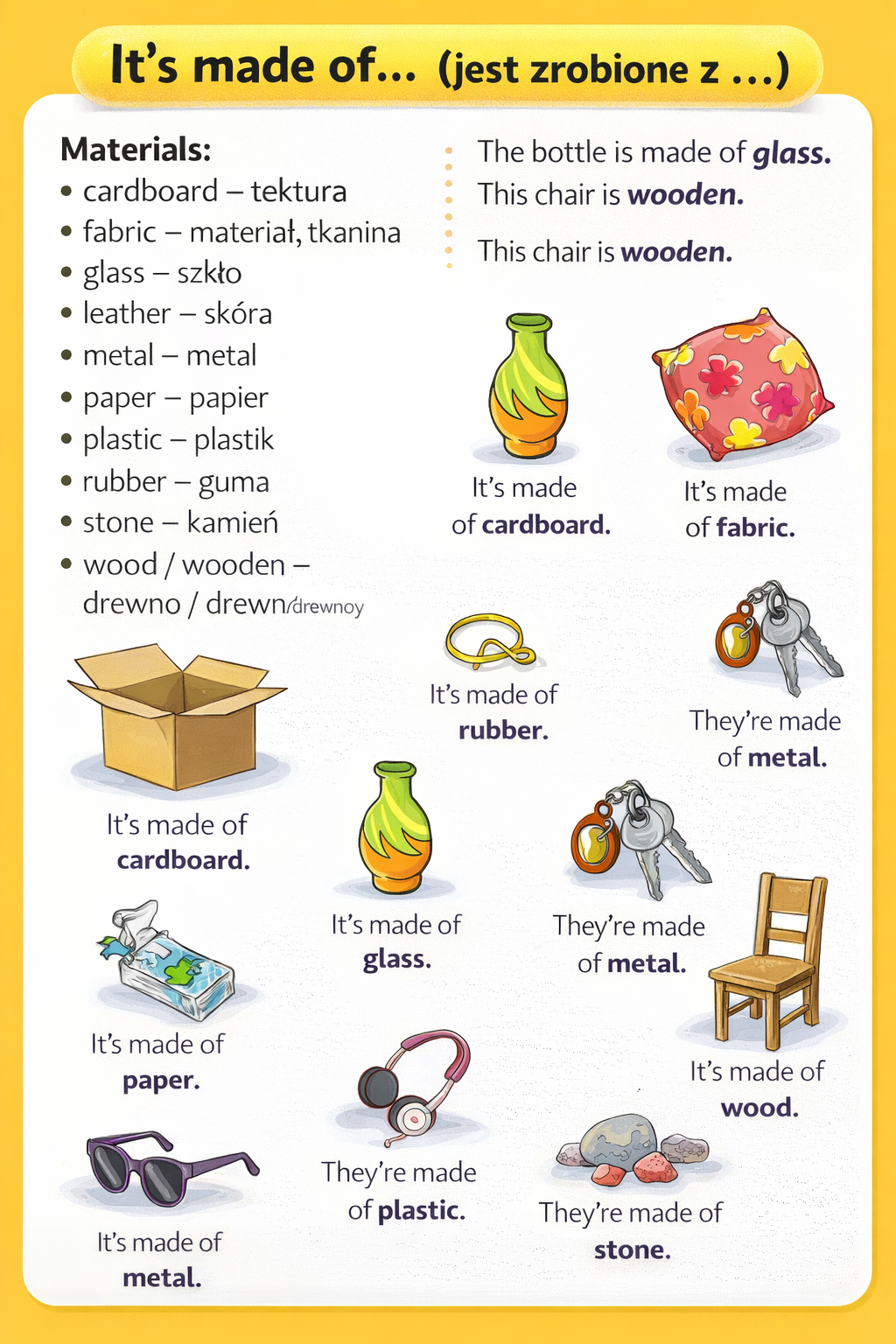
Materials – z jakiego materiału coś jest zrobione
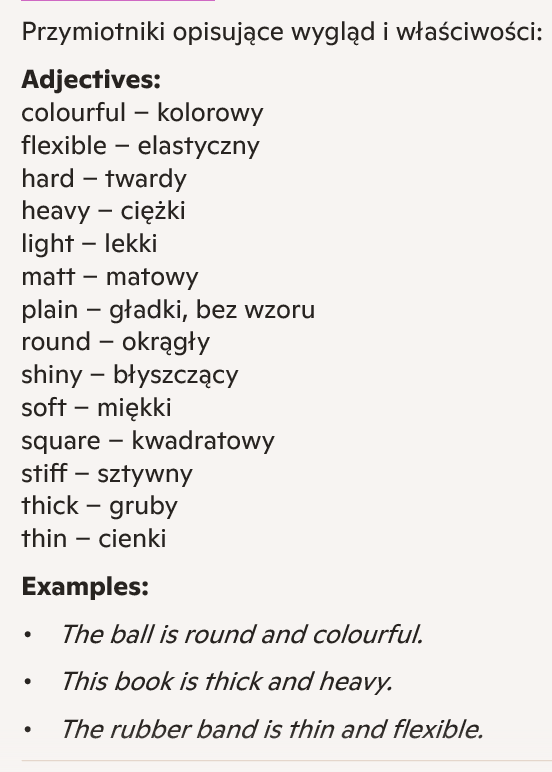
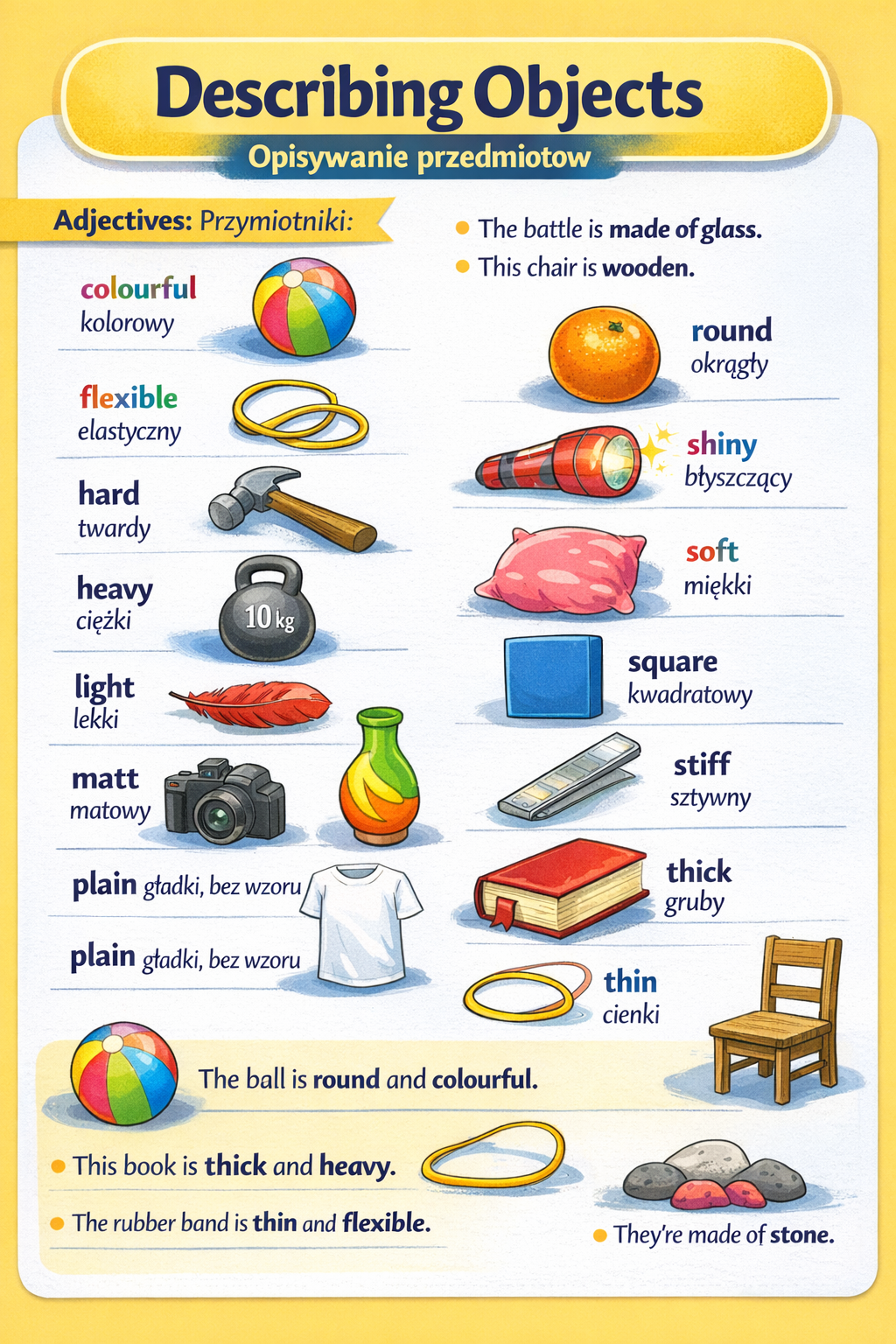
Size, shape and quality – rozmiar, kształt i cechy przedmiotu
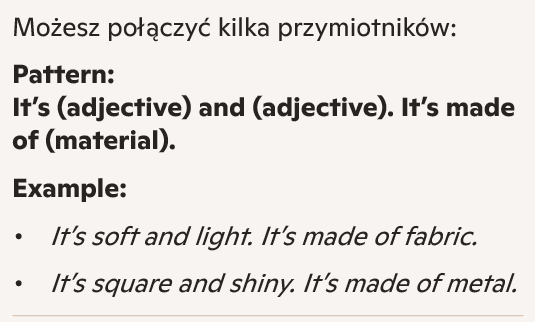
How to build a full description – jak stworzyć pełny opis
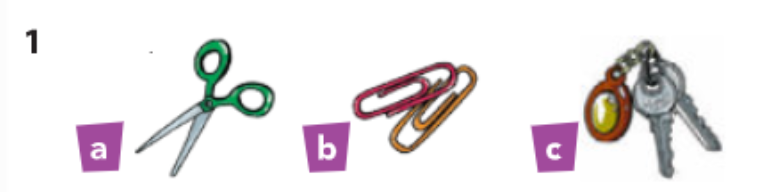
Description
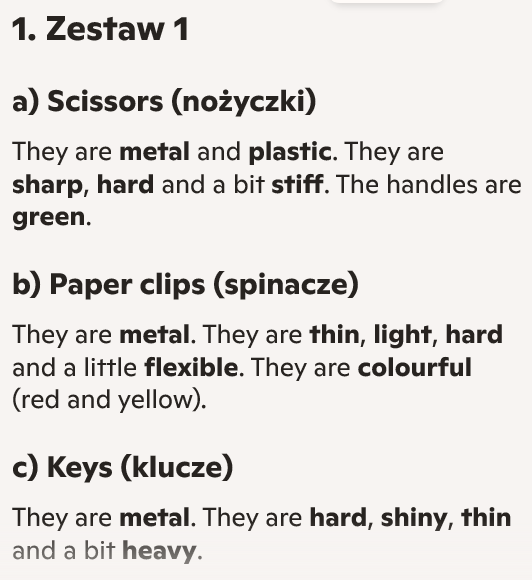
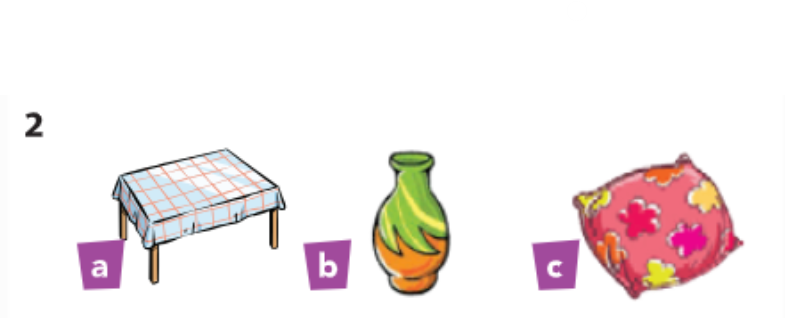
Descriptiom
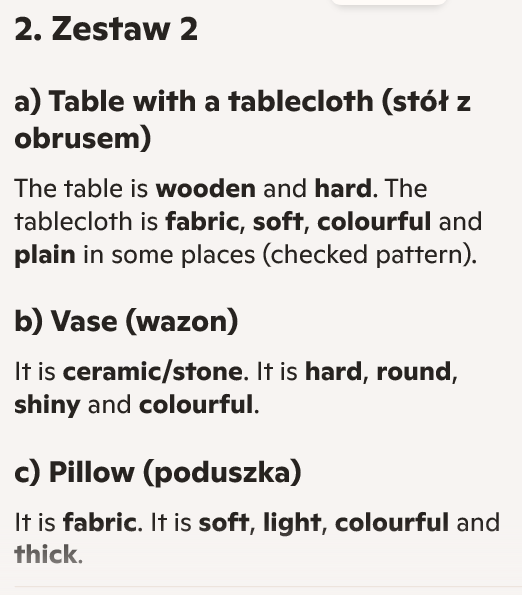
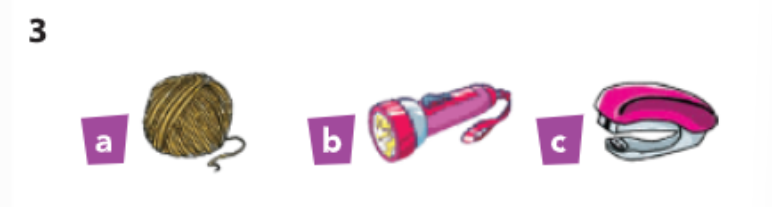
Description
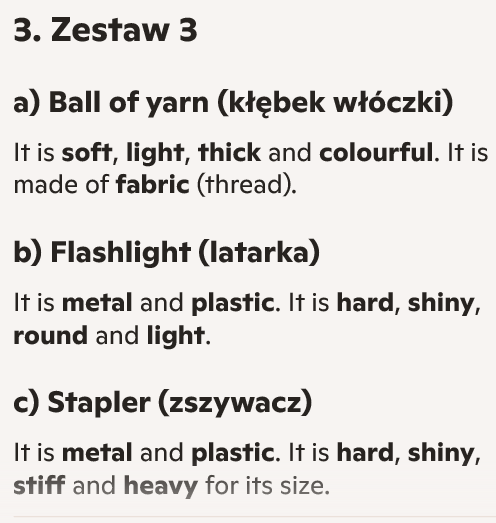
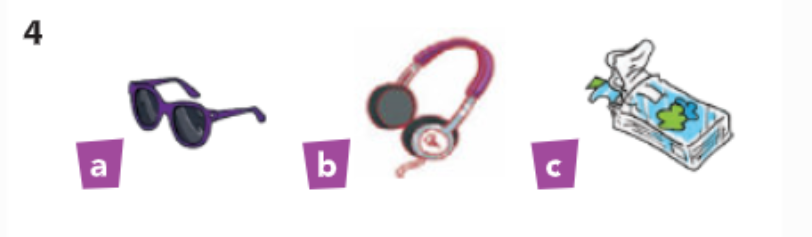
Description
Description
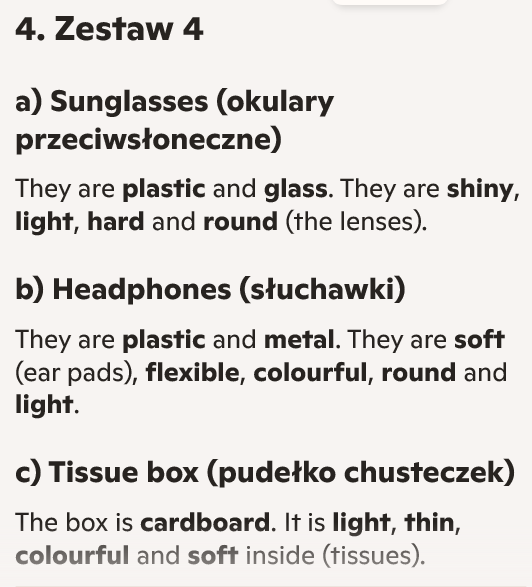
Categories
Klasa 6 WORD LIST 7
Przedmioty
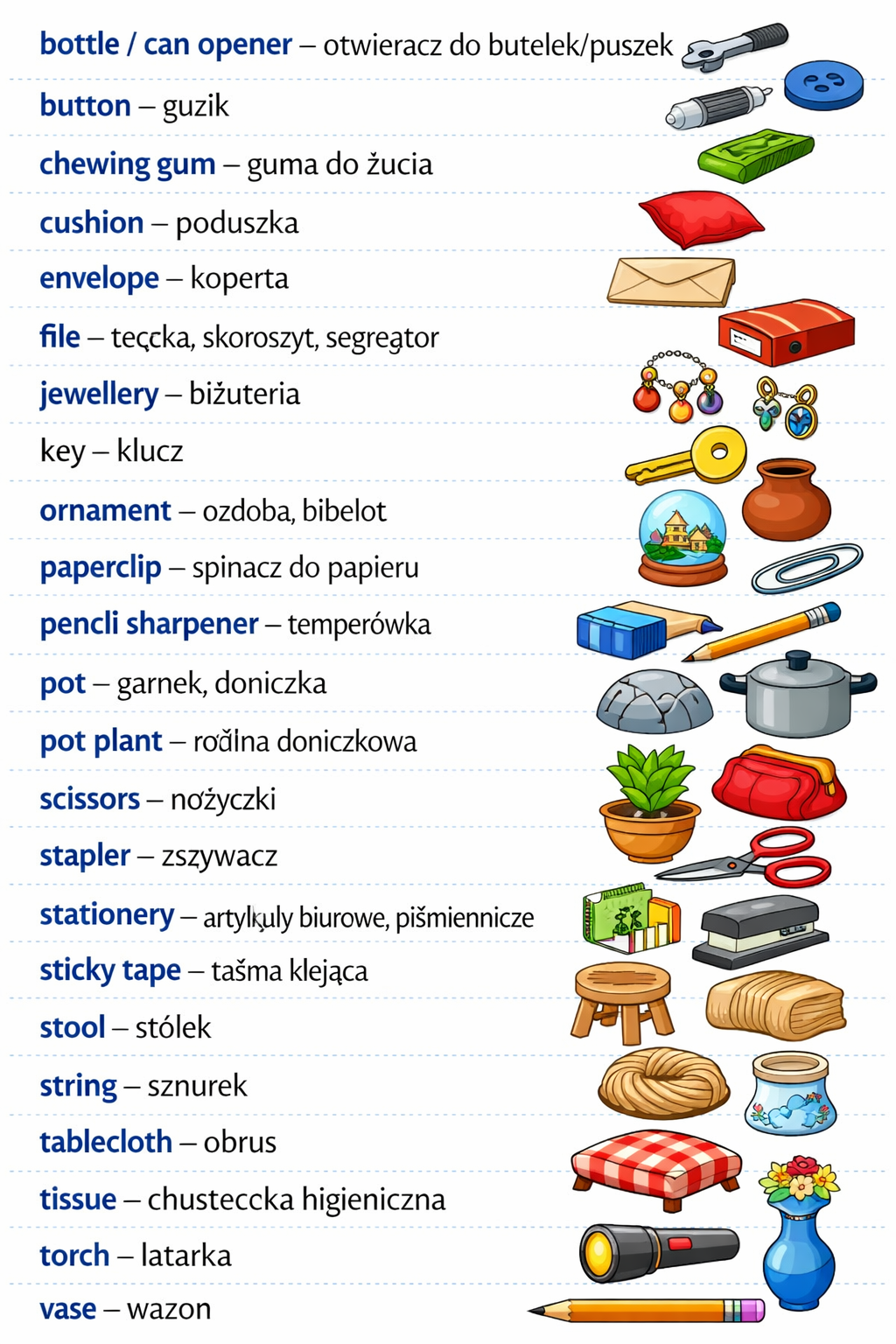
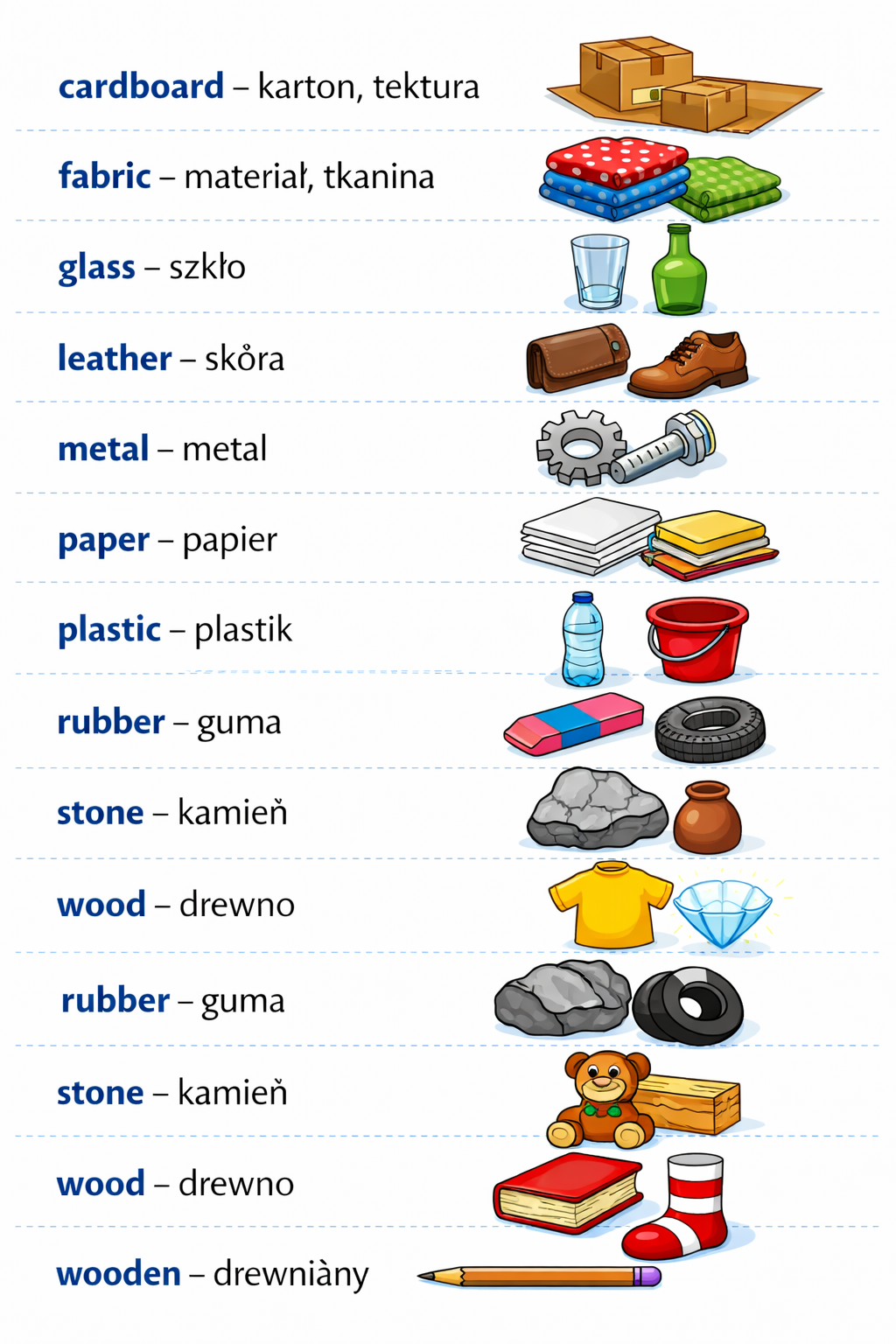
Materiały
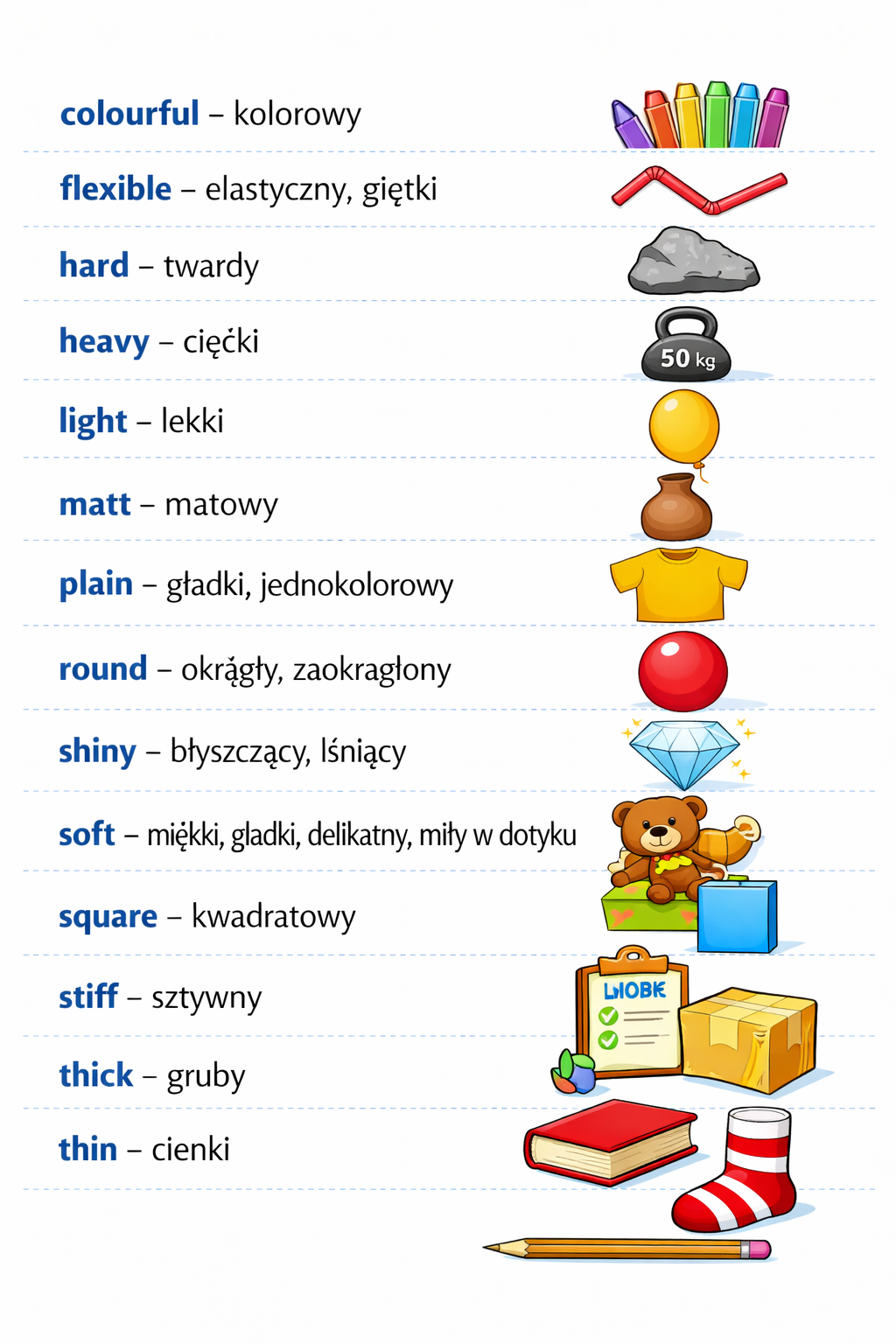
Kształty i inne cechy:
Zakupy
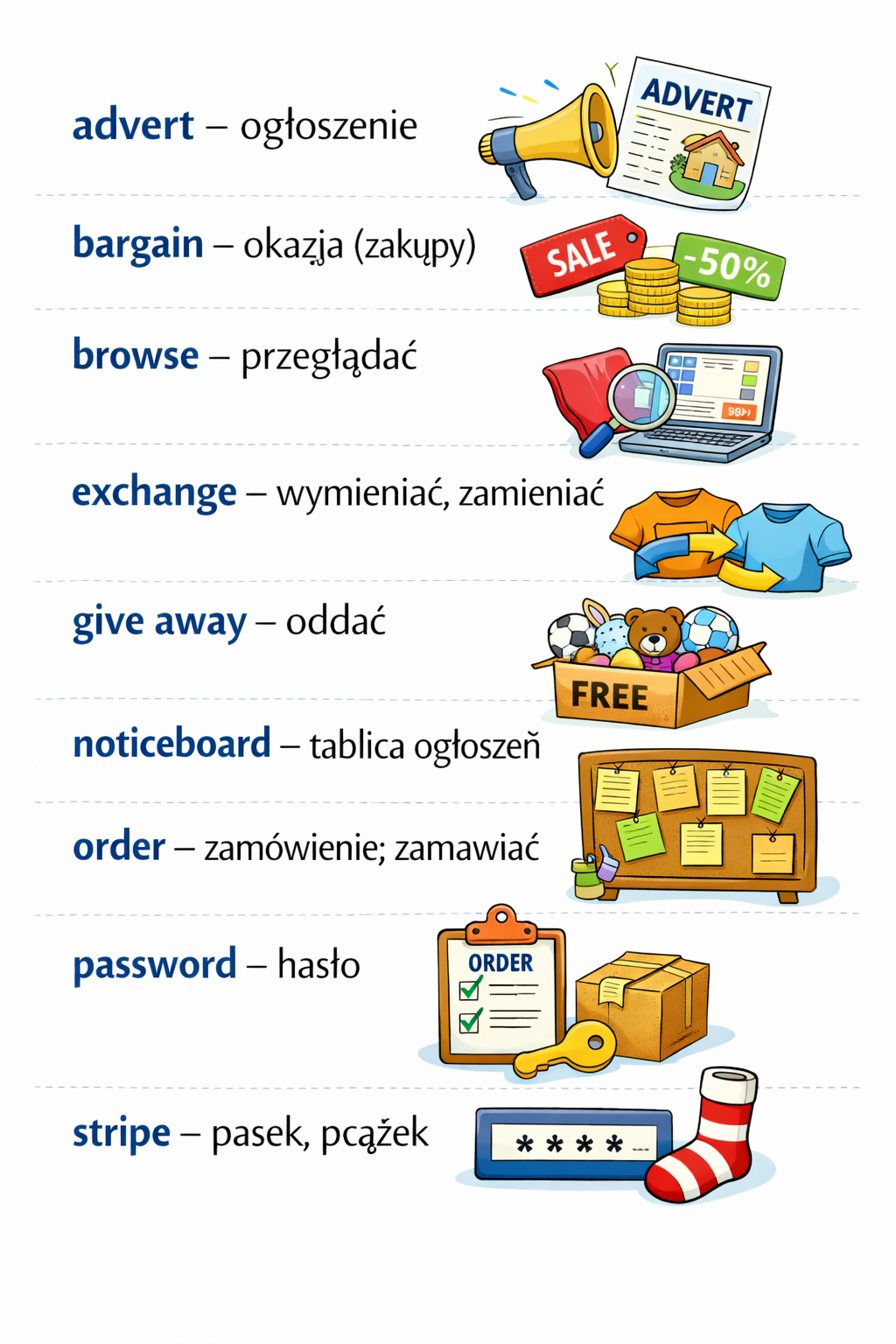
Other words
Categories
Klasa 6 – Jules Verne
Jules Verne
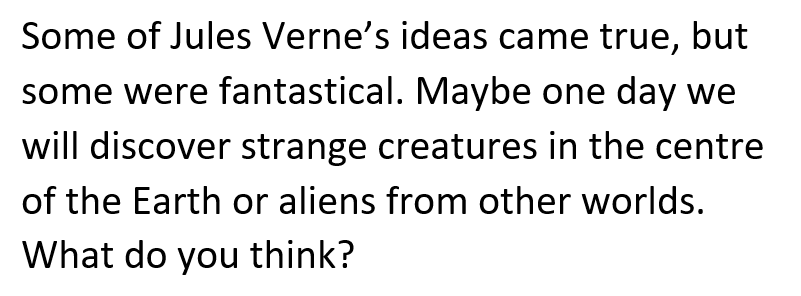
In his books
There are also
Some of
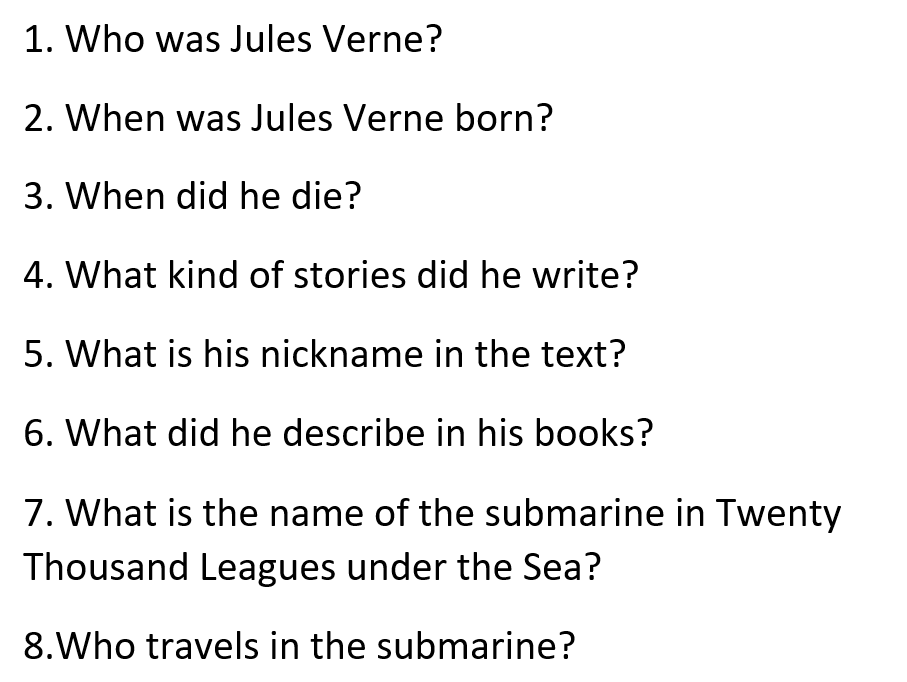
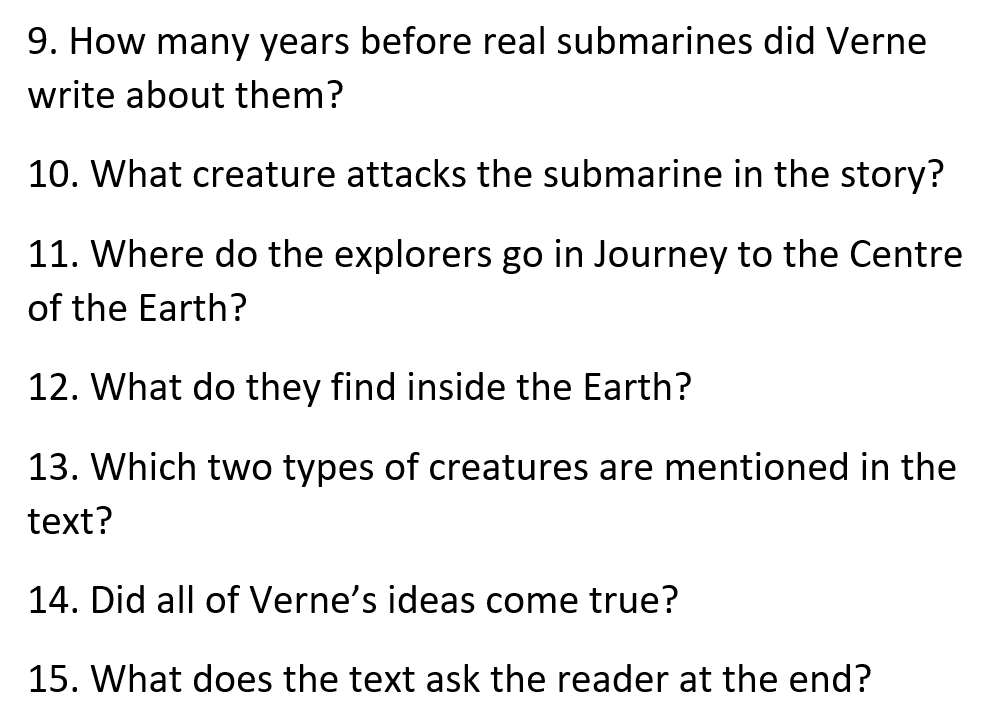
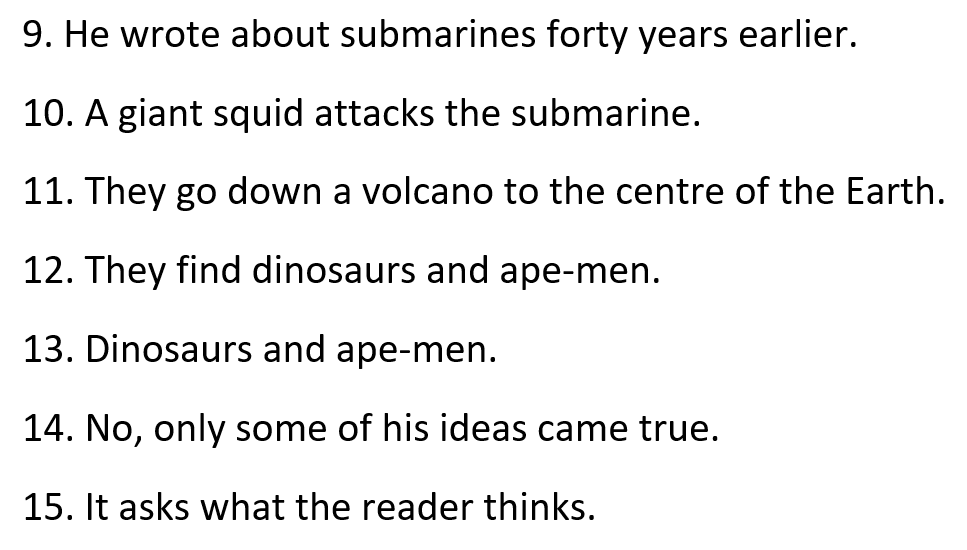
Questions
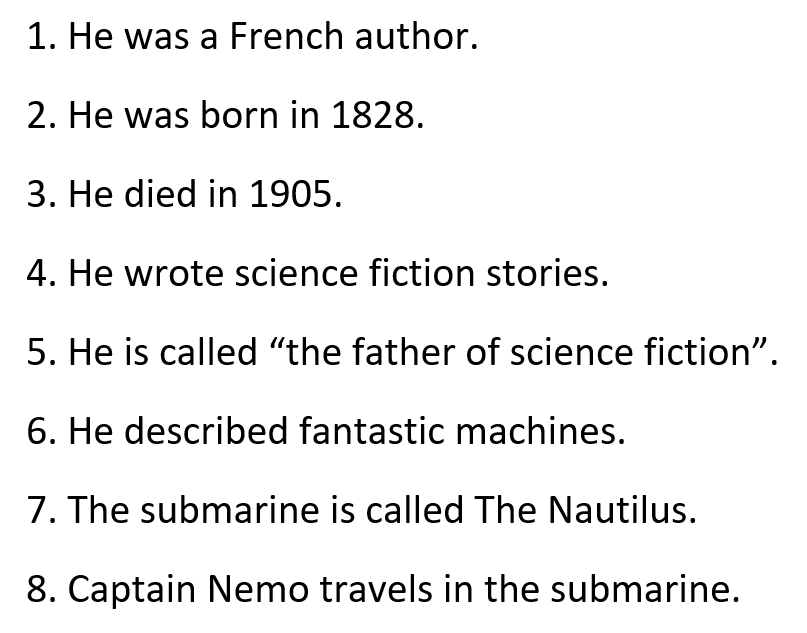
Answer
Categories
Chronologiczna kolejność
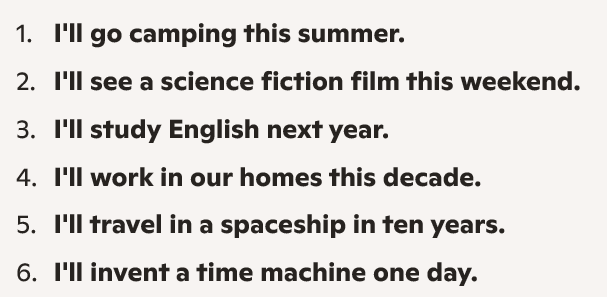
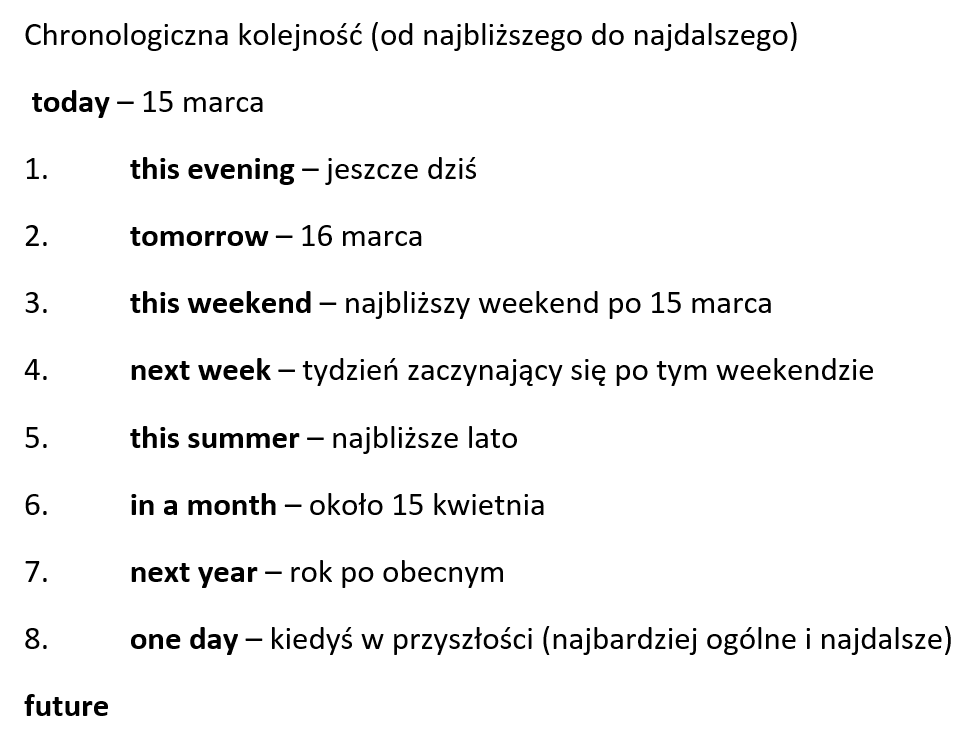
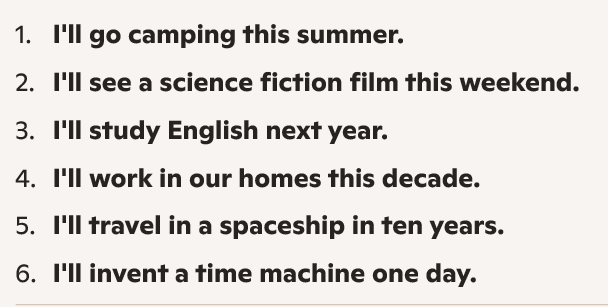
…
Kliknij w kartę, aby zmienić widok (EN / PL / Obie)
Klasa 6: Przewidywania dotyczące przyszłości – ćwiczenia
Match the sentence halves
1. I think that one
2. She is sure that next
3. Will humans travel to Mars in
4. I’ll see the science fiction film this
5. Someone will invent teleportation in
Categories
Predictions about the future
Przewidywania dotyczące przyszłości
I think.
I don’t think.
I’m sure.
I hope.
I believe.
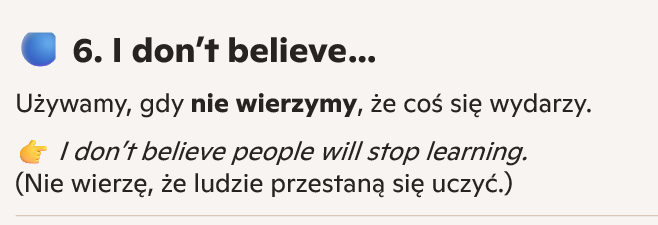
I don’t believe.
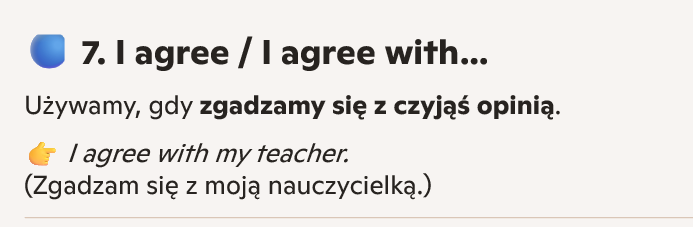
I agree / I agree with…
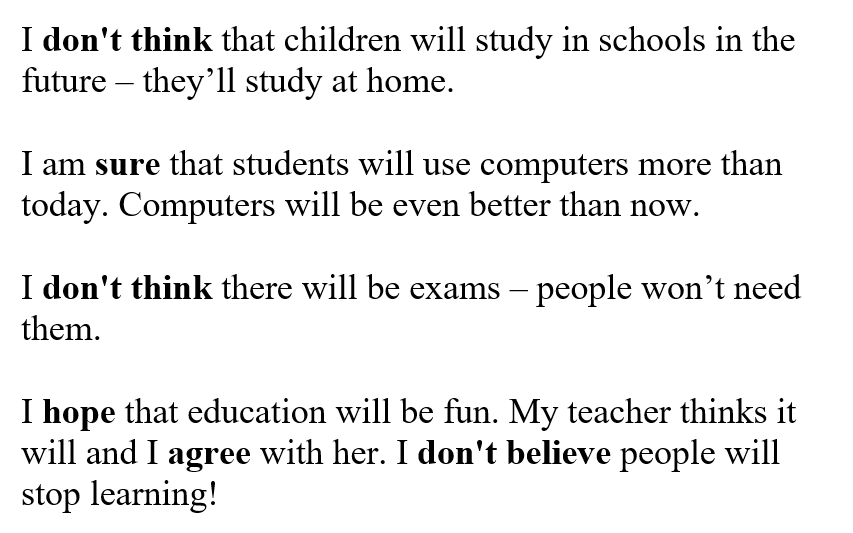
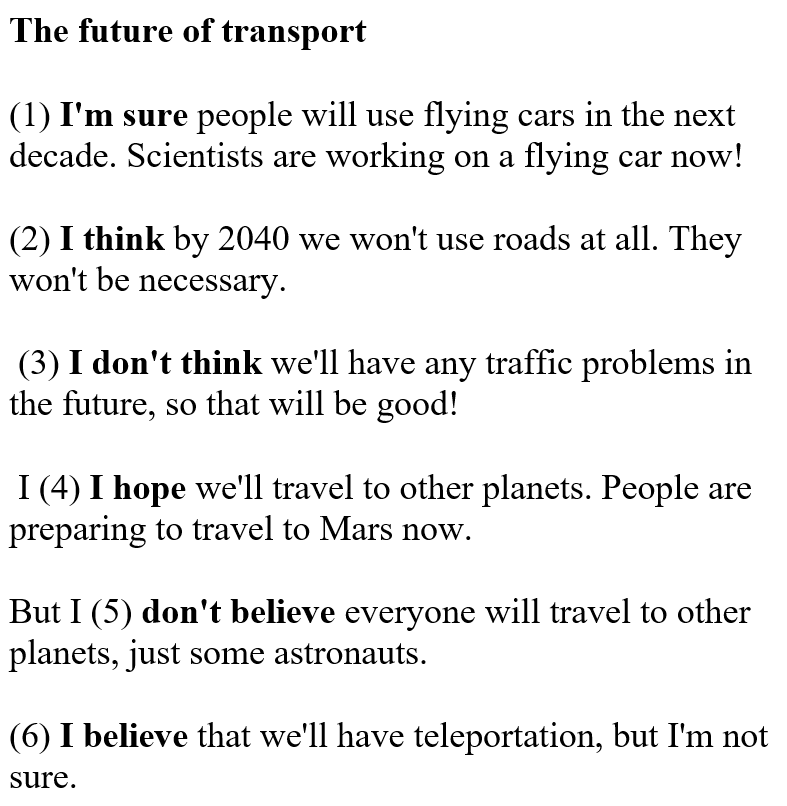
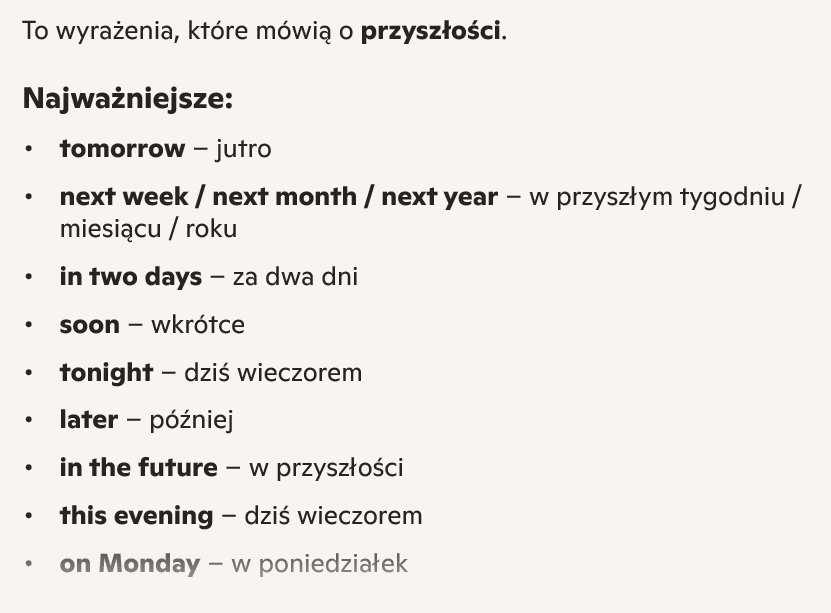
TIME EXPRESSIONS dla Future Simple (will)
Categories
Klasa 6 Zdania – Future Simple
Categories
Klasa 6 – Future Simple
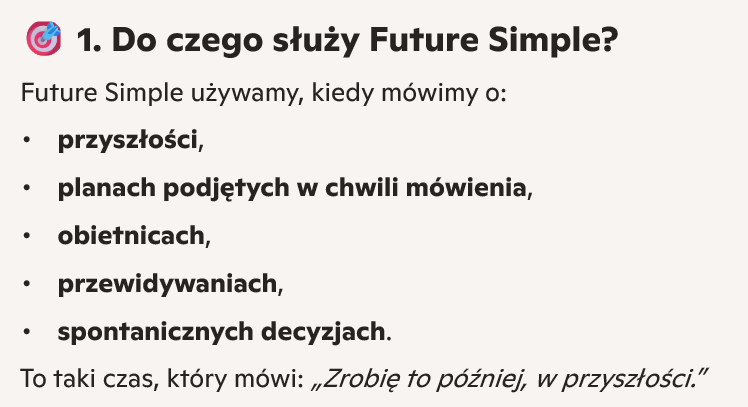
Do czego służy Future Simple?
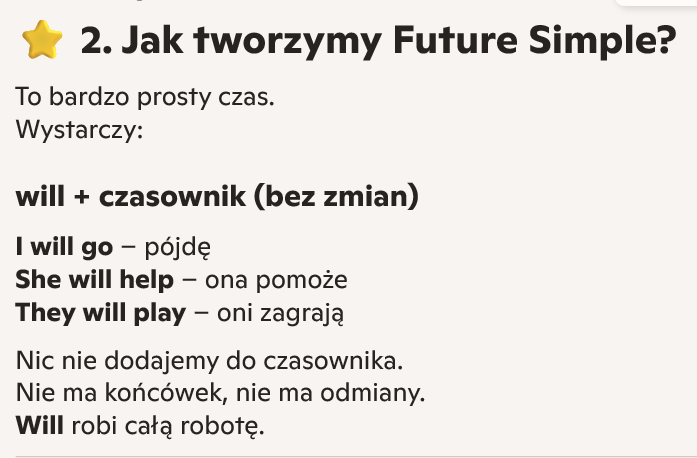
Jak tworzymy Future Simple?
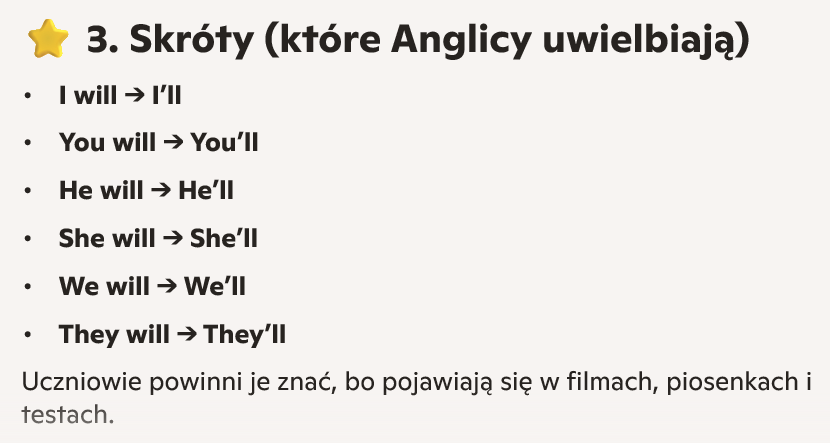
Skróty (które Anglicy uwielbiają)
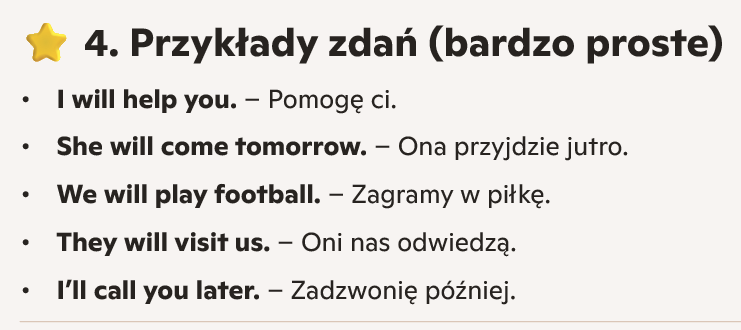
Przykłady zdań (bardzo proste)
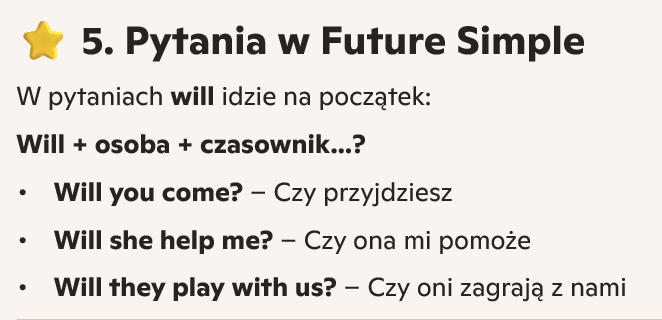
Pytania w Future Simple
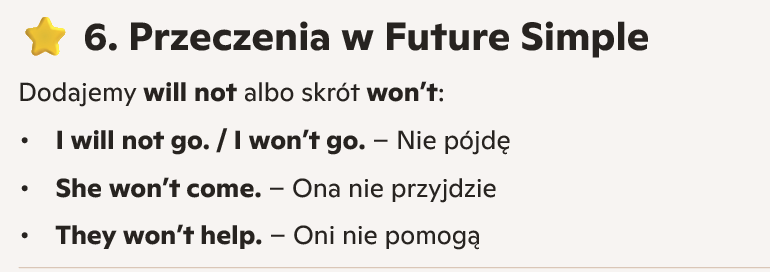
Przeczenia w Future Simple
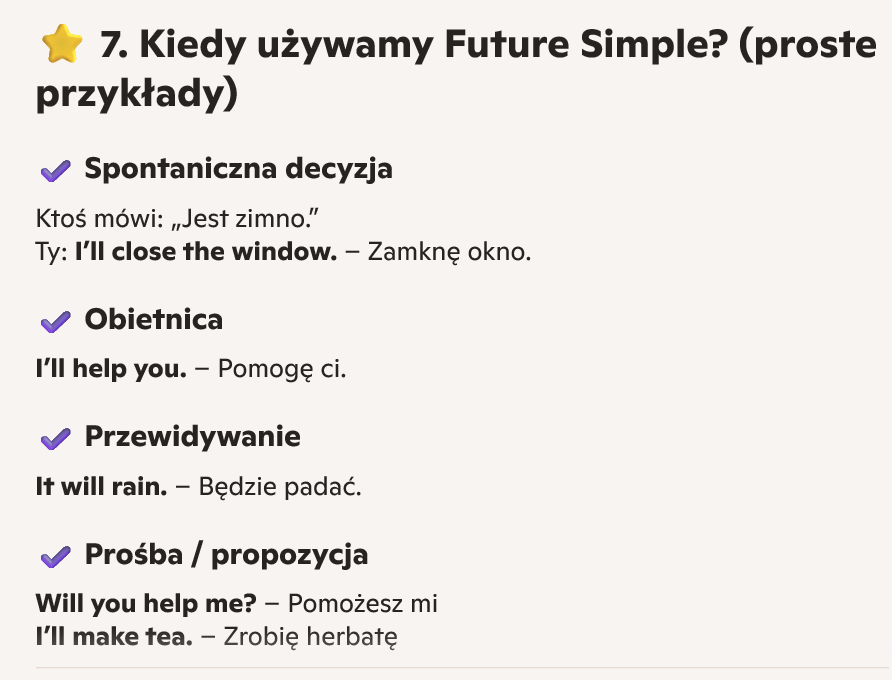
Kiedy używamy Future Simple? (proste przykłady)
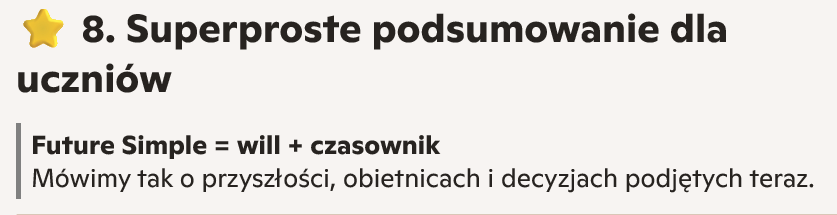
Superproste podsumowanie
Categories
Klasa 6 Unit 6b
Science fiction 58/2
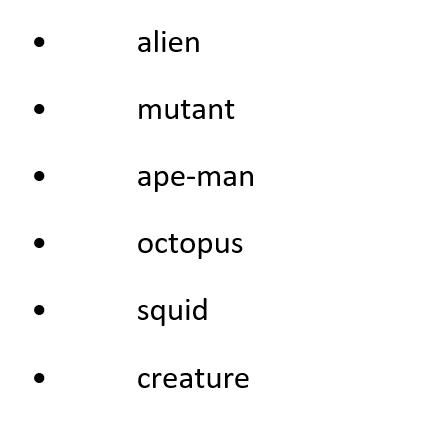
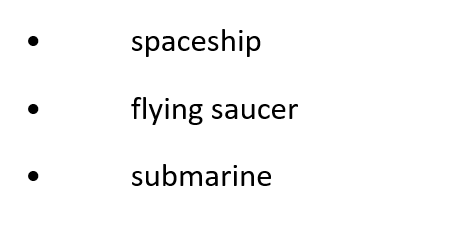
1. Which words are the names of creatures?
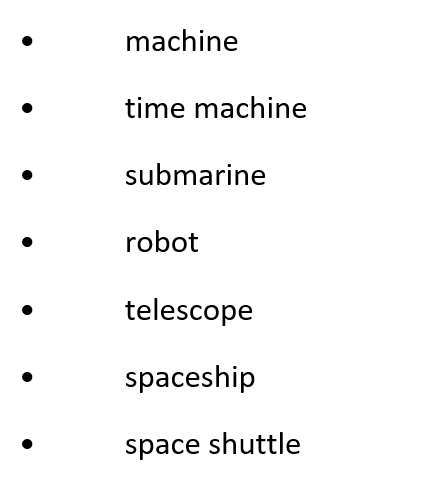
2. Which words are the names of machines?
3. Which words are the names of vehicles?
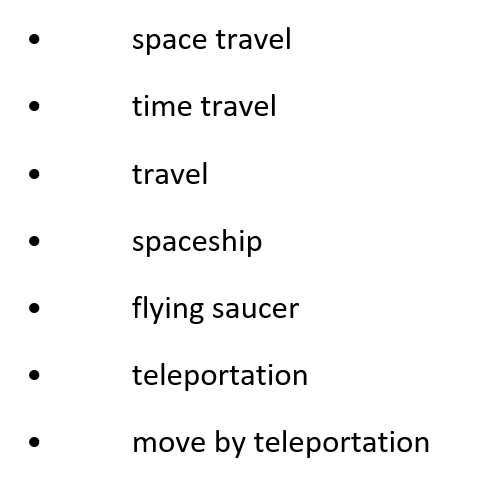
4. Which words are related to travelling?
Categories
Good wishes
Klasa 6/5
Klasa 6
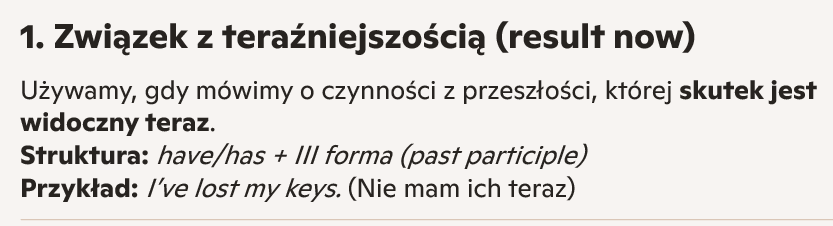
Związek z teraźniejszością (result now)
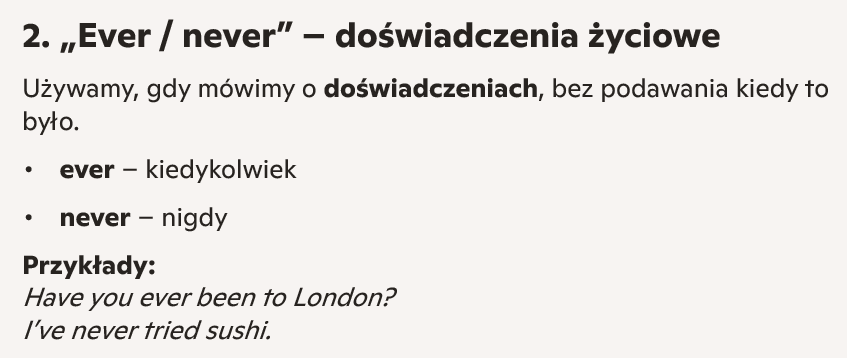
„Ever / never” – doświadczenia życiowe
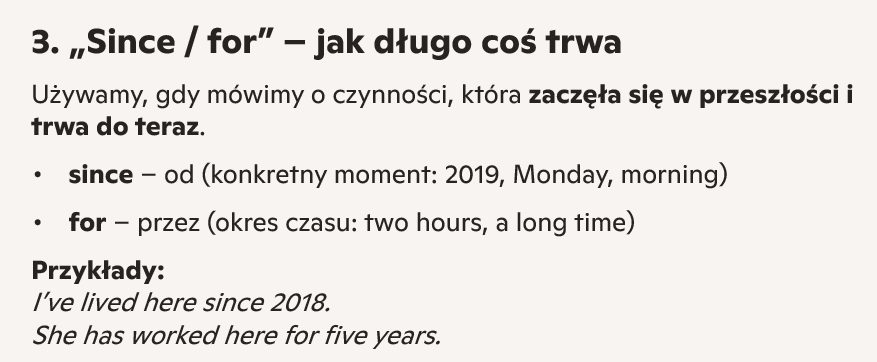
„Since / for” – jak długo coś trwa
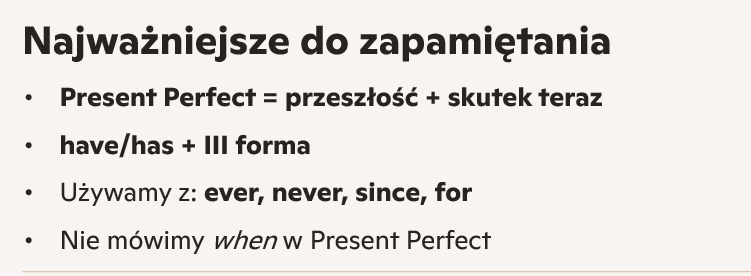
Najważniejsze do zapamiętania
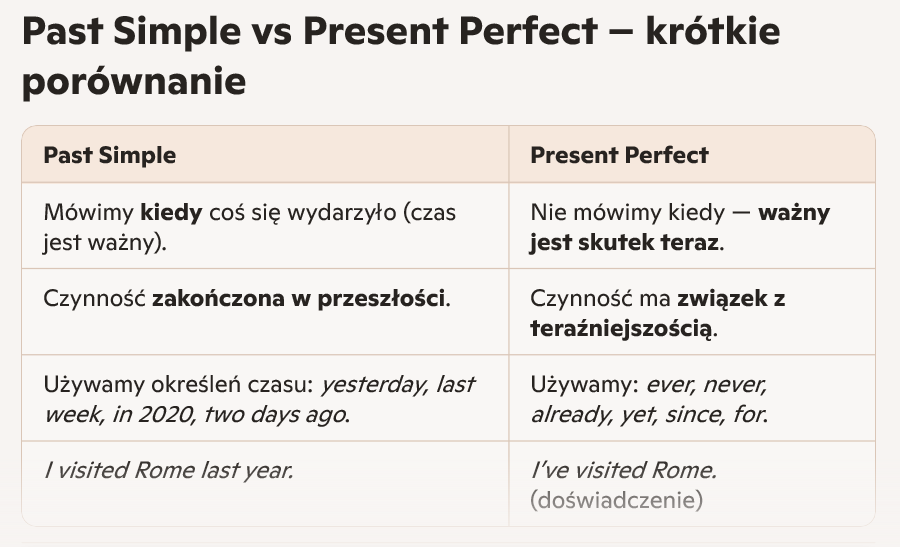
Past Simple vs Present Perfect – krótkie porównanie
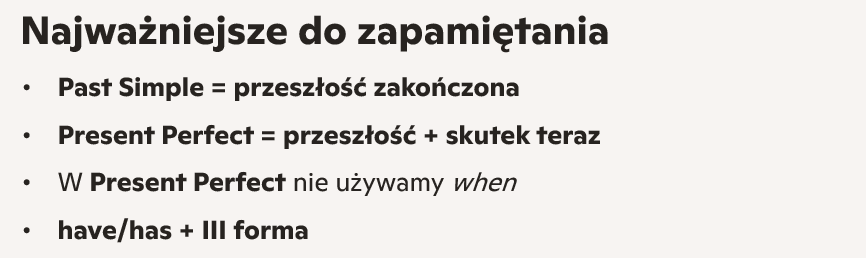
Najważniejsze do zapamiętania
Categories
Klasa 6 Unit 5
Zadanie 5/46
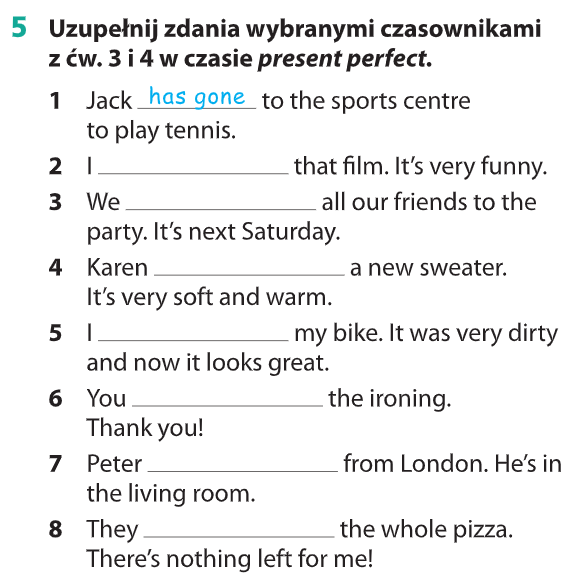
Odpowiedź
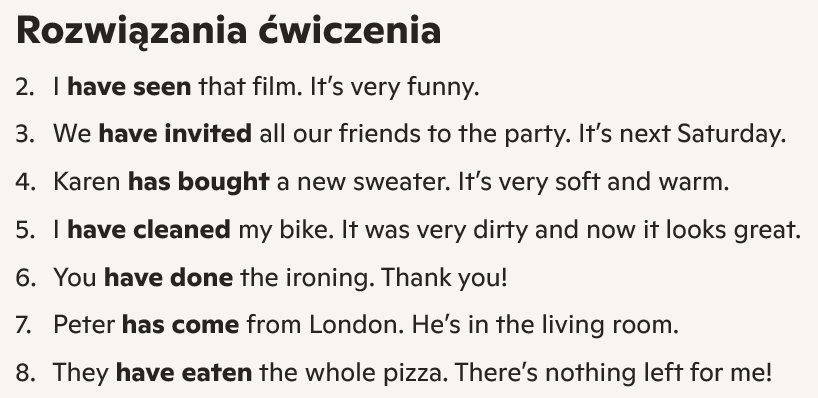
Uzasadnieniem, dlaczego wybrano daną formę czasownika.
Jack has gone to the sports centre to play tennis.
→ „has gone” = poszedł (i wciąż tam jest / nie wrócił jeszcze)
I have seen that film. It’s very funny.
→ „widziałem ten film” (kiedyś w przeszłości, doświadczenie życiowe, nieistotne kiedy dokładnie)
We have invited all our friends to the party. It’s next Saturday.
→ „zaprosiliśmy wszystkich znajomych” – czynność już wykonana, efekt jest aktualny (znajomi wiedzą o imprezie)
Karen has bought a new sweater. It’s very soft and warm.
→ „kupił / kupiła nowy sweter” – niedawno / niedawno kupiony, teraz go ma i opisujemy jego cechy
I have cleaned my bike. It was very dirty and now it looks great.
→ „wyczyściłem rower” – czynność zakończona niedawno, rezultat widoczny teraz („teraz wygląda świetnie”)
You have done the ironing. Thank you!
→ „zrobiłeś prasowanie” – czynność zakończona, rezultat jest aktualny (pranie jest wyprasowane, dziękujemy)
Peter has just arrived / has arrived from London. He’s in the living room.
→ obie formy poprawne, ale najczęściej w tej sytuacji mówi się: has just arrived
(„dopiero co przyjechał / właśnie przyjechał” – bardzo niedawno, stąd „just” pasuje idealnie)
They have eaten the whole pizza. There’s nothing left for me!
→ „zjedli całą pizzę” – czynność zakończona, rezultat widoczny teraz (nic nie zostało)
Podsumowanie
has gone → poszedł i jeszcze nie wrócił
have seen → widziałem (doświadczenie)
have invited → zaprosiliśmy (już zrobione)
has bought → kupiła / kupił (ma teraz)
have cleaned → wyczyściłem (jest czysty)
have done → zrobiłeś (zrobione)
has (just) arrived → właśnie przyjechał
have eaten → zjedli (nic nie zostało)
Zadanie 4/48
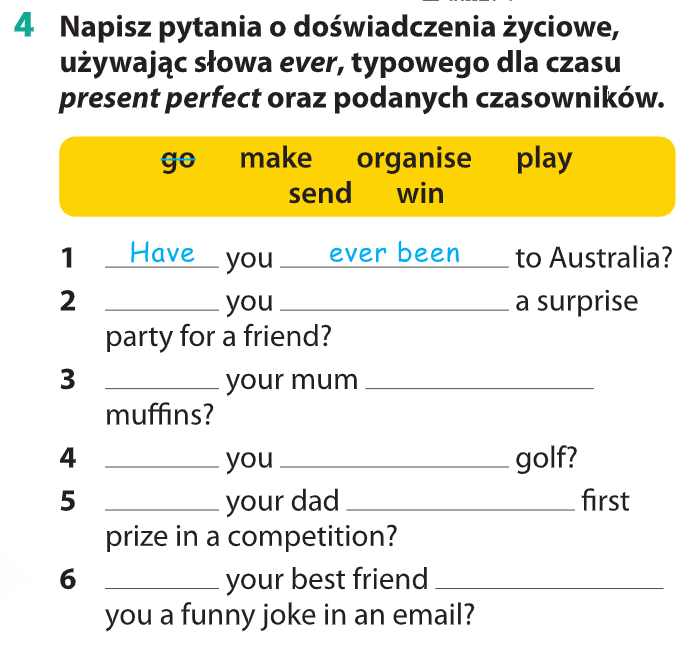
Odpowiedź
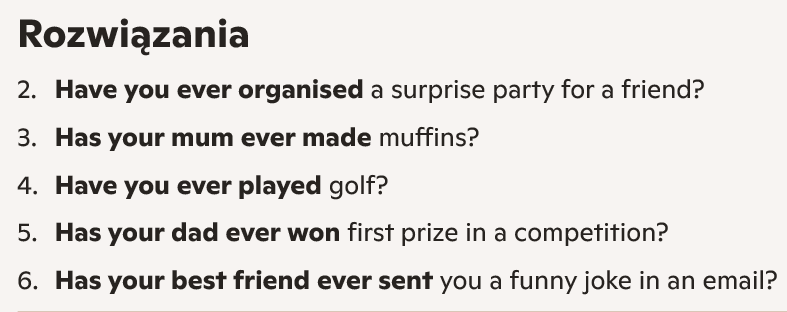
Zadanie 6/49
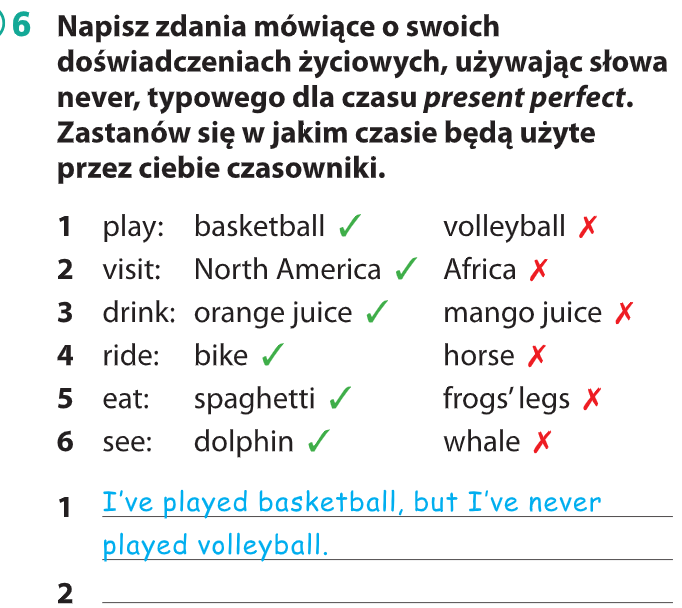
Odpowiedź
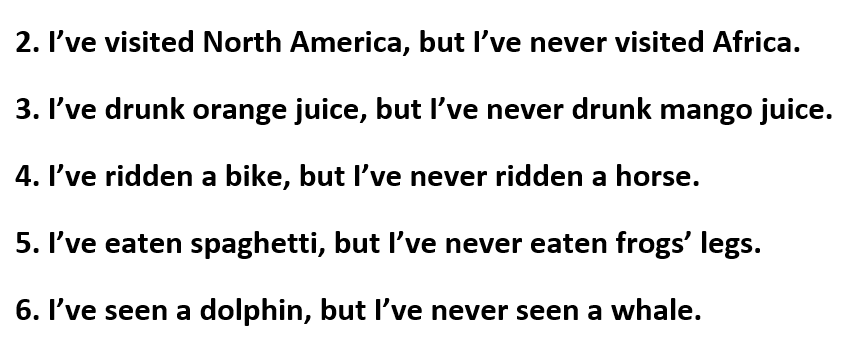
Zadanie 9/49
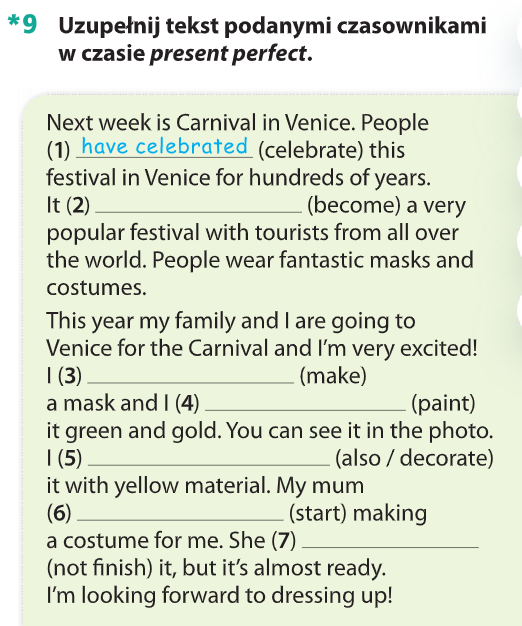
Odpowiedź
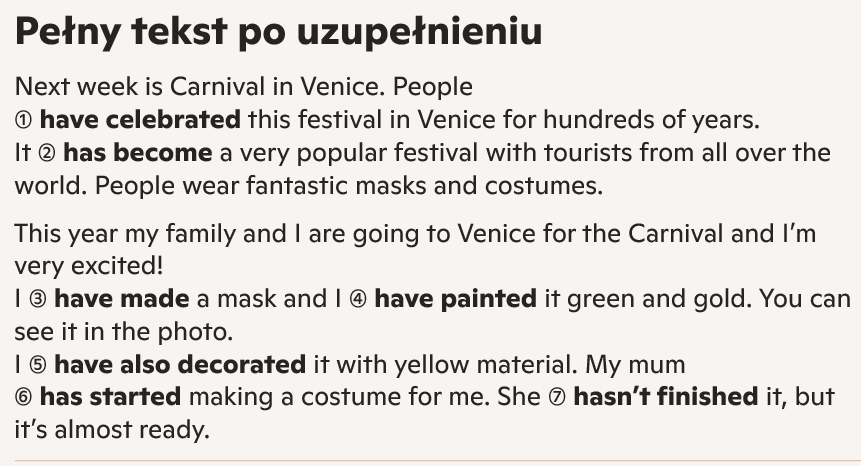
Categories
Klasa 6
Zeszyt ćwiczeń
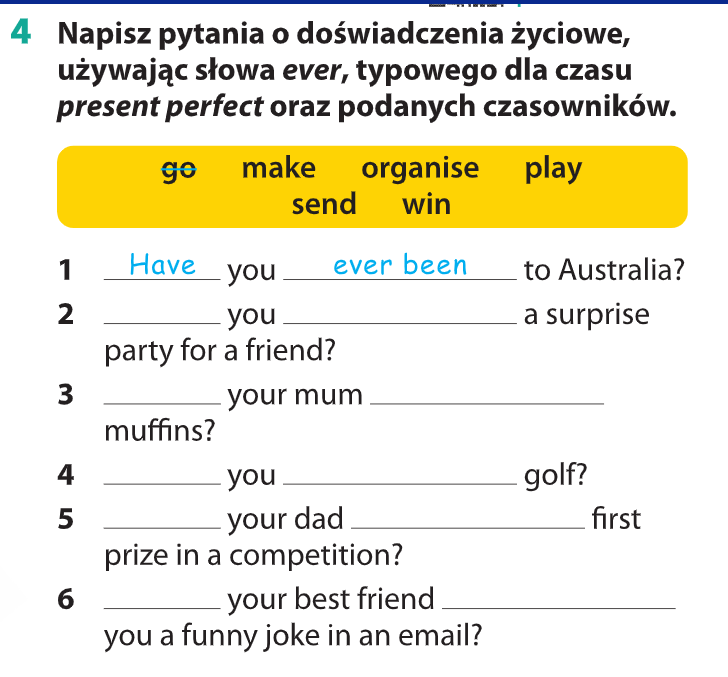
Zadanie 4 strona 48
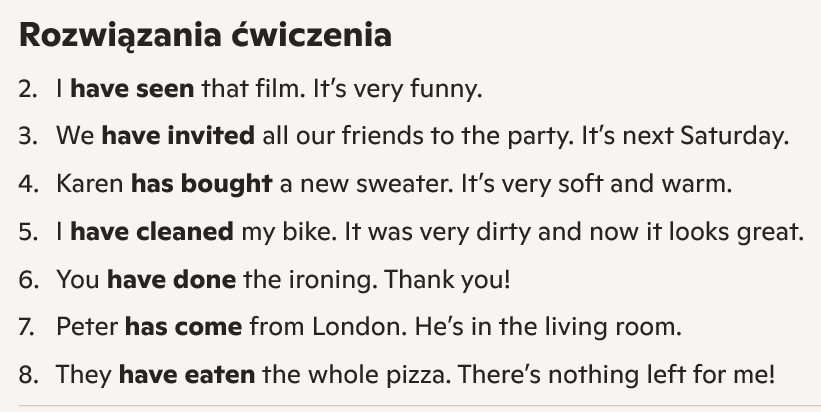
Odpowiedzi
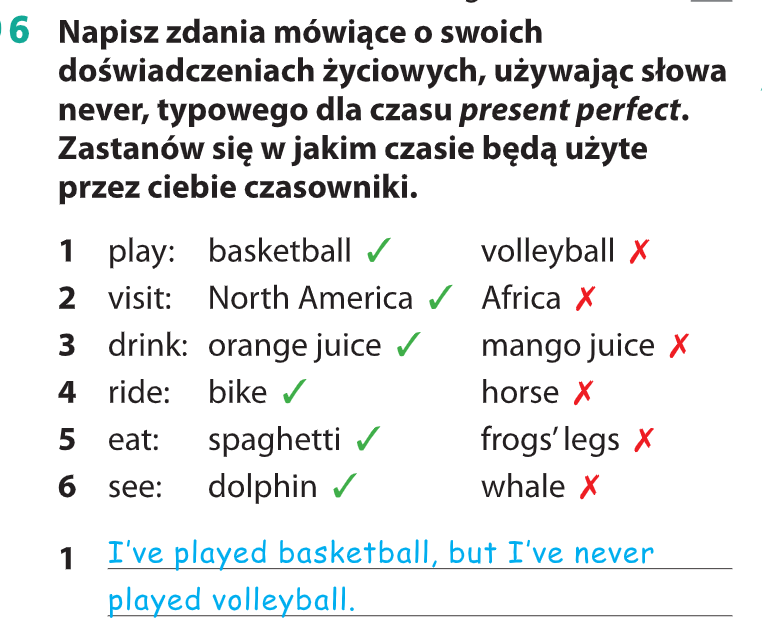
Zadanie 6 strona 48
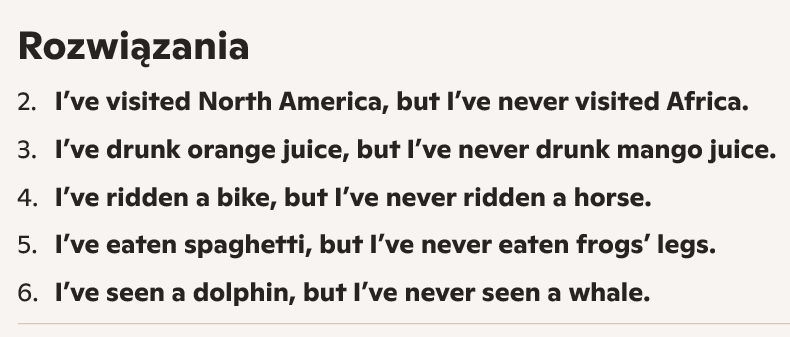
Odpowiedź
Categories
Klasa 6 Unit 5
Categories
PP vs PS
Past Simple vs Present Perfect
PAST SIMPLE
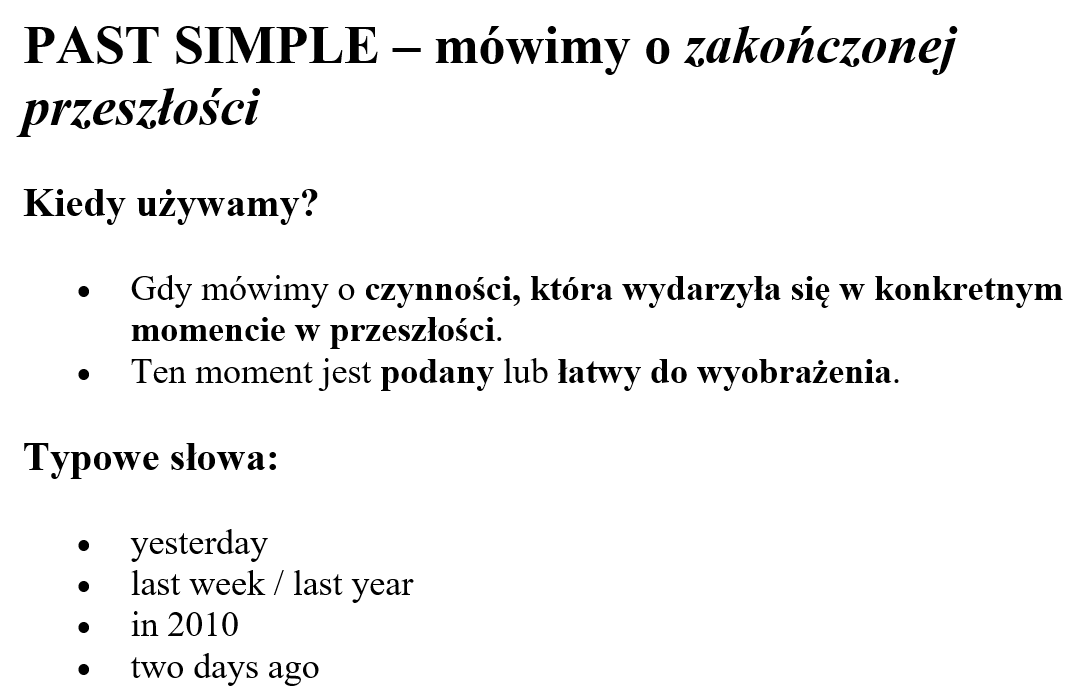
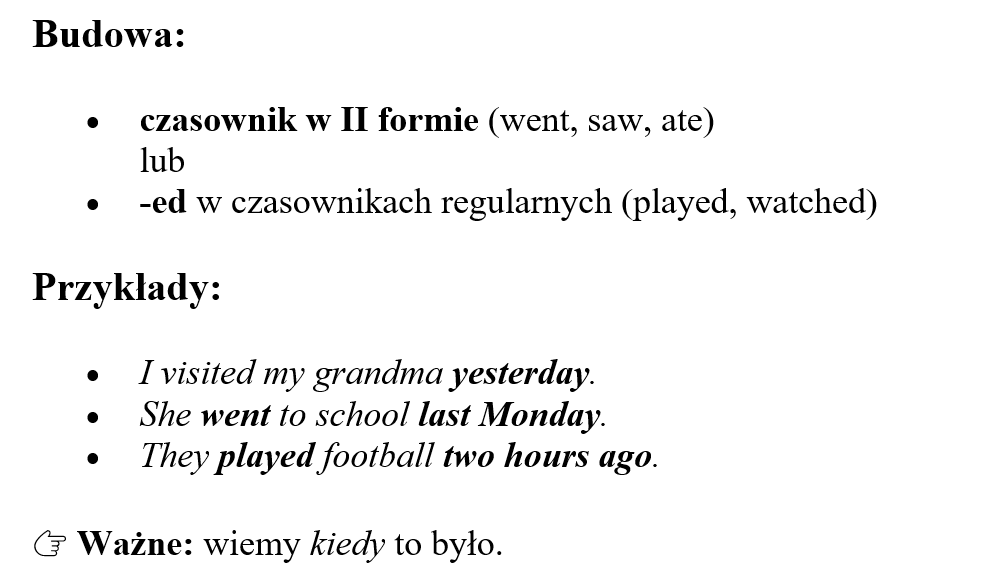
PRESENT PERFECT
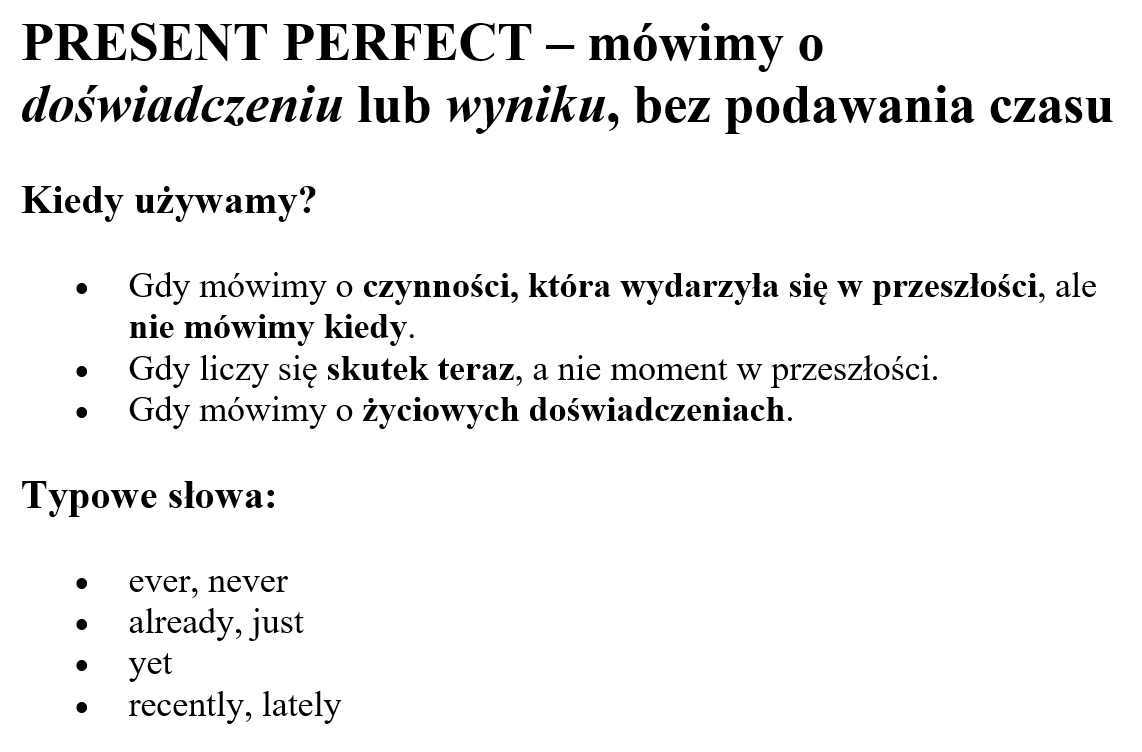
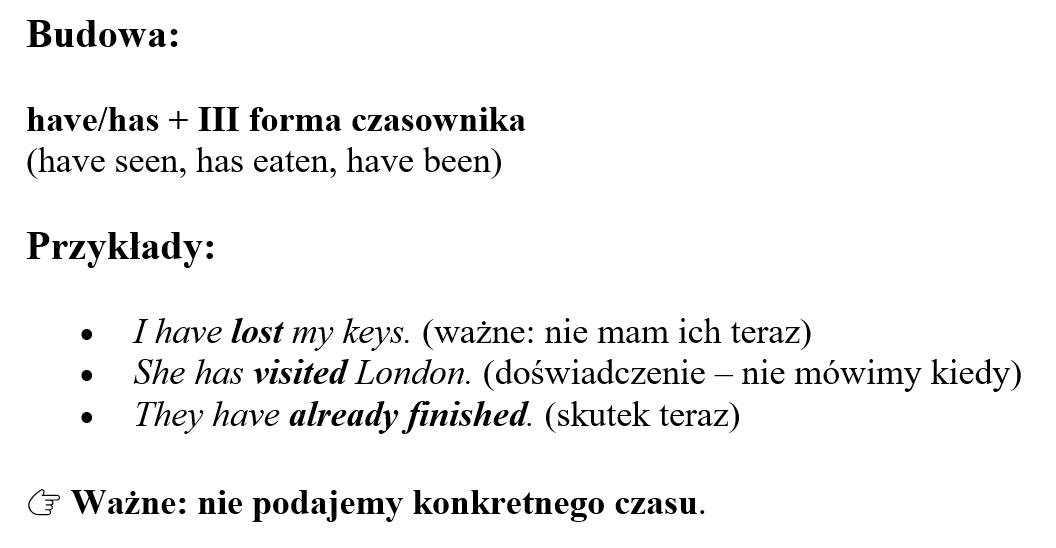
Najprostszy sposób, by odróżnić te czasy

Past Simple vs Present Perfect
Kliknij odpowiedź, aby od razu zobaczyć, czy jest poprawna.
1. Tom ______ his room yesterday.
2. We ______ the house already.
3. My mum ______ dinner two hours ago.
4. They ______ their friends many times this year.
5. I ______ my grandma last Sunday.
6. She ______ a new bike last week.
7. He ______ home just now.
8. We ______ our homework yesterday evening.
9. I ______ sushi many times.
10. They ______ a lot of emails this morning (It’s already the afternoon).
11. She ______ a present two days ago.
12. We ______ to London in 2019.
13. My dad ______ a cake just now.
14. I ______ that film three times.
15. They ______ a lot of new friends recently.
16. I ______ for the test many times this week.
17. She ______ breakfast at 7 AM today.
18. They ______ their room already.
19. We ______ the classroom yesterday.
20. She ______ me to her party last Friday.
21. We ______ many people this year.
22. I ______ him three times today.
23. She ______ her aunt last weekend.
24. They ______ the room for the party yesterday.
25. We ______ the house recently.
26. I ______ a lot of books this month.
27. She ______ a new jacket yesterday.
28. He ______ home late last night.
29. She ______ here many times before.
30. I ______ this exercise already.
31. We ______ this task yesterday.
32. They ______ pizza last night.
33. I ______ sushi many times.
34. She ______ a new phone last Christmas.
35. They ______ many presents this year.
36. I ______ him many gifts over the years.
37. She ______ me a letter yesterday.
38. We ______ to the cinema last weekend.
39. She ______ to Italy several times.
40. He ______ a sandwich an hour ago.
41. They ______ the room many times this month.
42. She ______ me yesterday evening.
43. I ______ this film already.
44. We ______ a big cake last weekend.
45. They ______ us many messages today.
Categories
Klasa 6 WORD LIST 5
Categories
Klasa 6 – 3rd person
TWÓJ WYNIK: 0 / 80
Categories