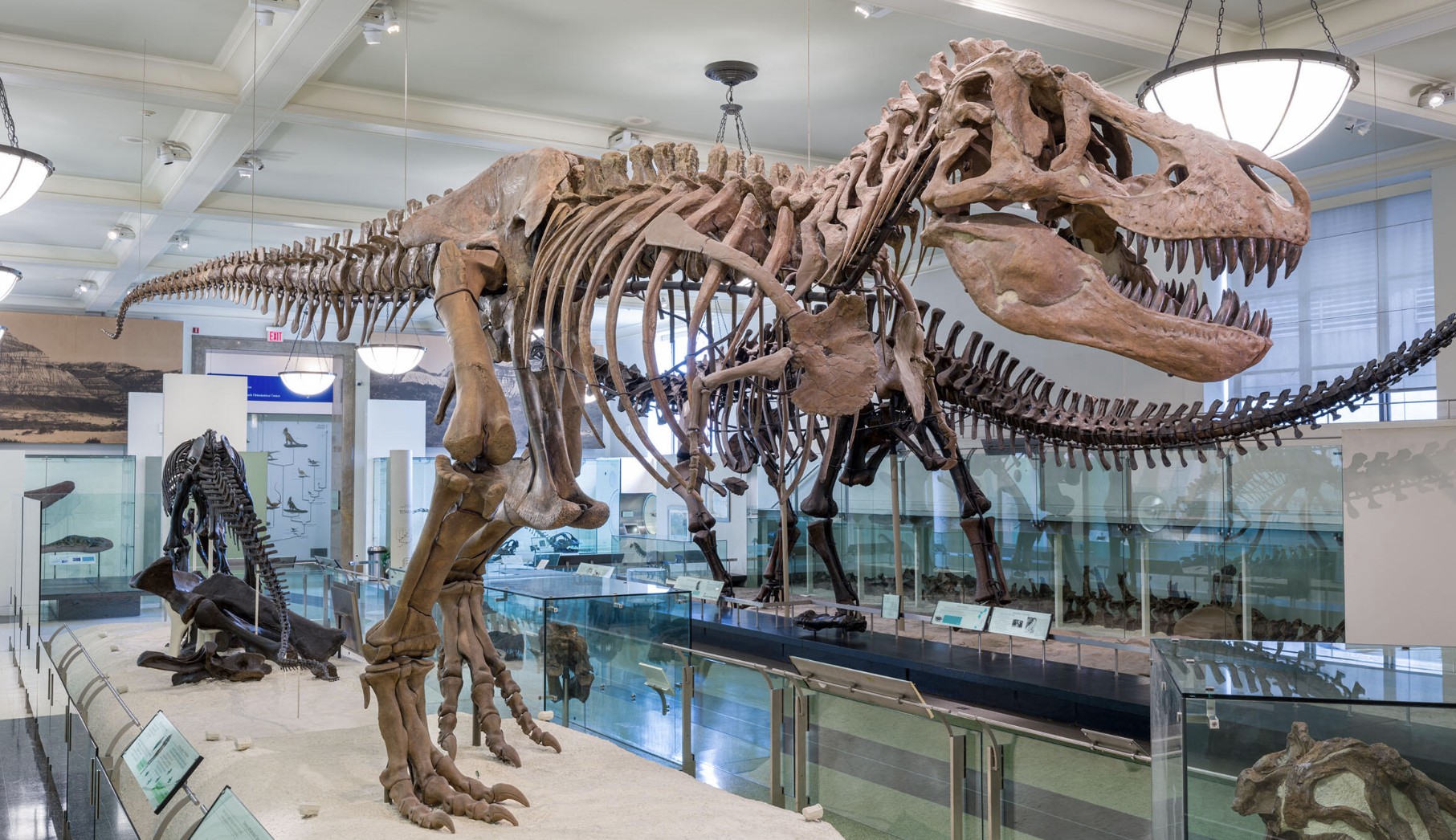
Kangaroos live in Australia. They are the only big animals in the world that hop to move from place to place. They have big hind legs and feet and a long strong tail that helps them keep their balance.
Kangury żyją w Australii. Są jedynymi dużymi zwierzętami na świecie, które przemieszczają się skacząc. Mają duże tylne nogi i stopy oraz długi, silny ogon, który pomaga im utrzymać równowagę.
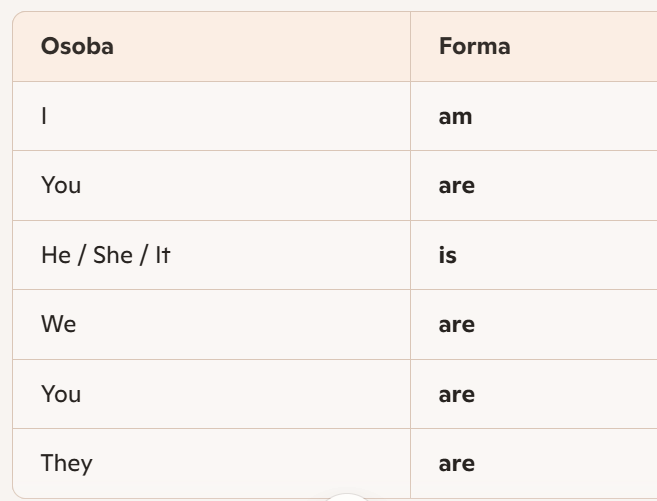
To zaimki, które zastępują konkretną osobę, rzecz lub grupę – wiemy dokładnie, o kim lub o czym mówimy.
Liczba pojedyncza:
I – ja
you – ty
he – on
she – ona
it – ono (dla rzeczy/zwierząt)
Liczba mnoga:
we – my
you – wy
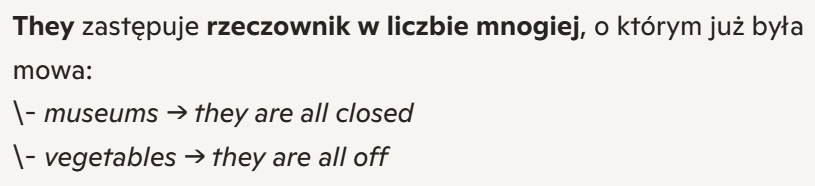
they – oni/one
Przykłady:
Tom is my friend. He plays football. (He = Tom)
My sister is smart. She likes math. (She = moja siostra)
I have a dog. It is brown. (It = pies)
W każdym zdaniu zaimek zastępuje konkretną osobę lub rzecz, którą wcześniej wymieniliśmy.
Impersonal pronoun (zaimek nieosobowy)
To specjalne użycie słowa it, które NIE zastępuje żadnej konkretnej osoby ani rzeczy. Używamy go, gdy mówimy ogólnie o:
1. Pogodzie:
It is raining. (Pada.)
It’s cold today. (Dziś jest zimno.)
2. Czasie:
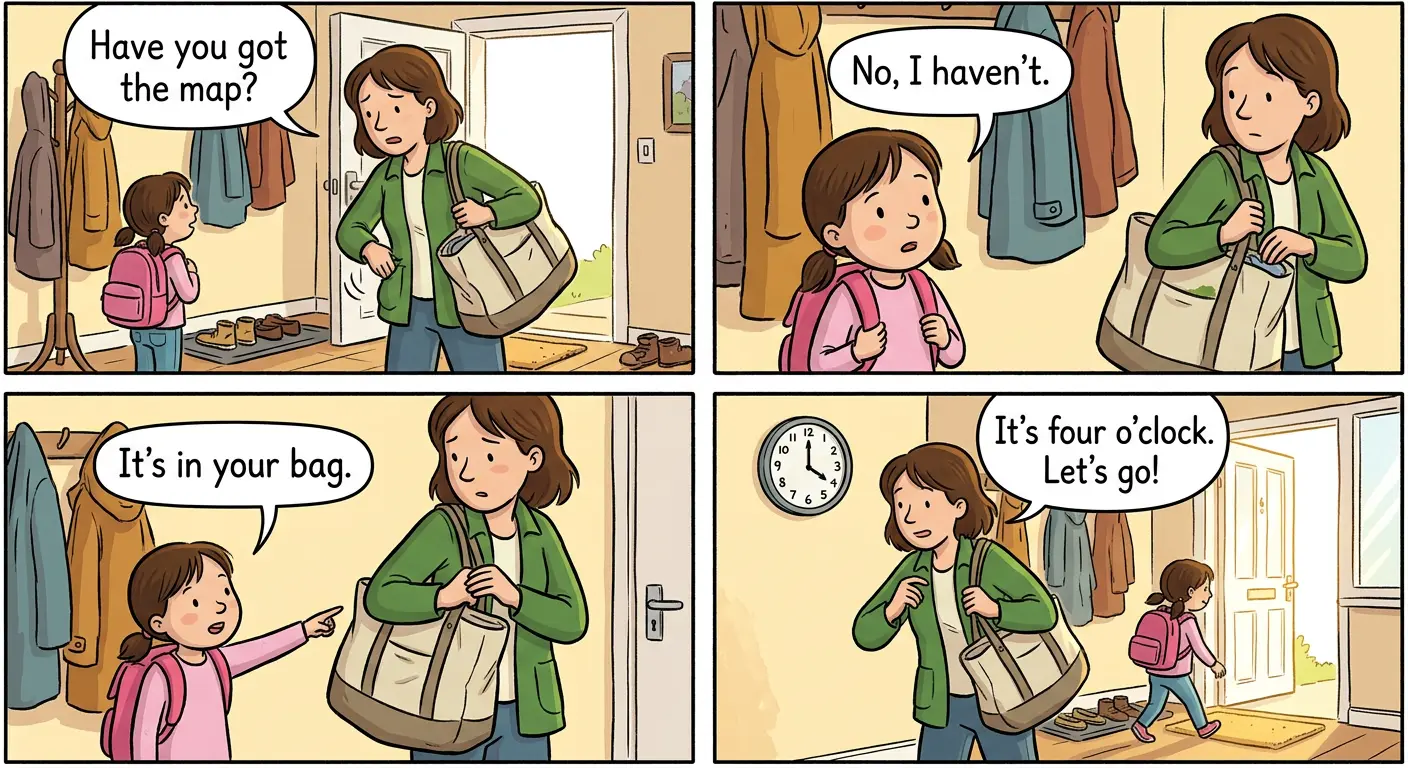
It is 5 o’clock. (Jest piąta.)
It’s Monday. (Jest poniedziałek.)
3. Odległości:
It is 10 kilometers to school. (Do szkoły jest 10 km.)
4. Ogólnych stwierdzeniach:
It is important to study. (Ważne jest, żeby się uczyć.)
Kluczowa różnica
Personal “it”
Impersonal “it”
Zastępuje konkretną rzecz
Nic konkretnego nie zastępuje
I have a cat. It is black. (it = kot)
It is snowing. (it = nic, tylko gramatyka wymaga podmiotu)
Zapamiętaj 💡
W angielskim zdaniu zawsze musi być podmiot – dlatego przy pogodzie, czasie czy odległości “sztucznie” wstawiamy it, mimo że nie ma ono żadnego znaczenia – pełni tylko funkcję gramatyczną.
The Statue of Liberty is a famous statue on an island in New York. It is a symbol of freedom and one of the most well‑known sights in the USA. You can take a ferry to see it up close.
Times Square
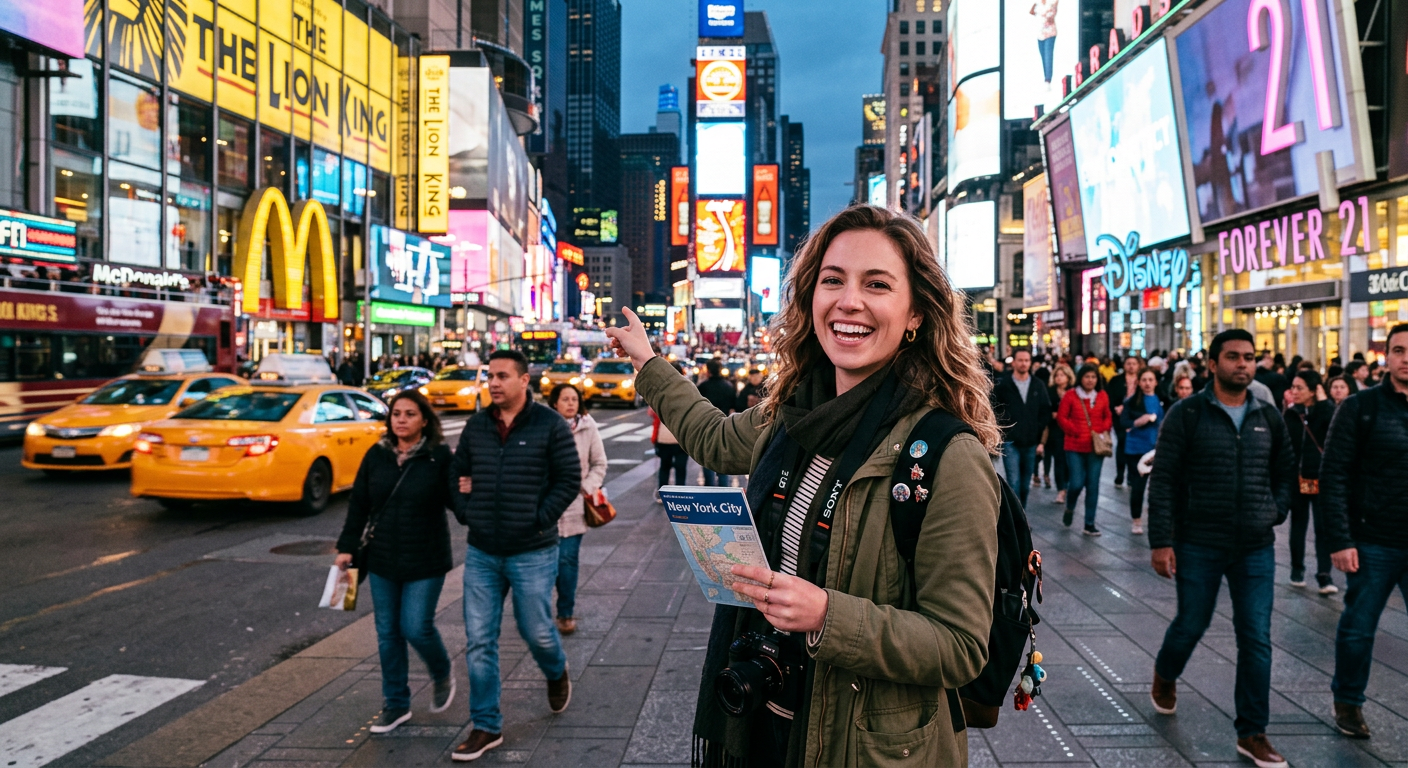
Times Square is a very bright and busy place in the centre of New York. There are big advertisements, lights, and many tourists. It is very crowded, especially at night.
Central Park
Central Park is a huge park in the middle of New York City. There are trees, lakes, and paths where people walk, relax, or ride bikes. It is a quiet place in a very busy city.
Empire State Building
The Empire State Building is a tall skyscraper and one of the most famous buildings in New York. There is an observation deck at the top, and you can see a beautiful view of the whole city. It is a popular tourist attraction.
Brooklyn Bridge
The Brooklyn Bridge is a famous bridge that connects Manhattan and Brooklyn. Many people walk or bike across it to see the beautiful view of the city. It is one of the most iconic landmarks in New York.
Broadway
Broadway is a famous street in New York known for its theatres and musicals. You can watch many popular shows there. It is one of the most exciting places for entertainment in the city.
The Big Apple
“The Big Apple” is a nickname for New York City. People use it to show that the city is important, exciting, and full of life. It is one of the most well‑known nicknames in the world.
Białowieska Puszcza to bardzo duży i stary las, który leży na terenie Polski i Białorusi. Jest jednym z największych i najcenniejszych lasów w Europie. Część puszczy znajduje się w Polsce i nazywa się Białowieski Park Narodowy. Można tam wejść tylko z przewodnikiem, aby chronić przyrodę.
Las jest wyjątkowy, ponieważ rośnie tu od czasów końca epoki lodowcowej. Oznacza to, że wiele roślin i zwierząt żyje tu w naturalnych warunkach, prawie bez wpływu człowieka.
Najbardziej znanym zwierzęciem puszczy jest żubr – największy ssak lądowy w Europie. Żubry są pod ochroną, ponieważ kiedyś było ich bardzo mało. Podczas II wojny światowej wojska niemieckie zabiły wiele żubrów, dlatego później trzeba było je ponownie sprowadzić i chronić.
W puszczy żyją także inne zwierzęta, takie jak wilki, rysie, jelenie, łosie oraz wiele gatunków ptaków. To świetne miejsce dla osób, które lubią obserwować przyrodę. Organizowane są tu specjalne wycieczki, na których można zobaczyć rzadkie ptaki i zwierzęta.
Białowieża Forest
Białowieża Forest is a very big and old forest in Poland and Belarus. It is one of the most famous forests in Europe. The Polish part of the forest is called Białowieża National Park. People can enter this part only with a guide, because the forest is protected.
The forest is special because it has existed since the end of the Ice Age. Many plants and animals live here in natural conditions, without much human influence.
The most famous animal in the forest is the European bison. It is the biggest land animal in Europe. Bison are protected because many of them were killed in the past. During World War II, German soldiers killed a lot of bison, so later people had to bring them back and take care of them.
Other animals living in the forest include wolves, lynxes, deer, elk, and many different birds. Białowieża Forest is a great place for people who like nature. Visitors can join special birdwatching trips to see rare birds.
Questions
Where is Białowieża Forest located?
What is the Polish part of the forest called?
Why can people enter Białowieża National Park only with a guide?
Since when has the forest existed?
Why is Białowieża Forest special?
What is the most famous animal living in the forest?
Why are European bison protected?
What happened to many bison during World War II?
Name two predators that live in the forest.
Name two large herbivores that live in the forest.
Why is the forest a good place for people who like nature?
What can visitors do if they want to see rare birds?
Which two countries share Białowieża Forest?
What makes the forest natural and wild?
Why did people have to bring bison back after the war?
Answers
Białowieża Forest is located in Poland and Belarus.
The Polish part is called Białowieża National Park.
People can enter only with a guide because the forest is protected.
The forest has existed since the end of the Ice Age.
It is special because many plants and animals live there in natural, wild conditions.
The most famous animal is the European bison.
Bison are protected because many of them were killed in the past.
During World War II, German soldiers killed many bison.
Two predators are wolves and lynxes.
Two large herbivores are deer and elk.
It is a good place for nature lovers because many wild animals and birds live there.
Visitors can join birdwatching trips to see rare birds.
Poland and Belarus share Białowieża Forest.
The forest is natural and wild because it has existed since the Ice Age and people changed it very little.
People had to bring bison back because their population became very small after the war.
Grammar – ważne elementy z tekstu
Present Simple
Używany do opisywania faktów i stałych informacji. Białowieża Forest is a very big and old forest.Many animals live in natural conditions.
Passive Voice (strona bierna)
Używana, gdy ważniejsza jest czynność niż wykonawca. Bison are protected.Many bison were killed during World War II.
Present Perfect – krótkie użycie w tekście
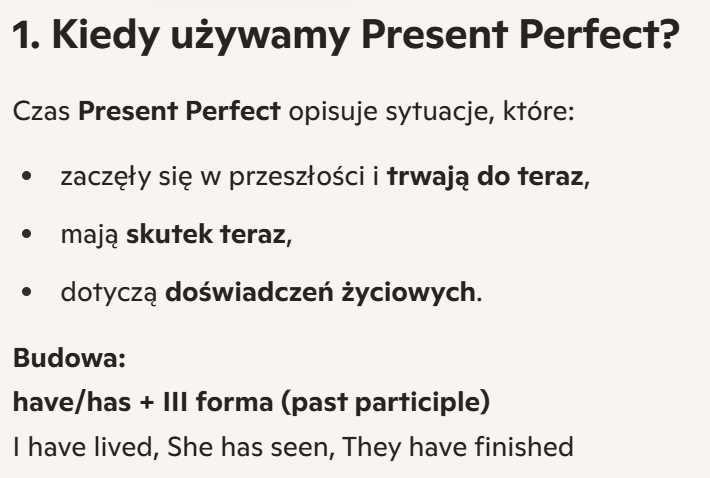
Pokazuje, że coś zaczęło się w przeszłości i trwa do dziś. The forest has existed since the end of the Ice Age.
Kapsuła czasu to specjalne pudełko lub koperta, do której wkładamy różne rzeczy z teraźniejszości — rysunki, zdjęcia, listy, opisy, małe pamiątki. Zamykamy ją i otwieramy dopiero za kilka lat, żeby zobaczyć:
jak wyglądaliśmy,
co lubiliśmy,
co było dla nas ważne,
jak zmieniliśmy się przez ten czas.
List do przyszłego siebie.
Kuba
I’m Kuba. I’m eight. I like sport and books. I ride a skateboard and I swim at the weekend. I read books every day. I’ve got a sister, Weronika. She’s ten. She likes winter, but I like summer. I like animals and I’ve got a cat, Bulwa. It’s big and black. I’ve got lots of friends.
Tłumaczenie
Jestem Kuba. Mam osiem lat. Lubię sport i książki. Jeżdżę na deskorolce i pływam w weekend. Czytam książki codziennie. Mam siostrę, Weronikę. Ma dziesięć lat. Ona lubi zimę, ale ja lubię lato. Lubię zwierzęta i mam kota, Bulwę. Jest duży i czarny. Mam wielu przyjaciół.
Ola
I’m Ola. I’m eight. I like drawing and riding my bike. I play with my friends after school. I love summer because I can swim. I’ve got a little brother. His name is Franek. I’ve got a dog called Luna. She’s small and white.
Tłumaczenie
Jestem Ola. Mam osiem lat. Lubię rysować i jeździć na rowerze. Bawię się z przyjaciółmi po szkole. Uwielbiam lato, bo mogę pływać. Mam młodszego brata. Ma na imię Franek. Mam psa o imieniu Luna. Jest mała i biała.
Bartek
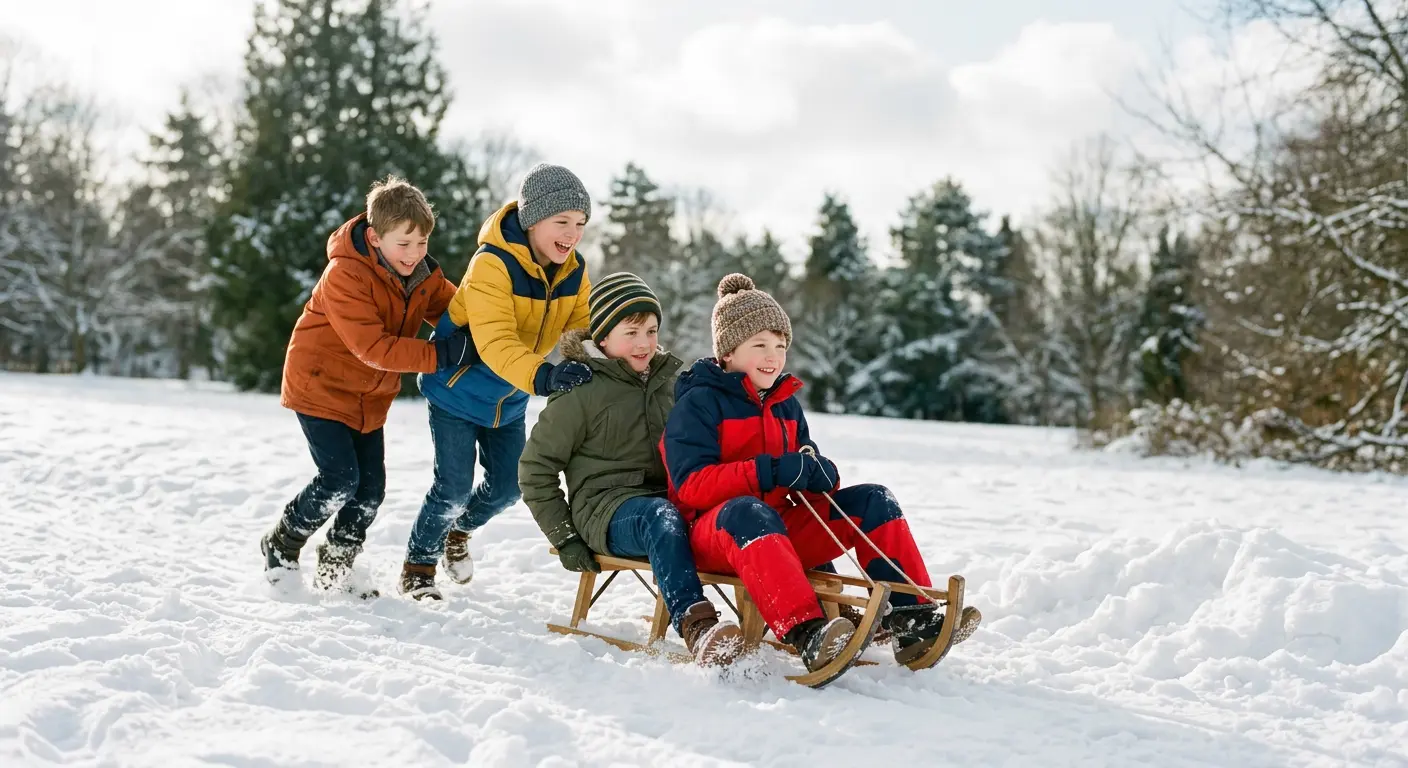
I’m Bartek. I’m seven. I like Maths and English. I go to school with my best friend, Maks. I play football at the weekend. I’ve got a hamster. His name is Pixel. I like winter because I can go sledging.
Tłumaczenie
Jestem Bartek. Mam siedem lat. Lubię matematykę i angielski. Chodzę do szkoły z moim najlepszym przyjacielem, Maksem. Gram w piłkę nożną w weekend. Mam chomika. Ma na imię Pixel. Lubię zimę, bo mogę jeździć na sankach.
Zosia
I’m Zosia. I’m eight. I like music and dancing. I listen to songs every day. I’ve got a sister, Maja. She’s twelve. We play board games together. I’ve got a cat called Mimi. I love animals.
Tłumaczenie
Jestem Zosia. Mam osiem lat. Lubię muzykę i taniec. Słucham piosenek codziennie. Mam siostrę, Maję. Ma dwanaście lat. Gramy razem w gry planszowe. Mam kota o imieniu Mimi. Kocham zwierzęta.
Narysuj siebie „today”
Portret + 3 podpisy po angielsku (np. I like… I can… My favourite…).
Ireland is an English-speaking country. Its national colour is green and its national symbol is the shamrock leaf. The capital city of Ireland is Dublin. St Patrick’s Cathedral is in Dublin. St Patrick is the patron saint of Ireland. People celebrate St Patrick’s Day on 17th March. They dress in green and there are parades and parties. There is a lot of food and drink. People sing and play music. You can hear bagpipes. Hurling is a popular sport in Ireland. It is very old – about 3000 years old. You need a stick, a ball and a goal. The ball can move at over 100 kilometres per hour. Sometimes players wear helmets to protect their heads. Does your country have a patron saint? Does it have a national colour or symbol? What sport is popular in your country?
Słownictwo
English-speaking country — kraj anglojęzyczny
national colour — kolor narodowy
national symbol — symbol narodowy
shamrock — koniczynka
capital city — stolica
cathedral — katedra
patron saint — święty patron
celebrate — świętować
parade — parada
bagpipes — dudy
hurling — hurling (irlandzki sport)
stick — kij
goal — bramka
helmet — kask
protect — chronić
Gramatyka
Present Simple – fakty i informacje
Tekst opisuje fakty, dlatego używa Present Simple:
Ireland is…
People celebrate…
The ball can move…
Czasownik „can” – umiejętność / możliwość
The ball can move… — piłka może się poruszać
„can” + czasownik podstawowy
can move, can hear
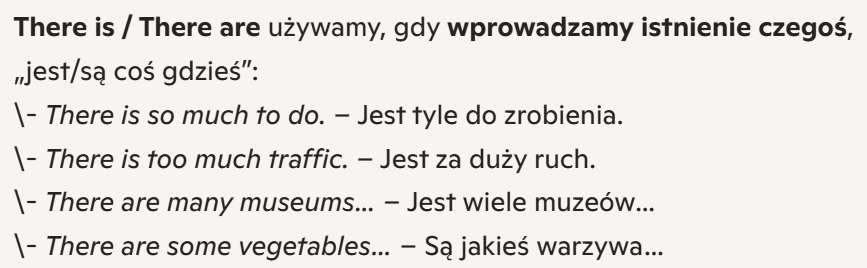
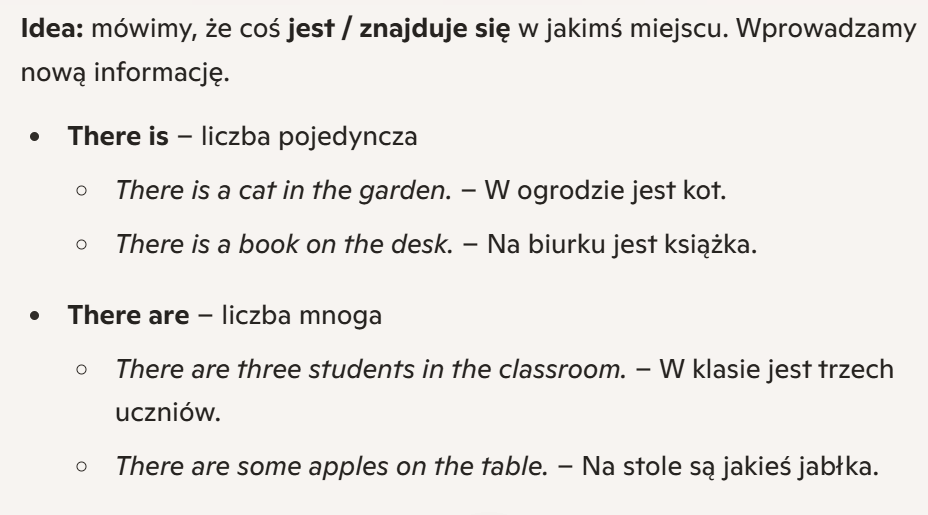
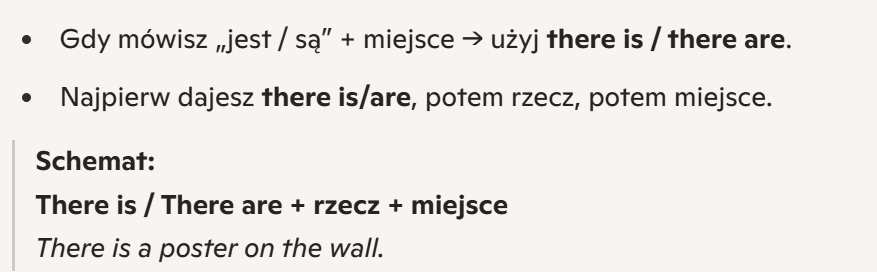
There is / There are
There is a lot of food — jest dużo jedzenia
There are parades — są parady
Trudności w wymowie
Ireland — /ˈaɪə.lənd/ — pierwsza sylaba jak „aj”
Dublin — /ˈdʌb.lɪn/ — „u” jak w „cup”
shamrock — /ˈʃæm.rɒk/ — „sh” jak w „sz”, ale krótkie „a”
cathedral — /kəˈθiː.drəl/ — trudne „th” (język między zęby)
patron — /ˈpeɪ.trən/ — „ei” jak „ej”
bagpipes — /ˈbæɡ.paɪps/ — „bag” jak „beg”, „pipes” jak „pajps”
hurling — /ˈhɜː.lɪŋ/ — „hɜː” jak długie „her”
Ważne informacje kulturowe
Irlandia jest nazywana zieloną wyspą — dlatego zielony to kolor narodowy.
Shamrock (koniczynka) to symbol szczęścia i Irlandii.
St Patrick’s Day to bardzo radosne święto — ludzie ubierają się na zielono.
Hurling to jeden z najszybszych sportów na świecie.
W Irlandii często gra się na dudach — charakterystyczny dźwięk.
Hans Christian Andersen was a writer from Denmark. He wrote many well‑known fairy tales, like The Little Mermaid. He is famous because children all over the world read his stories.
The Brothers Grimm
The Brothers Grimm were two German writers, Jacob and Wilhelm. They collected old folk tales and wrote them down. Many of their stories, like Cinderella and Snow White, are still popular today. They are famous because they saved traditional fairy tales.
Who made the first flying machine?
The Lumière Brothers
The Lumière brothers were inventors from France. They created one of the first film cameras and showed some of the first movies. Their short films were very simple but exciting for people at that time. They are famous because they helped start modern cinema.
The Wright brothers
The Wright brothers were inventors from the United States. They built the first successful airplane in 1903. They are famous because they started the age of flying.
Who wrote the children’s book Alice’s Adventures in Wonderland?
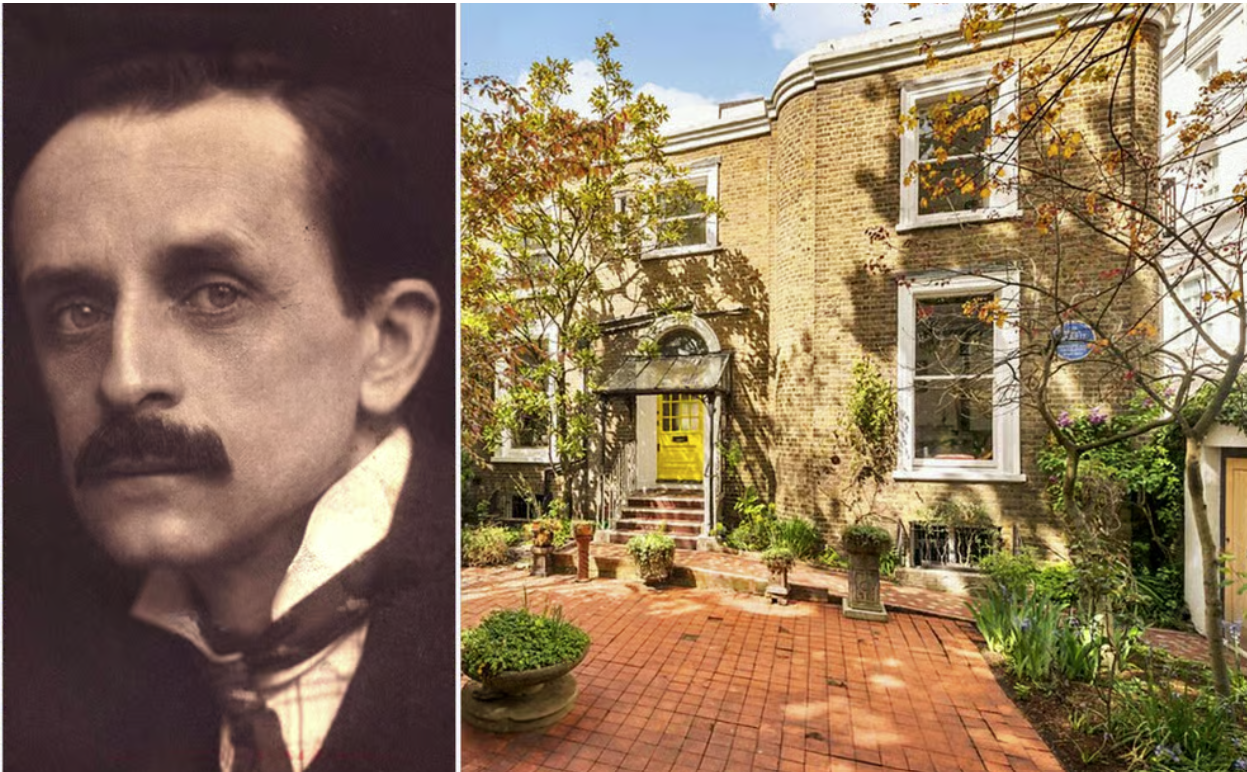
J. M. Barrie
J. M. Barrie was a Scottish writer. He wrote the story of Peter Pan, a boy who never grows up. His book is full of adventure and magic. He is famous because Peter Pan became one of the most loved characters in children’s literature.
Lewis Carroll
Lewis Carroll was an English writer and mathematician. He wrote Alice’s Adventures in Wonderland. He is famous because he created a magical and imaginative world for children.
The London Eye is a big wheel in London. It stands next to the River Thames. It is very tall. People can ride in special glass capsules and see the city from above.
The wheel has 32 capsules. Each capsule can take many people. The London Eye moves slowly, so passengers can get on and off safely. One ride takes about 30 minutes.
The wheel looks like a big bicycle wheel. It was made by people from different European countries.
From the top, you can see the River Thames, the Houses of Parliament and other famous places in London. Many tourists visit the London Eye every year.
O czym jest tekst?
Tekst opisuje London Eye – bardzo duże koło w Londynie. Stoi obok rzeki Tamizy. Ludzie jeżdżą w szklanych kapsułach i oglądają miasto z góry. Przejażdżka trwa około 30 minut.
Słownictwo z tekstu
wheel – koło
capsule – kapsuła
river – rzeka
city – miasto
famous places – słynne miejsca
tourists – turyści
from above – z góry
slowly – powoli
Gramatyka w tekście
Present Simple – opis faktów
Tekst używa czasu Present Simple, bo opisuje stałe informacje:
It is very tall.
The wheel moves slowly.
People can ride in capsules.
Kiedy używamy? Do opisywania faktów, miejsc, wyglądu, działania rzeczy.
„Can” – możliwości
Choć nie ma ich dosłownie, tekst opisuje rzeczy, które można łatwo wyrazić tymi strukturami:
Ms Barns: Listen, everybody. What’s happening tomorrow? Can you remember?
Children: It’s our school leaving party.
Ms Barns: That’s right! What is everybody doing?
Judy: We’re doing a ballet performance. Can we do it now?
Ms Barns: Yes, of course. Oh, that’s beautiful.
Luke: We’re doing a karate show. Come on, boys!
Ms Barns: That’s amazing. How often do you train?
Luke: We train twice a week, on Mondays and Thursdays.
Josh: I’m giving a short violin concert.
Ms Barns: You’re a great musician, Josh. Can you play any other instruments?
Josh: No, I can’t. I’d like to learn to play the trumpet.
Ms Barns: Don’t forget the invitations for your parents, and remember to bring some snacks and drinks! See you tomorrow!
Children: See you!
TŁUMACZENIE
Ms Barns:
Listen, everybody. Słuchajcie wszyscy.
What’s happening tomorrow? Co się jutro dzieje?
Can you remember? Pamiętacie?
Children:
It’s our school leaving party. To nasza impreza pożegnalna ze szkoły.
Ms Barns:
That’s right! Pani Barns: Zgadza się!
What is everybody doing? Co każdy z was robi?
Judy:
We’re doing a ballet performance.Can we do it now? Wystąpimy w pokazie baletowym. Czy możemy zrobić to teraz?
Ms Barns:
Yes, of course. Oh, that’s beautiful. Tak, oczywiście. Och, to piękne.
Luke:
We’re doing a karate show. Come on, boys! Robimy pokaz karate. Chodźcie, chłopaki!
Ms Barns:
That’s amazing. How often do you train? To niesamowite. Jak często trenujecie?
Luke:
We train twice a week, on Mondays and Thursdays. Trenujemy dwa razy w tygodniu, w poniedziałki i czwartki.
Josh:
I’m giving a short violin concert. Zagram krótki koncert skrzypcowy.
Ms Barns:
You’re a great musician, Josh. Can you play any other instruments? Jesteś świetnym muzykiem, Josh. Czy umiesz grać na innych instrumentach?
Josh:
No, I can’t. I’d like to learn to play the trumpet. Nie, nie umiem. Chciałbym nauczyć się grać na trąbce.
Ms Barns:
Don’t forget the invitations for your parents, and remember to bring some snacks and drinks! See you tomorrow! Nie zapomnijcie zaproszeń dla rodziców i pamiętajcie, żeby przynieść przekąski i napoje! Do zobaczenia jutro!
Albert Einstein was a famous scientist from Germany. He created the theory of relativity. His ideas changed how people understand time and space. He is famous because his work was very important for science.
Pytania
Who was Albert Einstein?
Where was he from?
What did he create?
What is the theory of relativity?
What did his ideas change?
What do people understand better because of his ideas?
Why is Albert Einstein famous?
Why was his work important for science?
What two things does the text mention: time and what else?
Did Einstein’s work change science?
Answers
Albert Einstein was a famous scientist.
He was from Germany.
He created the theory of relativity.
It is a theory that explains time and space.
His ideas changed how people understand time and space.
People understand time and space better because of his ideas.
He is famous because his work was very important for science.
His work was important because it changed science.
The text mentions time and space.
Yes, Einstein’s work changed science.
Gramatyka
Past Simple – czas przeszły prosty
W tekście pojawiają się podstawowe formy przeszłe:
was – był
created – stworzył
changed – zmieniły
Past Simple opisuje fakty z przeszłości:
Albert Einstein was a famous scientist.
He created the theory of relativity.
Present Simple – czas teraźniejszy prosty
Używany do faktów, które są nadal prawdziwe:
is – jest
people understand – ludzie rozumieją
Przykłady:
He is famous because…
People understand time and space.
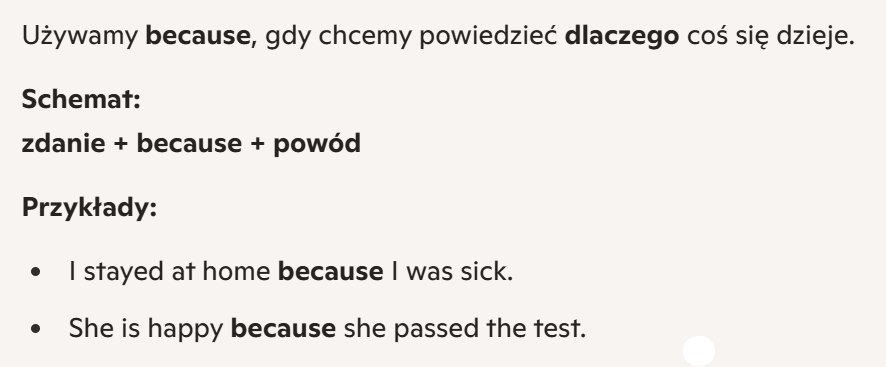
„Because” – wyrażanie przyczyny
Słowo because oznacza „ponieważ” i łączy zdania:
He is famous because his work was very important.
Podstawowe słownictwo naukowe
Do zrozumienia tekstu potrzebne są znaczenia kilku kluczowych słów:
scientist – naukowiec
theory – teoria
ideas – pomysły
time and space – czas i przestrzeń
important – ważny
Konstrukcja „how people understand…”
To zdanie podrzędne wyjaśniające jak coś się dzieje:
how people understand time and space
How = „jak”.
Przymiotniki opisujące cechy
W tekście pojawiają się przymiotniki opisujące osobę i jej pracę:
famous – sławny
important – ważny
Alfred Nobel
Alfred Nobel was a scientist and inventor from Sweden. He invented dynamite, which was used in building and construction. Later, he created the Nobel Prizes to reward people for important work. He is famous because these prizes are known all over the world.
Questions
Who was Alfred Nobel?
Where was he from?
What did he invent?
What was dynamite used for?
What did Alfred Nobel create later in his life?
Why did he create the Nobel Prizes?
Why is Alfred Nobel famous today?
What are the Nobel Prizes known for?
Are the Nobel Prizes known all over the world?
What kind of work do the Nobel Prizes reward?
Answers
He was a scientist and inventor.
He was from Sweden.
He invented dynamite.
It was used in building and construction.
He created the Nobel Prizes.
To reward people for important work.
He is famous because he created the Nobel Prizes.
They are known for rewarding important work.
Yes, they are known all over the world.
They reward people for important work.
Gramatyka
Past Simple – czas przeszły prosty
W tekście pojawiają się podstawowe formy przeszłe:
was – był
invented – wynalazł
was used – był używany
created – stworzył
Past Simple opisuje fakty z przeszłości:
Alfred Nobel was a scientist and inventor.
He invented dynamite.
Strona bierna – Passive Voice
W tekście występuje prosta forma bierna:
was used – „był używany”
Używana, gdy ważniejsze jest działanie niż wykonawca:
Dynamite was used in building and construction.
Present Simple – czas teraźniejszy prosty
Używany do faktów, które są nadal prawdziwe:
is famous – jest sławny
are known – są znane
Przykłady:
He is famous because…
These prizes are known all over the world.
„Because” – wyrażanie przyczyny
Słowo because oznacza „ponieważ” i łączy zdania:
He is famous because these prizes are known all over the world.
Podstawowe słownictwo naukowe i opisowe
Do zrozumienia tekstu potrzebne są znaczenia kilku kluczowych słów:
scientist – naukowiec
inventor – wynalazca
dynamite – dynamit
building / construction – budownictwo
prizes – nagrody
important work – ważna praca
Przymiotniki opisujące cechy
W tekście pojawiają się przymiotniki opisujące osobę i jej osiągnięcia:
famous – sławny
important – ważny
Who was the first man to walk on the moon?
Neil Armstrong
Neil Armstrong was an American astronaut. He was the first man to walk on the Moon in 1969. He said a very famous sentence about a “small step”. He is famous because he made history in space exploration.
Yuri Gagarin
Yuri Gagarin was a Russian cosmonaut. He was the first man to travel into space in 1961. His flight lasted only 108 minutes, but it was a huge achievement. He is famous because he opened the door to human space travel.
Who painted the picture called the Mona Lisa?
Pablo Picasso
Pablo Picasso was a Spanish painter. He created many different styles of art, including Cubism. His paintings are colourful and very unique. He is famous because he changed modern art.
Leonardo da Vinci
Leonardo da Vinci was an Italian painter and inventor. He painted the Mona Lisa, one of the most famous paintings in the world. He liked to study nature and machines. He is famous because he was a great artist with many talents.
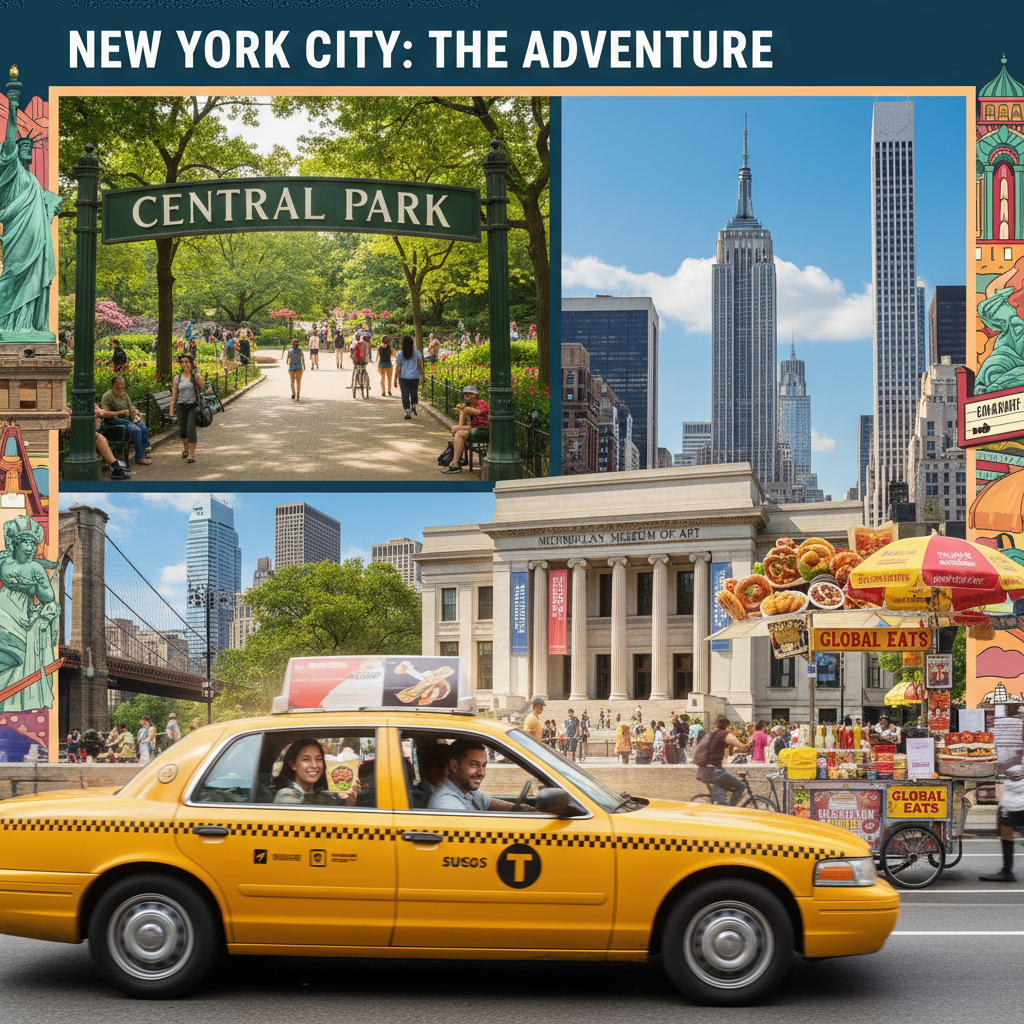
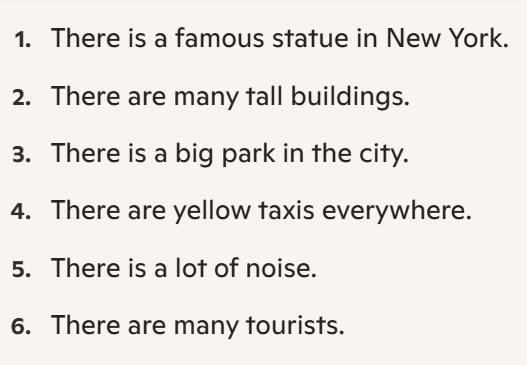
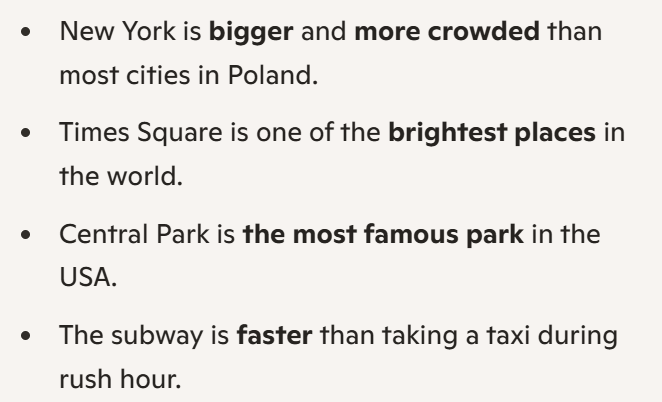
New York City is one of the most famous cities in the world. It is a huge and very busy place with tall buildings, bright lights, and people from many countries. The city is known for its yellow taxis, crowded streets, and famous places like the Statue of Liberty, Times Square, and Central Park.
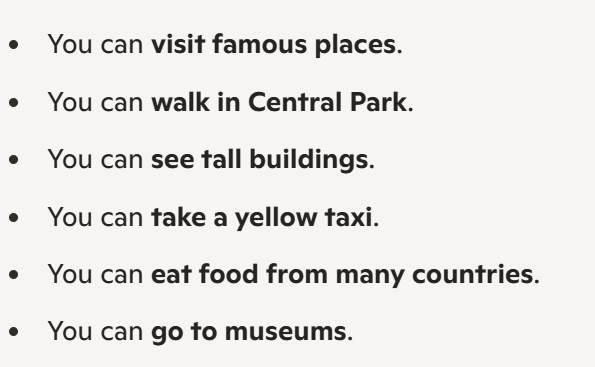
There are many attractions in New York. You can visit museums, walk in a big park, see skyscrapers, or try food from around the world. There is always something happening in the city, and it is full of energy and interesting things to see.
New York is different from most cities because it is very modern, very fast, and full of life. Many tourists visit it every year because there are so many things to do and explore.
Co można robić w Nowym Jorku?
MODELE ZDAŃ
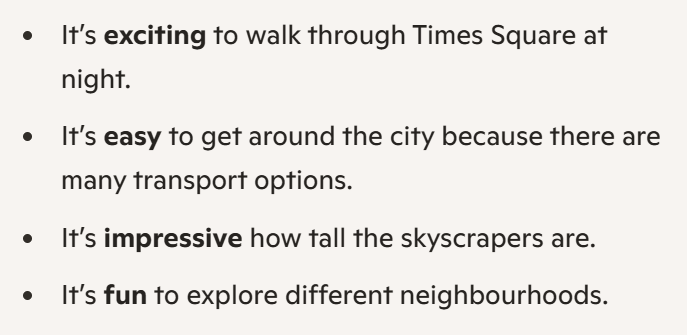
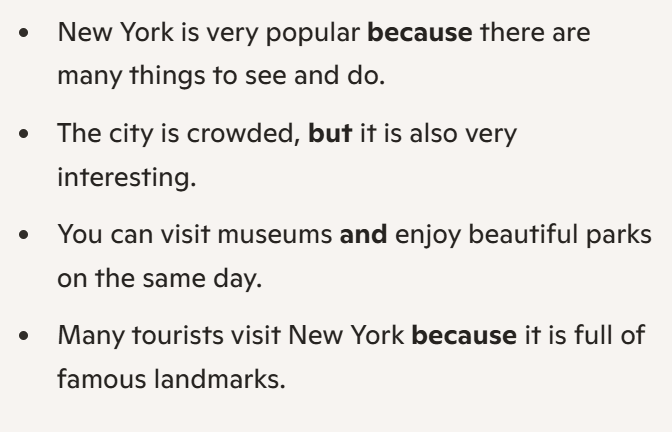
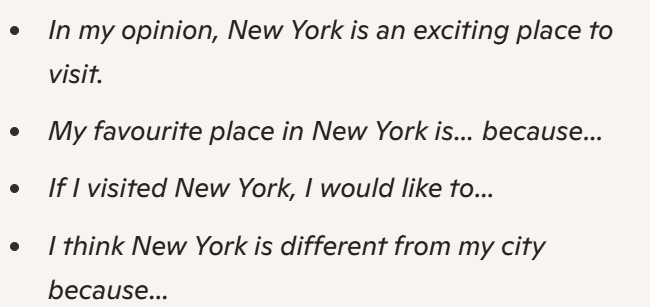
SIMPLE SENTENCEOpisywanie miastaTHERE IS / THERE ARETHERE IS / THERE ARE – bardziej rozbudowaneCzynności – YOU CAN…Porównania – COMPARATIVES / SUPERLATIVESOpisywanie wrażeń – IT’S…Łączenie zdań – BECAUSE / AND / BUTMini‑modele do krótkich wypowiedzi ustnych
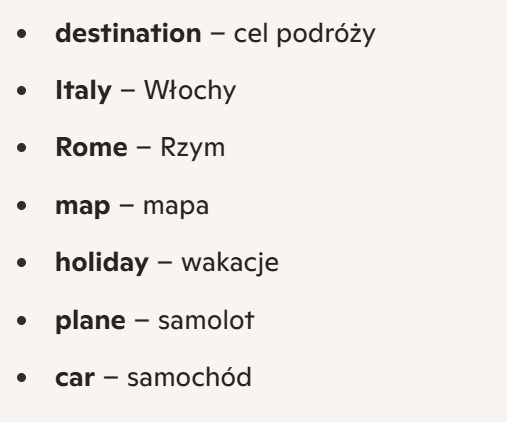
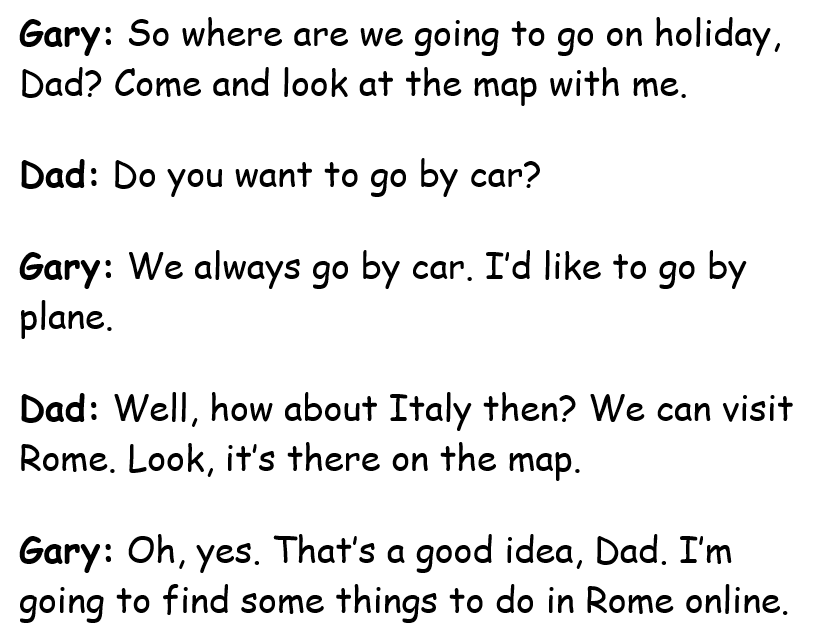
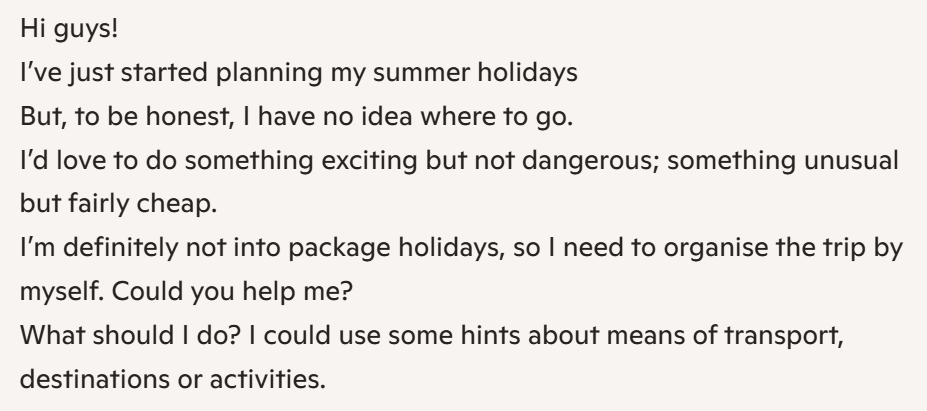
What is a destination?Useful phrasesGrammar focus – going to (plany)Mini‑dialog (z lekcji – uproszczony)Vocabulary – miejsca i kierunki podróżyKrótkie wyrażenia językowe
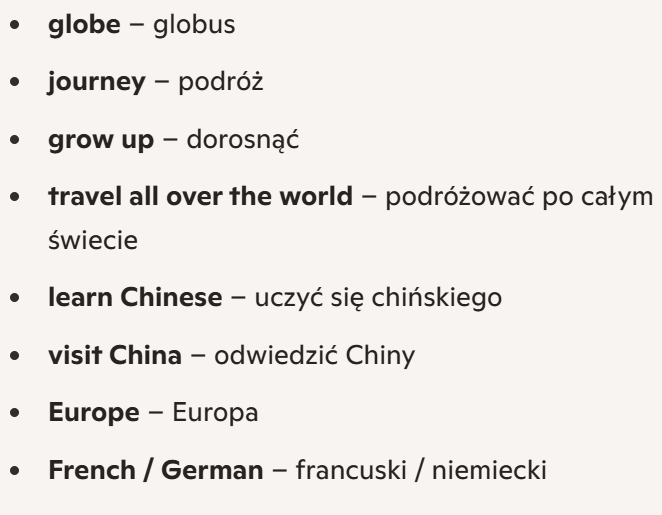
go on holiday – jechać na wakacje
go by car – jechać samochodem
go by plane – lecieć samolotem
look at the map – patrzeć na mapę
come and look – chodź i zobacz
how about Italy – a może Włochy
visit Rome – odwiedzić Rzym
find things to do – znaleźć rzeczy do zrobienia
on the map – na mapie
good idea – dobry pomysł
where are we going to go – dokąd pojedziemy
I’d like to – chciałbym
that’s a good idea – to dobry pomysł
go on a trip – jechać na wycieczkę
choose a destination – wybrać cel podróży
plan the holiday – planować wakacje
look online – szukać w internecie
travel to Italy – podróżować do Włoch
find a place – znaleźć miejsce
look at the map with me – popatrz na mapę ze mną
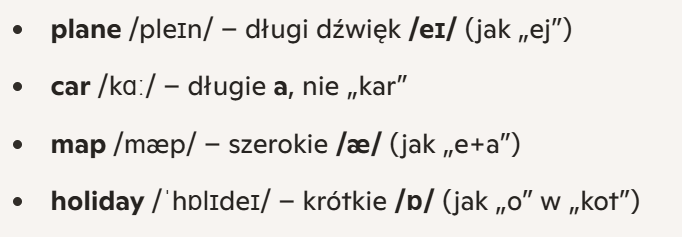
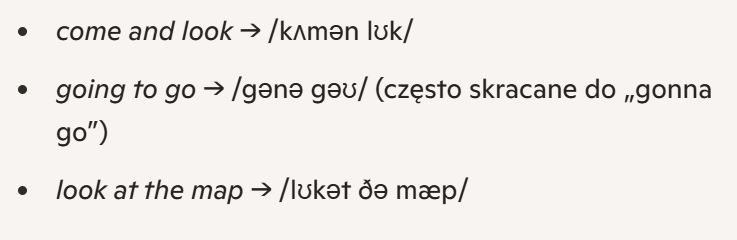
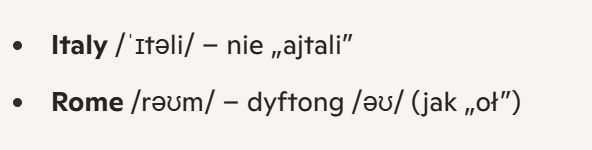
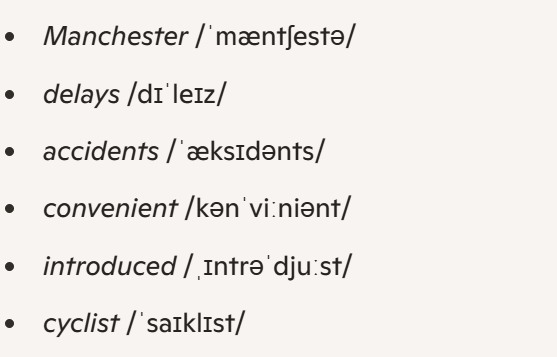
Trudności w wymowieŁączenie wyrazów w mowieNazwy własne
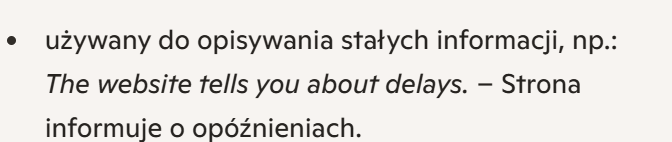
Manchester is an increasingly cool place to live or to visit. Now, getting around has never been easier thanks to more and more means of transport. A fantastic website, Transport for Greater Manchester (tfgm.com), will help you get to where you need to go. The website will tell you about the latest delays caused by accidents or road works. It will even tell you when there is a big football match so you can avoid traffic jams. And don’t forget that you can travel by bus or bike all-round the city centre. Isn’t that a cool way to arrive at the match?
Manchester has a great bus service, with buses covering the city centre as well as nearby towns. You can use the website’s Route Explorer to help you plan your bus route. Just type in where you want to go and you will see your choices. It will also tell you where the buses link up with trains and trams.
If you want to get fit, how about cycling? A new bike scheme, introduced in 2017, allows you to register using an app. After that, you just pick up one of the many bikes that you’ll find on the streets and ride it to wherever you want to go. Then you just leave it for the next cyclist to pick up. For you and for them, it’s very cheap, and it’s very convenient!
Tłumaczenie
Poruszanie się po Manchesterze
Manchester staje się coraz fajniejszym miejscem do życia lub odwiedzenia. Teraz poruszanie się po mieście jest łatwiejsze niż kiedykolwiek dzięki coraz większej liczbie środków transportu. Fantastyczna strona internetowa Transport for Greater Manchester (tfgm.com) pomoże ci dotrzeć tam, gdzie potrzebujesz. Strona poinformuje cię o najnowszych opóźnieniach spowodowanych wypadkami lub robotami drogowymi. Powie ci nawet, kiedy odbywa się duży mecz piłkarski, abyś mógł uniknąć korków. A nie zapominaj, że możesz podróżować autobusem lub rowerem po całym centrum miasta. Czy to nie świetny sposób, żeby dotrzeć na mecz?
Manchester ma świetną komunikację autobusową, a autobusy obsługują zarówno centrum miasta, jak i pobliskie miasteczka. Możesz skorzystać z Route Explorera na stronie, aby zaplanować swoją trasę autobusową. Wpisz tylko, dokąd chcesz jechać, a zobaczysz dostępne możliwości. Strona pokaże ci także, gdzie autobusy łączą się z pociągami i tramwajami.
Słownictwo potrzebne do zrozumienia tekstu
Transport i miastoKomunikacja miejskaInternet i aplikacje
Gramatyka w tekście
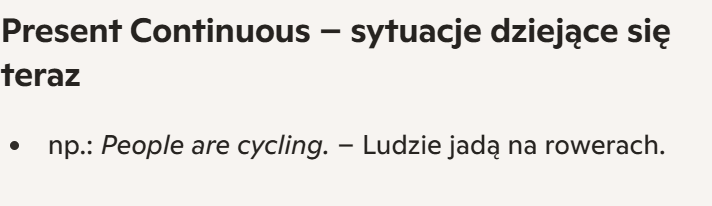
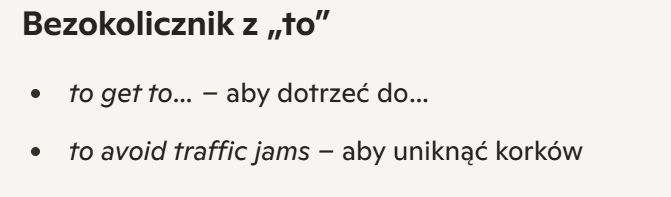
Present Simple – fakty i działanie usługPresent Continuous – sytuacje dziejące się terazBezokolicznik z „to”Typowe zwroty z tekstu
Trudności w wymowie w tekście
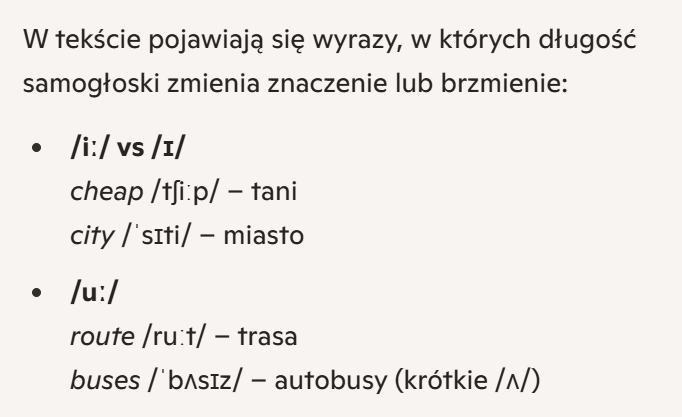
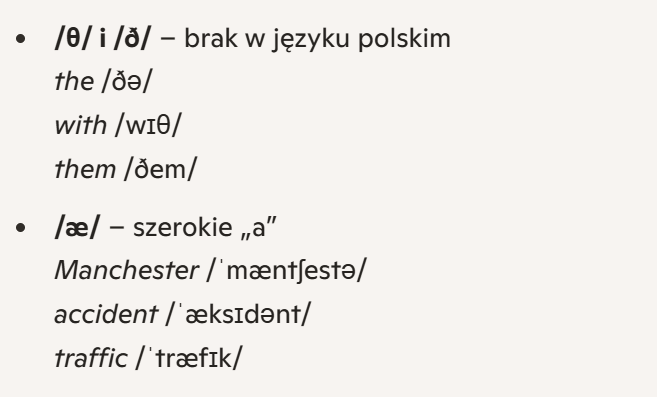
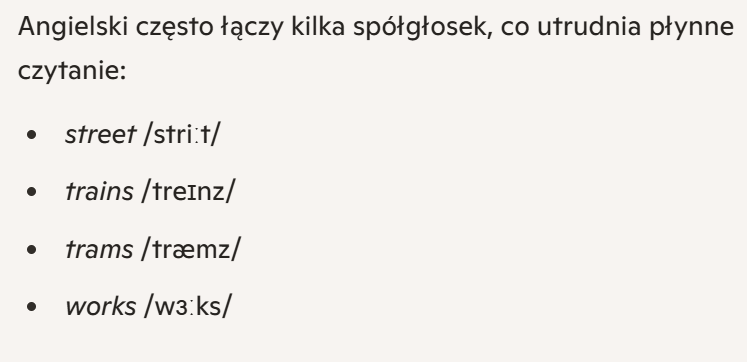
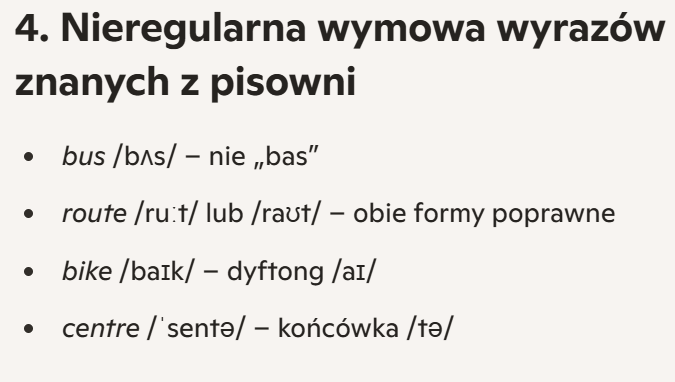
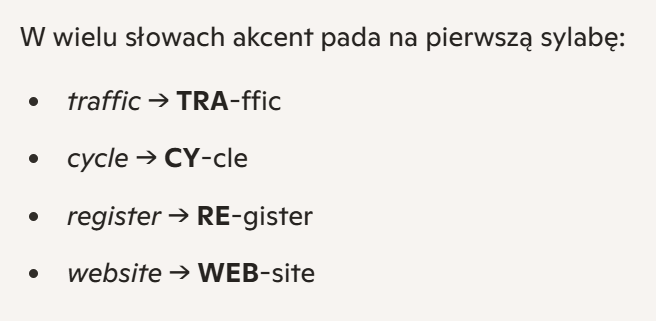
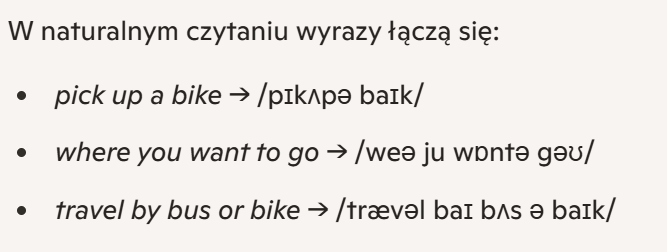
Samogłoski długie i krótkieGłoski trudne dla PolakówPołączenia spółgłoskoweNieregularna wymowa wyrazów znanych z pisowniAkcent wyrazowyŁączenie wyrazów w mowie (connected speech)Trudne słowa z tekstu – wymowaKrótkie wyrażenia językowe
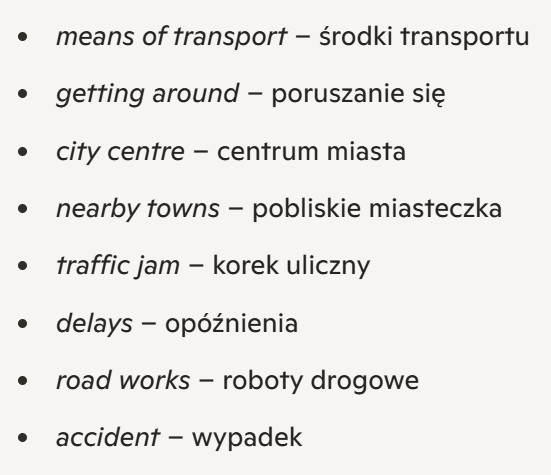
getting around – poruszanie się
means of transport – środki transportu
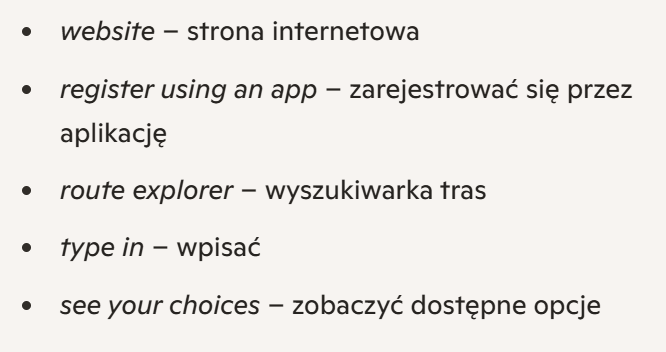
a fantastic website – fantastyczna strona internetowa
the latest delays – najnowsze opóźnienia
caused by accidents – spowodowane wypadkami
caused by road works – spowodowane robotami drogowymi
avoid traffic jams – unikać korków
a big football match – duży mecz piłkarski
travel by bus – podróżować autobusem
travel by bike – podróżować rowerem
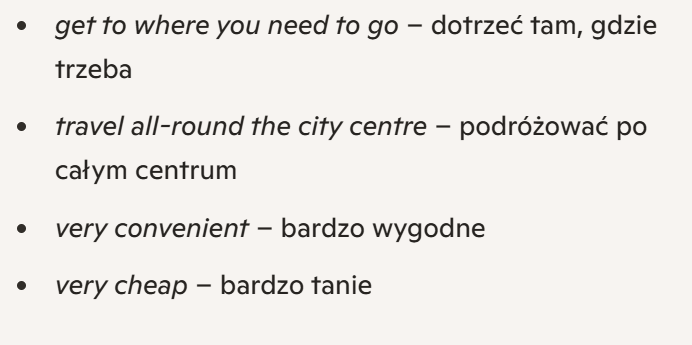
all-round the city centre – po całym centrum miasta
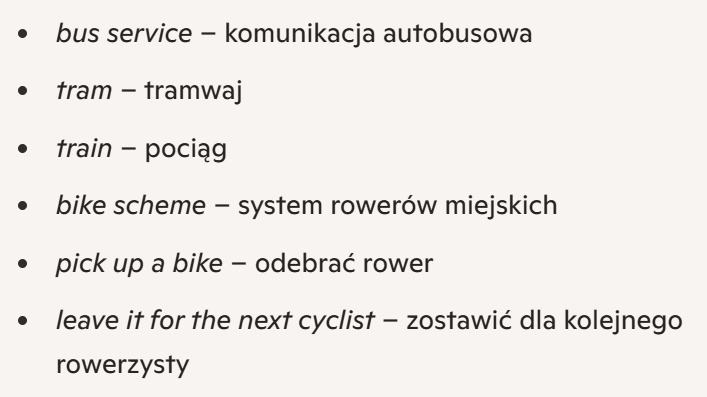
a great bus service – świetna komunikacja autobusowa
covering the city centre – obejmująca centrum miasta
nearby towns – pobliskie miasteczka
plan your route – zaplanować trasę
route explorer – wyszukiwarka tras
type in where you want to go – wpisz, dokąd chcesz jechać
see your choices – zobacz swoje możliwości
link up with trains – łączyć się z pociągami
link up with trams – łączyć się z tramwajami
get fit – nabrać kondycji
a new bike scheme – nowy system rowerowy
introduced in 2017 – wprowadzony w 2017 roku
register using an app – zarejestrować się przez aplikację
pick up a bike – odebrać rower
on the streets – na ulicach
ride it wherever you want – jechać, dokąd chcesz
leave it for the next cyclist – zostawić dla kolejnego rowerzysty
very convenient – bardzo wygodne
very cheap – bardzo tanie
get to where you need to go – dotrzeć tam, gdzie trzeba
find information quickly – szybko znaleźć informacje
avoid busy areas – unikać zatłoczonych miejsc
arrive at the match – dotrzeć na mecz
many bikes available – wiele dostępnych rowerów
helpful transport tools – pomocne narzędzia transportowe
choose the best route – wybrać najlepszą trasę
find the nearest stop – znaleźć najbliższy przystanek
check for delays – sprawdzić opóźnienia
move around the city easily – łatwo poruszać się po mieście
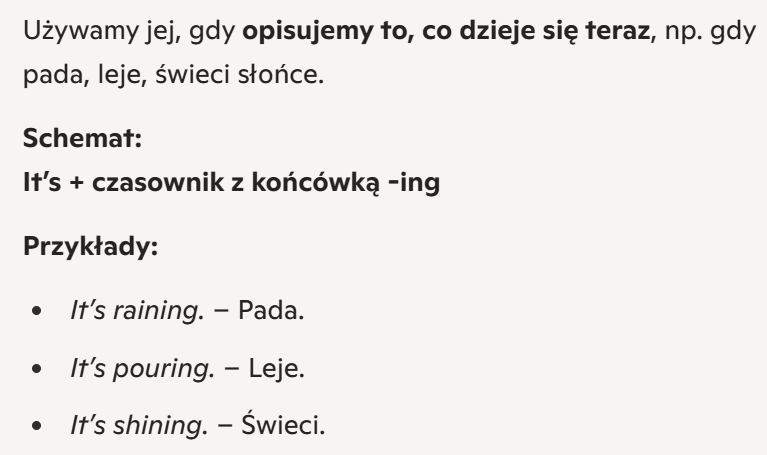
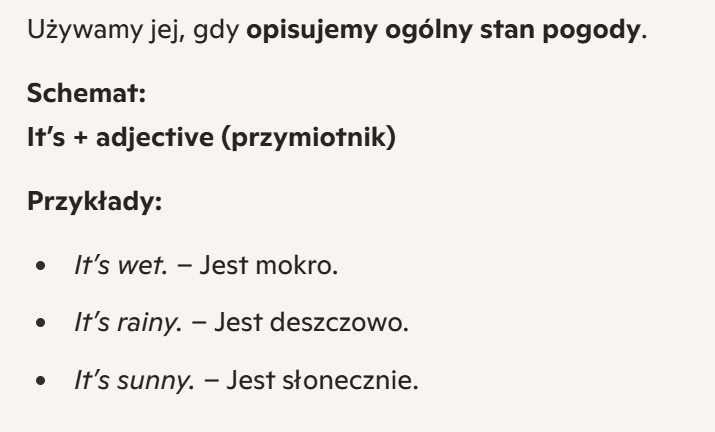
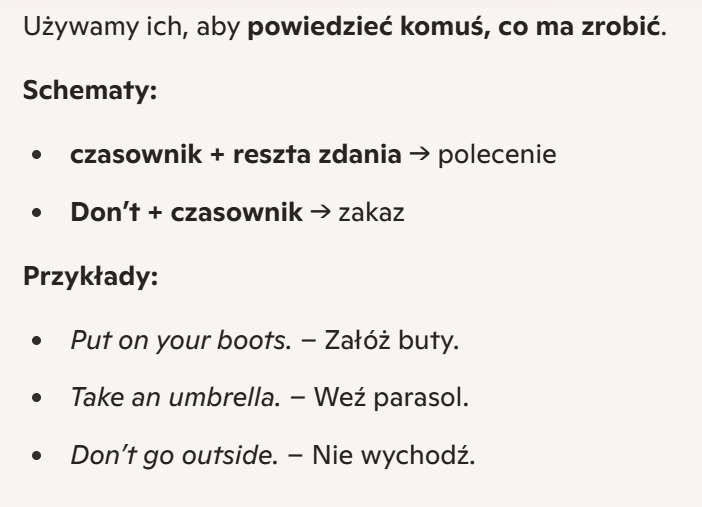
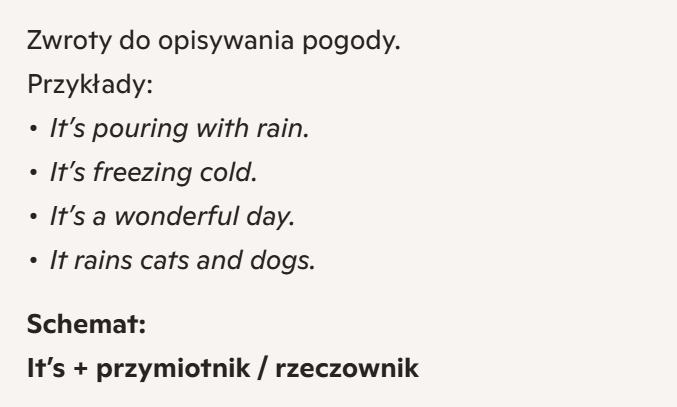
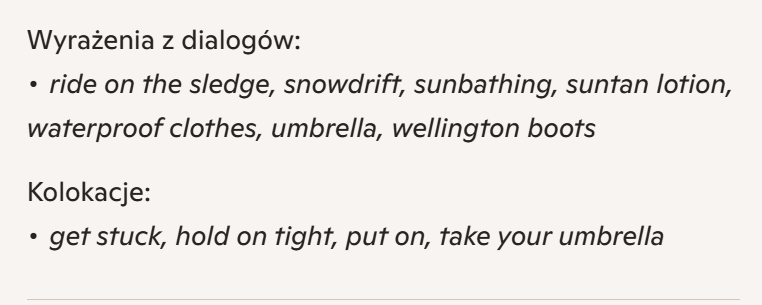
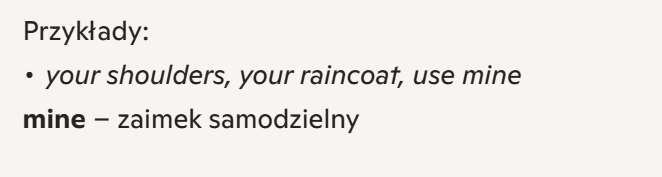
Present Simple & Present ContinuousFuture with WILLImperativeFirst ConditionalWeather expressionsSłownictwo i kolokacjeZaimki osobowe i dzierżawcze
Klasa 6 WYMOWA
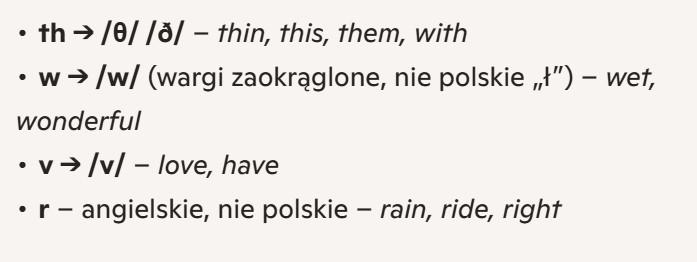
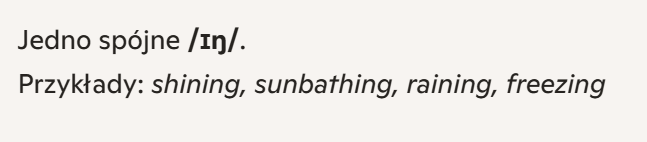
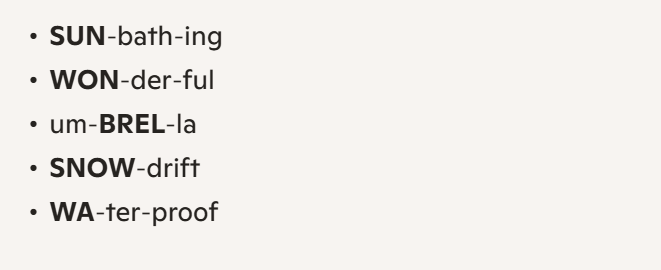
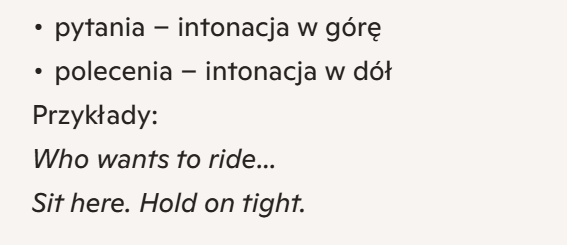
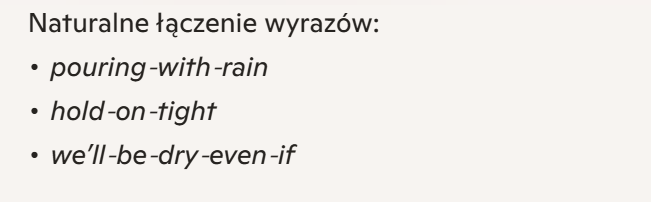
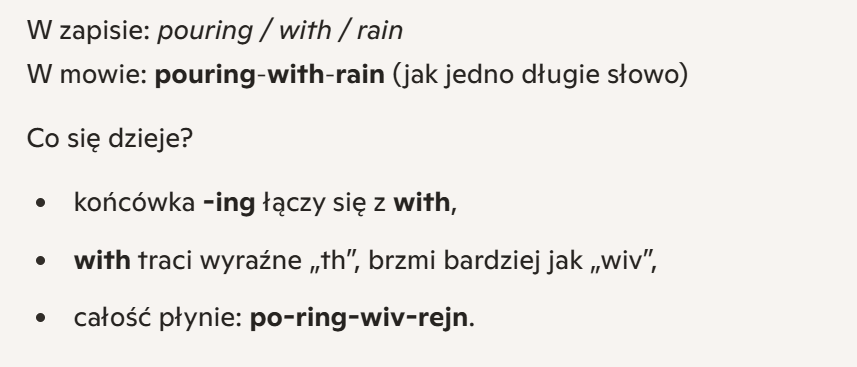
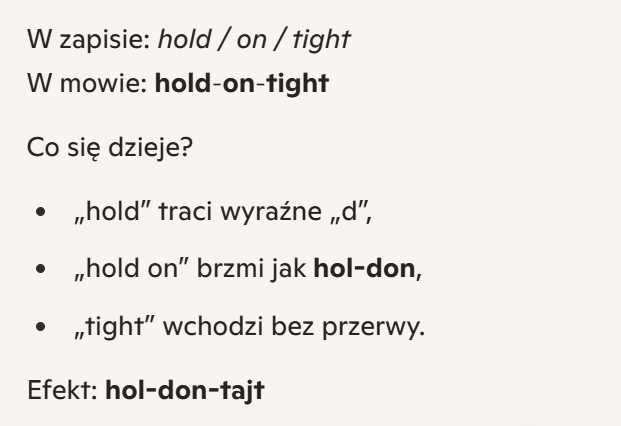
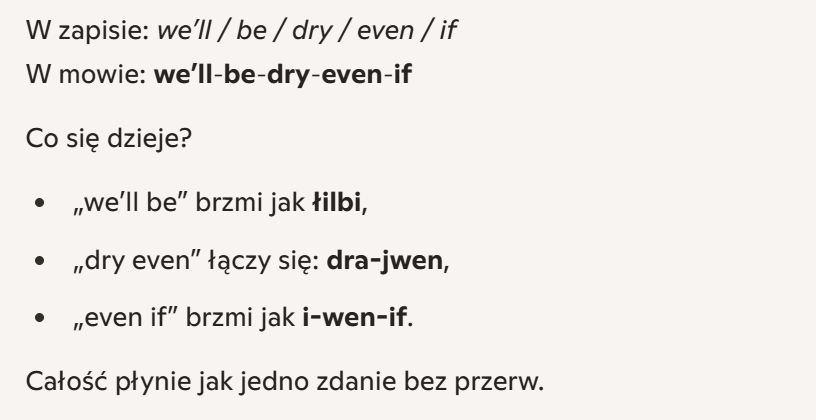
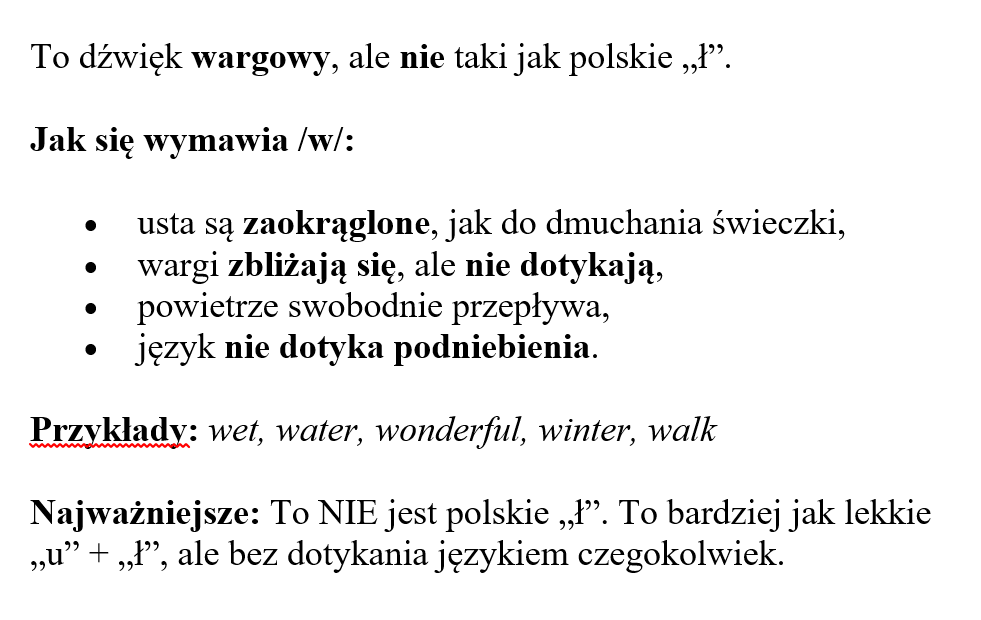
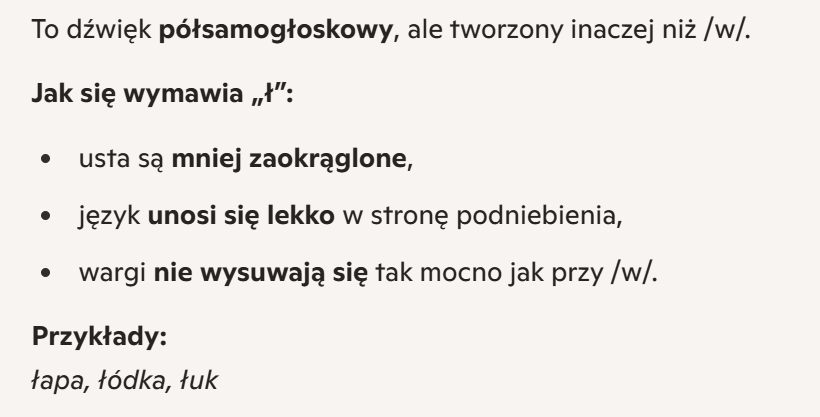
Trudne dźwiękiKońcówka -ingContractionsAkcent wyrazowyIntonacjaConnected speechpouring with rainhold on tightwe’ll be dry even if/w/ – angielskie „w”Polskie „ł”
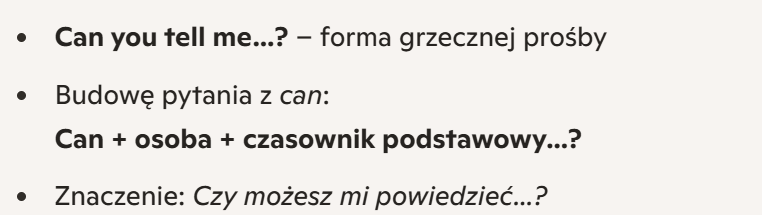
Girl: Excuse me. Can you tell me the way to the museum?
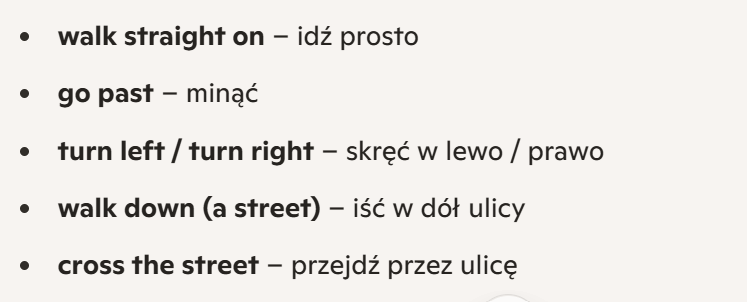
Woman: Of course. You are here at the moment. Walk straight on and go past the park. Then turn left and walk to the traffic lights and cross the street. Turn right and walk down North Street for about five minutes. The museum is on the right.
b. Trisha: Thank you!
Tłumaczenie
Dziewczyna: Przepraszam. Czy może mi pani powiedzieć, jak dojść do muzeum?
Kobieta: Oczywiście. Jesteś teraz tutaj. Idź prosto i minij park. Potem skręć w lewo i idź do świateł, a następnie przejdź przez ulicę. Skręć w prawo i idź w dół North Street przez około pięć minut. Muzeum jest po prawej stronie.
Dziewczyna: Dziękuję!
Can – pytania o możliwość / prośby o pomocPrzyimki i wyrażenia kierunku (prepositions of movement)Przyimki miejsca (prepositions of place)Wyrażenia czasu i dystansuProsty czas teraźniejszy w instrukcjach (imperative)Zaimki osobowe i podstawowe struktury
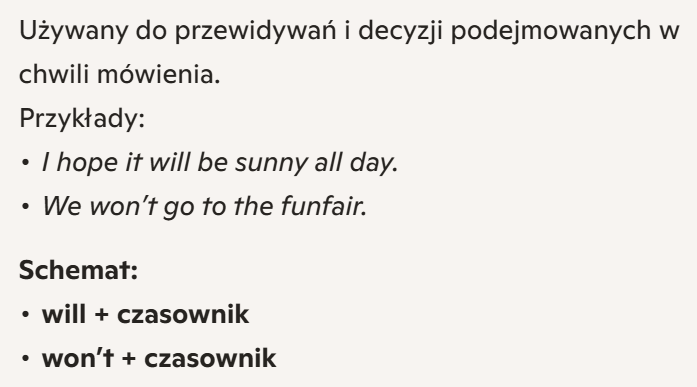
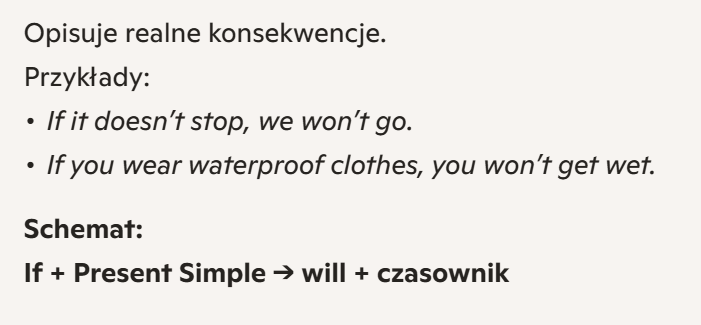
Używamy First Conditional, gdy mówimy o realnej przyszłości – o sytuacjach, które mogą się wydarzyć, jeśli spełni się warunek.
1. Kiedy używamy First Conditional?
Mówimy o przyszłości.
Warunek musi się najpierw spełnić.
Wynik jest możliwy, ale nie pewny.
Przykład: If it rains, we will stay at home.
2. Budowa zdania – schemat
IF + Present Simple, WILL + bezokolicznik
If + warunek – If it rains
will + verb – we will stay at home.
Przykłady:
If it rains, we will stay at home.
If you study, you will pass the test.
We will stay at home if it rains.
3. Tabela – dwie części zdania
Część zdania
Czas
Przykład
IF + warunek
Present Simple
If you study
wynik
will + verb
you will pass.
4. Przykładowe zdania (klasa 6)
If it rains, we will stay at home.
If you study hard, you will get a good mark.
If you don’t hurry, you will miss the bus.
If I’m tired, I will go to bed early.
If we finish the project, the teacher will be happy.
If you eat too much, you will feel sick.
If she forgets her homework, she will get a minus.
If they win the match, they will celebrate.
If you help me, I will help you.
If he doesn’t clean his room, his mom will be angry.
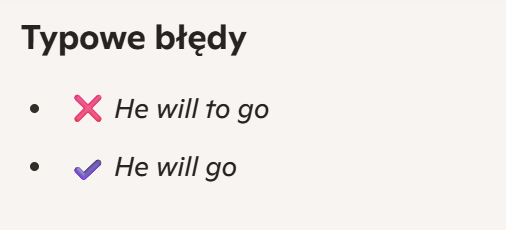
5. Typowe błędy
❌ If it will rain, we will stay at home.
✔️ If it rains, we will stay at home.
❌ If you will help me, I will help you.
✔️ If you help me, I will help you.
Po IF nie używamy WILL.
6. Mini‑ćwiczenie
Uzupełnij zdania:
If you ______ (be) late, the teacher ______ (be) angry.
If it ______ (snow), we ______ (make) a snowman.
If I ______ (finish) my homework, I ______ (play) games.
If they ______ (not study), they ______ (fail) the test.
If we ______ (go) to the shop, we ______ (buy) snacks.
7. Krótka ściąga
IF + Present Simple → WILL + bezokolicznik
Mówimy o przyszłości, która jest możliwa.
First Conditional – zdania z tłumaczeniem
If it rains, we will stay at home.
Jeśli będzie padać, zostaniemy w domu.
If you study hard, you will get a good mark.
Jeśli będziesz się uczyć, dostaniesz dobrą ocenę.
If you don’t hurry, you will miss the bus.
Jeśli się nie pospieszysz, spóźnisz się na autobus.
If I’m tired, I will go to bed early.
Jeśli będę zmęczony, pójdę spać wcześniej.
If we finish the project, the teacher will be happy.
Jeśli skończymy projekt, nauczyciel będzie zadowolony.
If you eat too much, you will feel sick.
Jeśli zjesz za dużo, poczujesz się źle.
If she forgets her homework, she will get a minus.
Jeśli zapomni pracy domowej, dostanie minusa.
If they win the match, they will celebrate.
Jeśli wygrają mecz, będą świętować.
If you help me, I will help you.
Jeśli mi pomożesz, ja pomogę tobie.
If he doesn’t clean his room, his mom will be angry.
Jeśli nie posprząta pokoju, jego mama będzie zła.
If we go to the park, we will play football.
Jeśli pójdziemy do parku, zagramy w piłkę.
If you drink this tea, you will feel better.
Jeśli wypijesz tę herbatę, poczujesz się lepiej.
If the weather is nice, we will have a picnic.
Jeśli pogoda będzie ładna, zrobimy piknik.
If she studies, she will pass the test.
Jeśli będzie się uczyć, zda test.
If you don’t wear a coat, you will get cold.
Jeśli nie założysz kurtki, zmarzniesz.
If you call me later, I will tell you everything.
Jeśli zadzwonisz do mnie później, powiem ci wszystko.
If we leave now, we will catch the train.
Jeśli wyjdziemy teraz, zdążymy na pociąg.
If he eats breakfast, he will have more energy.
Jeśli zje śniadanie, będzie miał więcej energii.
If they don’t stop talking, the teacher will get angry.
Jeśli nie przestaną rozmawiać, nauczyciel się zdenerwuje.
If you practise every day, you will improve.
Jeśli będziesz ćwiczyć codziennie, zrobisz postępy.
If she takes an umbrella, she won’t get wet.
Jeśli weźmie parasolkę, nie zmoknie.
If we don’t hurry, we will be late.
Jeśli się nie pospieszymy, spóźnimy się.
If you open the window, the room will get cold.
Jeśli otworzysz okno, pokój zrobi się zimny.
If he studies more, he will understand the lesson.
Jeśli będzie więcej się uczyć, zrozumie lekcję.
If they invite me, I will come.
Jeśli mnie zaproszą, przyjdę.
If you touch the dog gently, it will be friendly.
Jeśli pogłaszczesz psa delikatnie, będzie przyjazny.
If we buy tickets today, we will save money.
Jeśli kupimy bilety dzisiaj, zaoszczędzimy pieniądze.
If she doesn’t eat lunch, she will be hungry later.
Jeśli nie zje lunchu, będzie później głodna.
If you close the door quietly, nobody will hear you.
Jeśli zamkniesz drzwi cicho, nikt cię nie usłyszy.
If it gets dark, we will turn on the lights.
Jeśli się ściemni, włączymy światła.
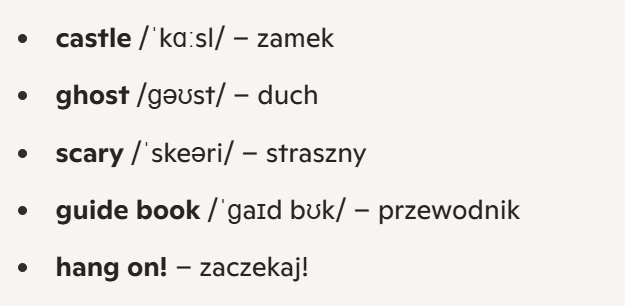
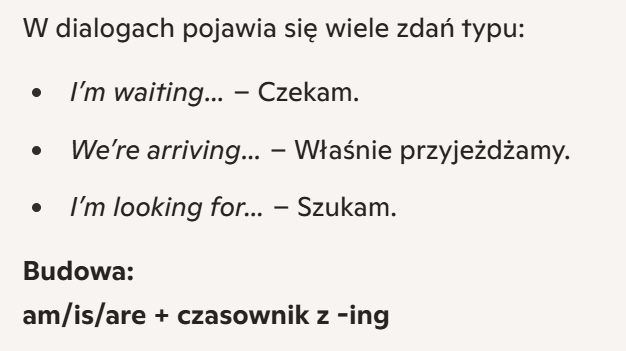
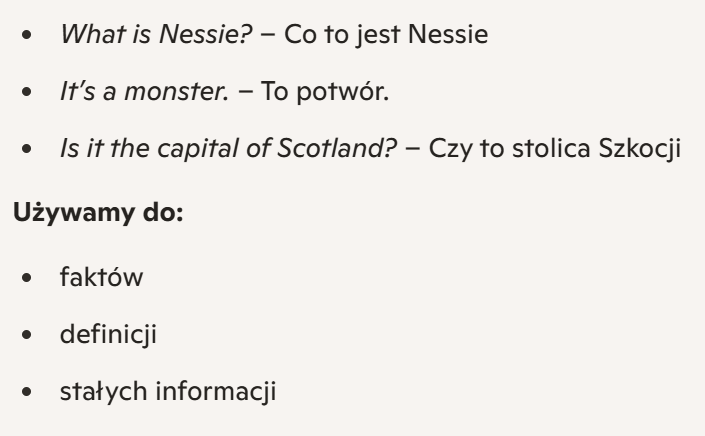
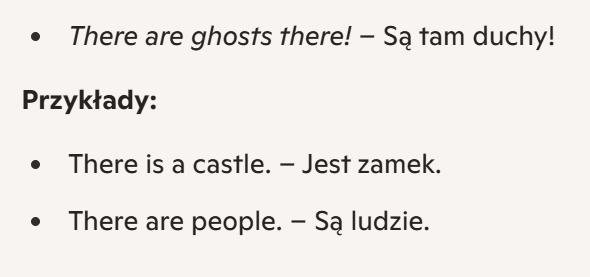
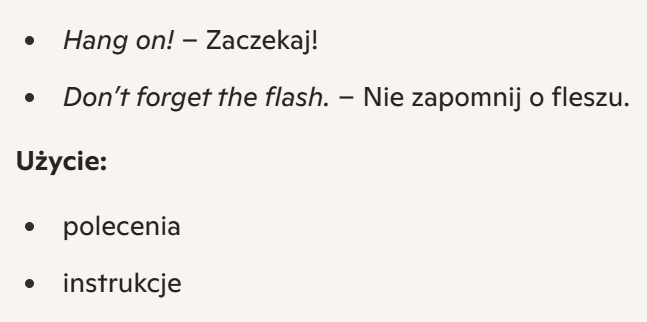
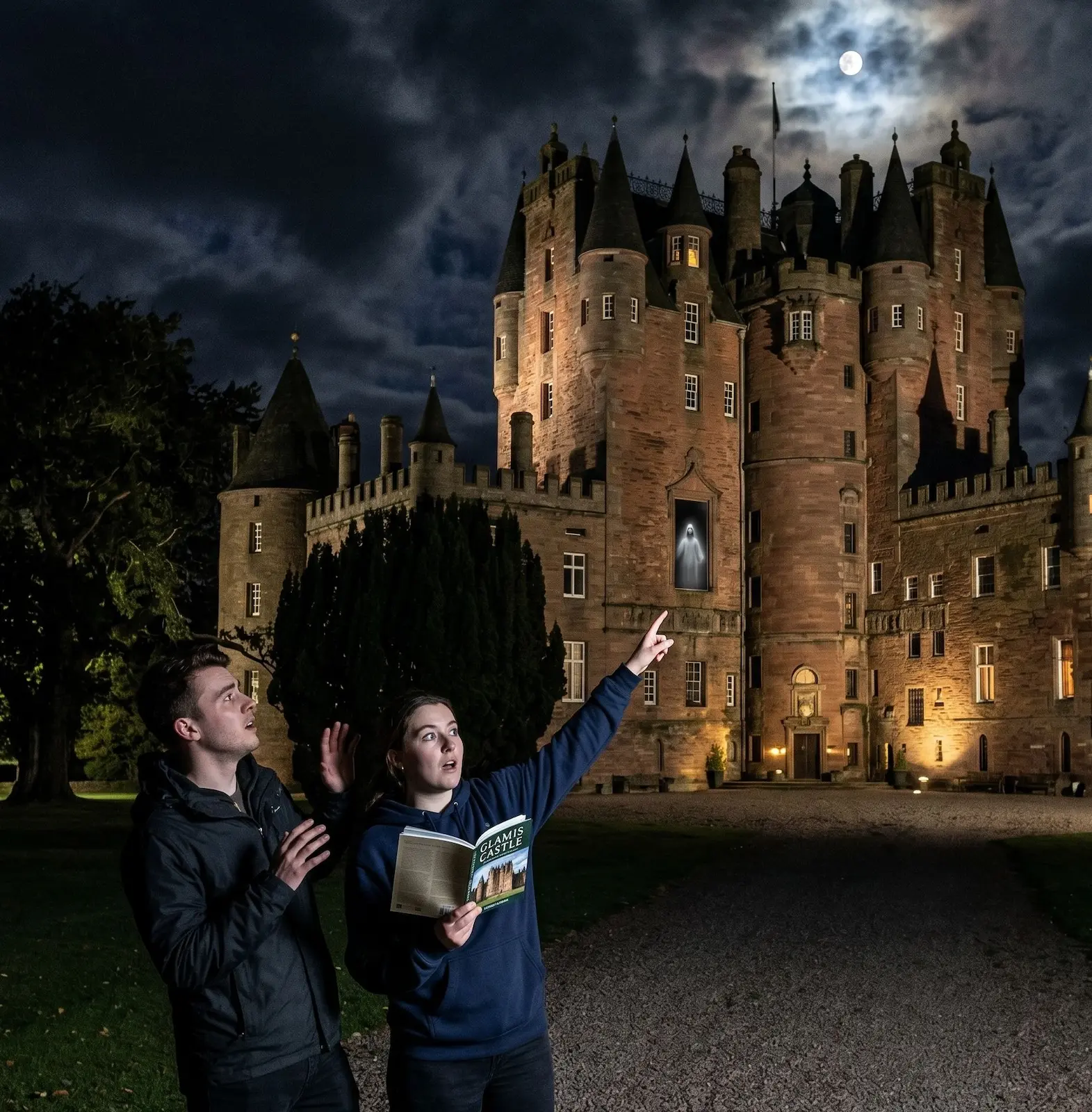
Hang on! I’m looking for it in the guide book. It’s Glamis castle. There are ghosts there!
No way! That’s scary.
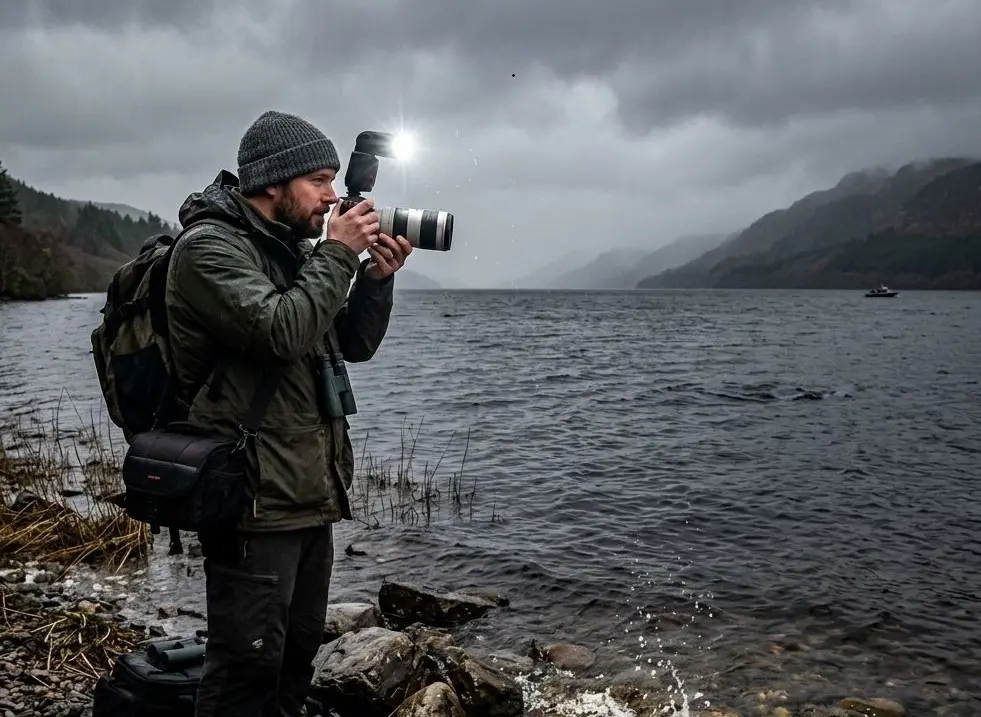
What are you doing?
What are you doing now?
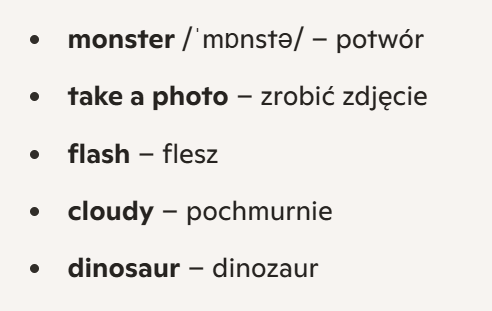
I’m waiting to take a photo of Nessie. What is Nessie?
It’s a monster that lives here in Loch Ness.
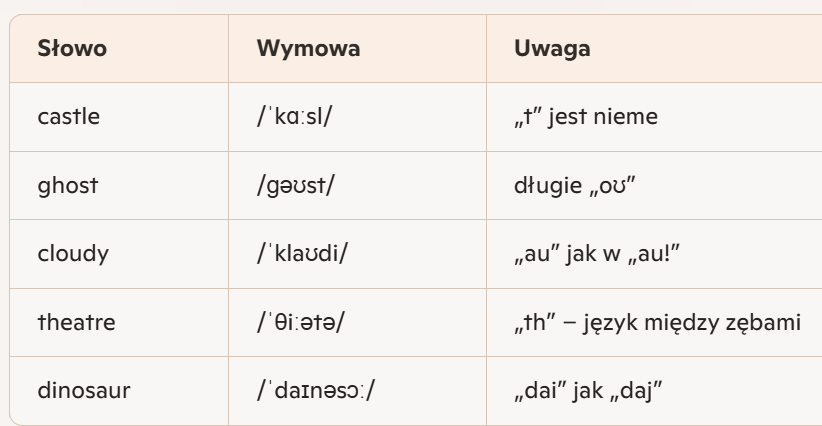
Cool! Maybe it’s a dinosaur! Don’t forget the flash. It’s very cloudy today.
Good idea.
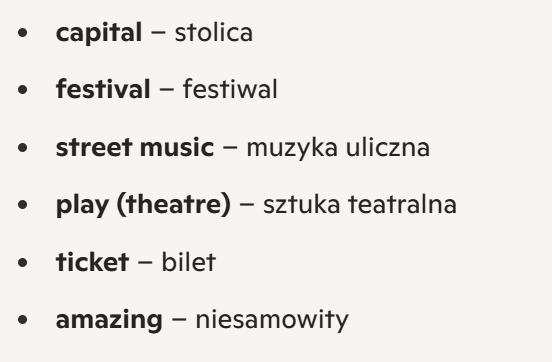
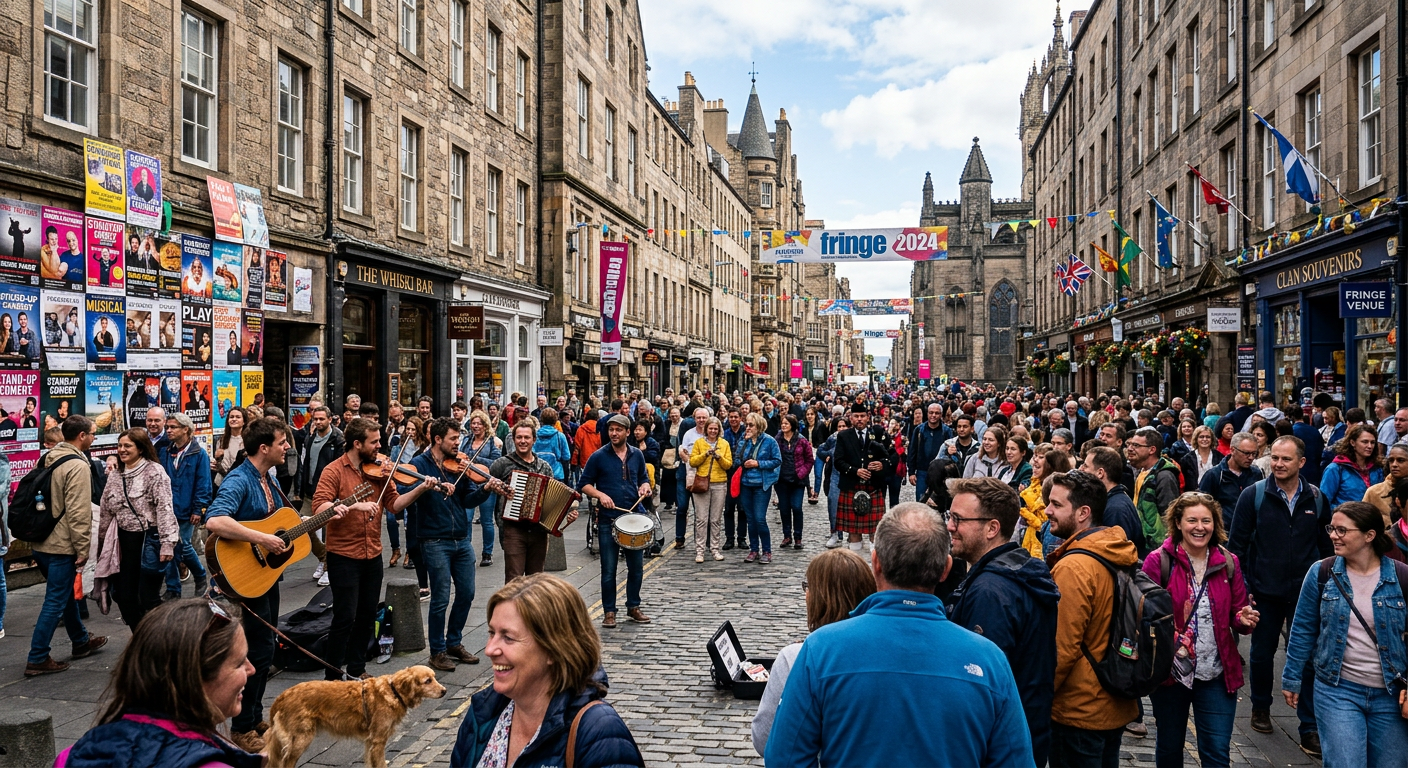
We’re arriving in Edinburgh now.
We’re arriving in Edinburgh now. Is it the capital of Scotland? Yes, it is. The Edinburgh Festival is happening here at the moment. Brilliant! We can see plays, listen to street music and watch films here. I know. It’s absolutely amazing! Look. I’ve got a ticket for the theatre. You lucky thing!
Pollution is a serious problem for the environment. It puts plants and animals in danger. Conservationists say that something must be done.
Rubbish is one of the problems. When you drive in the countryside, you see rubbish on the sides of the road. When you go for a walk in the woods, you see litter from picnics on the grass. When you look in rivers, you see plastic or glass drink bottles, cans and wrappers in the water.
Rubbish not only looks horrible, but it is also dangerous for the environment. Lots of wild animals get injured or trapped because of litter. They can also get sick from eating it by mistake. Toxins from litter pollute water that the animals drink, and they get into the soil.
The result is that many plants and animals die because the rubbish and pollution kill them. So if you care about the environment, don’t drop litter. Don’t throw it away carelessly. Remember to sort your rubbish and put it in the recycling bins. If we recycle more, there will be less rubbish in the world.
Looking after the environment starts at home. If everyone does something, the world will be a better place.
Streszczenie
Zanieczyszczenie środowiska jest poważnym problemem i zagraża roślinom oraz zwierzętom. Wiele osób uważa, że trzeba zacząć działać. Jednym z największych problemów są śmieci. Widać je przy drogach, w lasach i w rzekach — plastikowe i szklane butelki, puszki czy papierki.
Śmieci nie tylko brzydko wyglądają, ale są też niebezpieczne. Dzikie zwierzęta mogą się zranić, zaplątać albo zachorować, gdy przypadkowo je zjedzą. Toksyczne substancje z odpadów zanieczyszczają wodę i glebę, co prowadzi do śmierci wielu roślin i zwierząt.
Dlatego ważne jest, aby nie śmiecić, nie wyrzucać odpadów byle gdzie, segregować je i wrzucać do odpowiednich pojemników. Jeśli będziemy więcej recyklingować, śmieci będzie mniej. Dbaniem o środowisko powinniśmy zajmować się już w domu — jeśli każdy zrobi coś małego, świat stanie się lepszym miejscem.
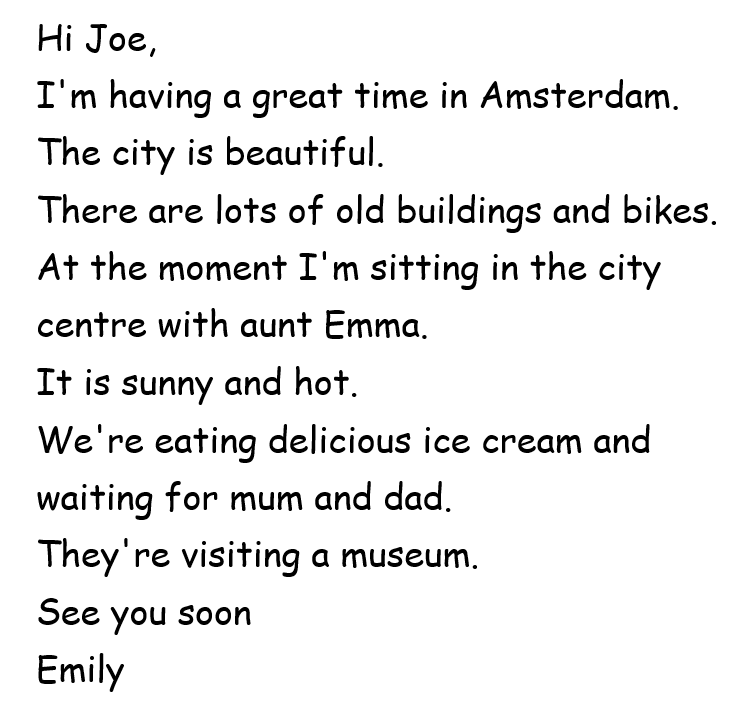
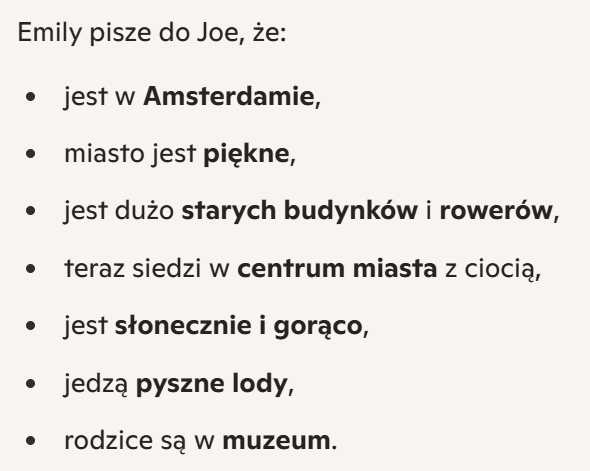
My name is John and I am on holiday in New York with my family. We are staying in a hotel in Manhattan. There are tall skyscrapers everywhere.
Central Park
In the centre of New York there is a big park called Central Park. I am looking at it at the moment from my hotel room. There is a lake, a zoo and two ice-skating rinks.
Sunny Day in the Park
It is a sunny day and lots of people are jogging there right now.
Monsters from the Past!
My favourite place in New York is the American Museum of Natural History. There are dinosaur skeletons in it
The Space Ball
There is also an Earth and Space theatre. It looks like a ball.
Icons of New York
You can also see the Statue of Liberty in the port, and Times Square in the centre of New York.
Broadway Adventure!
The theatres are also great here. We have got tickets to see a play at a Broadway theatre tomorrow. I can’t wait!
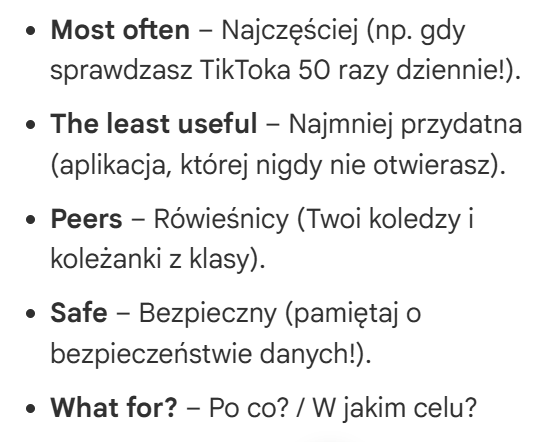
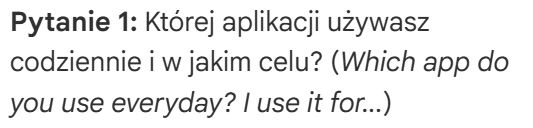
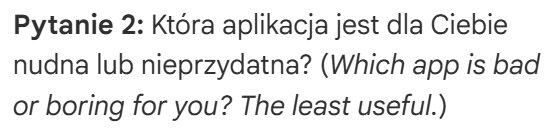
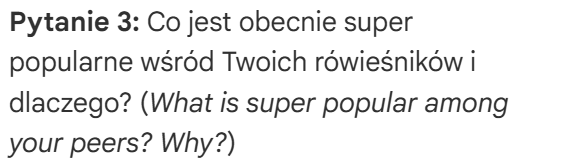
Can you imagine a day without your phone? Why / Why not?
2. Vocabulary (Słownictwo)
user-friendly – przyjazny dla użytkownika
to download / to upload – pobierać / przesyłać (np. na serwer)
features – funkcje, cechy charakterystyczne
notifications – powiadomienia
to subscription fee – opłata abonamentowa
in-app purchases – zakupy w aplikacji
to update – aktualizować
addictive – uzależniający
3. Reading & Discussion
Text: Are We Too Dependent on Apps? Nowadays, there is an app for everything. We use them to chat with friends, track our fitness goals, learn foreign languages, and even order food. Many apps are free of charge, but they often contain pop-up ads or offer in-app purchases. Some software developers create games that are highly addictive, making users spend hours staring at their screens. Useful features like push notifications remind us about important tasks, but they can also be very distracting. It is important to find a balance between the digital world and real life.
Tłumaczenie
Czy jesteśmy zbyt zależni od aplikacji? W dzisiejszych czasach istnieje aplikacja do wszystkiego. Używamy ich, aby rozmawiać z przyjaciółmi, śledzić nasze cele fitness, uczyć się języków obcych, a nawet zamawiać jedzenie. Wiele aplikacji jest bezpłatnych, ale często zawierają wyskakujące reklamy lub oferują zakupy w aplikacji. Niektórzy twórcy oprogramowania tworzą gry, które są bardzo uzależniające, sprawiając, że użytkownicy spędzają godziny, wpatrując się w ekrany. Przydatne funkcje, takie jak powiadomienia push, przypominają nam o ważnych zadaniach, ale mogą też być bardzo rozpraszające. Ważne jest, aby znaleźć równowagę między światem cyfrowym a prawdziwym życiem.
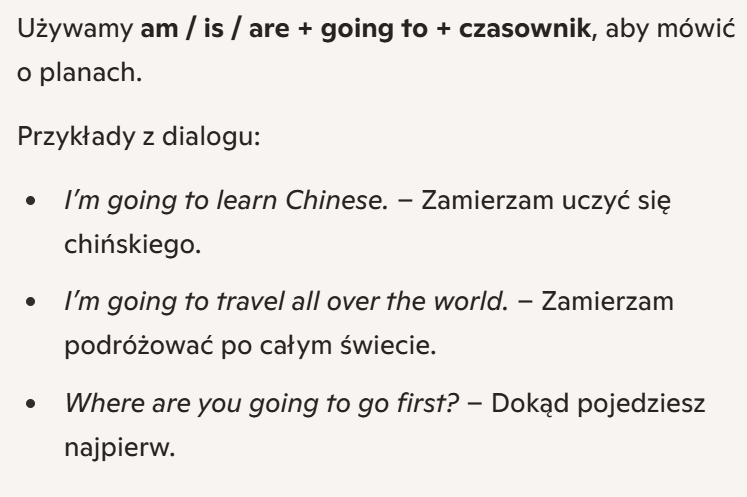
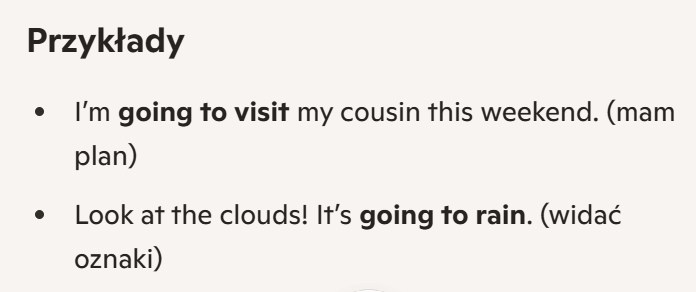
This summer I’m going to travel around the USA with my family. We’re going to visit the Grand Canyon. I can’t wait!
Tego lata zamierzam podróżować po USA z moją rodziną. Zamierzamy odwiedzić Wielki Kanion. Nie mogę się doczekać!
The Grand Canyon is one of the world’s seven natural wonders. It’s a long deep valley of the Colorado River. It is in Arizona, in the USA. The canyon is 446 kilometres long and, in some places, it is two kilometres deep.
Wielki Kanion jest jednym z siedmiu cudów natury na świecie. To długa, głęboka dolina rzeki Kolorado. Znajduje się w Arizonie, w USA. Kanion ma 446 kilometrów długości, a w niektórych miejscach ma dwa kilometry głębokości.
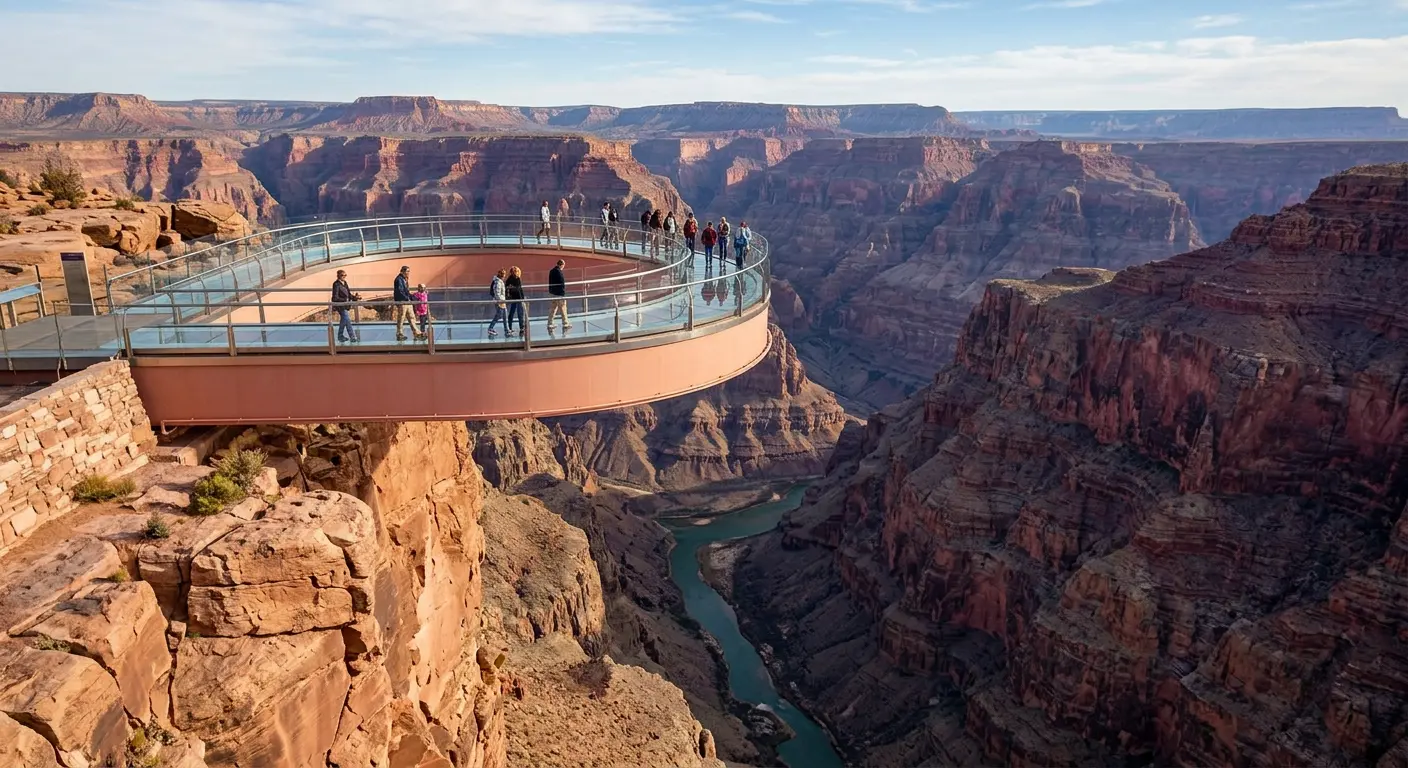
The view from the top of the canyon is amazing. There is a glass bridge called Skywalk and you can walk on it and look down and see the bottom of the canyon under you. The rocks have got beautiful colours there. Some visitors like hiking and explore the canyon on foot and others go down the river by boat. You can even go rafting on the river.
Widok ze szczytu kanionu jest niesamowity. Jest tam szklany most o nazwie Skywalk i możesz po nim chodzić oraz spojrzeć w dół, żeby zobaczyć dno kanionu pod sobą. Skały mają tam piękne kolory. Niektórzy odwiedzający lubią wędrować i zwiedzać kanion pieszo, a inni spływają w dół rzeki łodzią. Można nawet popłynąć pontonem (rafting).
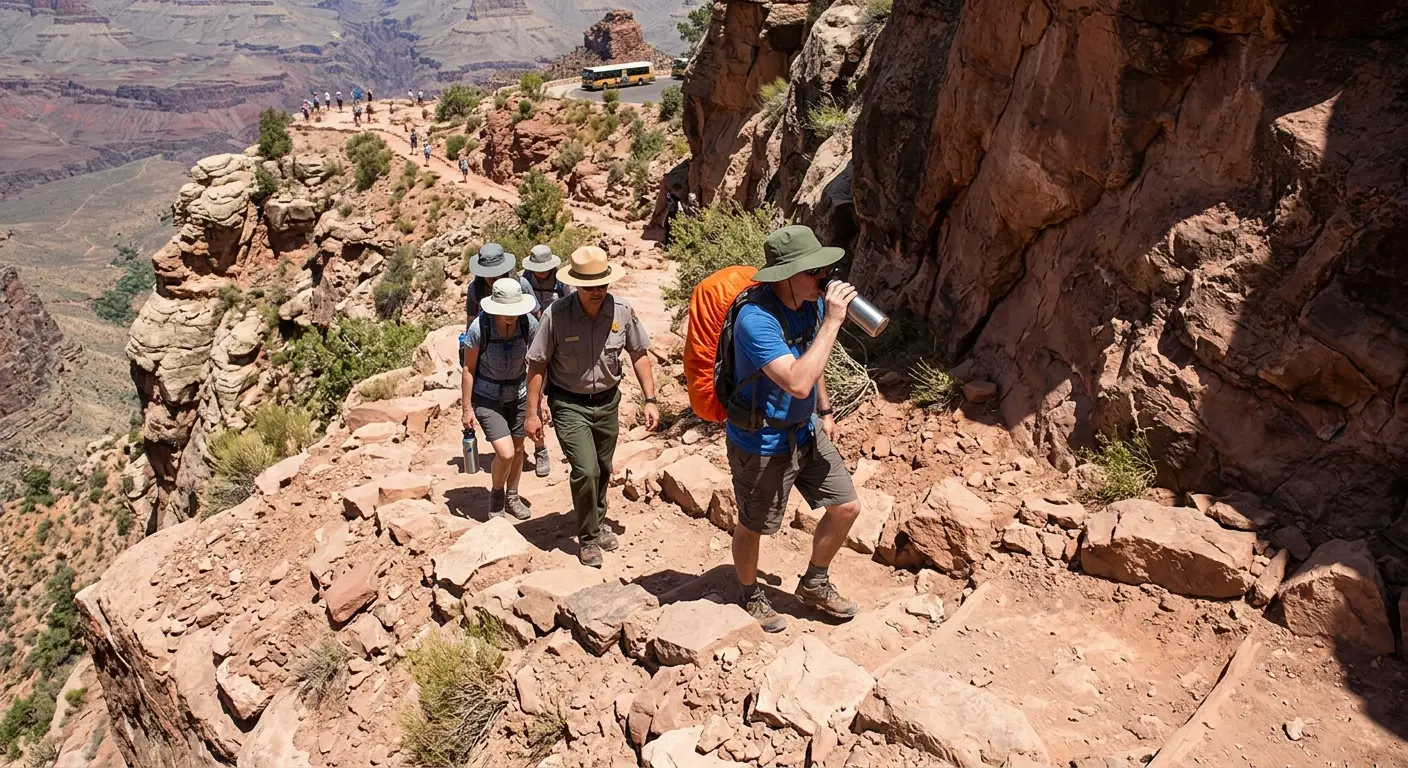
About four million people visit the Grand Canyon every year. But you must be careful there. It is a dangerous place because the rocks are very hard to climb. Also the sun is very hot in the canyon, and there is not a lot of shade. You have to take a bottle of water with you and a hat.
Około czterech milionów ludzi odwiedza Wielki Kanion każdego roku. Ale trzeba tam uważać. To niebezpieczne miejsce, ponieważ skały są bardzo trudne do wspinania. Słońce w kanionie jest też bardzo gorące, a cienia jest niewiele. Trzeba zabrać ze sobą butelkę wody i kapelusz.
Pytania
Where is the Grand Canyon?
It is in Arizona, in the USA.
How long is the Grand Canyon?
It is 446 kilometres long.
How deep is the canyon in some places?
It is two kilometres deep.
What is the Skywalk?
It is a glass bridge where you can look down and see the bottom.
What can visitors do in the Grand Canyon?
They can hike, explore on foot, go by boat, or go rafting.
How many people visit the Grand Canyon every year?
About four million people.
Why must visitors be careful?
Because the rocks are hard to climb and the sun is very hot.
Poniżej znajdziesz rozszerzone wyjaśnienia z przykładami, tłumaczeniem i uzasadnieniem.
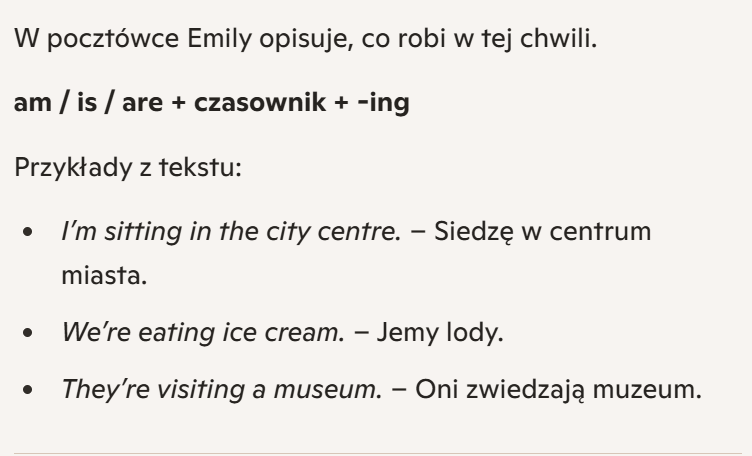
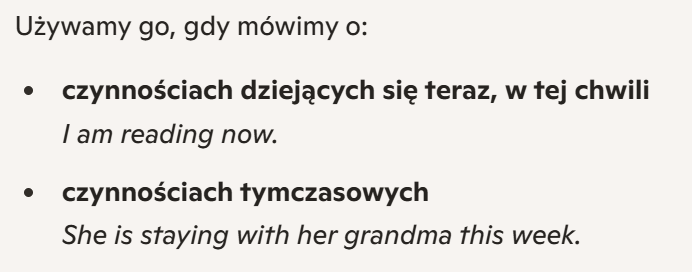
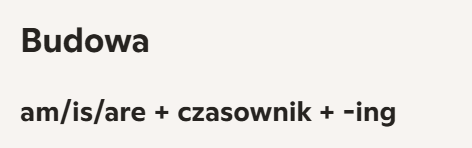
1. Czynności dziejące się teraz, w tej chwili
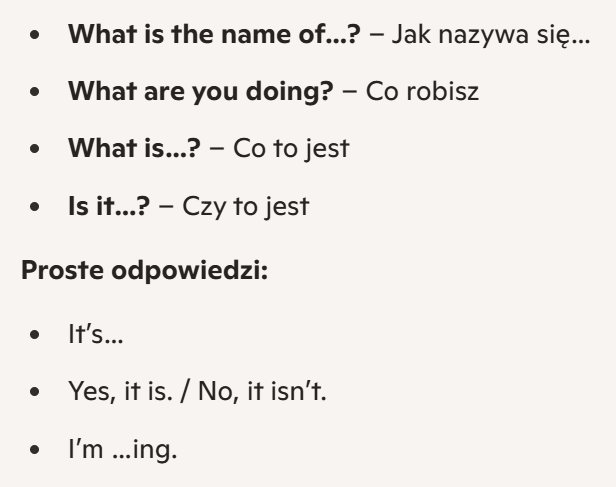
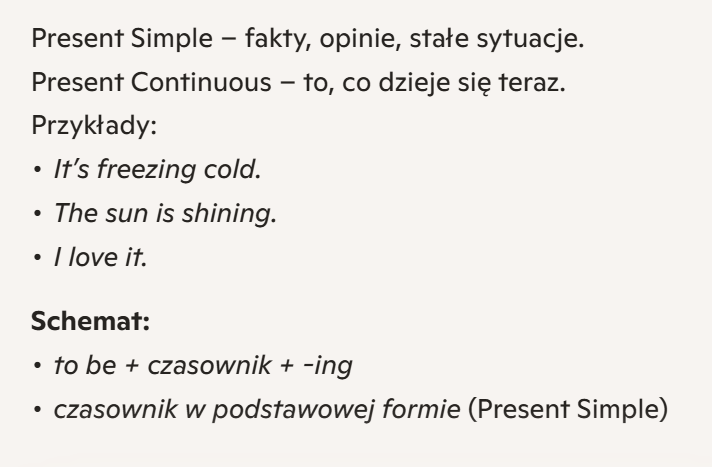
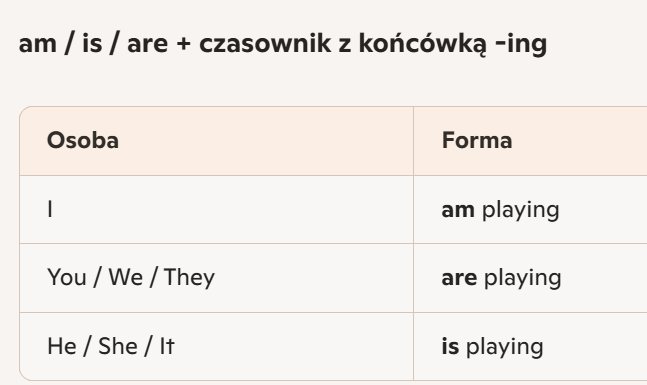
Używamy Present Continuous, gdy czynność trwa dokładnie w momencie mówienia. Typowe wyrażenia: now, at the moment, right now.
Pokaż przykłady
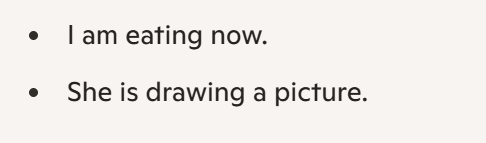
I am reading now. – Czytam teraz. Uzasadnienie: czynność odbywa się w tej chwili.
She is talking on the phone. – Ona rozmawia przez telefon. Uzasadnienie: widzimy ją w trakcie rozmowy.
They are playing football at the moment. – Oni grają teraz w piłkę. Uzasadnienie: wyrażenie „at the moment” wskazuje na „teraz”.
We are doing homework right now. – Robimy teraz pracę domową. Uzasadnienie: „right now” to sygnał czasu ciągłego.
He is eating his lunch. – On je swój lunch. Uzasadnienie: czynność trwa w momencie mówienia.
2. Sytuacje tymczasowe
Używamy Present Continuous, gdy mówimy o czymś, co trwa przez krótki okres, ale nie jest stałe. Typowe wyrażenia: this week, these days, today, this month.
Pokaż przykłady
She is staying with her aunt this week. – Ona mieszka u cioci w tym tygodniu. Uzasadnienie: sytuacja przejściowa, tylko na tydzień.
I am living in Warsaw for a few months. – Mieszkam w Warszawie przez kilka miesięcy. Uzasadnienie: pobyt jest czasowy, nie na stałe.
They are working on a school project these days. – Oni pracują nad projektem w ostatnich dniach. Uzasadnienie: projekt trwa tylko przez pewien okres.
We are learning about animals this month. – Uczymy się o zwierzętach w tym miesiącu. Uzasadnienie: temat lekcji jest tymczasowy.
He is studying at his friend’s house today. – On uczy się dziś u kolegi. Uzasadnienie: wyjątkowa, jednorazowa sytuacja.
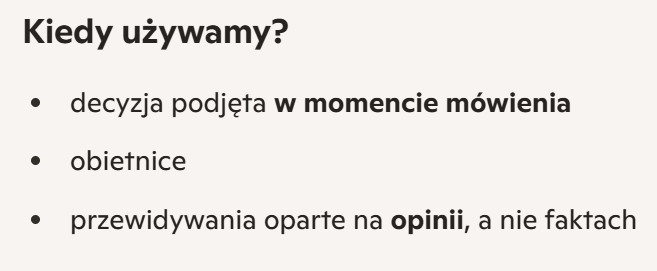
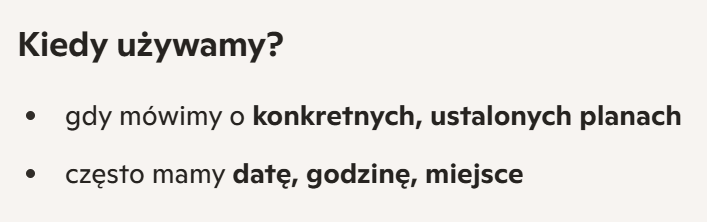
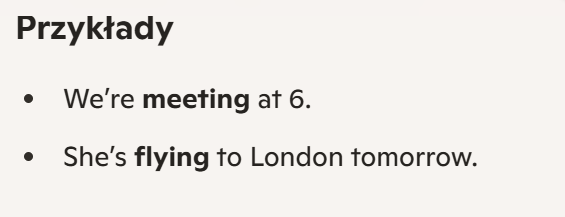
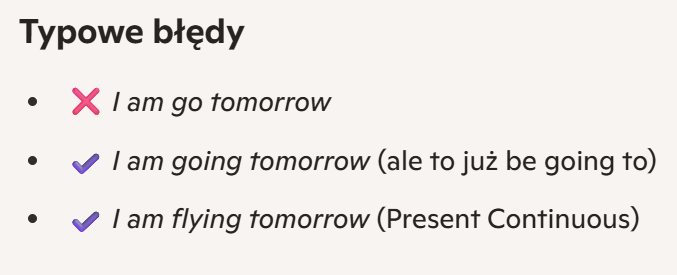
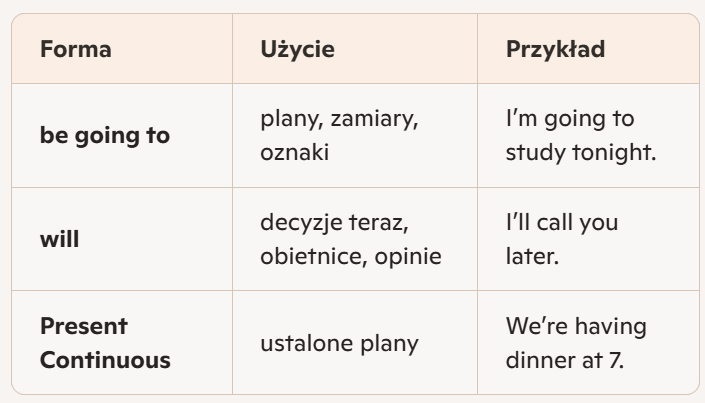
3. Plany na najbliższą przyszłość
Używamy Present Continuous, gdy mówimy o konkretnych, ustalonych planach na niedaleką przyszłość. Typowe wyrażenia: tomorrow, tonight, next week, this afternoon.
Pokaż przykłady
We are meeting after school. – Spotykamy się po szkole. Uzasadnienie: plan jest ustalony – wiadomo kiedy i z kim.
I am visiting my grandparents tomorrow. – Jutro odwiedzam dziadków. Uzasadnienie: jest data i konkretne ustalenie.
She is having a piano lesson this afternoon. – Ona ma lekcję pianina dziś po południu. Uzasadnienie: zaplanowane wydarzenie.
They are travelling to Kraków next weekend. – Oni jadą do Krakowa w następny weekend. Uzasadnienie: podróż jest zaplanowana.
He is meeting his friends tonight. – On spotyka się dziś wieczorem z przyjaciółmi. Uzasadnienie: konkretne ustalenie na dziś.
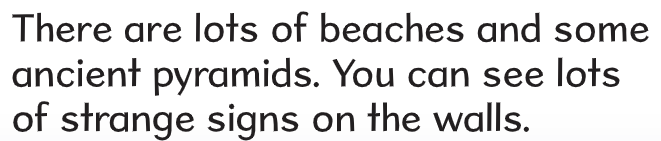
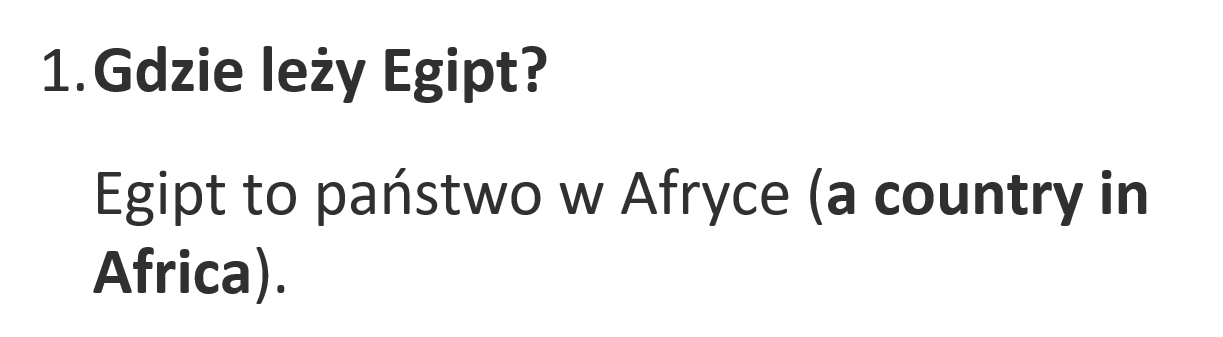
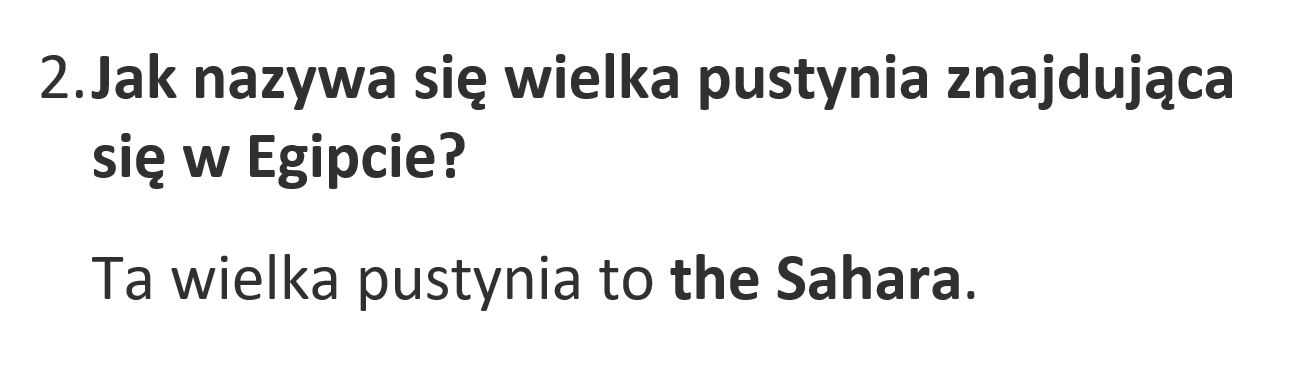
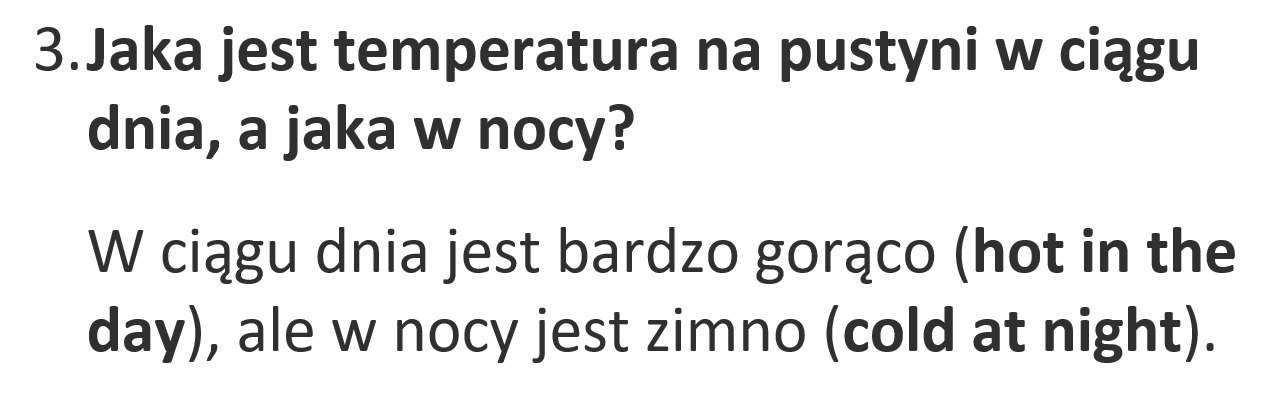
Gdzie leży Egipt? (Na jakim kontynencie?)Jak nazywa się wielka pustynia znajdująca się w Egipcie?Jaka jest temperatura na pustyni w ciągu dnia, a jaka w nocy?Na jakim zwierzęciu można jeździć po pustyni?Jak nazywa się bardzo długa rzeka, która płynie przez Egipt?Co ciekawego można zobaczyć na ścianach starożytnych piramid?Co można robić, będąc nad rzeką Nil?
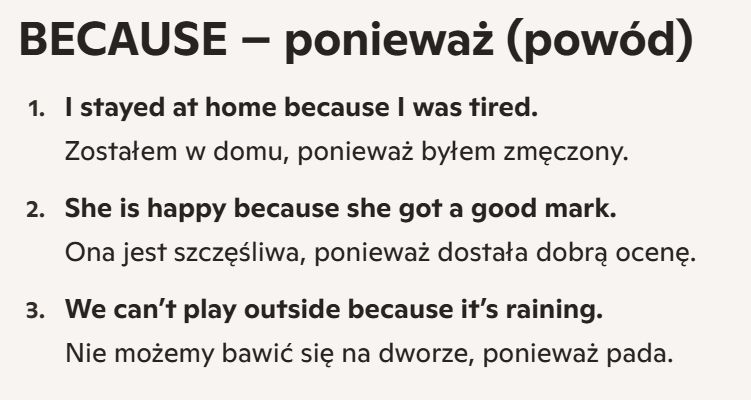
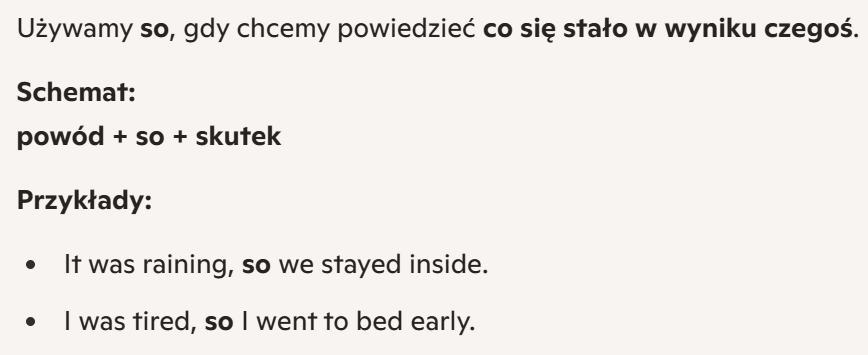
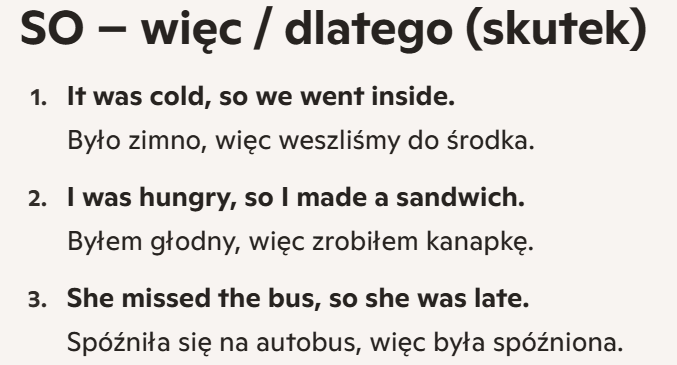
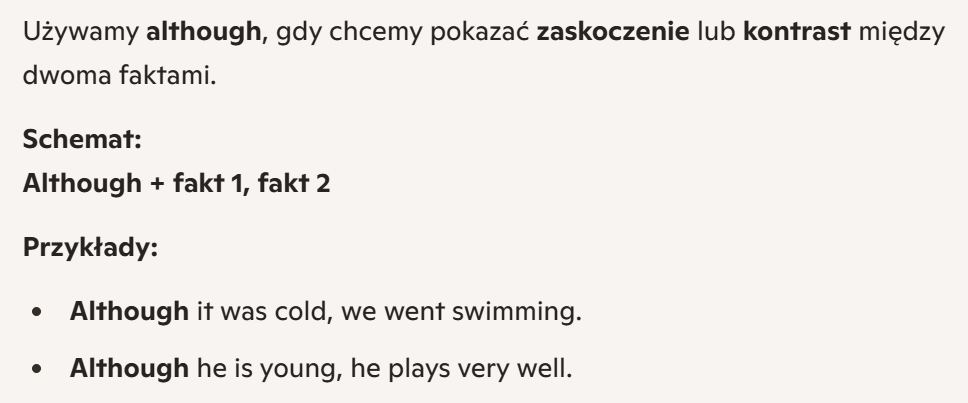
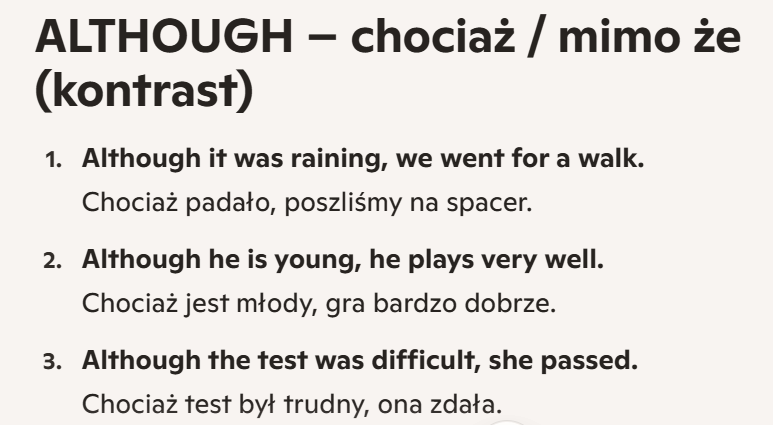
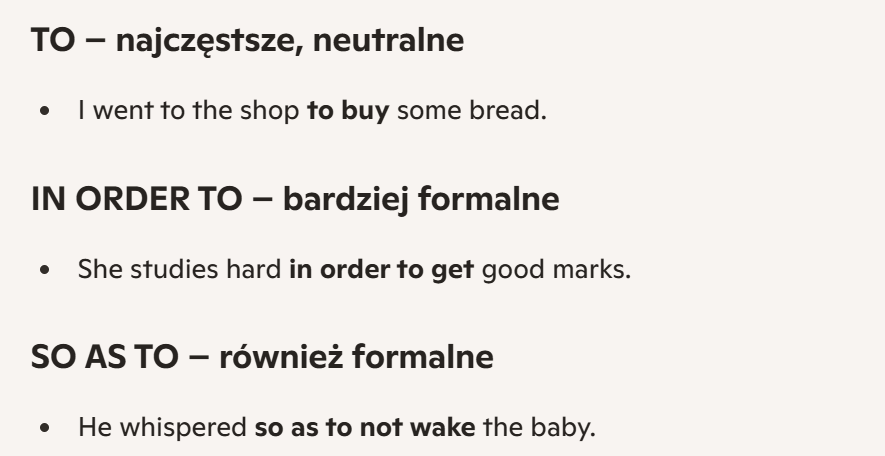
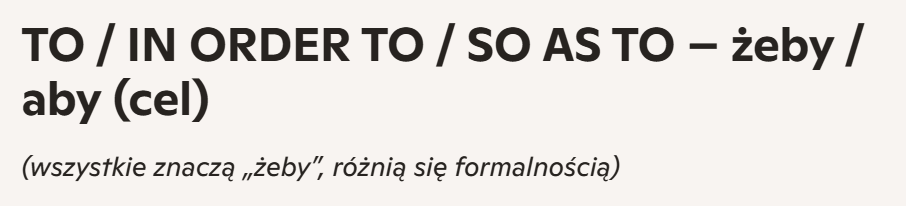
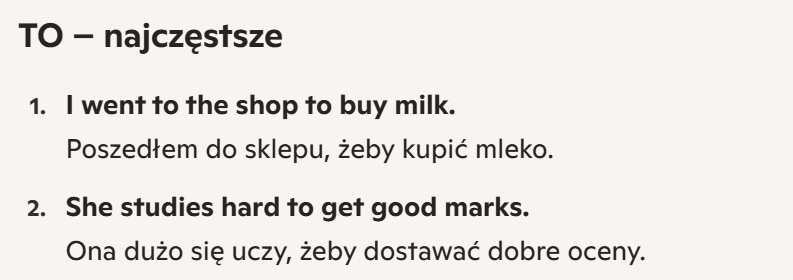
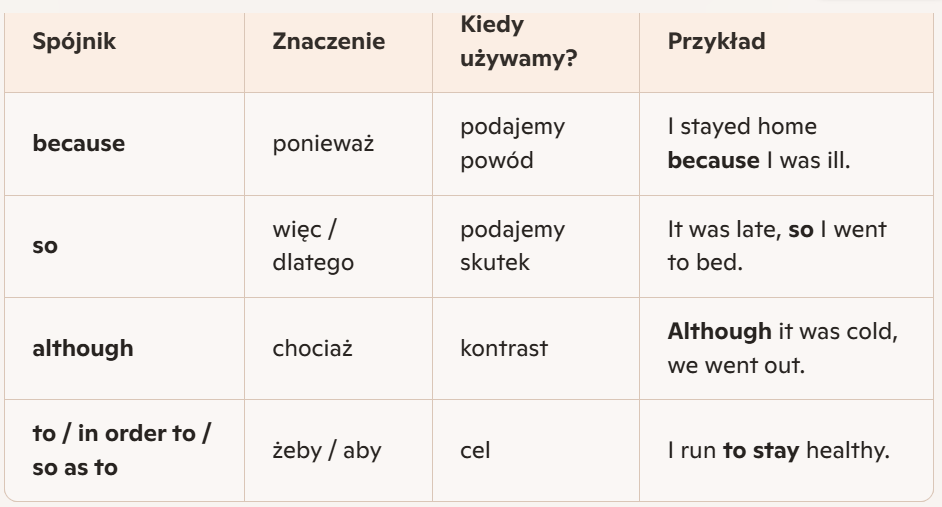
BECAUSE – ponieważ (podaje powód)SO – więc / dlatego (podaje skutek)ALTHOUGH – chociaż / mimo że (kontrast)TO / IN ORDER TO / SO AS TO – żeby / aby (cel)Podsumowanie
_____ is a pity you can’t stay longer.
OdpowiedźIt is a pity you can’t stay longer.
_____ is so much noise in this room.
OdpowiedźThere is so much noise in this room.
_____ is important to listen carefully in class.
OdpowiedźIt is important to listen carefully in class.
_____ are three new students in our class.
OdpowiedźThere are three new students in our class.
I like these books. _____ are really interesting.
OdpowiedźThey are really interesting.
_____ is too late to start the film now.
OdpowiedźIt is too late to start the film now.
_____ are some sandwiches on the table.
OdpowiedźThere are some sandwiches on the table.
I don’t like these shoes. _____ are too small for me.
OdpowiedźThey are too small for me.
_____ is very cold in this room.
OdpowiedźIt is very cold in this room.
_____ is a supermarket near my house.
OdpowiedźThere is a supermarket near my house.
_____ are a lot of mistakes in your test.
OdpowiedźThere are a lot of mistakes in your test.
I know these boys. _____ are in class 8B.
OdpowiedźThey are in class 8B.
There is / There are vs It / They – Uzupełnij dialog
________ from my aunt’s house in Italy.
Odpowiedź + uzasadnienieThey are from my aunt’s house in Italy. „Photographs” = liczba mnoga → używamy they.
________ a great house!
Odpowiedź + uzasadnienieIt is a great house! Mówimy o jednym domu → it.
________.
Odpowiedź + uzasadnienieIt is. Odpowiadamy na poprzednie zdanie z „it”.
________ three bedrooms in the house.
Odpowiedź + uzasadnienieThere are three bedrooms in the house. Wprowadzamy informację o istnieniu czegoś → there are.
________ all upstairs.
Odpowiedź + uzasadnienieThey are all upstairs. „Bedrooms” = liczba mnoga → zastępujemy je they.
________ also a nice garden around the house.
Odpowiedź + uzasadnienieThere is also a nice garden around the house. Wprowadzamy nowy element (ogród) → there is.
________ a swimming pool too?
Odpowiedź + uzasadnienieIs there a swimming pool too? Pytanie o istnienie czegoś → Is there…?
________ beautiful!
Odpowiedź + uzasadnienieThey are beautiful! „Beaches” (plaże) = liczba mnoga → they.
________ a nice place,
Odpowiedź + uzasadnienieIt is a nice place. „Place” = liczba pojedyncza → it.
but ________ aren’t any discos or cinemas there.
Odpowiedź + uzasadnieniethere aren’t any discos or cinemas there. Mówimy, że czegoś nie ma → there aren’t.
4. Wstaw czasownik w nawiasie w formie Past Simple (4 pkt)
a) I ……………….. (feel) a bit scared yesterday.
b) We ……………….. (buy) new equipment last week.
c) He ……………….. (drink) some mint tea.
d) They ……………….. (take) some pills and felt better.
5. Czy podane zdania są prawdziwe (True) czy fałszywe (False)? (4 pkt)
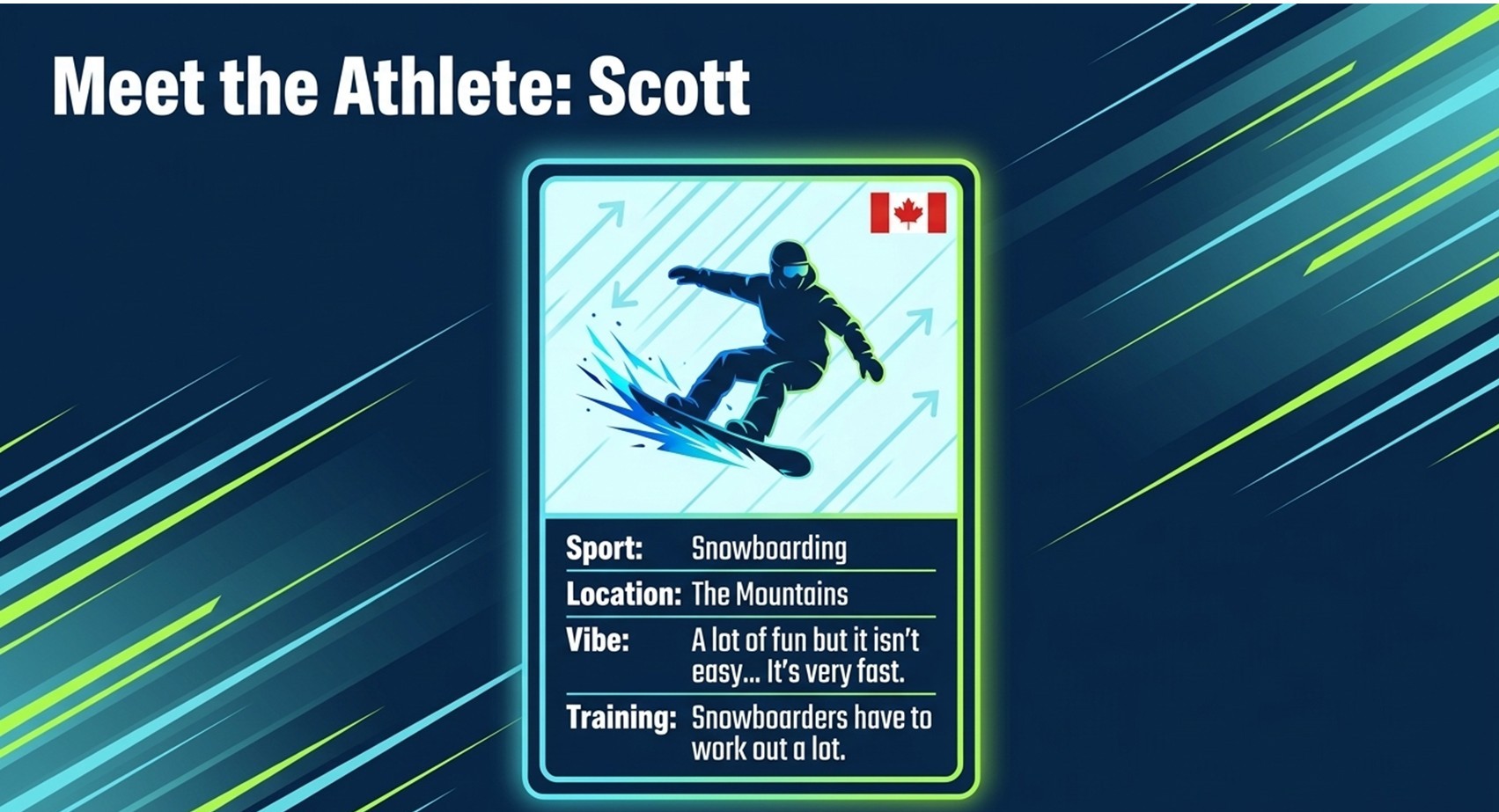
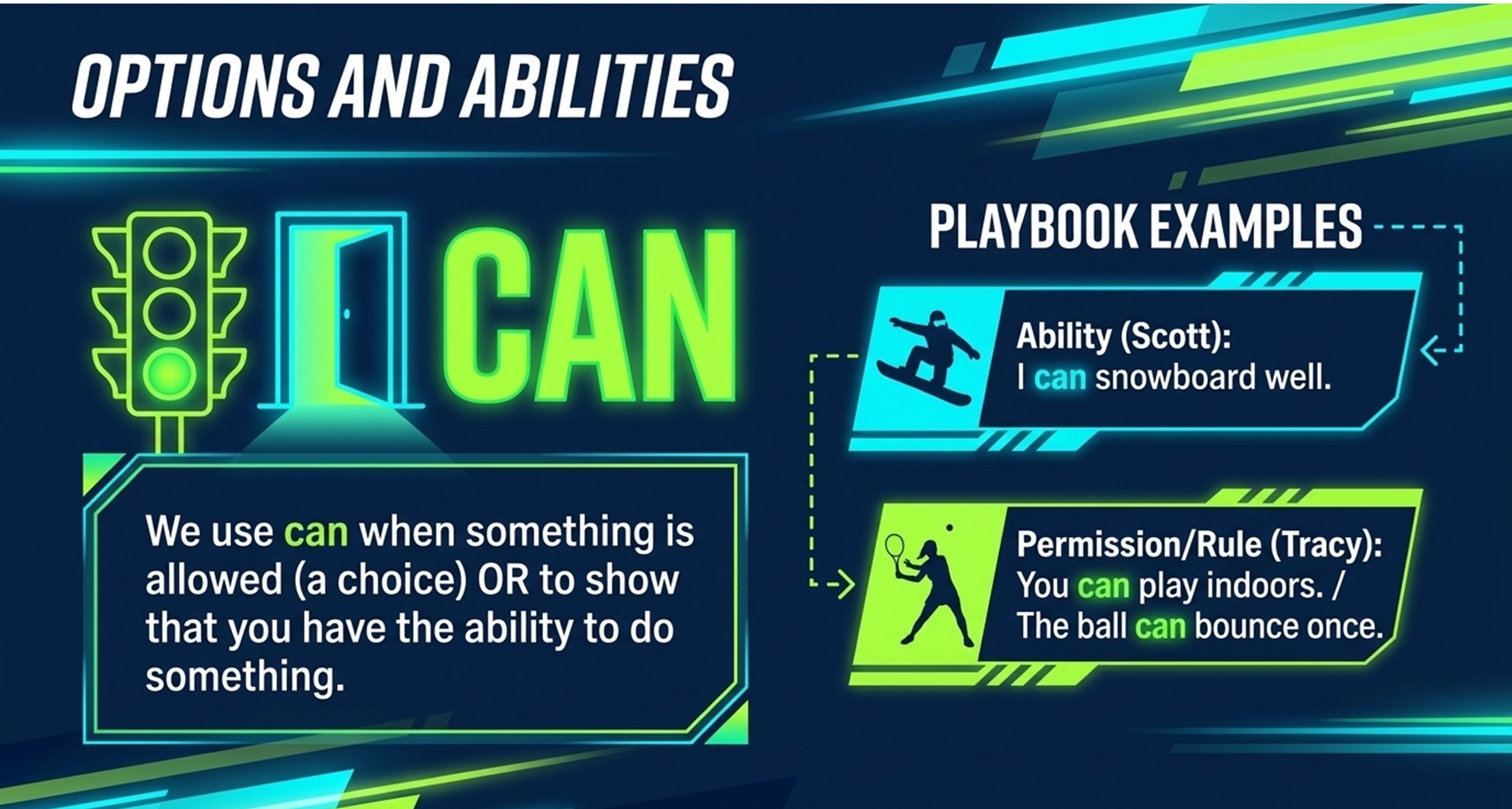
a) Scott is from Canada and likes snowboarding.
T/F
b) Joanne was 10 when she had her first climb outdoors.
T/F
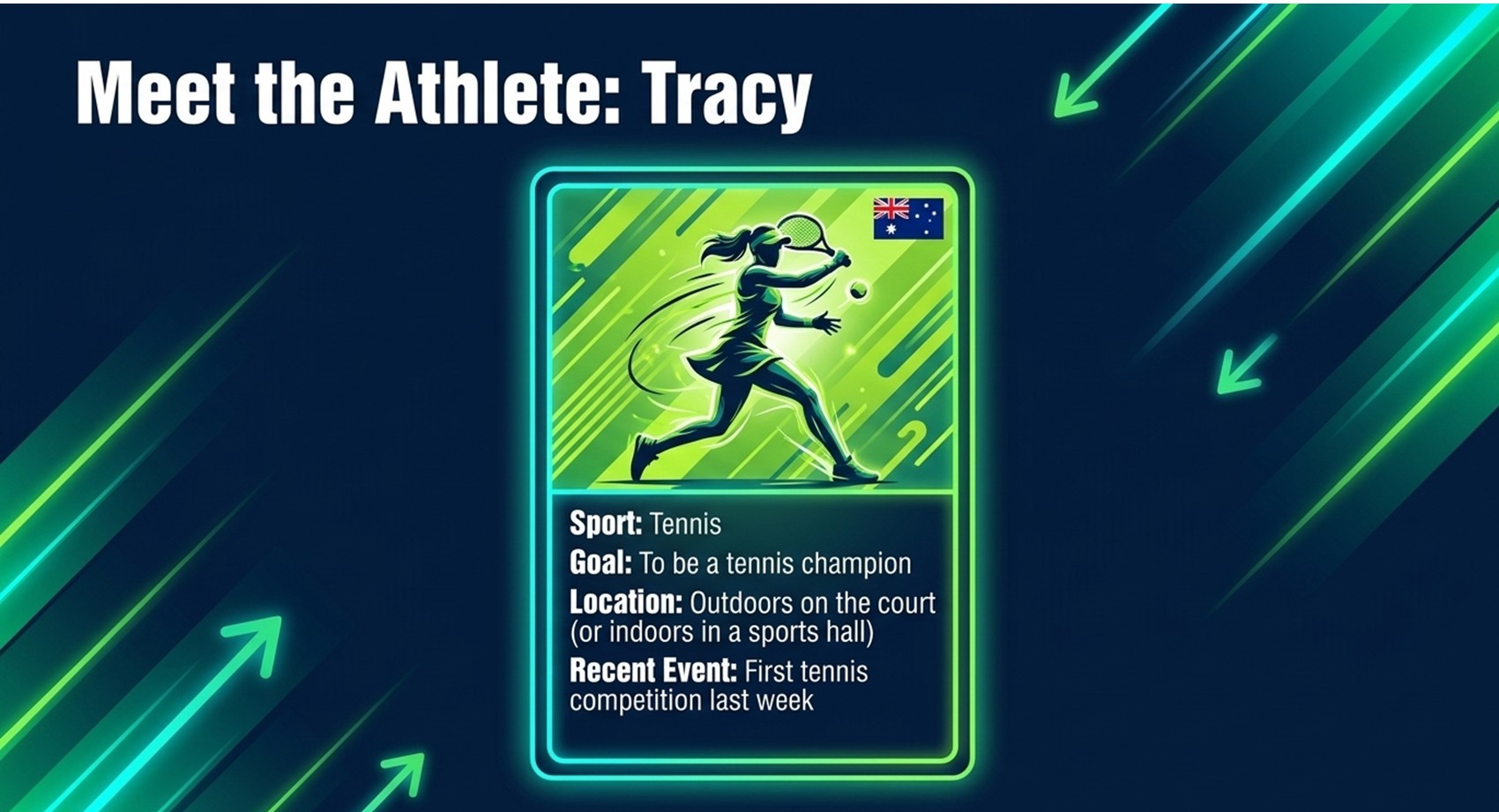
c) In tennis, the ball can bounce three times.
T/F
d) Mickey found a secret path behind the waterfall.
T/F
6. Ułóż pytania z rozsypanych wyrazów (3 pkt)
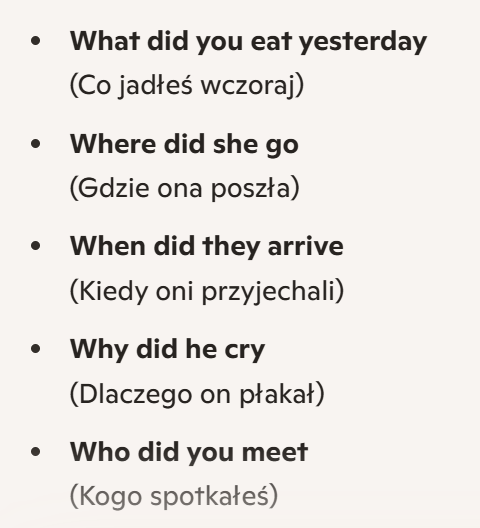
a) you / did / see / Who / yesterday? _________________________________________
b) What / eat / they / did / for lunch? _________________________________________
c) did / Where / go / she? _________________________________________
ZADANIE DLA CHĘTNYCH (+2 pkt): Napisz po angielsku, jak nazywa się sprzęt zabezpieczający (uprząż), którego używa Joanne podczas wspinaczki.
Odpowiedź: ……………………………………………
KLUCZ ODPOWIEDZI: GRUPA DEMONSTRACYJNA (E)
Sprawdź swoje odpowiedzi i policz punkty! Za każdą poprawną odpowiedź otrzymujesz 1 punkt.
1. Nazwy sportów (3 pkt)
a) A (windsurfing) [żagiel + deska]
b) B (rafting) [ponton + wiosło]
c) B (snowboarding) [deska + stok]
2. Wyrażenia i idiomy (3 pkt)
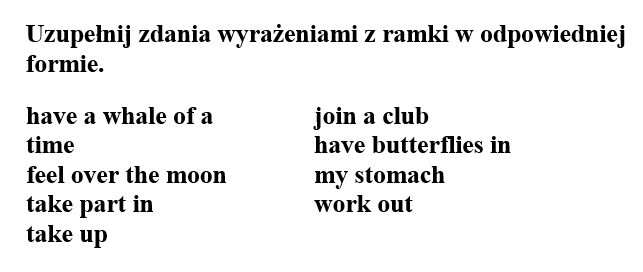
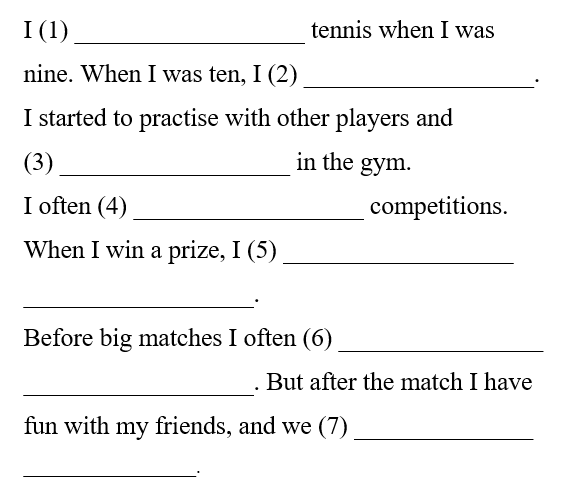
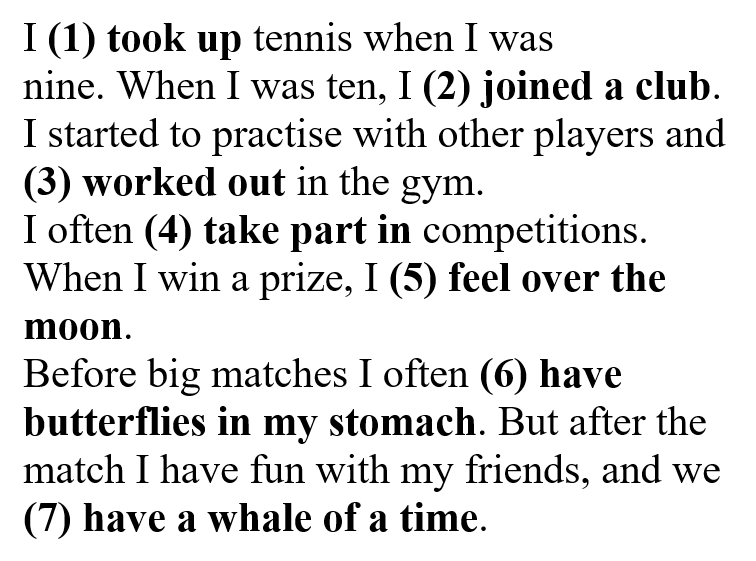
1 — B (feel over the moon — być bardzo szczęśliwym)
2 — C (join a club — zapisać się do klubu)
3 — A (take part in — brać udział w)
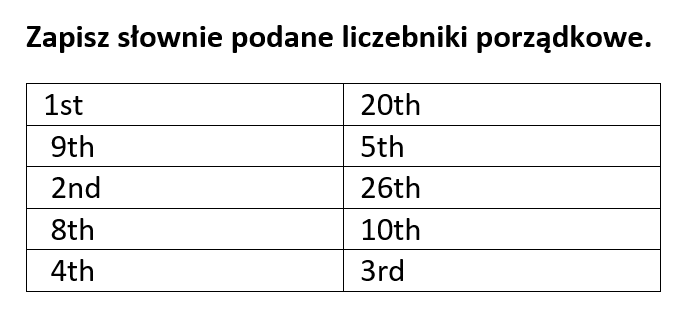
3. Liczebniki porządkowe (3 pkt)
4th: fourth
9th: ninth
22nd: twenty-second
4. Czasowniki Past Simple (4 pkt)
a) felt
b) bought
c) drank
d) took
5. Prawda czy Fałsz? (4 pkt)
a) True(Scott pochodzi z Kanady i lubi snowboard)
b) True(Joanne wspinała się na zewnątrz po raz pierwszy w wieku 10 lat)
c) False(W tenisie piłka może odbić się tylko raz)
d) False(To Susie znalazła ścieżkę, a nie Mickey)
6. Układanie pytań (3 pkt)
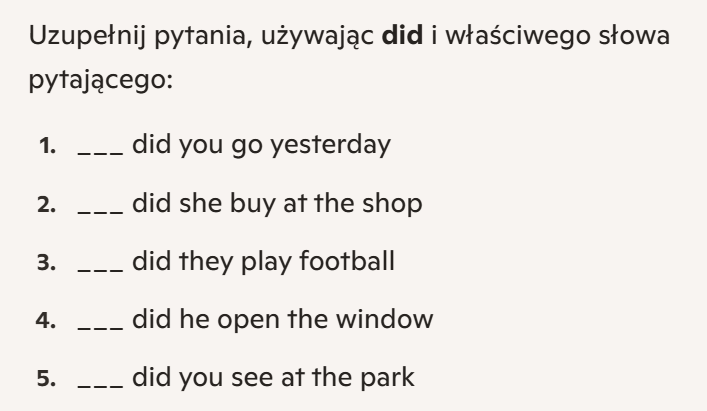
a) Who did you see yesterday?
b) What did they eat for lunch?
c) Where did she go?
ROZWIĄZANIE ZADANIA DLA CHĘTNYCH:
Sprzęt zabezpieczający używany przez Joanne to: harness (uprząż).
Wstęp: Niektóre sporty mogą być uznane za nielegalne i prowadzić do aresztowania, jeśli wiążą się z naruszaniem terenu prywatnego, narażaniem innych osób na niebezpieczeństwo lub są po prostu zbyt ryzykowne.
10. Skateboarding Wiele miast oferuje specjalne skateparki do ćwiczenia trików. Problem pojawia się poza wyznaczonymi strefami – niektóre miasta zezwalają na jazdę po chodniku (o ile nie wykonuje się trików), podczas gdy inne całkowicie zakazują skateboardingu w miejscach publicznych.
9. Parkour (freerunning) Sport ten polega na przemieszczaniu się z punktu A do punktu B bez względu na przeszkody. Uczestnicy wspinają się na ściany, skaczą między budynkami lub zeskakują z dachów. Choć sam parkour nie jest nielegalny, uprawianie go na terenie prywatnym grozi mandatem lub aresztowaniem za wtargnięcie.
8. Buildering (wspinaczka miejska) Jest to wspinaczka skałkowa przeniesiona do środowiska miejskiego. Zamiast klifów, uczestnicy wspinają się po ścianach budynków. W przeciwieństwie do parkouru, celem nie jest dotarcie do konkretnego miejsca, lecz sam proces wspinaczki i podziwianie widoków.
7. Elevator surfing (surfing na windach) Sport ten zyskał popularność w połowie lat 80., głównie wśród nastolatków i studentów. Zazwyczaj uprawiany jest w parach: jedna osoba steruje windą ręcznie, a druga znajduje się na jej dachu. Dostęp do dachu uzyskuje się przez właz lub siłowe otwarcie drzwi, gdy kabina znajduje się między piętrami.
6. Hashing Tradycja ta narodziła się w 1938 roku w Kuala Lumpur. Głównym celem “hasherów” jest promowanie sprawności fizycznej.
5. Drag racing (nielegalne wyścigi uliczne) Wyścigi te odbywają się na ulicach miast lub autostradach i są niezwykle niebezpieczne dla uczestników, innych kierowców oraz pieszych. Stanowią one również uciążliwość dla mieszkańców ze względu na duży hałas, ponieważ wyścigi odbywają się zazwyczaj późno w nocy.
4. Urban exploration (eksploracja miejska) Polega na badaniu antropogenicznego krajobrazu, w tym opuszczonych budynków, niszczejących tuneli czy kanałów ściekowych. Uczestnicy często fotografują te miejsca. Ponieważ często wiąże się to z wchodzeniem na teren prywatny bez zgody właściciela, może prowadzić do kary więzienia.
3. Underground bike racing (podziemne wyścigi rowerowe) Wywodzą się z zawodów kurierów rowerowych, znanych jako wyścigi alley cat. Zawody te odbywają się bez zezwoleń w normalnym ruchu miejskim. Zadaniem uczestników jest odwiedzenie kilku punktów docelowych i znalezienie najszybszej trasy przy użyciu wszelkich dostępnych środków.
2. Train surfing (surfing na pociągach) Zjawisko to stało się popularne w Niemczech w latach 90., jednak straciło na popularności po serii wypadków śmiertelnych. Od 2005 roku obserwuje się jego powrót. Ze względu na ogromne ryzyko dla surferów i pasażerów oraz potencjalne szkody materialne, sport ten jest nielegalny w większości krajów.
1. BASE jumping Nazwa pochodzi od akronimu oznaczającego obiekty, z których oddawane są skoki: budynki (Buildings), anteny (Antenna), przęsła (Span — np. mosty) oraz ziemia (Earth — np. klify). W porównaniu do tradycyjnego spadochroniarstwa, skoki te odbywają się z mniejszych wysokości, co daje mniej czasu na otwarcie spadochronu i czyni ten sport znacznie bardziej niebezpiecznym
Introduction It may seem strange that a sport could be illegal, but it can lead to arrest if it involves trespassing, injuring others, or is simply considered too dangerous.
10. Skateboarding Many cities provide skate parks for practicing tricks. However, outside these areas, the legality of skateboarding varies; some towns allow it on sidewalks if no tricks are performed, while others ban it in public areas entirely.
9. Parkour (Freerunning) Parkour is about getting from point A to point B regardless of obstacles, which involves leaping between buildings or jumping off roofs. While the sport itself isn’t illegal, practicing on private property can lead to fines or arrest for trespassing.
8. Buildering (Urban Climbing) This is essentially rock climbing in an urban setting, where participants scale the sides of buildings instead of cliffs. Unlike parkour, the focus is on the climb and the view rather than reaching a specific destination.
7. Elevator Surfing Popularized in the mid-1980s among students, this involves one person operating an elevator manually while another surfs on top of the car. Access is gained through roof hatches or by forcing doors open between floors.
6. Hashing Starting in Kuala Lumpur in 1938, hashing was designed to promote fitness. Simply put, participants run and then they drink.
5. Drag Racing Illegal street racing on city streets or highways is extremely dangerous to participants and pedestrians. It is also a major nuisance in residential areas due to the high noise levels late at night.
4. Urban Exploration This involves exploring man-made landscapes like abandoned buildings, tunnels, or sewers, often for photography. Because it frequently involves entering private property without permission, it can result in jail time.
3. Underground Bike Racing Originating from “alley cat” courier competitions, these races take place in normal city traffic without permits. The goal is to reach several destinations in the shortest time by any means necessary.
2. Train Surfing This trend was popular in Germany in the 1990s and saw a resurgence in 2005. Due to the high risk of injury or death, as well as property damage, it is illegal in most countries.
1. BASE Jumping The name is an acronym for the objects jumped from: Buildings, Antenna, Span, and Earth. It is significantly more dangerous than skydiving because it occurs at lower altitudes, leaving very little time to deploy a parachute.
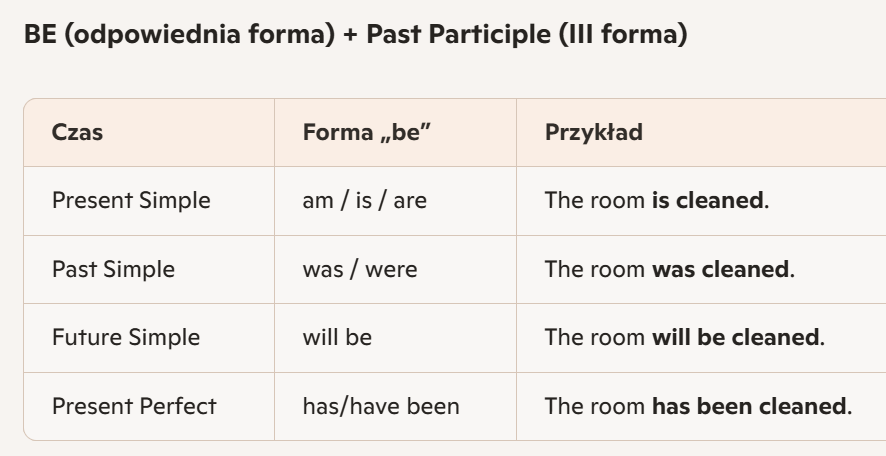
Czasy: Present Simple, Past Simple, Future Simple, Present Perfect
Materiały dla klasy 7 – teoria, przykłady, ćwiczenia
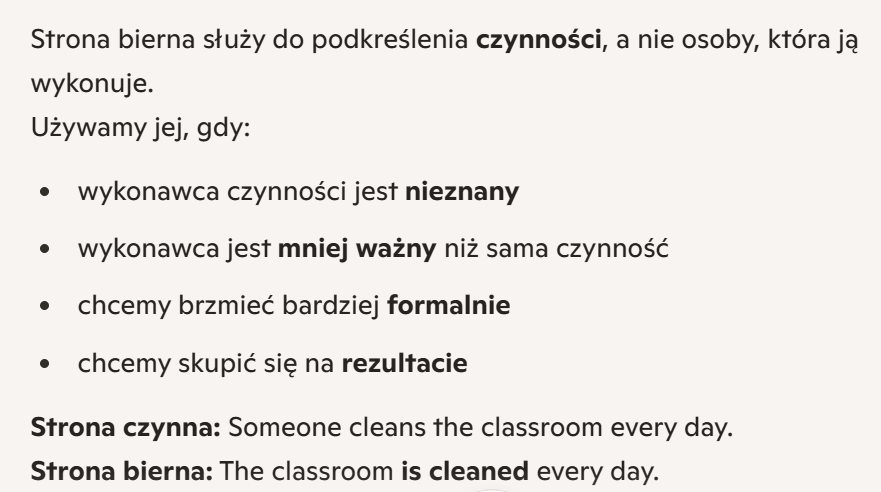
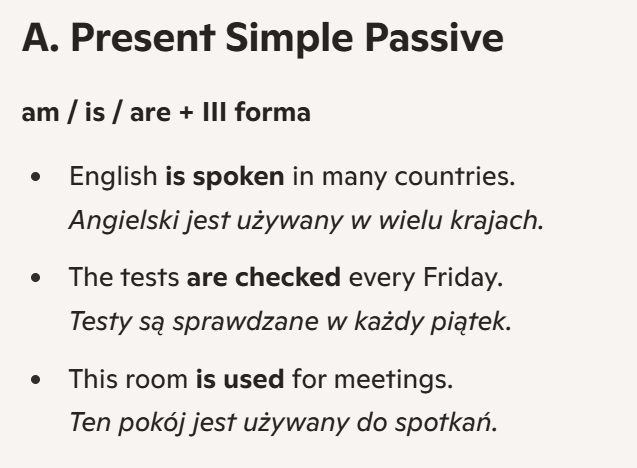
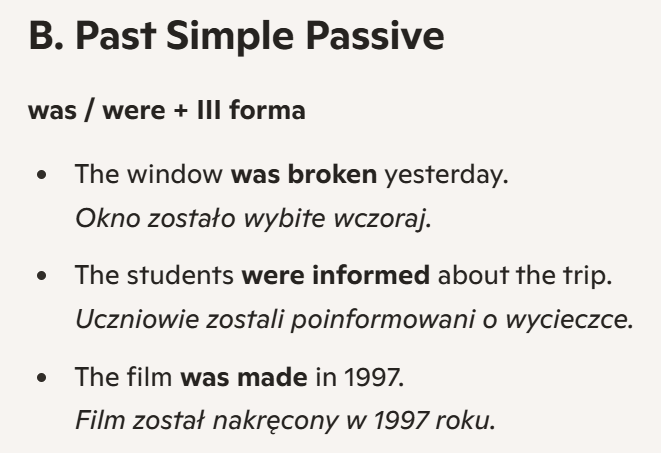
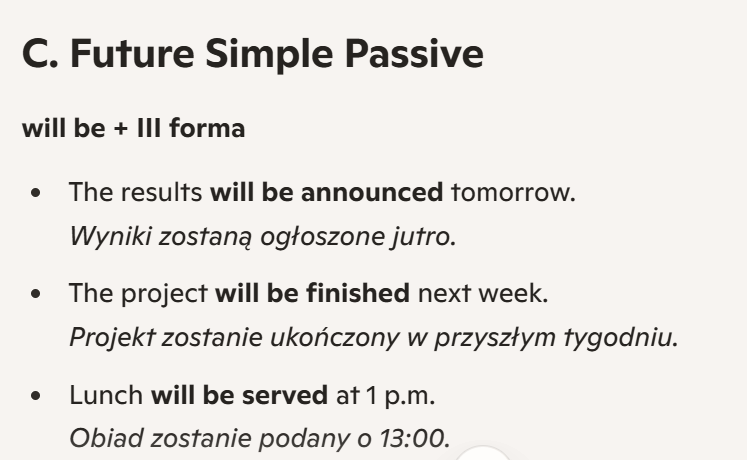
Kiedy używamy strony biernej?Budowa strony biernejPassive Voice w poszczególnych czasach
Ćwiczenie 1 – Zamień na stronę bierną
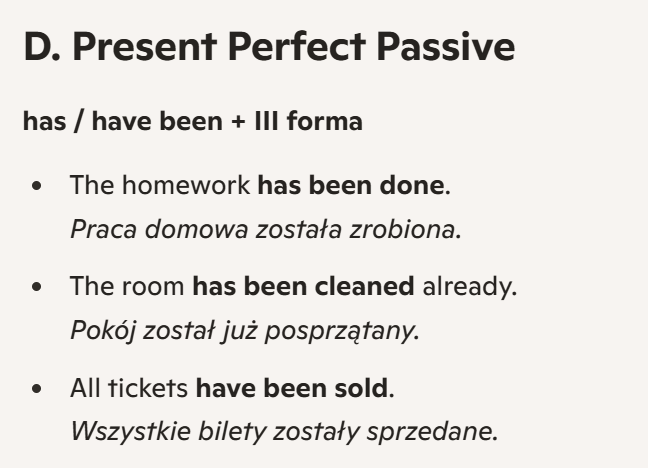
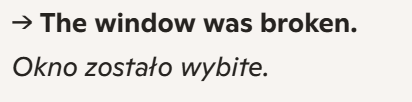
They clean the classroom every day.Oni sprzątają klasę każdego dnia.Someone broke the window. Ktoś wybił okno.They will open the new museum next month.Oni otworzą nowe muzeum w przyszłym miesiącu.They have already finished the project.Oni już skończyli projekt.People speak English all over the world.Ludzie mówią po angielsku na całym świecie.
Ćwiczenie 2 – Uzupełnij formę „be”
The homework ___ checked every Monday. Praca domowa ___ sprawdzana w każdy poniedziałek.
→ is
The cake ___ made yesterday.Ciasto ___ zrobione wczoraj.
→ was
The winners ___ announced tomorrow.Zwycięzcy ___ ogłoszeni jutro.
→ will be
The room ___ already cleaned.Pokój ___ już posprzątany.
→ has been
The tests ___ written last week. Testy ___ napisane w zeszłym tygodniu.
→ were
Ćwiczenie 3 – Wybierz poprawną formę
The film (is made / was made) in 2001.Film został nakręcony w 2001 roku.
→ was made
The results (will be announced / are announced) next Friday. Wyniki zostaną ogłoszone w przyszły piątek.
→ will be announced
English (is spoken / was spoken) in Canada. Angielski jest używany w Kanadzie.
→ is spoken
The project (has been finished / was finished) already. Projekt został już ukończony.
→ has been finished
The room (is cleaned / will be cleaned) every day.Pokój jest sprzątany codziennie.
Przekształć zdania tak, żeby zachować ten sam sens. Użyj podanego słowa.
1. Someone built this bridge in 1950. [WAS]
This bridge
2. “I am tired,” he said. [WAS]
He said that he
3. It is too cold to go swimming. [ENOUGH]
It is not
4. She started learning French two years ago. [HAS]
She
5. “Do you like pizza?” she asked me. [WHETHER]
She asked me
🗝️ Odpowiedzi:
This bridge was built in 1950.
He said that he was tired.
It is not warm enough to go swimming.
She has been learning French for two years.
She asked me whether I liked pizza.
🔴 TrudneZadanie 2.5 – Gerund vs Bezokolicznik5 pkt
Wybierz właściwą formę: gerund (-ing) lub bezokolicznik (to + verb).
1. I enjoy _____ to music in the evenings.
2. She decided _____ a new language this year.
3. He is good at _____ problems quickly.
4. Would you like _____ to the cinema tonight?
5. They avoided _____ the busy road at rush hour.
📖
Rozumienie tekstów pisanych
Ćwicz czytanie ze zrozumieniem – od zdań dopasowujących po teksty z wielokrotnym wyborem.
🟢 ŁatweZadanie 3.1 – Dobieranie nagłówków do akapitów4 pkt
Dobierz nagłówek (A–E) do każdego akapitu (1–4). Jeden nagłówek jest zbędny.
🌿 Going Green at School
(1) Our school has recently started a new programme to reduce waste. Students collect paper, plastic, and glass separately and bring them to special bins in the corridors.
(2) Every Friday, a group of volunteers spends an hour picking up litter in the school garden. Last month they planted twenty new trees.
(3) The school canteen now uses only reusable plates and cups. The kitchen also composts food leftovers to create natural fertiliser for the garden.
(4) The head teacher plans to install solar panels on the school roof next year. This will help cut the school’s electricity bills significantly.
Nagłówki:
A – Cleaner EnergyB – Sorting RubbishC – Water Saving TipsD – Zero Waste CanteenE – Green Volunteers
1. Akapit 1
2. Akapit 2
3. Akapit 3
4. Akapit 4
🗝️ Odpowiedzi:
Akapit 1 → B – Sorting Rubbish
Akapit 2 → E – Green Volunteers
Akapit 3 → D – Zero Waste Canteen
Akapit 4 → A – Cleaner Energy
Zbędny nagłówek: C – Water Saving Tips
🟡 ŚrednieZadanie 3.2 – Wielokrotny wybór (tekst o podróżach)4 pkt
Przeczytaj tekst, a następnie wybierz odpowiedź A, B, C lub D.
✈️ Travelling on a Budget
Many young people dream of travelling the world, but believe it requires a fortune. In reality, smart planning can make adventure affordable. Booking flights months in advance can save up to 60% on the ticket price. Travelling in the “shoulder season” – the period between peak and off-peak seasons – means cheaper hotels and fewer crowds. Staying in hostels is another great option; not only is it economical, but it also provides a chance to meet fellow travellers from around the globe. Finally, cooking your own meals instead of eating out every day can dramatically cut your daily budget.
1. According to the text, booking flights early can save…
2. The “shoulder season” means…
3. What advantage of hostels is mentioned in the text?
Przeczytaj tekst. Zdecyduj, czy zdanie jest P (prawda), F (fałsz), czy NW (nie wiadomo na podstawie tekstu).
🤖 Artificial Intelligence in Schools
More and more schools around the world are introducing artificial intelligence (AI) tools into the classroom. These technologies can personalise learning for each student, identifying areas where a pupil struggles and providing additional exercises. Critics, however, argue that overreliance on AI may reduce the development of critical thinking skills. Some teachers feel uncertain about using new technology, as they have not received proper training. A recent survey of 500 secondary school teachers in Europe found that 65% believe AI will become a standard part of education within ten years.
1. AI tools can identify which parts of a subject a student finds difficult.
2. All teachers are enthusiastic about using AI in their lessons.
3. The survey was conducted online.
4. Most teachers surveyed think AI will be standard in education within a decade.
🎧
Rozumienie ze słuchu
Przeczytaj pytania PRZED odsłuchaniem. Zaznacz odpowiedzi podczas pierwszego odsłuchu, potwierdź podczas drugiego.
🟡 ŚrednieZadanie 4.1 – Rozmowa w sklepie (symulacja)4 pkt
Nagranie: W sklepie sportowym
Rozmowa klientki ze sprzedawcą | ~2 min.
💡 Strategia: Przeczytaj wszystkie pytania i opcje PRZED odsłuchem. Zaznacz „NOT” w pytaniach, jeśli się pojawia!
1. The customer wants to buy…
2. The shoes the customer tries are…
3. The final price of the shoes is…
4. The customer pays by…
🗝️ Odpowiedzi:
C – running shoes
B – too big
D – £50
B – card
🔴 TrudneZadanie 4.2 – Dopasuj rozmówcę do wypowiedzi4 pkt
Nagranie: Uczniowie o swoim wolnym czasie
4 wypowiedzi | ~3 min.
Dopasuj osobę (A–E) do tego, co mówi (1–4). Jedna osoba jest zbędna.
A – AnnaB – BenC – ClaraD – DavidE – Emma
1. Volunteers at an animal shelter
2. Learns to play guitar
3. Does competitive swimming
4. Prefers reading to sport
🗝️ Odpowiedzi:
C – Clara
B – Ben
A – Anna
D – David
Zbędna osoba: E – Emma
✍️
Wypowiedź pisemna
Pamiętaj: proste zdania bez błędów są lepsze niż skomplikowane z błędami. Zaplanuj przed pisaniem!
🟡 ŚrednieZadanie 5.1 – E-mail do przyjaciela (50–80 słów)10 pkt
Twój anglojęzyczny przyjaciel napisał do Ciebie i zapytał o Twoje plany na wakacje. Napisz e-mail, w którym:
opiszesz, gdzie planujesz pojechać na wakacje,
wyjaśnisz, dlaczego wybrałeś/wybrałaś to miejsce,
zapytasz przyjaciela o jego plany.
✏️ Zakres słów: 50–80 słów | Styl: nieformalny
Słowa: 0 / 80
🗝️ Przykładowa odpowiedź:
Dear Tom,
Thanks for your email! This summer I’m planning to visit the Tatra Mountains in southern Poland. I chose this place because I love hiking and the views there are absolutely breathtaking. I’m going with my family for two weeks in July.
W Twoim imieniu zostałeś/aś poproszony/a o napisanie ogłoszenia na tablicę szkolną o szkolnym kole wolontariatu. W ogłoszeniu:
wyjaśnij, czym zajmuje się koło wolontariatu,
podaj, kiedy i gdzie odbywają się spotkania,
zachęć uczniów do dołączenia i podaj, jak mogą się zapisać.
✏️ Zakres słów: 60–90 słów | Styl: neutralny/formalny
Słowa: 0 / 90
🗝️ Przykładowa odpowiedź:
JOIN OUR VOLUNTEER CLUB!
Are you interested in helping others and making your community a better place? Our Volunteer Club organises charity events, collects food for local families in need, and cleans up the school garden.
We meet every Wednesday at 3 pm in Room 15.
Everyone is welcome! To sign up, speak to Mrs Kowalska or write your name on the list outside the headteacher’s office.
(~70 słów)
⭐ Użyte struktury: pytanie retoryczne, Present Simple, tryb rozkazujący, podanie konkretnych informacji
📋
Klucz odpowiedzi
Kompletny klucz do wszystkich zadań. Użyj po samodzielnym rozwiązaniu ćwiczeń!
Pamiętaj! Egzamin E8 sprawdza, czy komunikujesz się skutecznie — nie czy jesteś perfekcyjny/a.
✅ Czytaj polecenia dokładnie i zwracaj uwagę na słowo NOT.
✅ W pisaniu: proste zdania bez błędów > skomplikowane z błędami.
✅ W słuchaniu: czytaj pytania przed odsłuchem.
✅ Sprawdzaj swoje odpowiedzi — masz czas!
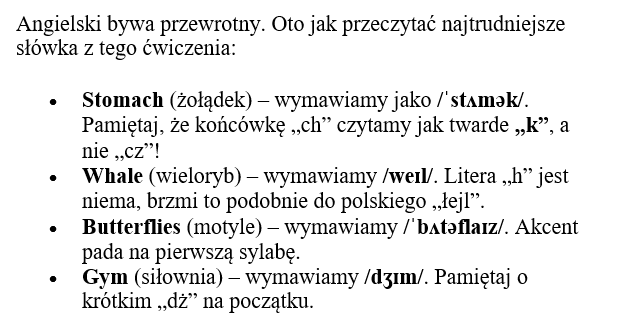
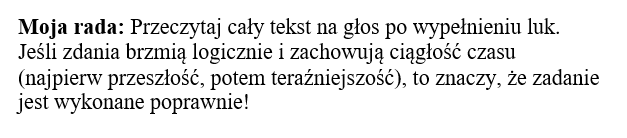
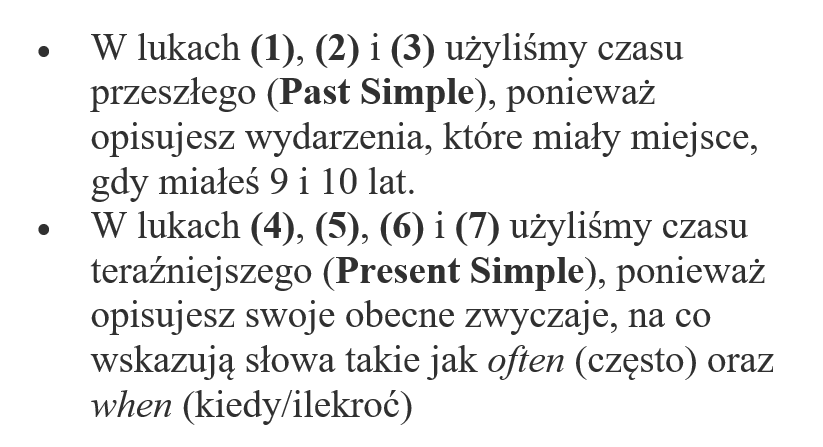
Zadanie 2Jak opowiadać o pasjach i emocjach? Wskazówki do ćwiczenia1. Kluczowe słownictwo i idiomy2. Gramatyka: Zwróć uwagę na czas!3. Wymowa trudnych wyrazówMoja radaOdpowiedź
Zadanie 3
Zadanie 4
Zadanie 5
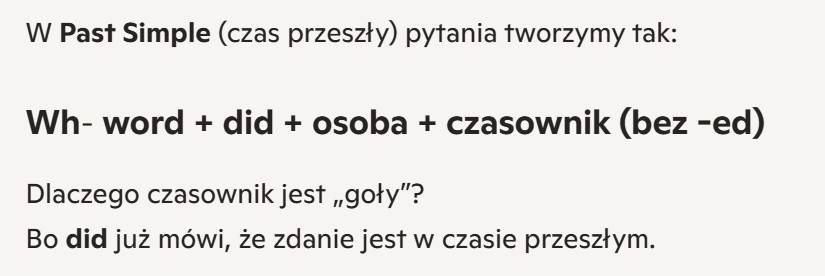
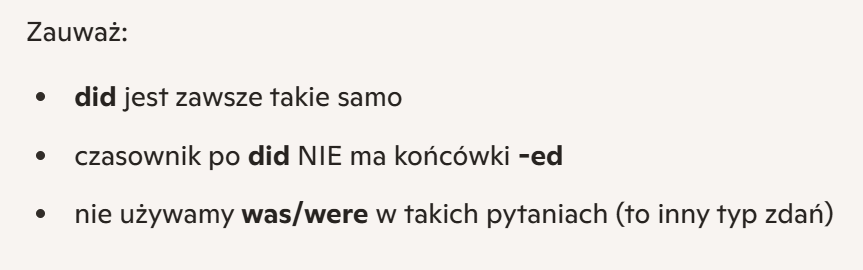
I did my homework last night.
I didn’t do my homework last night.
I went to the park yesterday.
I didn’t go to the park yesterday.
I bought a new pair of trainers last week.
I didn’t buy a new pair of trainers last week.
I saw Star Wars last weekend.
I didn’t see Star Wars last weekend.
I found a small kitten last month.
I didn’t find a small kitten last month.
I swam in a lake last summer.
I didn’t swim in a lake last summer.
Zadanie 6
początek pytania
czynność
wyrażenie czasu
Did you Did your mum Did your best friend Did your friends
go on holiday visit your grandparents do your homework play football
yesterday on Saturday last night last summer
Zadanie 7
Zadanie 8
1. I ate an apple yesterday. HAD
I had an apple yesterday.
2. I started snowboarding last winter. TOOK UP
I took up snowboarding last winter.
3. Did you fly to a different country last year? ABROAD
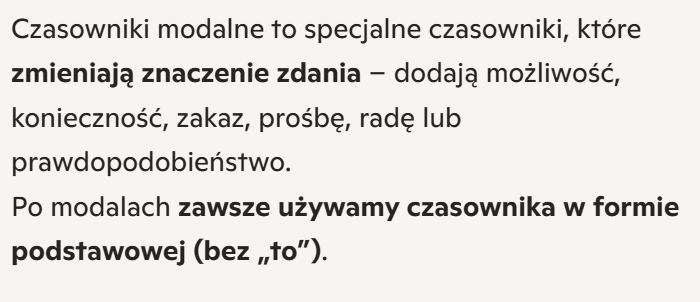
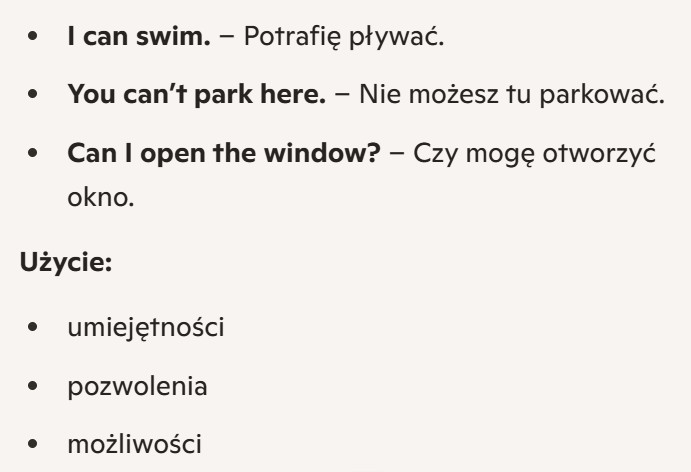
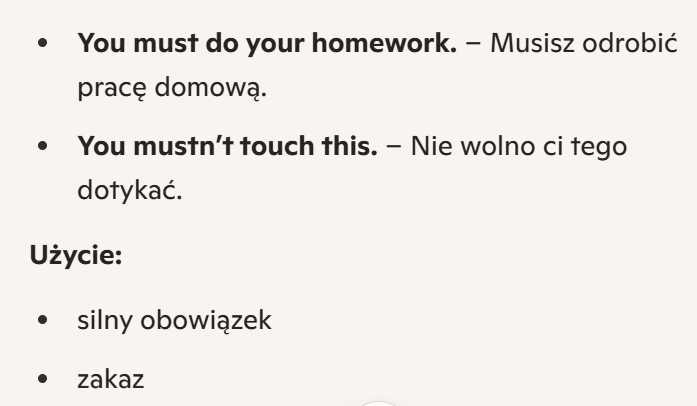
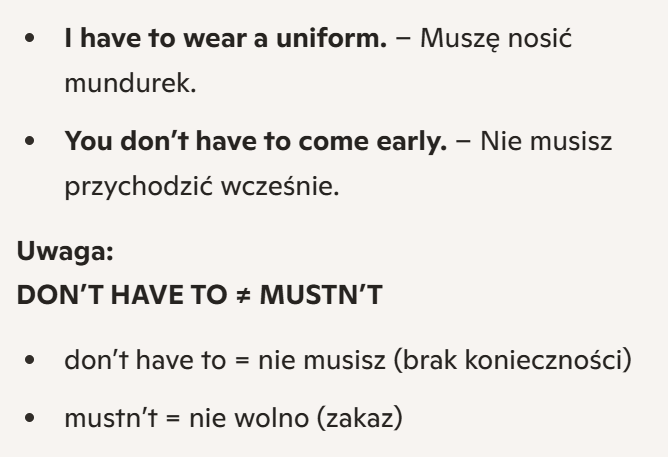
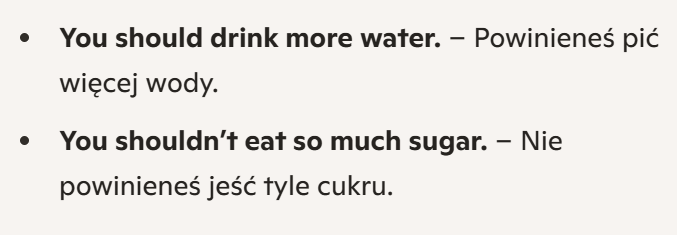
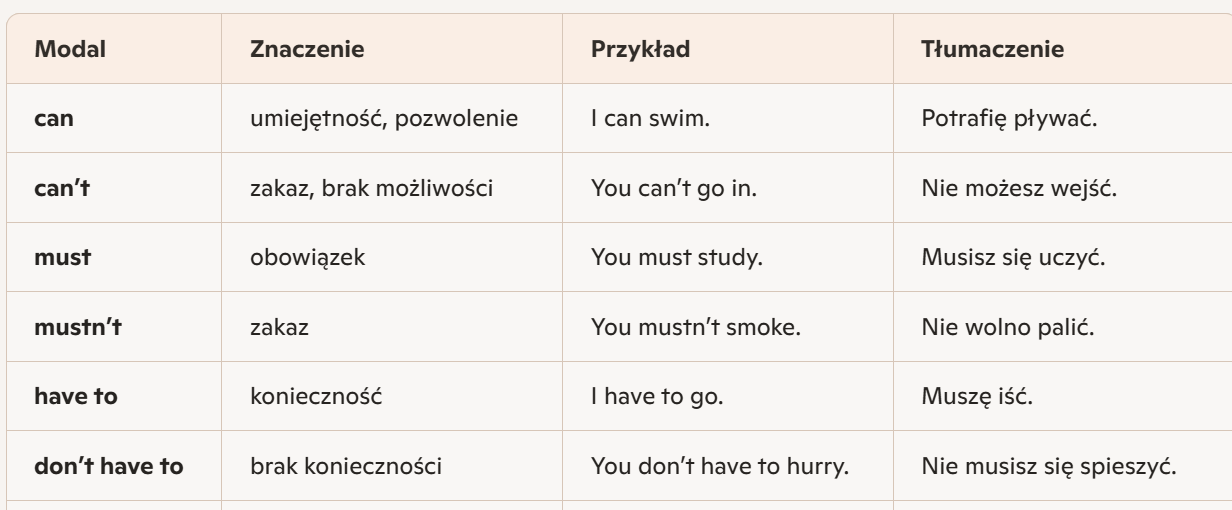
can, could, may, might, must, shall, should, will, would
1.Co to są czasowniki modalne?
Najważniejsze czasowniki modalne w klasie 8
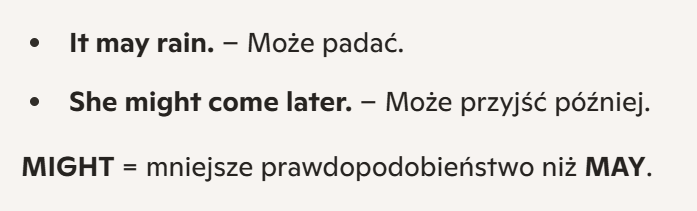
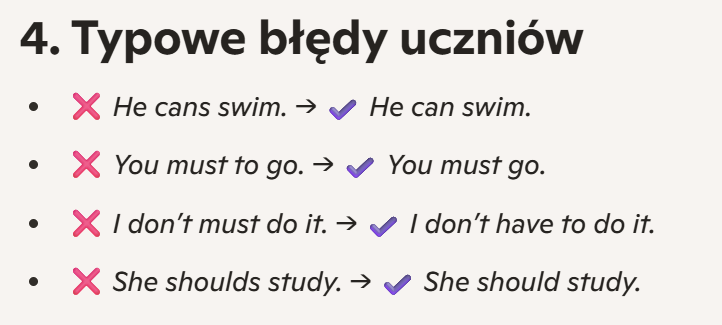
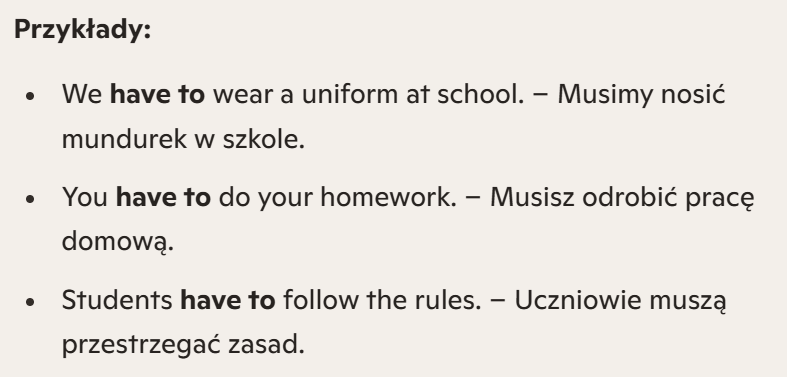
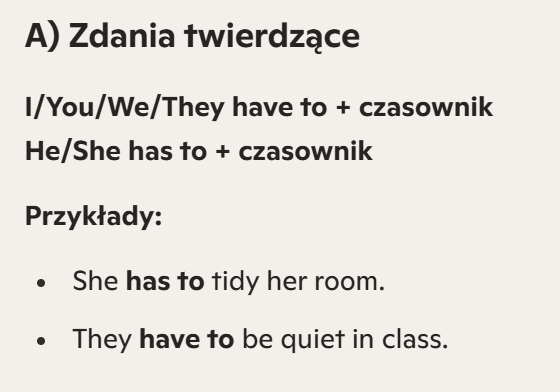
2.1. CAN / CAN’T – umiejętność, możliwość, pozwolenie2.2. MUST / MUSTN’T – obowiązek, zakaz2.3. HAVE TO / DON’T HAVE TO – konieczność, brak konieczności2.4. SHOULD / SHOULDN’T – rada2.5. MAY / MIGHT – prawdopodobieństwoTabela porównawcza modal verbsTypowe błędy
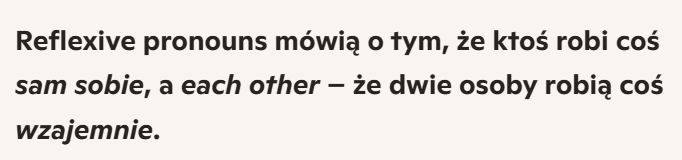
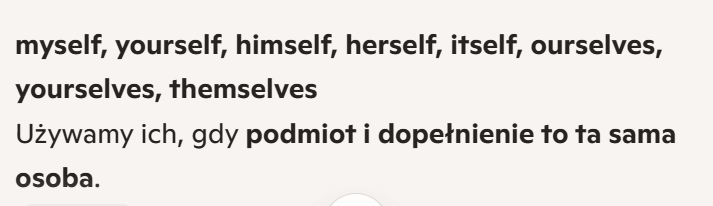
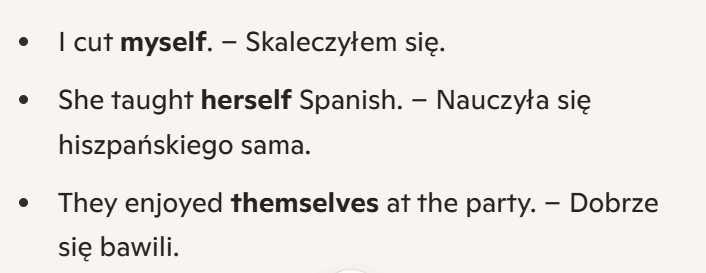
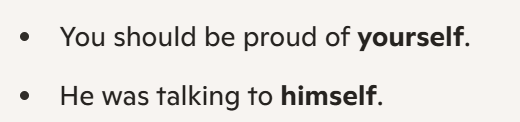
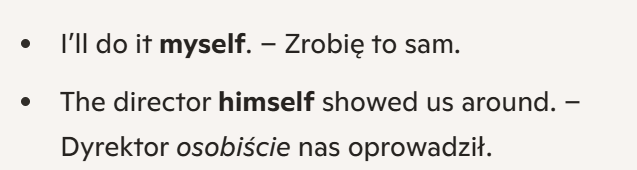
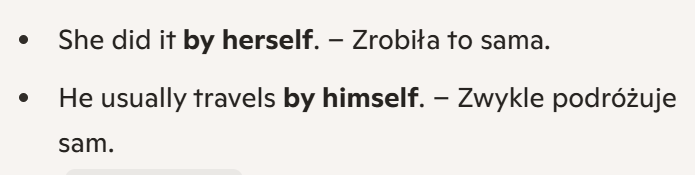
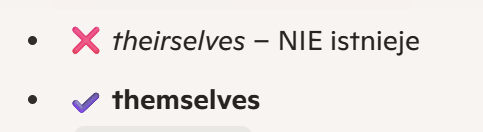
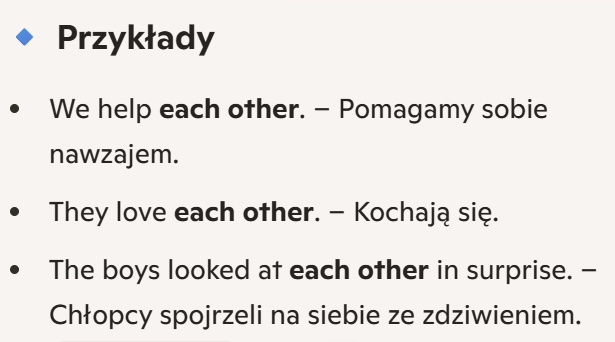
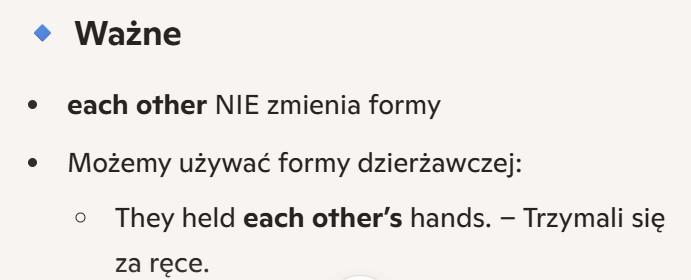
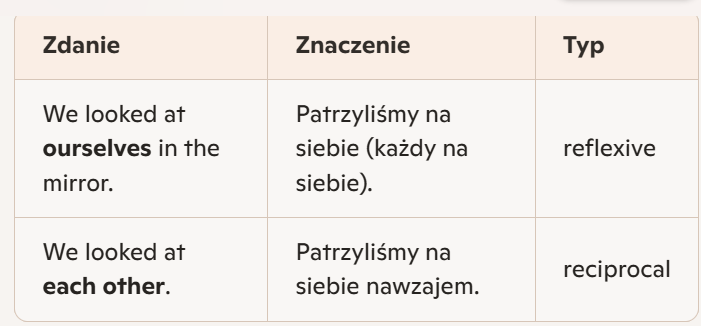
A. Gdy ktoś robi coś sam sobieB. Po niektórych przyimkach (gdy odnoszą się do podmiotu)C. Aby podkreślić, że ktoś zrobił coś osobiścieD. “by + reflexive pronoun” = samodzielnie / bez pomocyUwagaReciprocal pronouns: each other (wzajemnie)Reflexive vs. each other – różnica
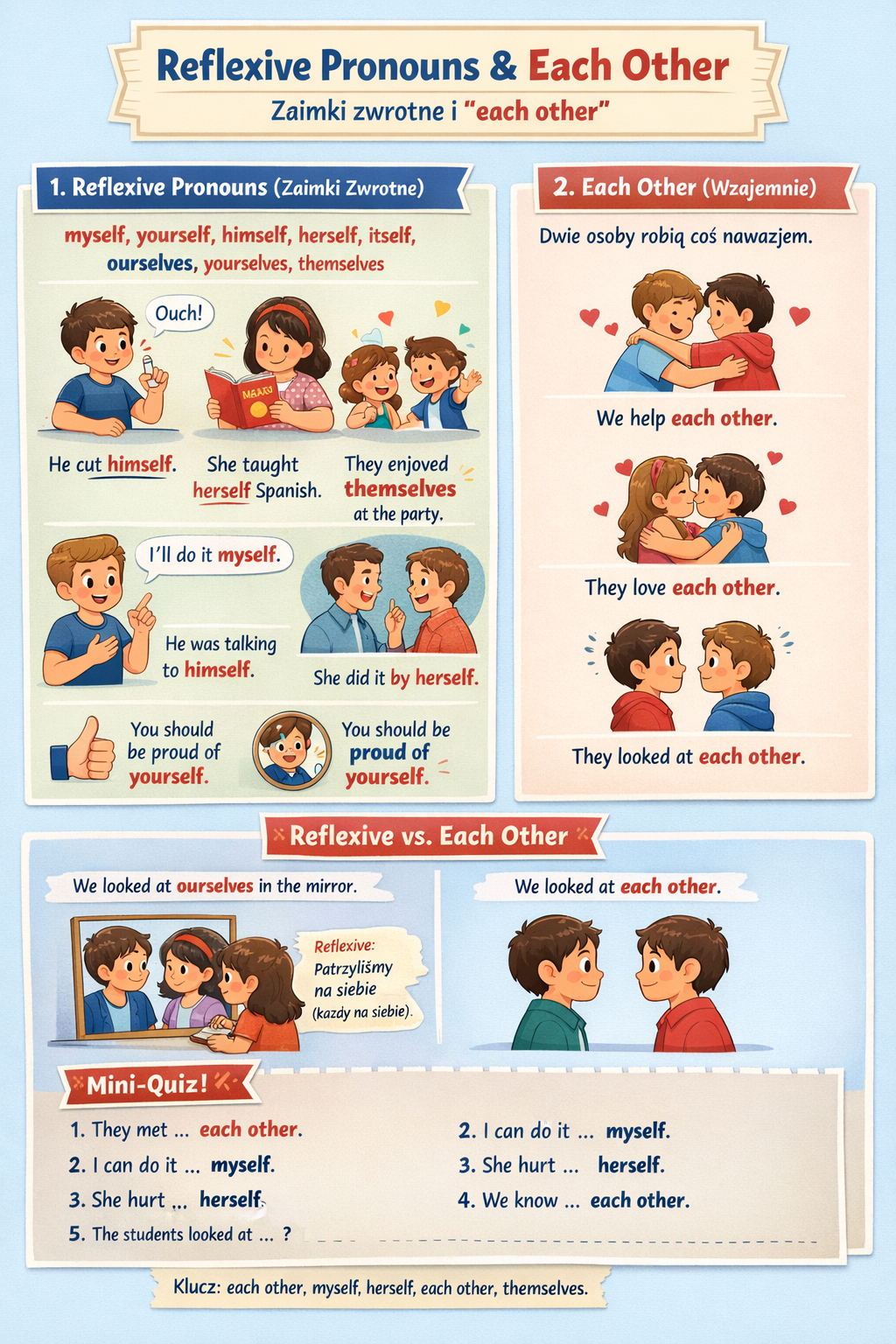
✨ Reflexive Pronouns & Each Other
Poćwicz zaimki zwrotne i wyrażenie “each other” przed testem!
💡 Szybka powtórka:
• Reflexive Pronouns: używamy, gdy podmiot i dopełnienie to ta sama osoba (np. I see myself – widzę siebie).
• Each other: używamy, gdy dwie osoby robią coś wzajemnie (np. We like each other – lubimy się nawzajem).
1. Kate and Alice are best friends. They know _______ very well.
each other
Używamy “each other”, ponieważ one znają się nawzajem. To relacja między dwiema osobami.
2. Be careful with that knife! You might cut _______.
yourself
Mówimy do jednej osoby (Ty), która może skaleczyć samą siebie.
3. Look! The cat is cleaning _______.
itself
Kot (it) czyści samego siebie. Zaimek zwrotny dla “it” to “itself”.
4. My parents love _______ very much.
each other
Rodzice kochają się nawzajem (mama tatę, tata mamę).
5. We enjoyed _______ at the party last night.
ourselves
“We enjoyed ourselves” to stały zwrot oznaczający “dobrze się bawiliśmy” (my sami).
6. They looked at _______ and started to laugh.
each other (lub themselves)
Najczęściej użyjemy each other (spojrzeli na siebie nawzajem). Gdyby spojrzeli w lustro, użylibyśmy themselves.
7. Tom, did you paint this picture _______?
yourself
Pytamy Toma, czy namalował to samodzielnie (sam siebie/sam przez się).
8. The children dressed _______ before going outside.
themselves
Dzieci ubrały same siebie, więc używamy “themselves”.
9. We haven’t seen _______ for a long time.
each other
Chodzi o to, że my (dwie osoby) nie widzieliśmy się nawzajem.
10. Be quiet! You’re talking to _______ again.
yourself
Mówisz do samego siebie, więc używamy “yourself”.
11. The two teams congratulated _______ after the match.
each other
Drużyny gratulowały sobie wzajemnie, więc “each other”.
12. She bought _______ a new laptop for school.
herself
Kupiła laptopa sobie samej, więc “herself”.
13. The boys pushed _______ into the pool.
each other
Chłopcy popychali się wzajemnie, więc “each other”.
14. I can’t believe you did it all by _______!
yourself
“By yourself” oznacza „samodzielnie”.
15. We promised _______ to stay in touch.
each other
Obiecaliśmy sobie wzajemnie, więc “each other”.
16. The robot can repair _______ if necessary.
itself
Robot (it) naprawia samego siebie, więc “itself”.
17. They taught _______ how to play chess.
themselves
Nauczyli się sami, więc “themselves”.
18. After the argument, they refused to talk to _______.
each other
Po kłótni nie chcieli rozmawiać ze sobą nawzajem.
19. Please help _______ with the project.
each other
Prośba, aby uczniowie pomagali sobie wzajemnie.
20. I looked at _______ in the mirror and smiled.
myself
W lustrze widzimy siebie, więc “myself”.
21. She looked at _______ in the camera and smiled.
herself
Patrzy na siebie w kamerze, więc używamy “herself”.
22. The students checked _______ before handing in the test.
their answers themselves / themselves
Sprawdzali swoje odpowiedzi samodzielnie, więc “themselves”.
23. We met _______ at the cinema by accident.
each other
Spotkaliśmy się nawzajem, więc “each other”.
24. The dog hurt _______ while jumping over the fence.
itself
Pies zranił siebie, więc “itself”.
25. They blamed _______ for the mistake.
themselves
Obwiniali siebie samych, więc “themselves”.
26. My friends and I call _______ almost every day.
each other
Dzwonimy do siebie wzajemnie, więc “each other”.
27. He introduced _______ to the new class.
himself
Przedstawił siebie, więc “himself”.
28. The two girls helped _______ with homework.
each other
Pomagały sobie wzajemnie.
29. I made this cake all by _______.
myself
Zrobiłem to samodzielnie, więc “myself”.
30. They looked at _______ in surprise.
each other
Spojrzeli na siebie wzajemnie w zaskoczeniu.
31. The bird protected _______ from the rain.
itself
Ptak chronił siebie, więc “itself”.
32. We told _______ to stay calm.
ourselves
Mówimy do samych siebie, więc “ourselves”.
33. The two boys were angry and didn’t talk to _______.
each other
Chłopcy nie rozmawiali ze sobą nawzajem.
34. She taught _______ how to play the piano.
herself
Nauczyła się sama, więc “herself”.
35. We hugged _______ after the long trip.
each other
Przytuliliśmy się wzajemnie.
36. The cat warmed _______ by the fireplace.
itself
Kot ogrzewał siebie, więc “itself”.
37. They prepared _______ for the competition.
themselves
Przygotowywali siebie samych.
38. The two sisters often borrow clothes from _______.
each other
Siostry pożyczają ubrania wzajemnie.
39. He couldn’t stop laughing at _______ after seeing the photo.
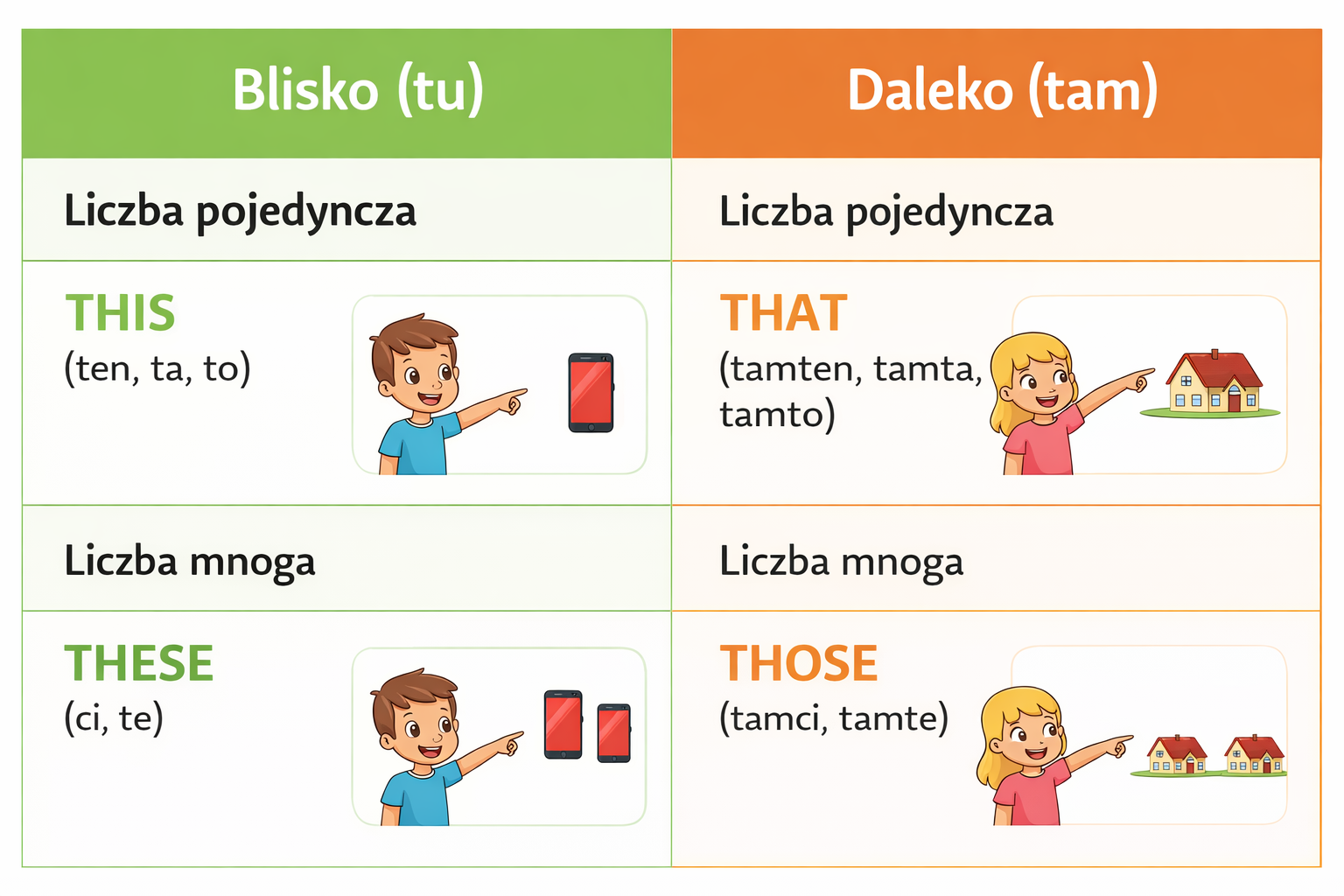
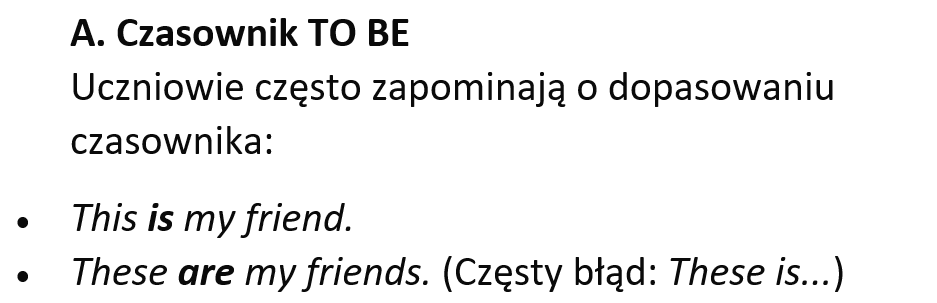
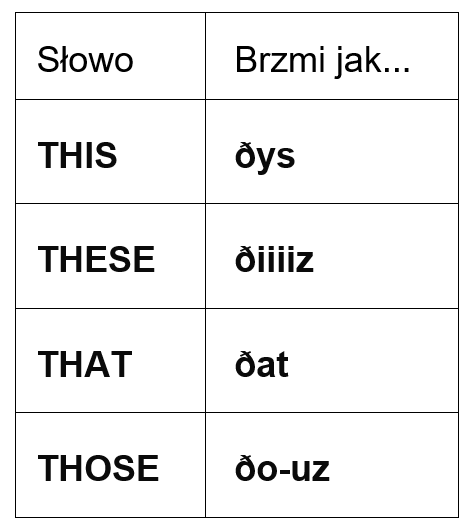
1. Podział podstawowy (Odległość i Liczba)Mnemotechnika2. Kiedy “Blisko”, a kiedy “Daleko”?3. Pułapki gramatyczne (Na co uważać?)4. Szybkie ćwiczenie “Sprawdź się”Klucz5. Wymowa
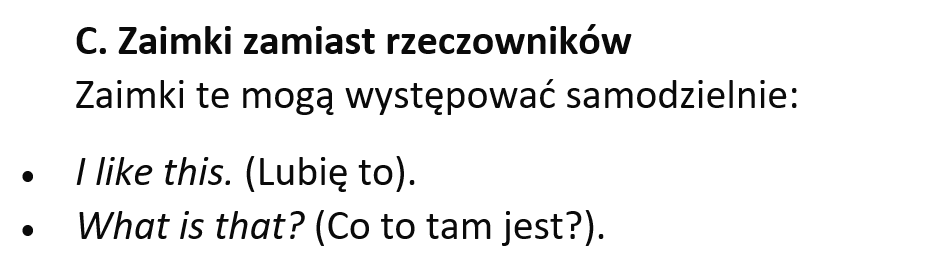
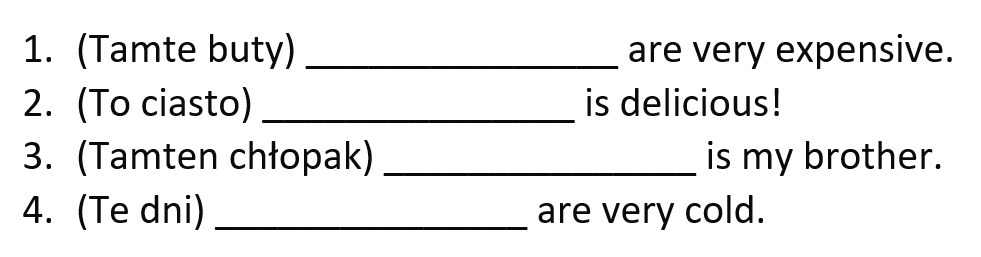
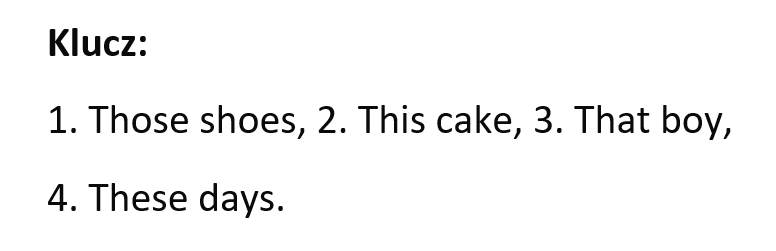
🎓 Advanced Practice: This, That, These, Those
Przeanalizuj liczbę, odległość i czas. Powodzenia!
Sekcja 1: Przestrzeń i Odległość
1. Put _______ magazines over there on the shelf.
those
Liczba mnoga (magazines) + “over there” (tam, daleko).
2. _______ sandwich I’m eating now is delicious!
This
Liczba pojedyncza + bardzo blisko (jem go teraz).
3. Look at _______ stars in the sky.
those
4. Who is _______ man standing by the gate?
that
5. _______ keys in my hand are for the garage.
These
6. Could you bring me _______ chair from the kitchen?
that
7. _______ shoes I’m wearing are too small.
These
8. Is _______ your car parked across the street?
that
9. I love _______ flowers here in the vase.
these
10. Give me _______ pen you are holding.
that (trzyma go druga osoba, więc jest “tam”)
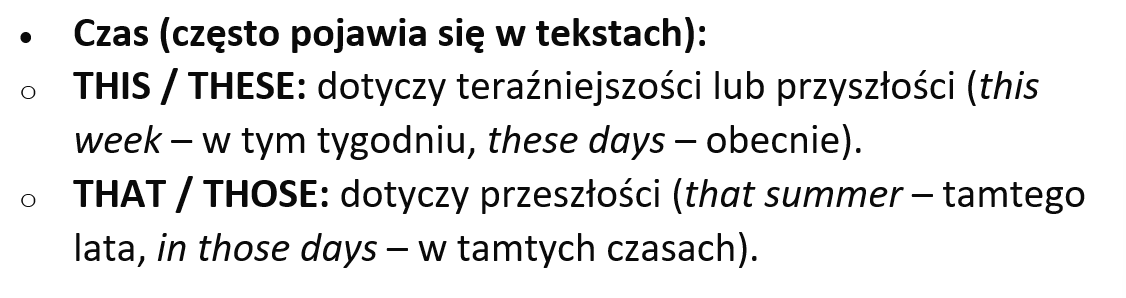
Sekcja 2: Kontekst Czasowy (Przeszłość vs Teraźniejszość)
11. _______ summer in 2015 was the best ever!
That
Mówimy o odległym czasie w przeszłości.
12. _______ days, life is much faster than before.
These
Wyrażenie “these days” oznacza “obecnie”.
13. Do you remember _______ people we met in Italy?
those (przeszłość)
14. _______ movie we’ve just seen was great.
This (właśnie go obejrzeliśmy)
15. People lived differently in _______ times.
those (w tamtych czasach)
16. I am very busy _______ week.
this (w tym tygodniu)
17. _______ earrings were a gift from my late grandma.
These (trzymam je/mam na sobie)
18. _______ party last night was amazing.
That (przeszłość)
19. We are going on holiday _______ month.
this
20. What was _______ noise a minute ago?
that (coś co minęło)
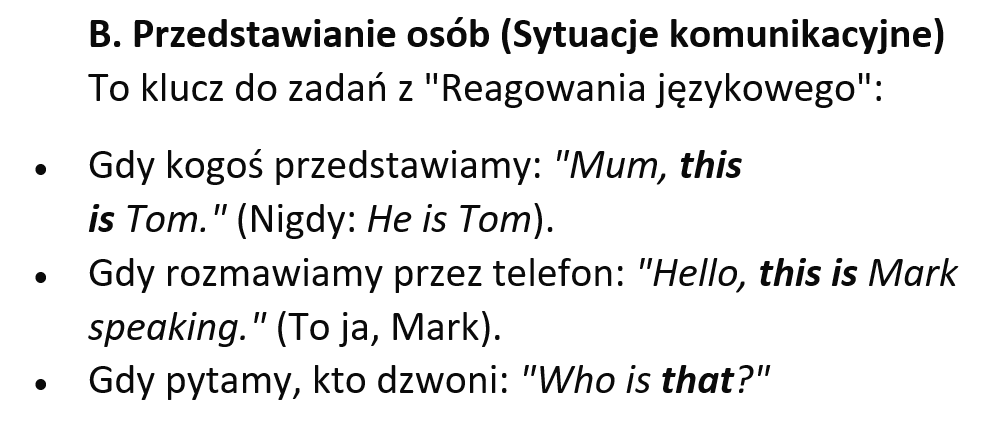
Sekcja 3: Reagowanie i Telefon
21. (Przez telefon): Hello! _______ is Kate speaking.
This
Przez telefon przedstawiamy się używając “This is…”.
22. (Przedstawianie kogoś): Peter, _______ are my parents.
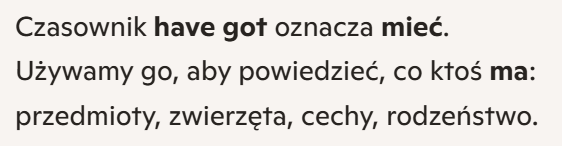
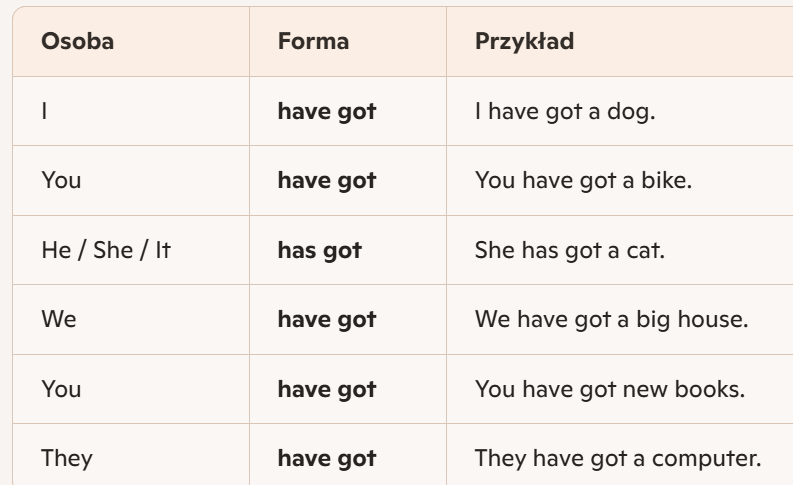
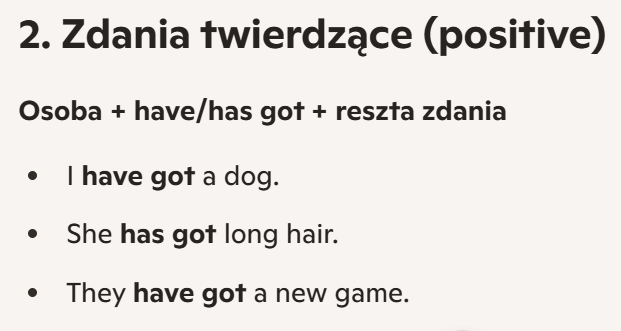
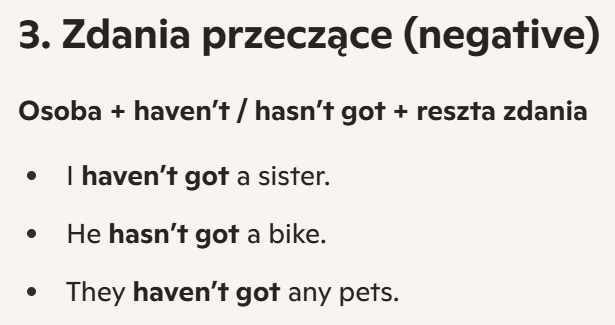
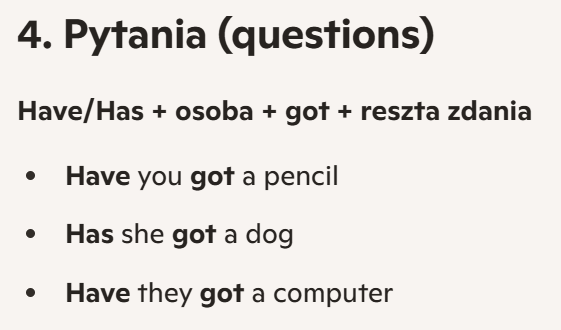
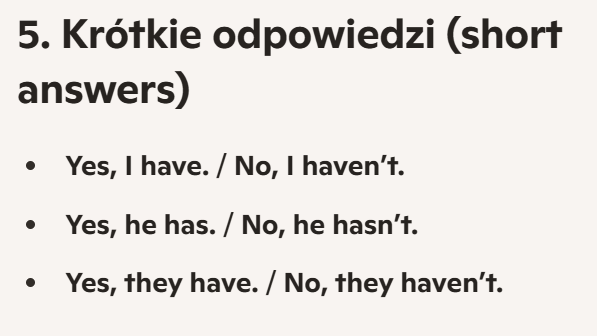
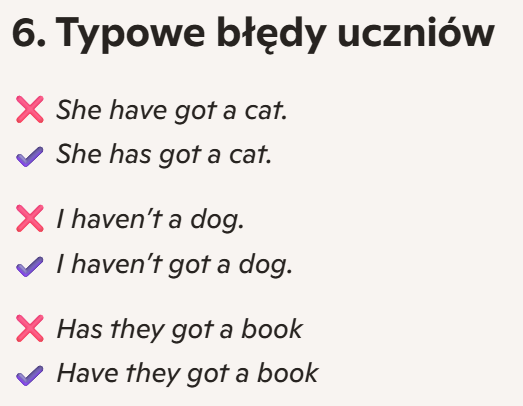
1. Formy have got2. Zdania twierdzące (positive)3. Zdania przeczące (negative)4. Pytania (questions)5. Krótkie odpowiedzi (short answers)6. Typowe błędy uczniów
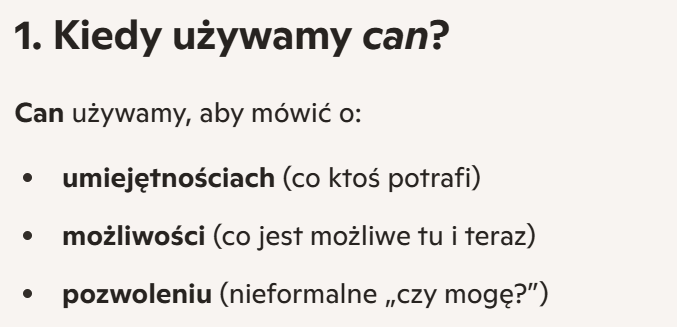
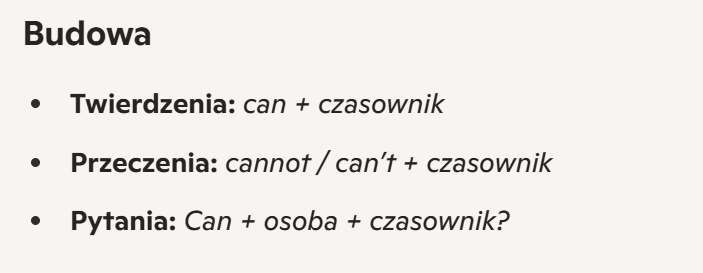
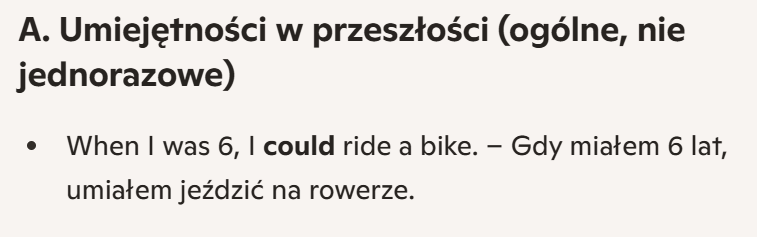
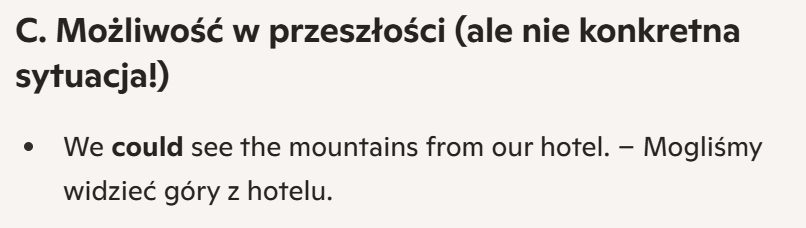
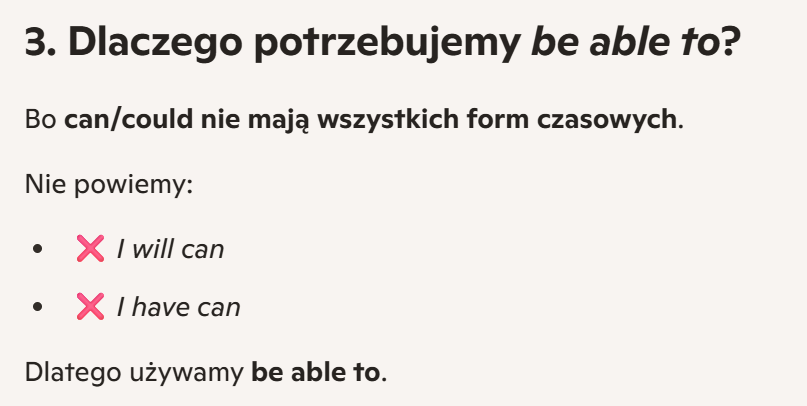
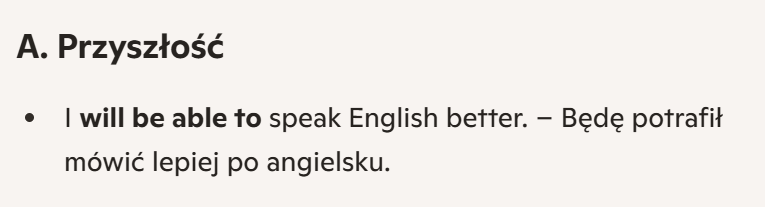
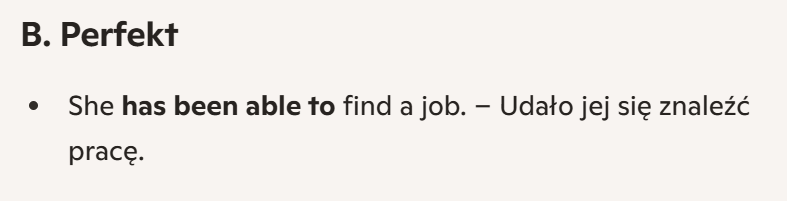
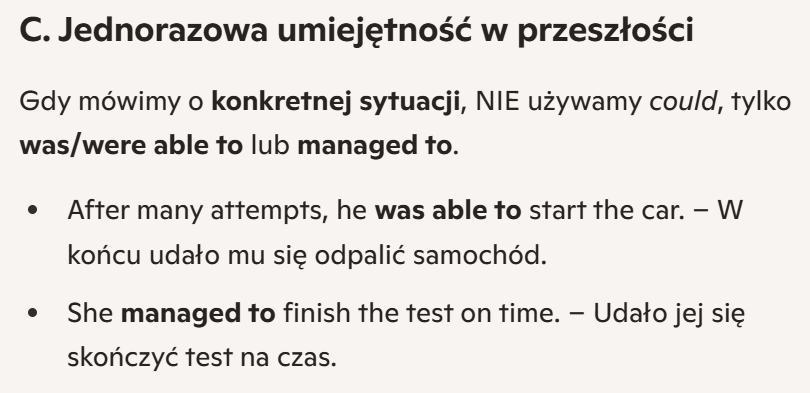
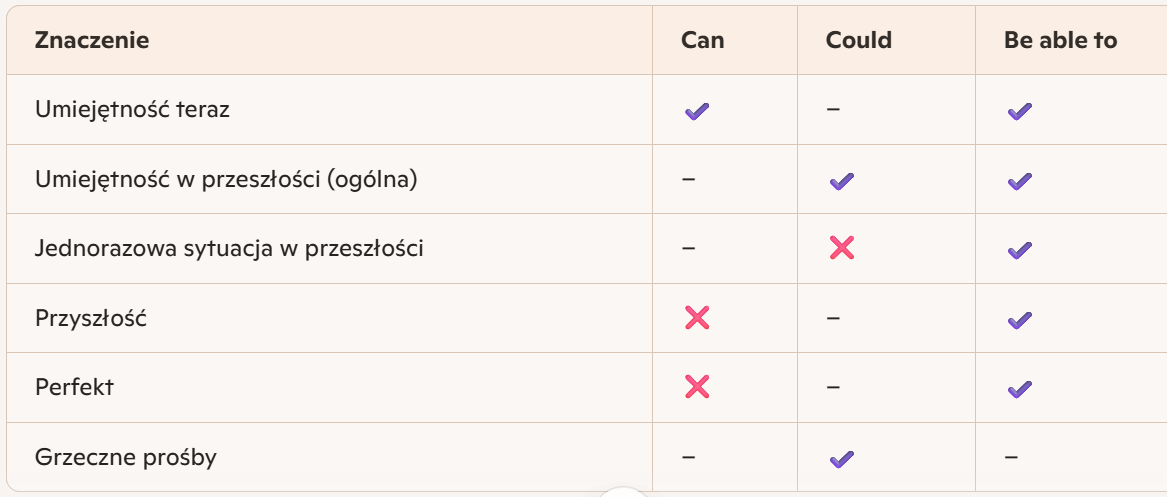
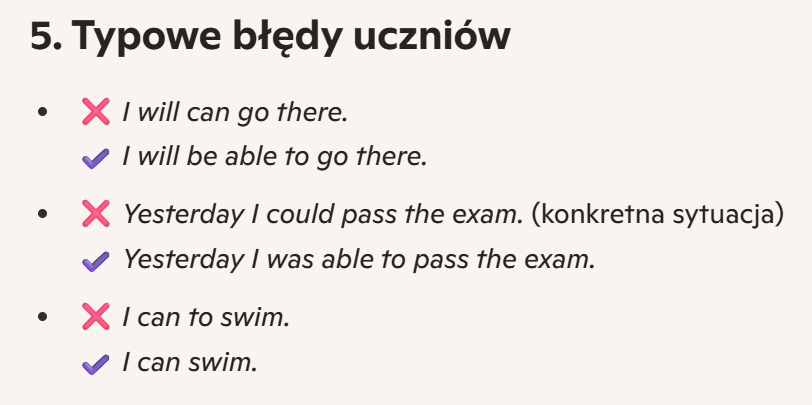
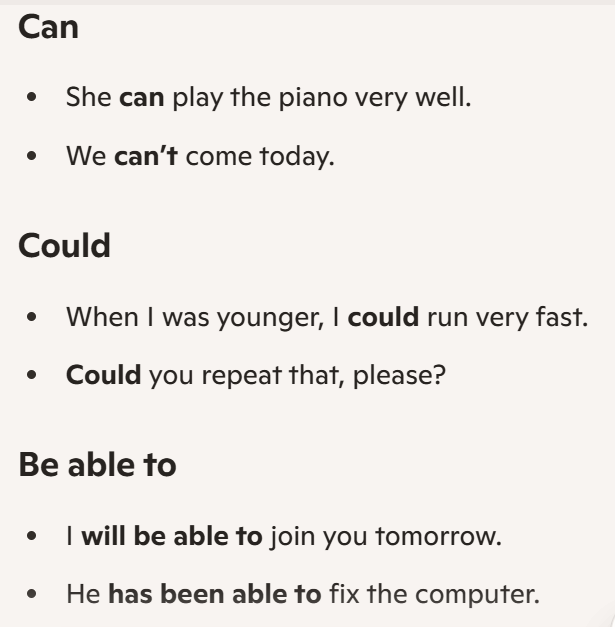
1. Kiedy używamy can?2. Kiedy używamy could?3. Dlaczego potrzebujemy be able to?A. PrzyszłośćB. PerfektC. Jednorazowa umiejętność w przeszłościPorównanie – szybka tabelaTypowe błędy uczniówPrzykłady zdań
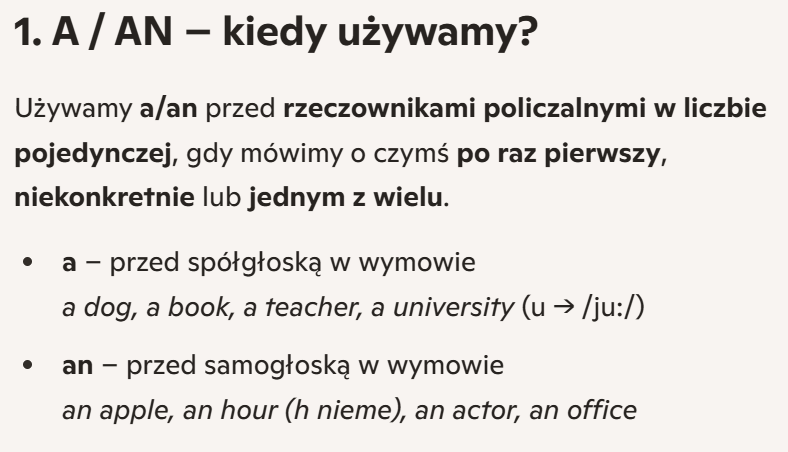
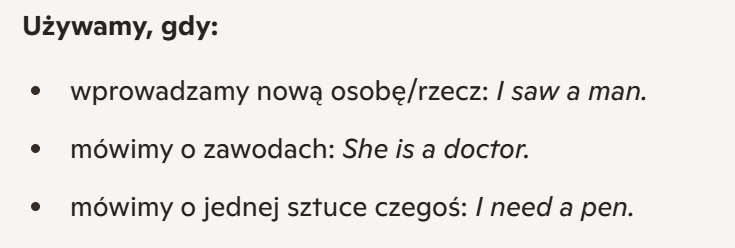
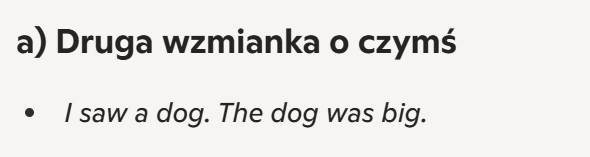
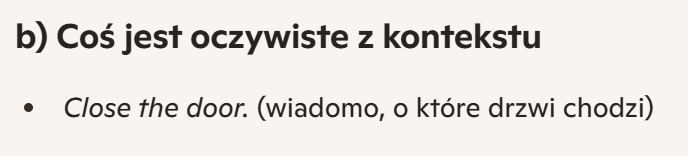
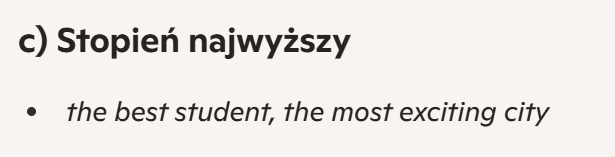
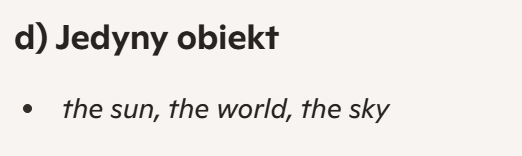
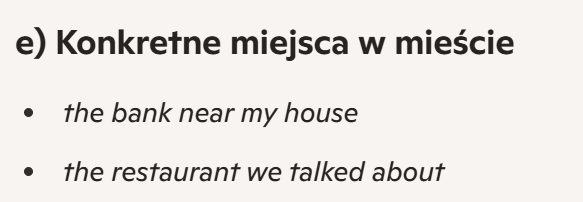
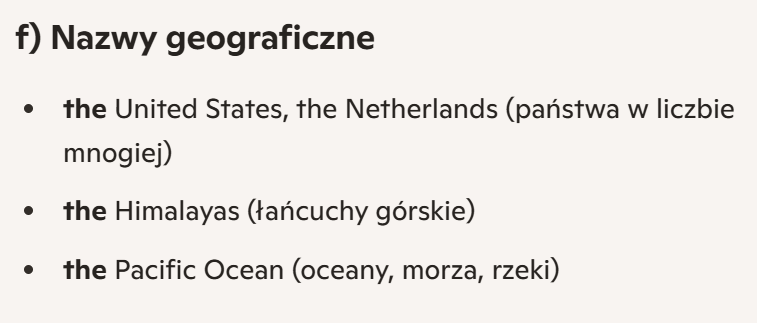
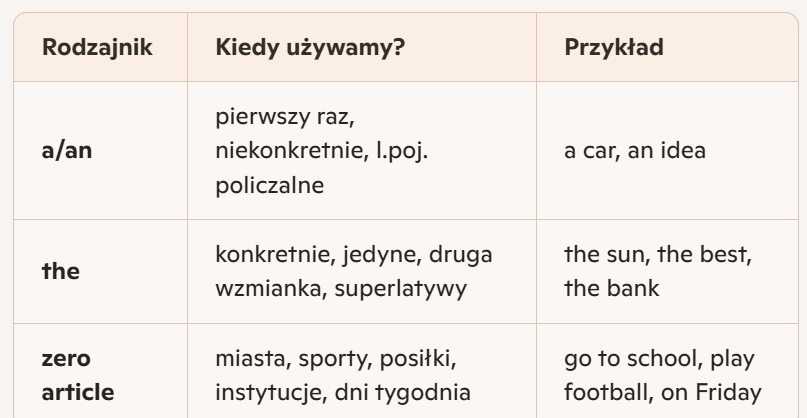
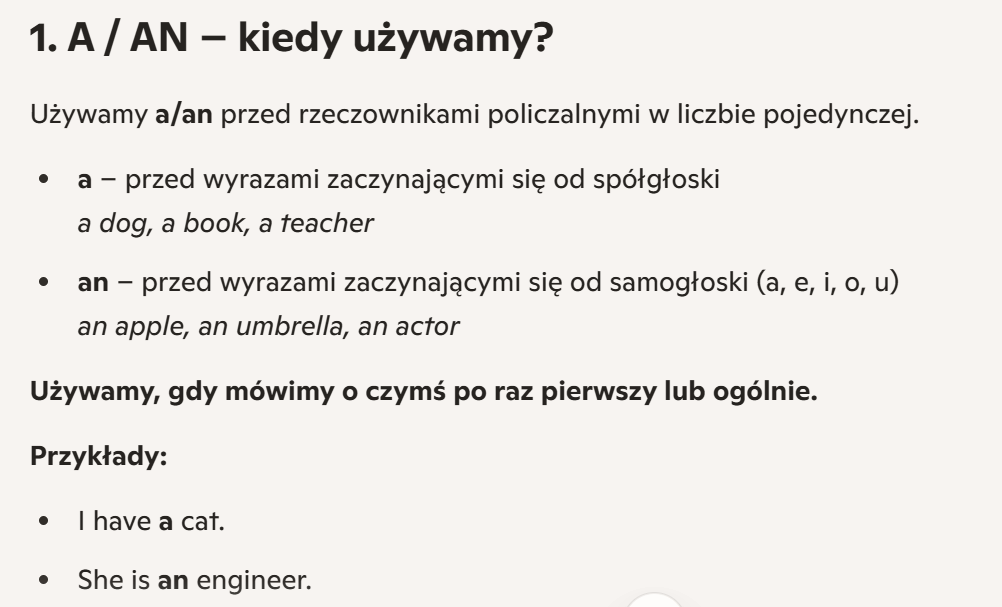
1. A / AN – kiedy używamy?2. THE – kiedy używamy?a) Druga wzmianka o czymśb) Coś jest oczywiste z kontekstuc) Stopień najwyższyd) Jedyny obiekte) Konkretne miejsca w mieścief) Nazwy geograficzne
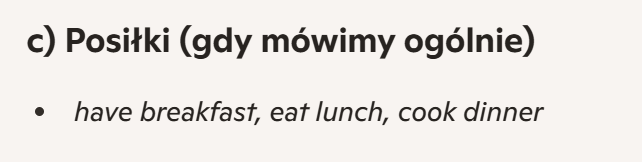
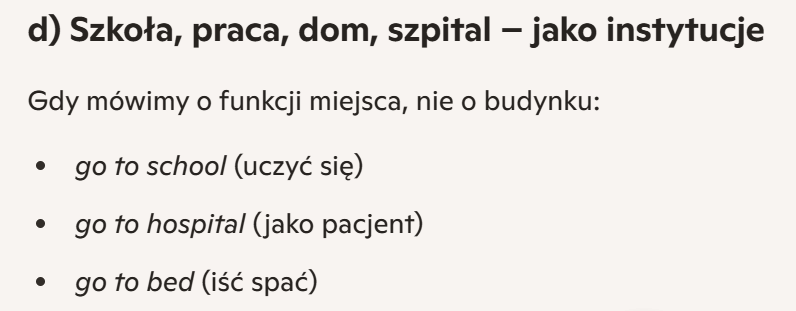
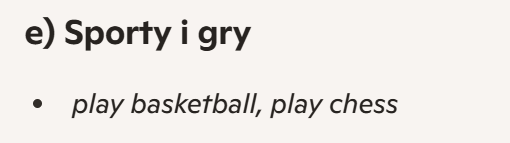
3. ZERO ARTICLE (brak rodzajnika) – kiedy nie używamy żadnego?
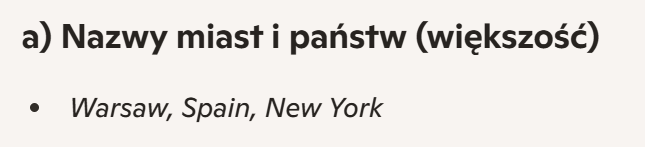
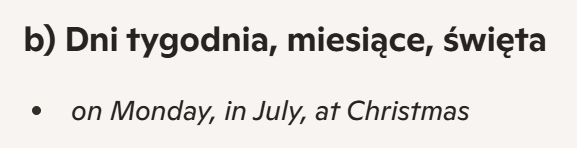
a) Nazwy miast i państw (większość)b) Dni tygodnia, miesiące, świętac) Posiłki (gdy mówimy ogólnie)d) Szkoła, praca, dom, szpital – jako instytucjee) Sporty i gryf) Rzeczowniki niepoliczalne w znaczeniu ogólnymSzybkie porównanie
Popraw błędy – czasy Present Simple, Present Continuous, Past Simple
Zdanie nr 1:
Przejdź do zdania:
Manage Consent
To provide the best experiences, we use technologies like cookies to store and/or access device information. Consenting to these technologies will allow us to process data such as browsing behavior or unique IDs on this site. Not consenting or withdrawing consent, may adversely affect certain features and functions.
Functional
Always active
The technical storage or access is strictly necessary for the legitimate purpose of enabling the use of a specific service explicitly requested by the subscriber or user, or for the sole purpose of carrying out the transmission of a communication over an electronic communications network.
Preferences
The technical storage or access is necessary for the legitimate purpose of storing preferences that are not requested by the subscriber or user.
Statistics
The technical storage or access that is used exclusively for statistical purposes.The technical storage or access that is used exclusively for anonymous statistical purposes. Without a subpoena, voluntary compliance on the part of your Internet Service Provider, or additional records from a third party, information stored or retrieved for this purpose alone cannot usually be used to identify you.
Marketing
The technical storage or access is required to create user profiles to send advertising, or to track the user on a website or across several websites for similar marketing purposes.