Categories
Author: Marek
Categories
Are you curious? Color things
Klasa 1
Categories
Questions
Klasa 3
Categories
Possessive adjectives and pronouns
Klasa 7
Possessive adjectives (przymiotniki dzierżawcze)
Mówią, do kogo coś należy i zawsze stoją przed rzeczownikiem.
| Zaimek osobowy | Possessive adjective | Przykład |
|---|---|---|
| I | my | This is my dog. |
| you | your | Is this your book? |
| he | his | His name is Tom. |
| she | her | Her cat is black. |
| it | its | The dog wags its tail. |
| we | our | Our school is big. |
| they | their | Their house is new. |
Possessive pronouns (zaimki dzierżawcze)
Zastępują całą frazę “przymiotnik + rzeczownik” – używamy ich, żeby nie powtarzać rzeczownika.
| Zaimek osobowy | Possessive pronoun | Przykład |
|---|---|---|
| I | mine | This book is mine. |
| you | yours | Is this pen yours? |
| he | his | This bag is his. |
| she | hers | The red coat is hers. |
| we | ours | This house is ours. |
| they | theirs | These toys are theirs. |
Categories
OPEN TASKS
Klasa 8
Categories
FOOD
Klasa 5
Categories
Free time
Klasa 5
Categories
Family
Klasa 2
Categories
Looks and personality
Klasa 6
Categories
Alphabet
Klasa 4
Categories
Hello
Klasa 3
Jim
Categories
They’re my grandparents
Klasa 2
Klasa 5
My house
There are six rooms in my house: a kitchen, a living room, a bathroom and three bedrooms.
In the kitchen there is a big table in the middle of the room. The fridge is next to the cooker and there are some cups on the shelf above the sink.
The living room is my favourite room. There is a sofa opposite the TV and a small table in front of the sofa. My cat often sleeps under the table. There are two pictures on the wall, between the window and the door.
My bedroom is small. There is a bed near the window and a desk behind the door. My schoolbag is on the floor beside the bed and my posters are on the wall.
The bathroom is at the end of the corridor.
Categories
Choose the odd one out
Klasa 8
Categories
Choose correct answers
Klasa 8
Choose the correct answers.
Kliknij formę, która Twoim zdaniem jest poprawna.
Poprawne odpowiedzi: 0 / 7
-
I think CJ / shave his beard.
Poprawnie: I think CJ should shave his beard.
Dlaczego: should = rada, moja opinia („uważam, że powinien”). has to oznaczałoby przymus z zewnątrz (nakaz, przepis), co nie pasuje do wstępu I think.
Tłumaczenie: Myślę, że CJ powinien zgolić brodę.
-
Maddox / for his exams now.
Poprawnie: Maddox is studying for his exams now.
Dlaczego: słowo now to sygnał Present Continuous – czynność dzieje się w tej chwili.
Tłumaczenie: Maddox uczy się teraz do egzaminów.
-
All of us are into / videos.
Poprawnie: All of us are into making videos.
Dlaczego: be into something kończy się przyimkiem into, a po przyimku zawsze stoi forma z -ing.
Tłumaczenie: Wszyscy kręcimy filmiki / bardzo lubimy kręcić filmiki.
-
/ any of your friends collect anything?
Poprawnie: Do any of your friends collect anything?
Dlaczego: podmiotem jest your friends – rzeczownik w liczbie mnogiej, więc operator to do, a czasownik nie ma końcówki -s.
Tłumaczenie: Czy któryś z twoich znajomych coś kolekcjonuje?
-
Only Jen and Steve / to hip-hop.
Poprawnie: Only Jen and Steve don’t usually listen to hip-hop.
Dlaczego: usually opisuje zwyczaj, a nie chwilę obecną – potrzebny jest Present Simple.
Tłumaczenie: Tylko Jen i Steve zwykle nie słuchają hip-hopu.
-
We really enjoy / time together.
Poprawnie: We really enjoy spending time together.
Dlaczego: po czasowniku enjoy zawsze stoi forma z -ing (podobnie: like, love, hate, mind).
Tłumaczenie: Naprawdę lubimy spędzać razem czas.
-
/ you got such close friends in your class?
Poprawnie: Have you got such close friends in your class?
Dlaczego: w konstrukcji have got pytanie tworzymy przez inwersję (Have you got…?), bez operatora do.
Tłumaczenie: Czy masz w swojej klasie takich bliskich przyjaciół?
Categories
New Message
Klasa 8
Kliknij dowolne zdanie, aby zobaczyć tłumaczenie.
Hi Karren,
Just a quick email to let you know that I’m staying with the Johnsons in Leeds now.
They are visiting Emily’s grandmother and I’m here as a guest.
Emily’s grandma has got a big house so we play in the garden every day.
We also go for walks in the city.
Emily has got a really handsome cousin.
He’s 17, he’s tall and he’s very kind.
I really like him, Karren!
I’d like to have a boyfriend like him.
But it’s a secret and you have to keep it!
You mustn’t tell anyone, even your sister!
I can tell you more when I get back.
Anyway, I’d like to buy you something.
What would you like – a hoodie with the British flag or a badge?
Or maybe some earrings?
Let me know.
See you!
Sally
Categories
Are you curious? – Comunication
Klasa 1
Categories
Are you curious?
Klasa 1
Categories
Numbers
Klasa 7
Cardinal numbers
Ordinal numbers
Plural nouns
Categories
Quick Check
Klasa 8
1. My parents usually wake up half an hour earlier than me.
Moi rodzice zwykle budzą się pół godziny wcześniej niż ja.
2. My friends aren’t really keen on collecting things.
Moi przyjaciele tak naprawdę nie przepadają za kolekcjonowaniem rzeczy.
3. My older sister doesn’t want to get married or have children.
Moja starsza siostra nie chce wyjść za mąż ani mieć dzieci.
4. Please be punctual this time. We mustn’t be late!
Proszę, bądź punktualny tym razem. Nie możemy się spóźnić!
5. Be quiet, Tom. Lucy is sleeping.
Bądź cicho, Tom. Lucy śpi.
6. On weekdays after school we don’t play computer games.
W dni powszednie po szkole nie gramy w gry komputerowe.
7. We should go to bed early because we have to get up at 5.
Powinniśmy iść wcześnie spać, ponieważ musimy wstać o 5.
8. There are five people in my family.
W mojej rodzinie jest pięć osób.
9. You can come – we aren’t doing anything important at the moment.
Możesz przyjść – nie robimy teraz nic ważnego.
10. My brother and I are planning a surprise for our parents’ anniversary.
Mój brat i ja planujemy niespodziankę na rocznicę naszych rodziców.
11. Claire always knows everything – she is very clever.
Claire zawsze wszystko wie – jest bardzo mądra.
12. Fortunately, I don’t have to wear a white shirt for the ceremony.
Na szczęście nie muszę nosić białej koszuli na uroczystość.
13. My uncle hasn’t got a car.
Mój wujek nie ma samochodu.
14. What do Mike’s sisters study?
Co studiują siostry Mike’a?
Categories
Welcome
Klasa 4
Buzz Lightyear – kosmiczny ranger-zabawka z filmów “Toy Story” (Pixar)
Kapitan Jack Sparrow – ekscentryczny pirat z serii “Piraci z Karaibów”, grany przez Johnny’ego Deppa
Hermiona Granger – jedna z głównych bohaterek serii “Harry Potter”, najzdolniejsza uczennica swojego rocznika
Luke Skywalker – główny bohater oryginalnej trylogii “Gwiezdnych wojen”, młody Jedi
Categories
Who lives with you?
Klasa 7
I live with my parents and my younger sister.
She is twelve and I often help her with homework.
My mum is very kind and I talk to her every day.
My dad likes animals and we have a dog.
We love him very much and he always plays with us.
I take him for a walk after school.
Categories
Family
Klasa 6
Tekst:
My family is small. I’ve got one brother. I haven’t got any cousins. I’ve got one grandma and two grandads.
Wersja 1:
My family is big. I’ve got two sisters. I’ve got a lot of cousins. I’ve got two grandmas and one grandad.
Wersja 2:
My family is small. I haven’t got any brothers or sisters. I’ve got one cousin. I’ve got one grandma and one grandad.
Wersja 3:
My family is big. I’ve got one brother and one sister. I’ve got three cousins. I’ve got two grandmas and two grandads.
Categories
Ants are amazing insects.
Klasa 6
Ants are amazing insects.
There are over 12,000 kinds of ants around the world. They have six legs, big heads and strong jaws. They are very strong – they can lift and carry things which are much heavier than their own body.
Ants belong to the same group of insects as wasps and bees.
Their homes are called nests. Ant nests are usually underground in the soil, but some ants live in trees.
The most important ant is the queen. She has thousands of eggs.
The ants we usually see are the workers – they look for food, look after the baby ants, build and look after the nest and do many other jobs.
Ants use chemical substances to communicate. These substances can tell other ants where danger or food is.
Ants usually eat seeds and other insects. Army ants even eat birds and small mammals.
The ant in the photo is a leaf‑cutter ant. These ants live in South and Central America. They cut leaves with their jaws, but they don’t eat them. They carry them to their nests and use them to grow food!
Categories
Próba
To jest przykładowa zawartość.
Widzisz, jak płynnie się rozwija?
Categories
google-site-verification: google2584a6edbdc470d1
Categories
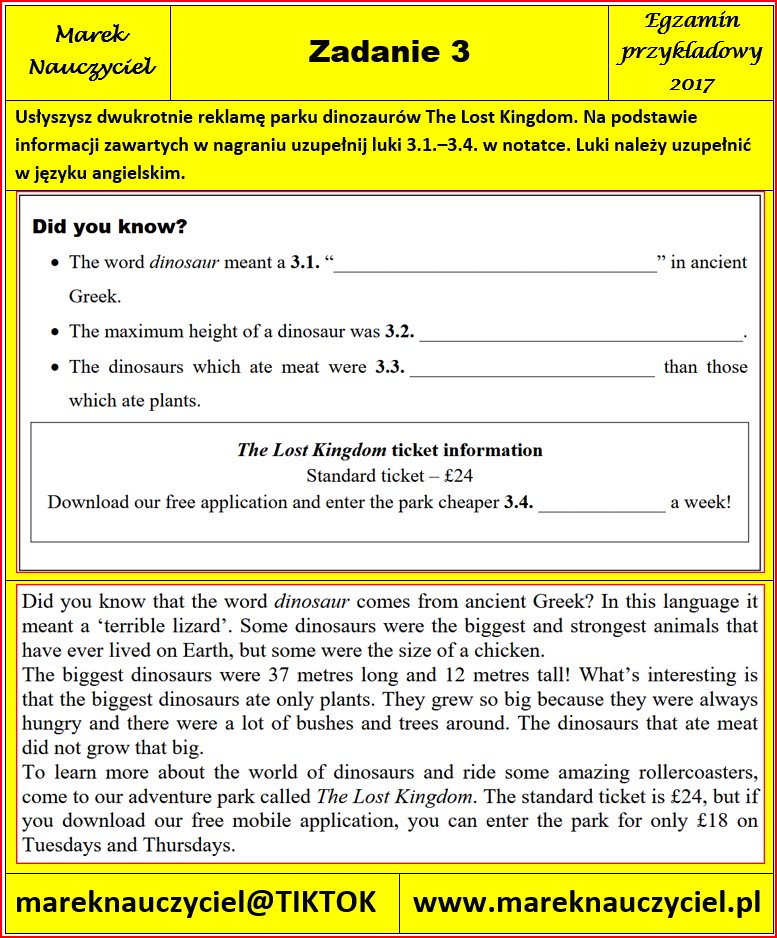
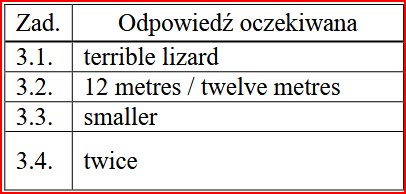
Zadanie 3
Categories
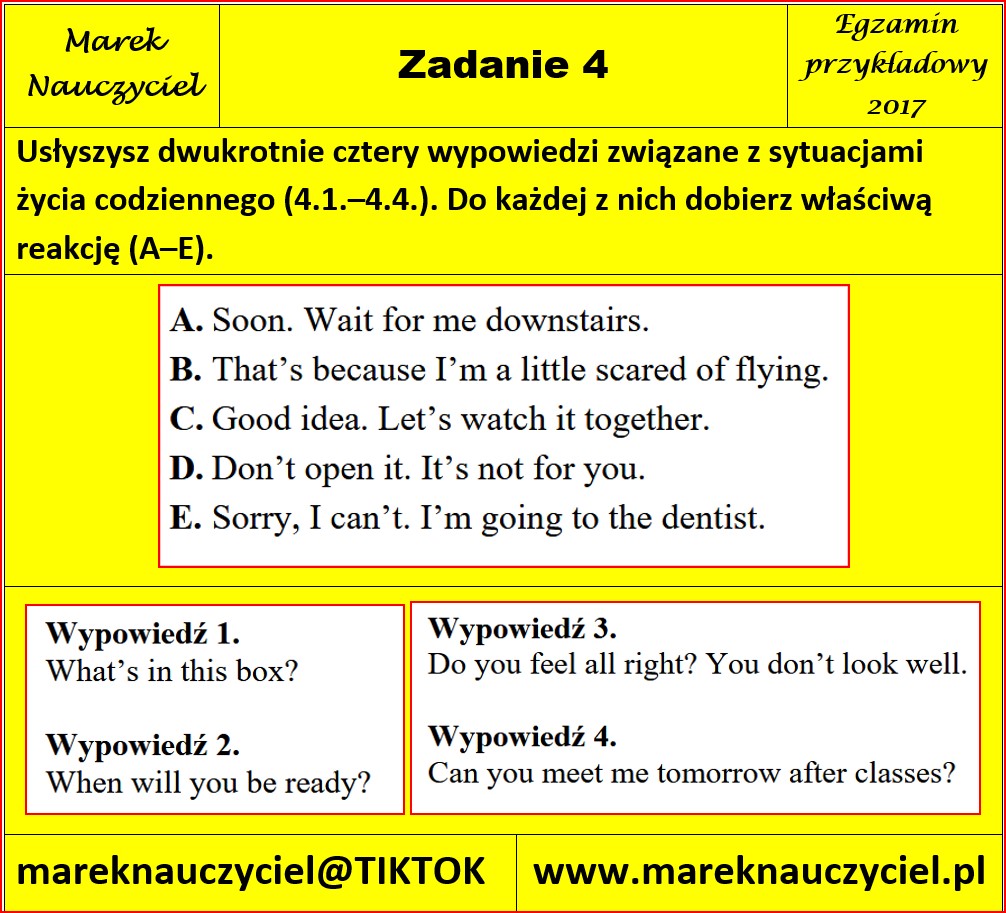
Zadanie 4
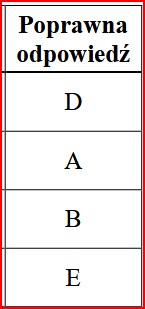
Categories
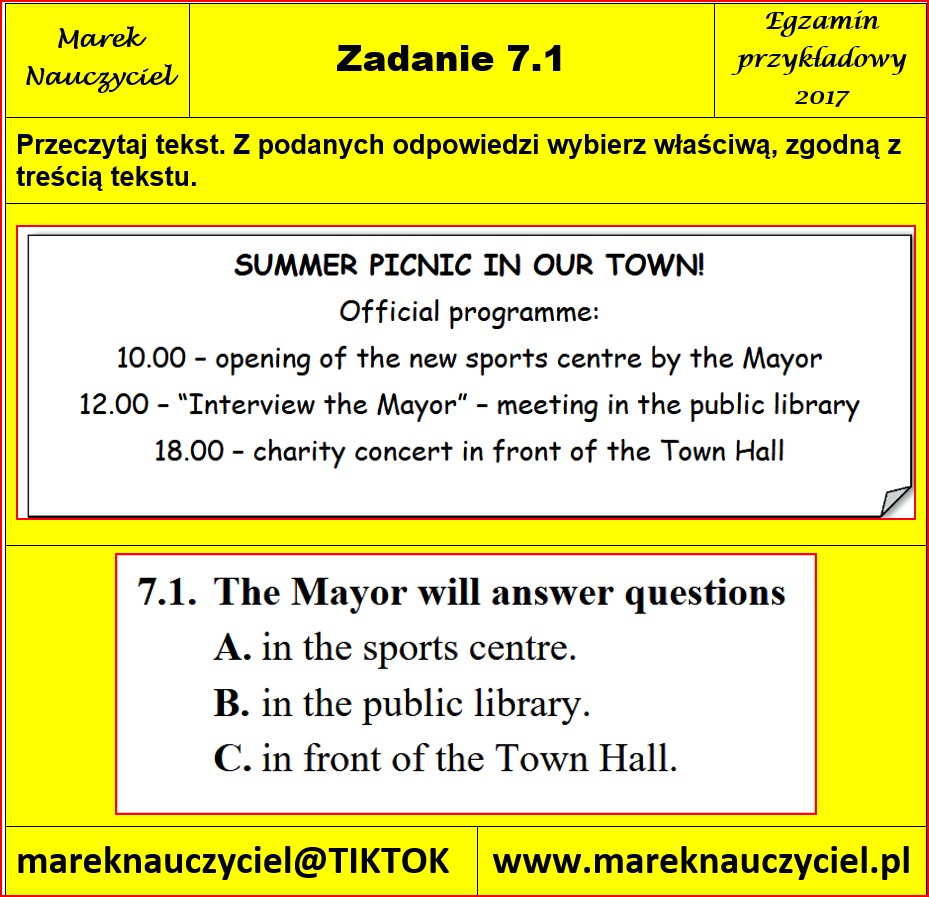
Zadanie 7.1
Categories
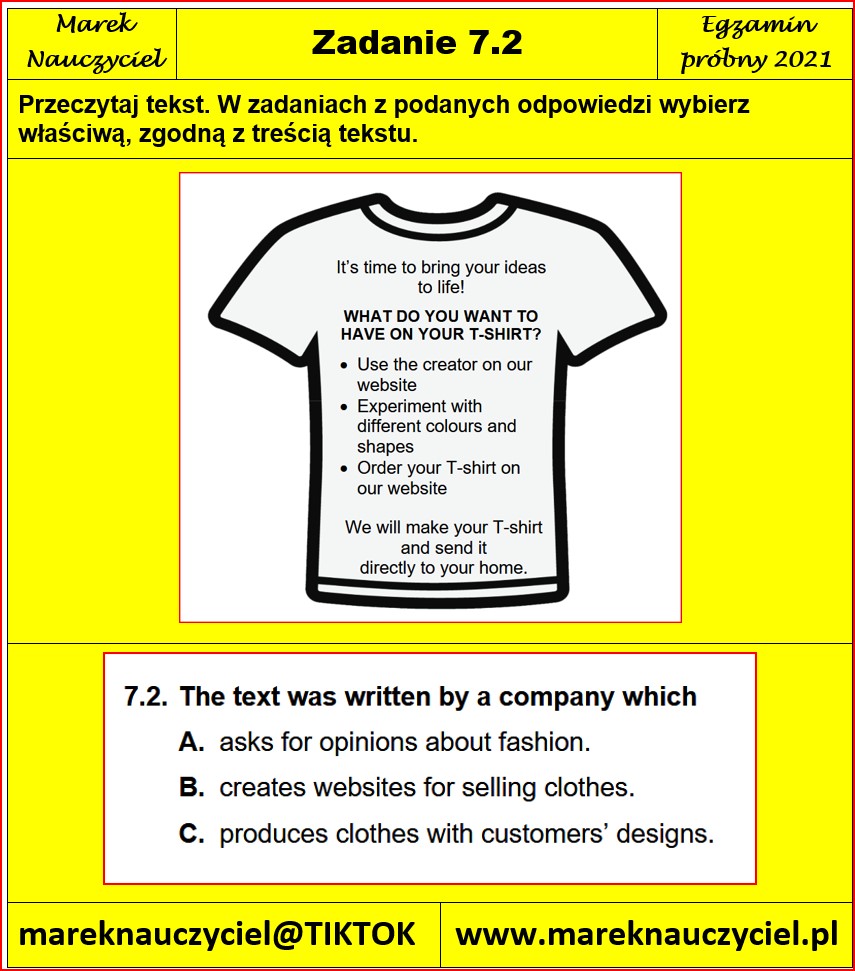
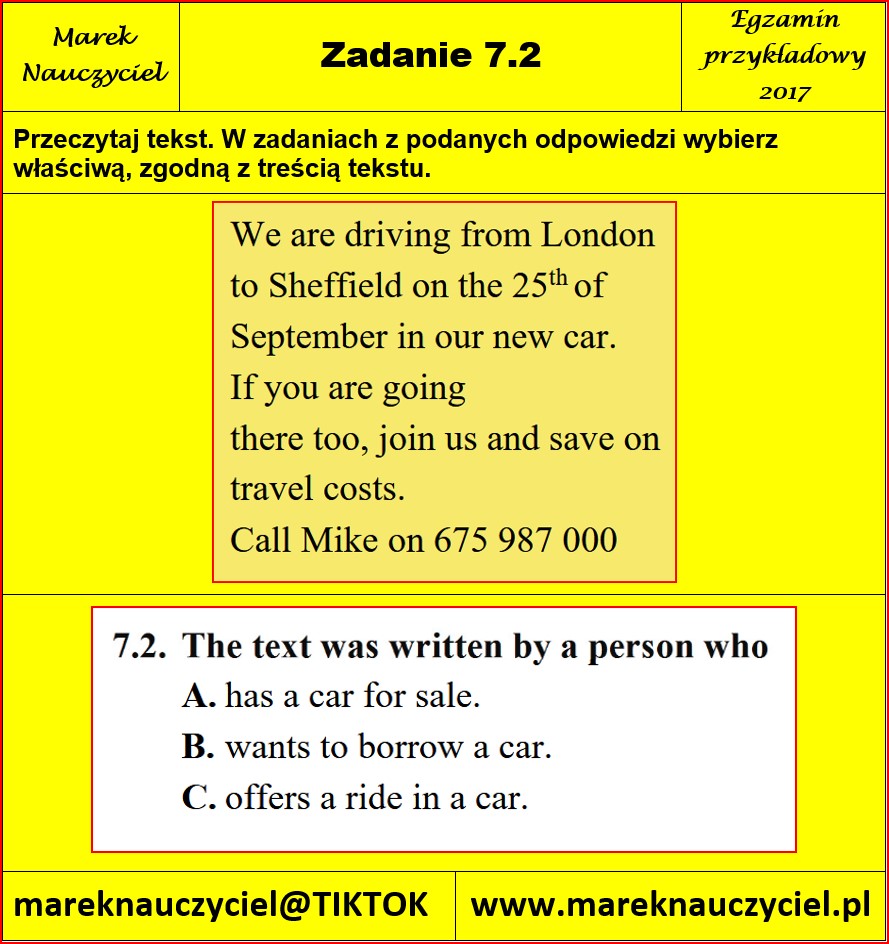
Zadanie 7.2

Categories
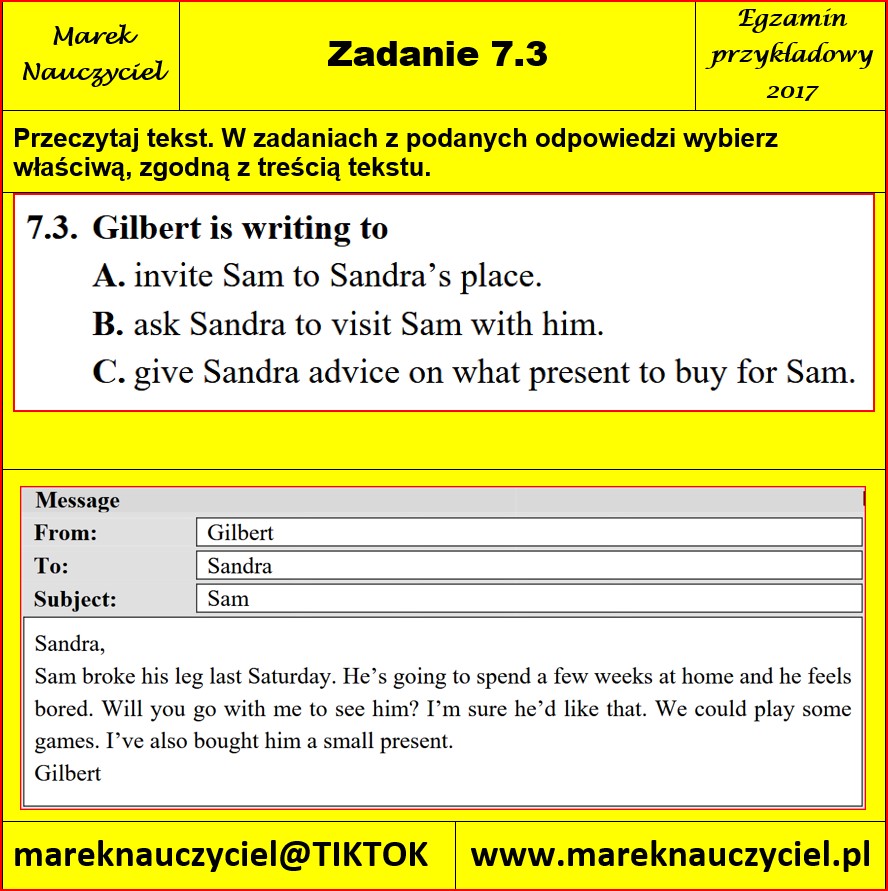
Zadanie 7.3

Categories
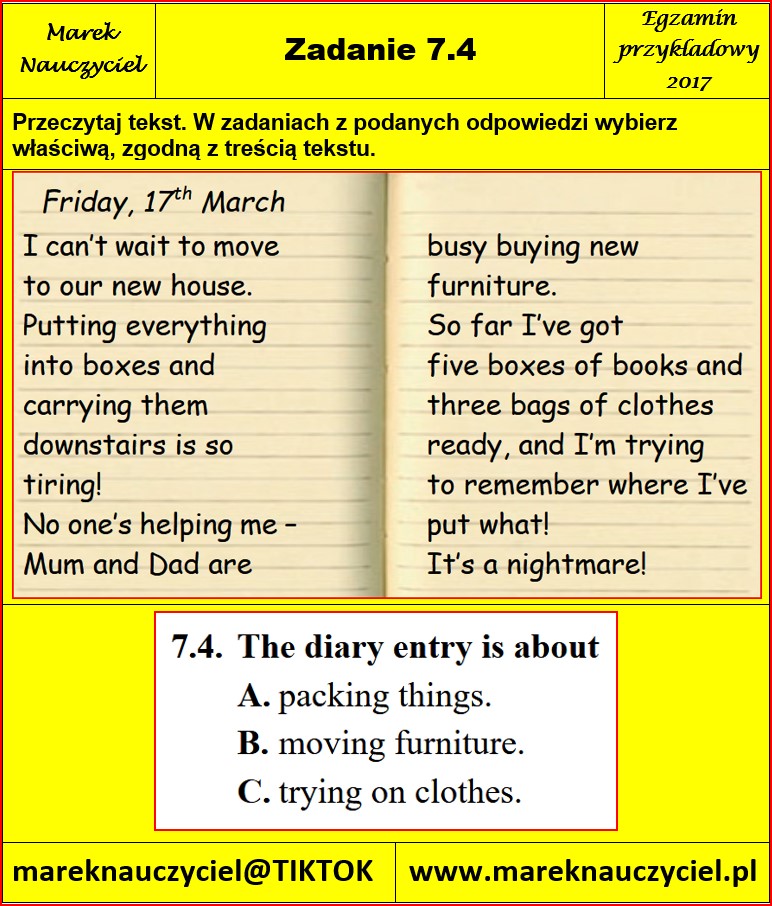
Zadanie 7.4
Categories
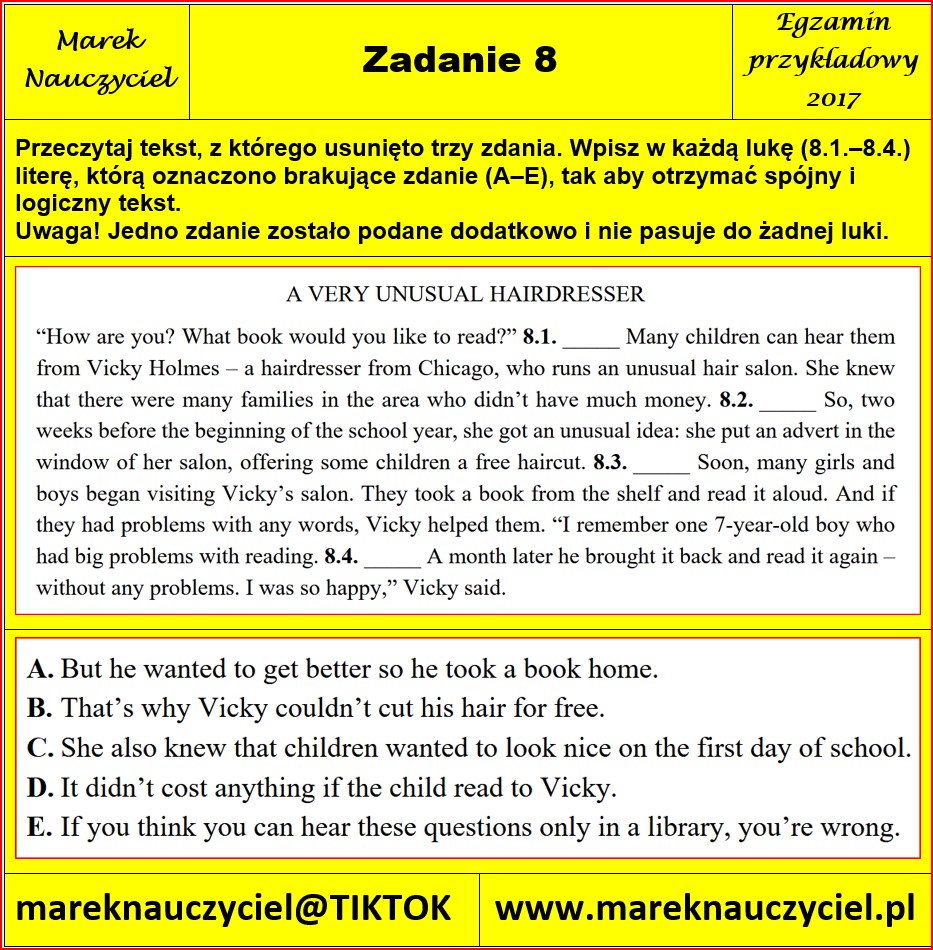
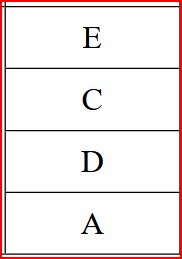
Zadanie 8
Categories
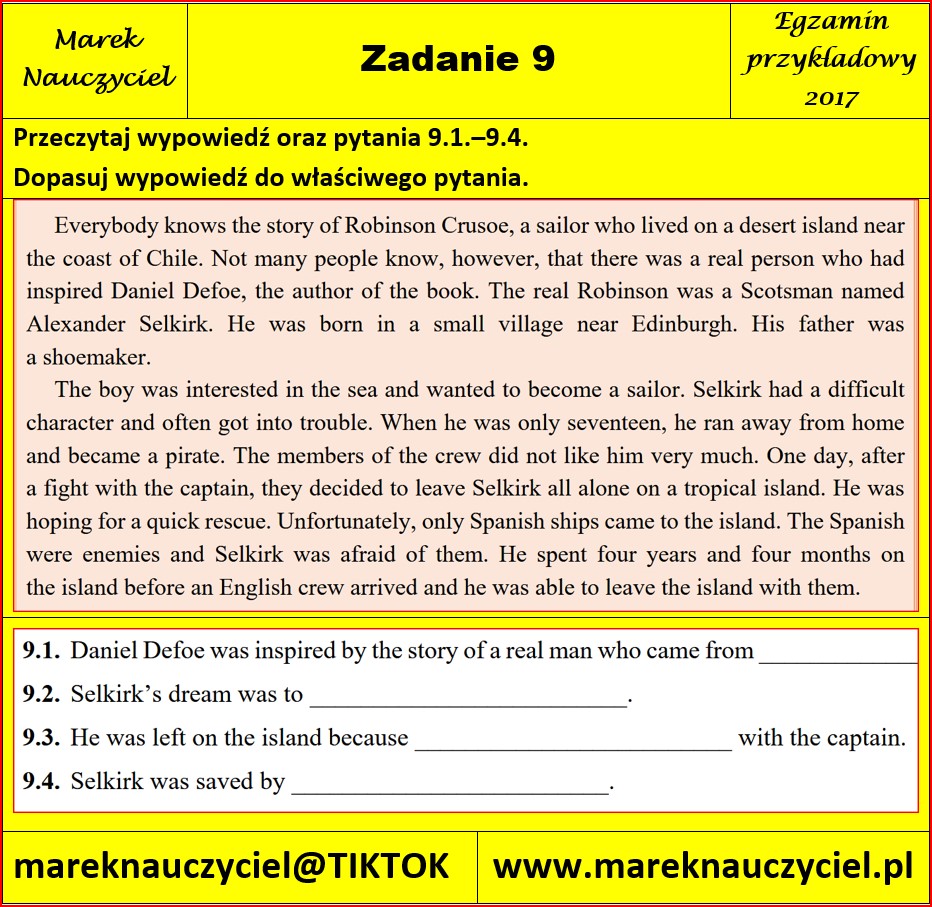
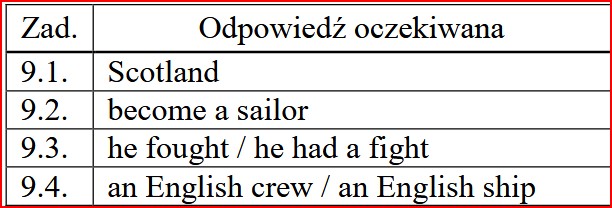
Zadanie 9
Categories
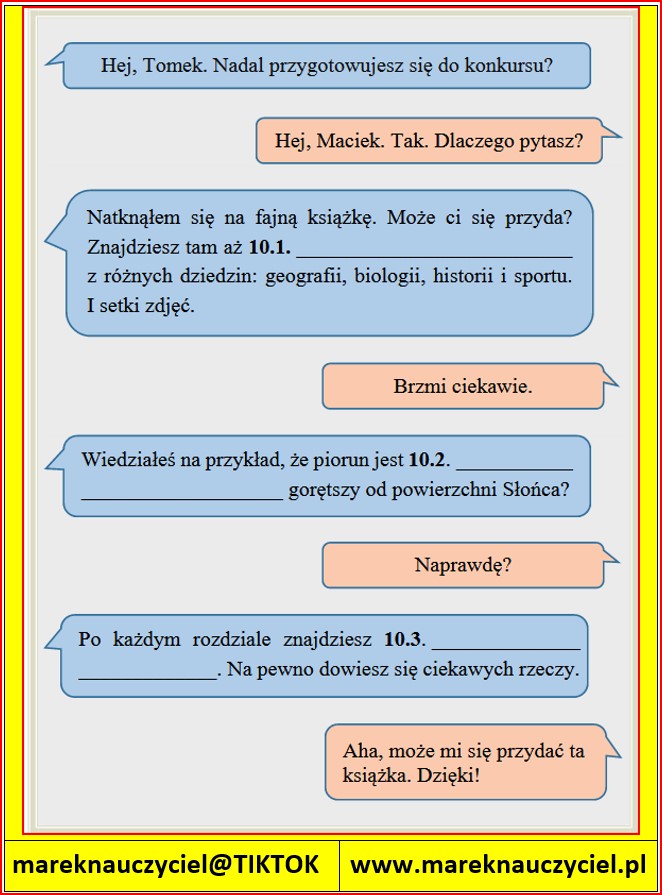
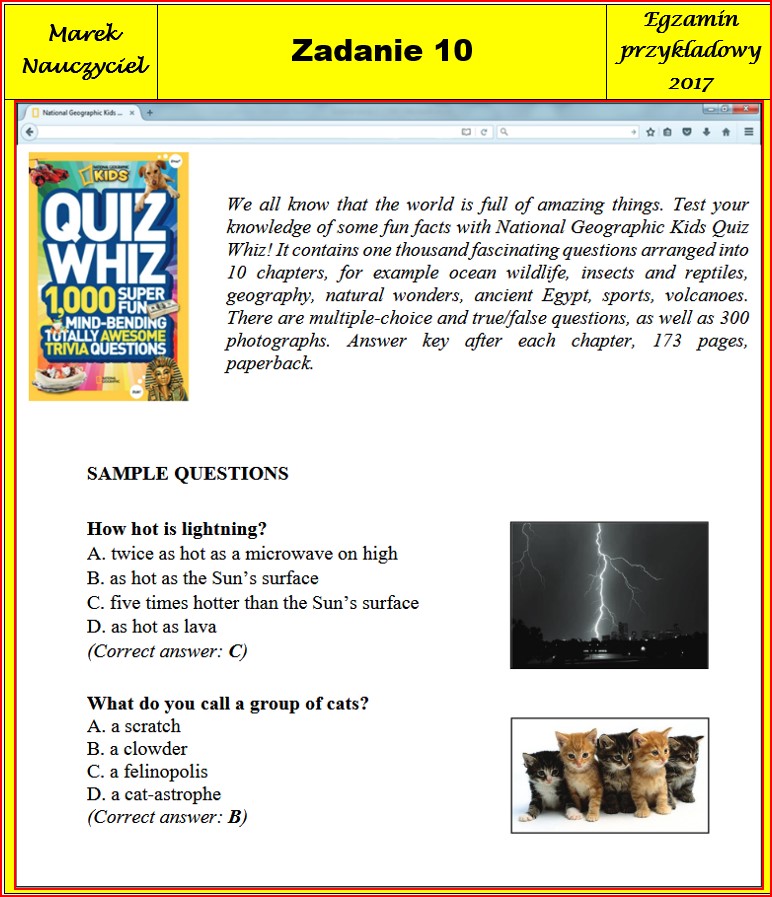
Zadanie 10

Categories
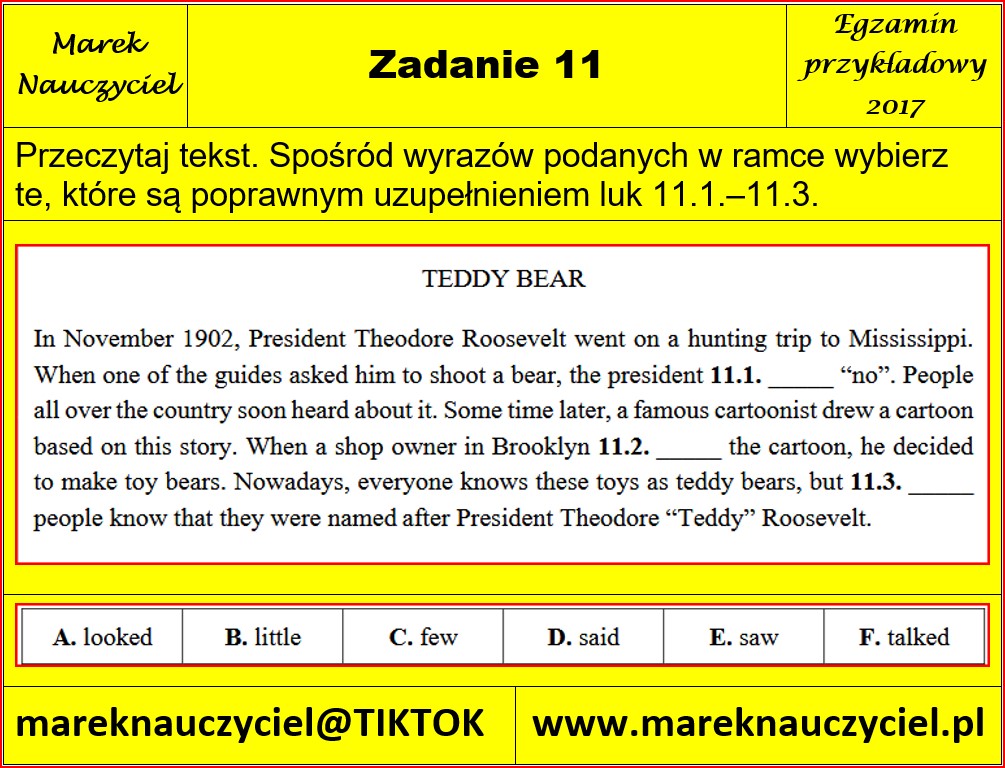
Zadanie 11
Categories
Zadanie 12
Categories
Zadanie 13
Categories
Zadanie 14
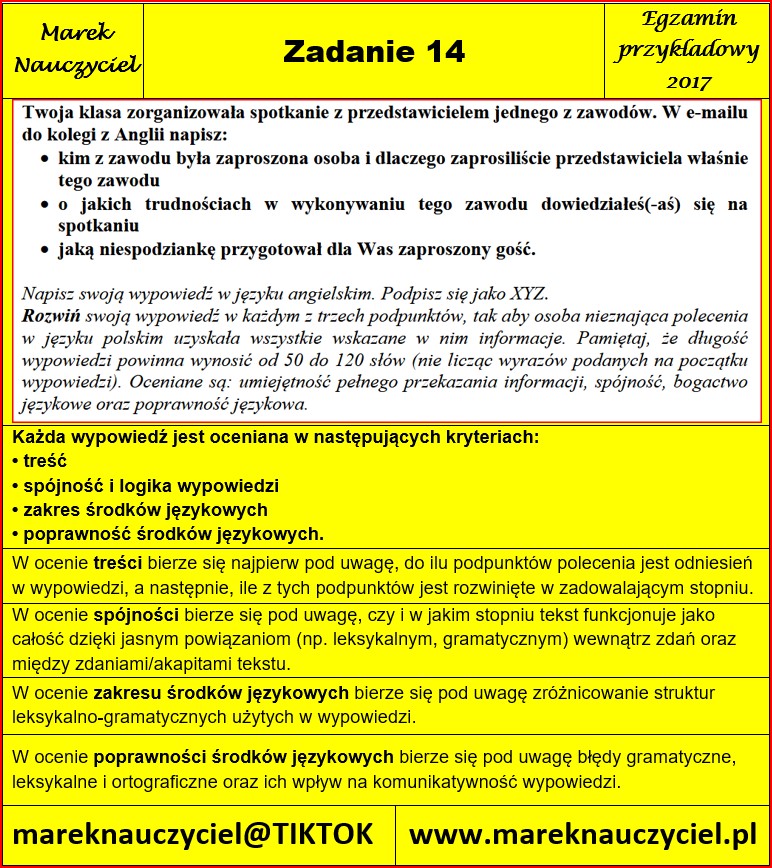
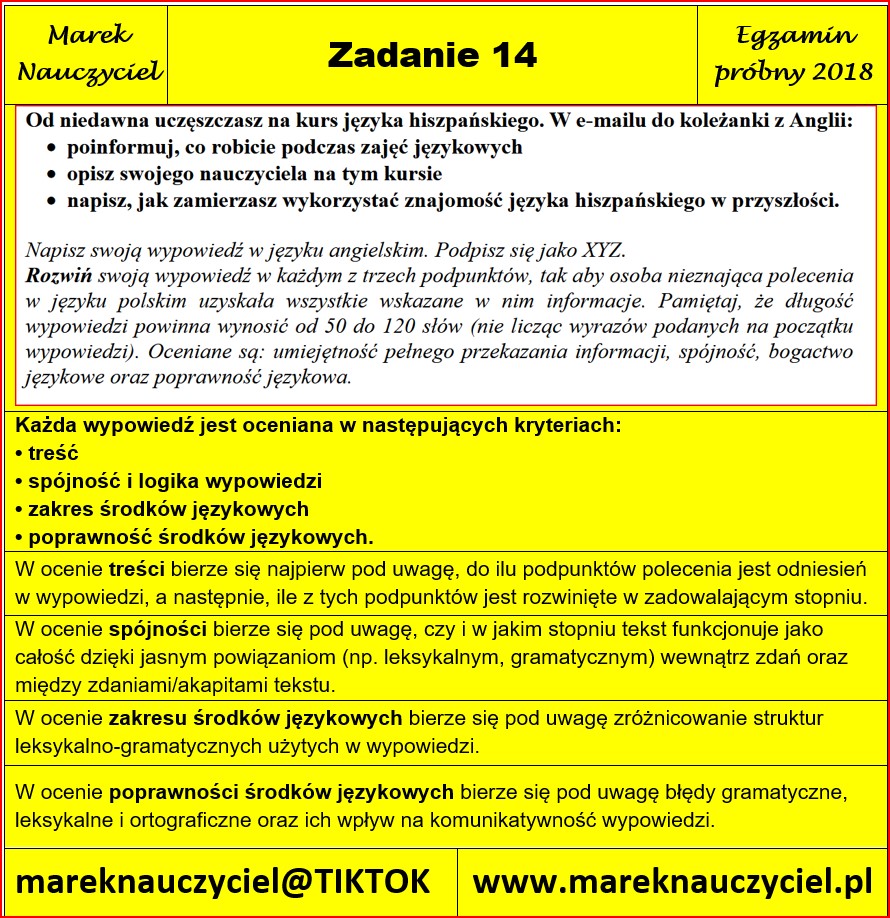
Przykładowa wypowiedź
Hi Mike,
Guess what! My class organized a meeting with a special guest. We invited a firefighter to talk to us because we wanted to learn more about this brave and important profession.
During the meeting, we learned about the difficulties firefighters face, such as dealing with dangerous situations, working long hours, and the emotional stress of saving lives. It was really eye-opening.
As a surprise, the firefighter brought his gear and let us try on the helmet and jacket. It was an amazing experience!
Best, XYZ
Tłumaczenie
Cześć Mike,
Zgadnij co! Moja klasa zorganizowała spotkanie ze specjalnym gościem. Zaprosiliśmy strażaka, aby opowiedział nam o tym odważnym i ważnym zawodzie.
Podczas spotkania dowiedzieliśmy się o trudnościach, z jakimi borykają się strażacy, takich jak radzenie sobie z niebezpiecznymi sytuacjami, długie godziny pracy i stres emocjonalny związany z ratowaniem życia. To było naprawdę otwierające oczy doświadczenie.
Jako niespodziankę, strażak przyniósł swoje wyposażenie i pozwolił nam przymierzyć kask i kurtkę. To było niesamowite przeżycie!
Pozdrawiam, XYZ
Categories
Zadanie 1 Przykład 1
Categories
Zadanie 1 Przykład 2

Categories
Zadanie 1 Przykład 3
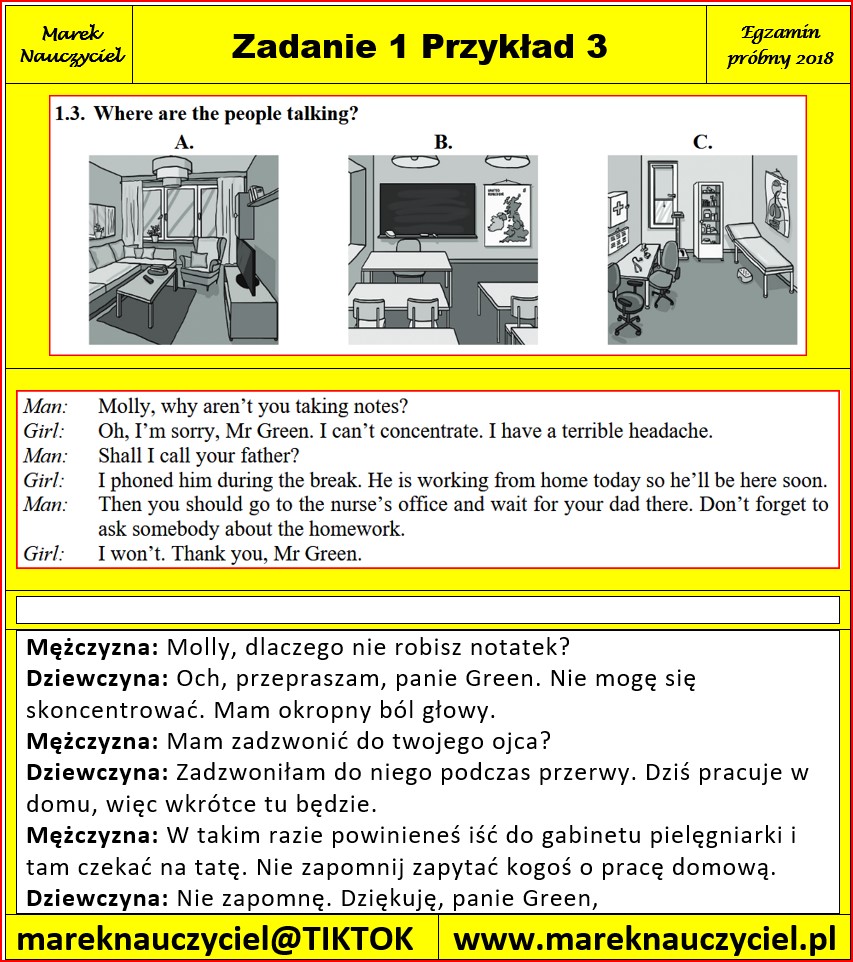
Categories
Zadanie 1 Przykład 4
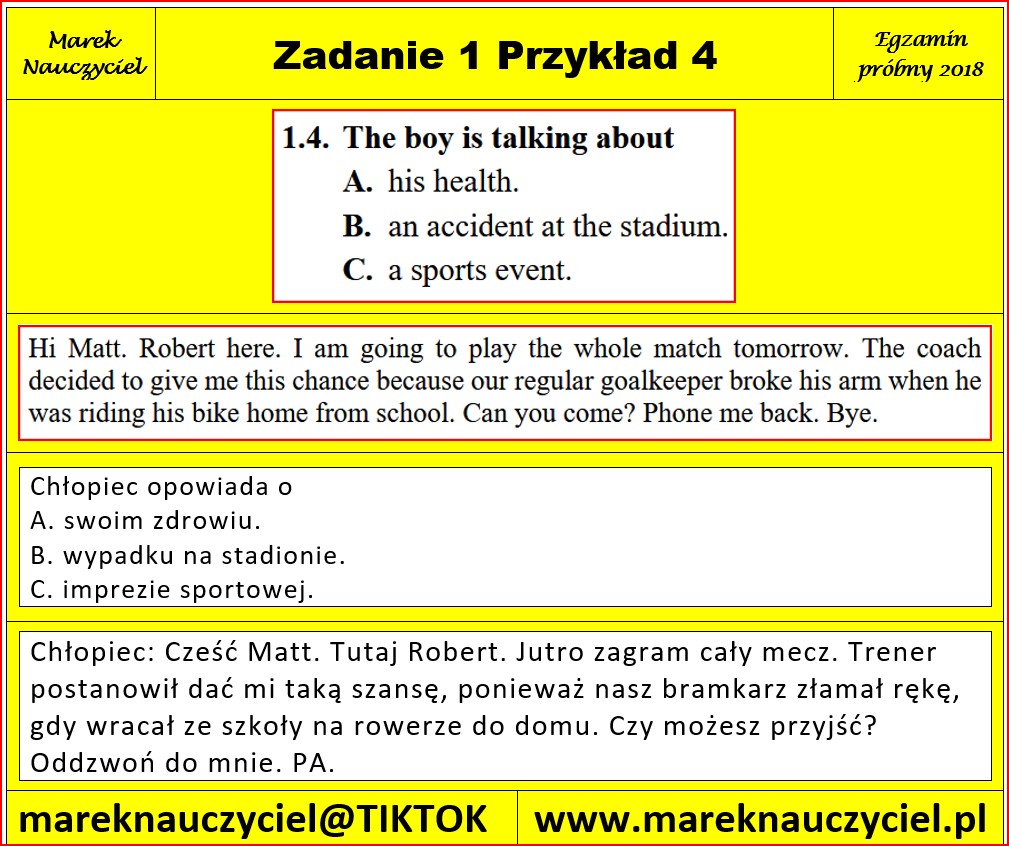
Categories
Zadanie 1 Przykład 5
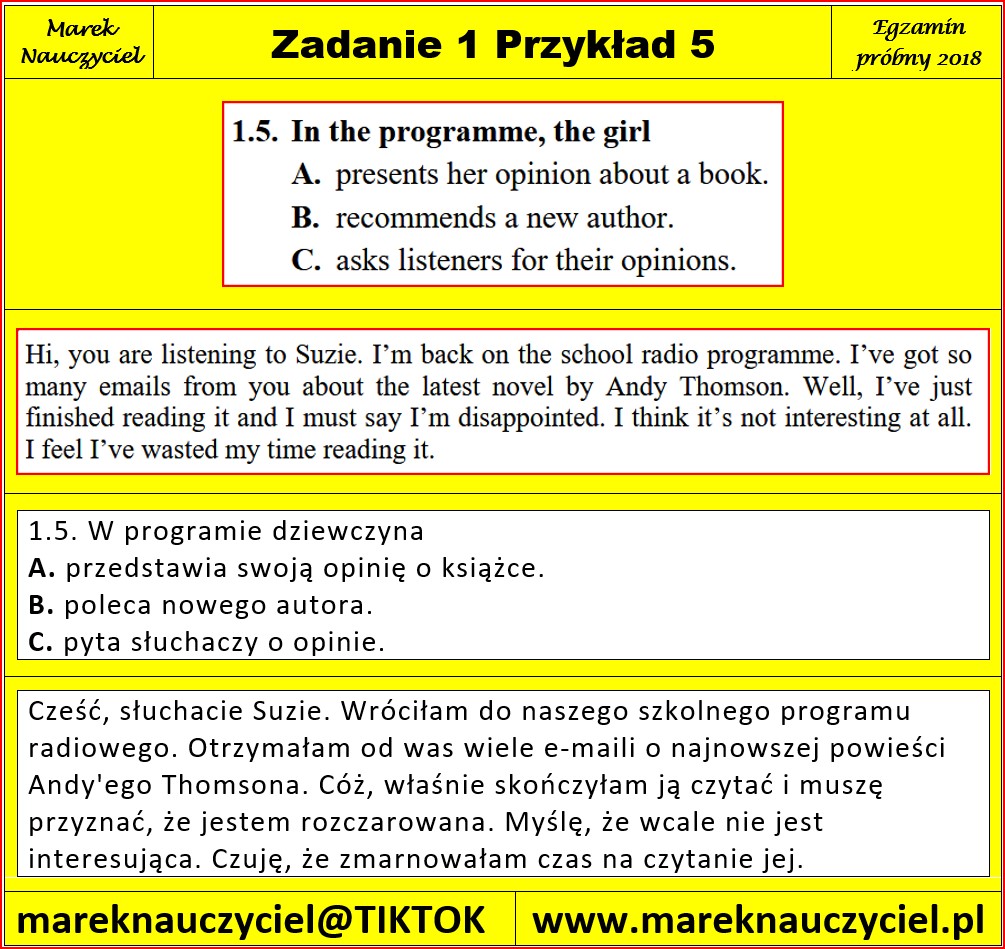
Categories
Zadanie 2.1
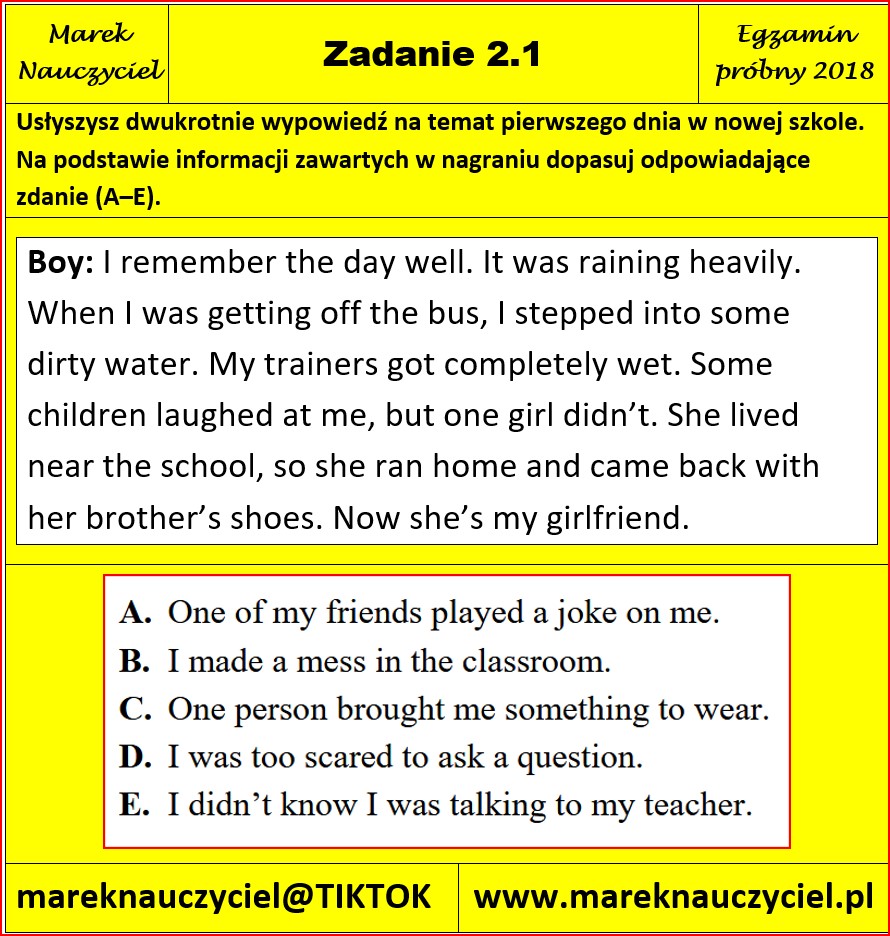
Categories
Zadanie 2.2
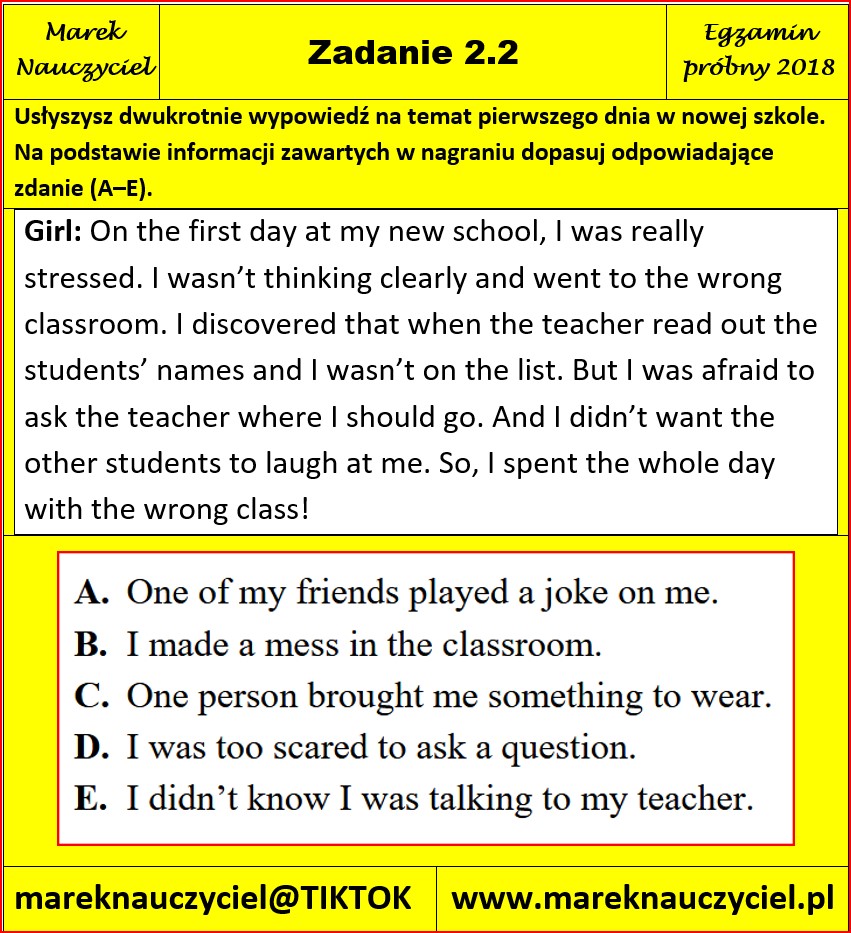

Categories
Zadanie 2.3
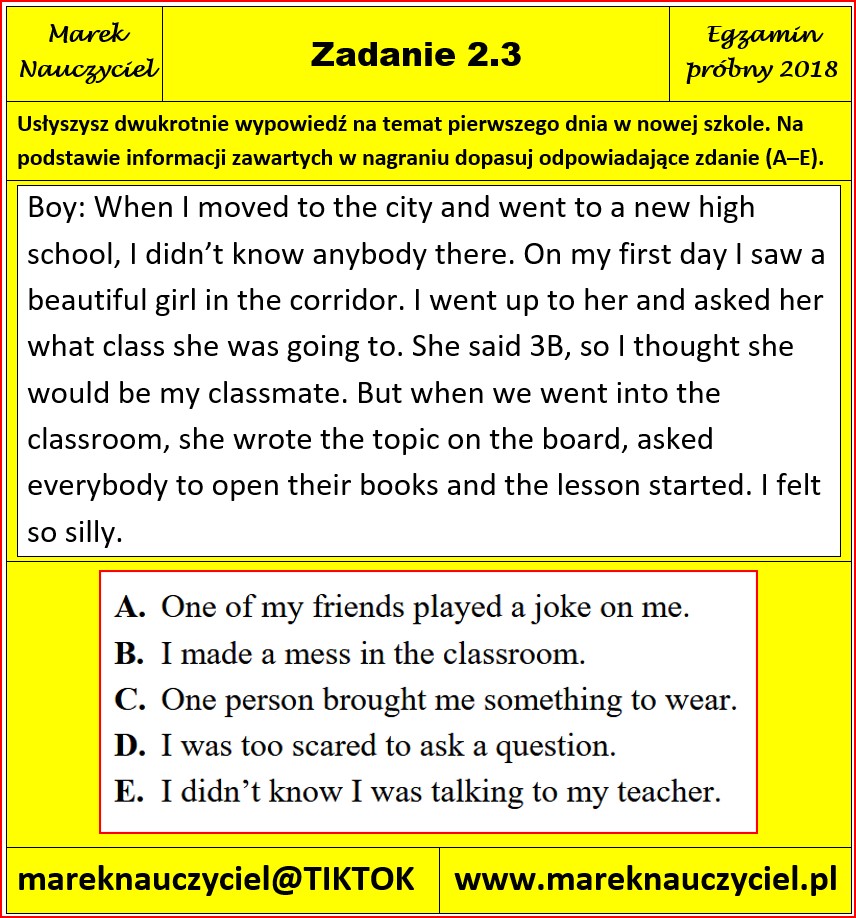

Categories
Zadanie 2.4
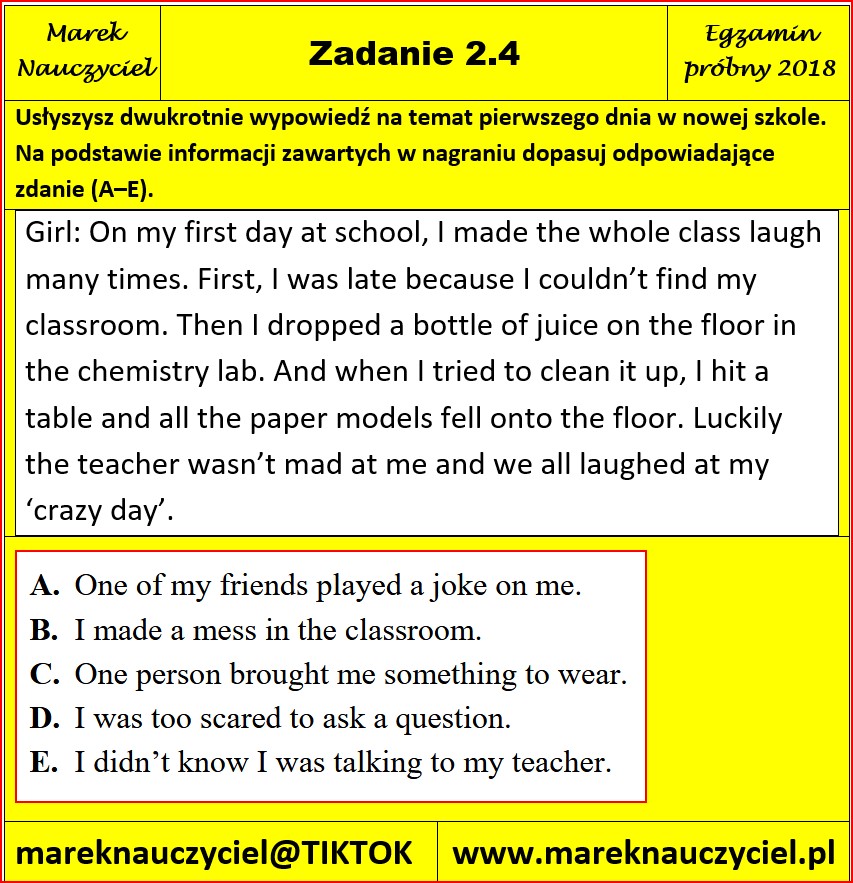
Categories
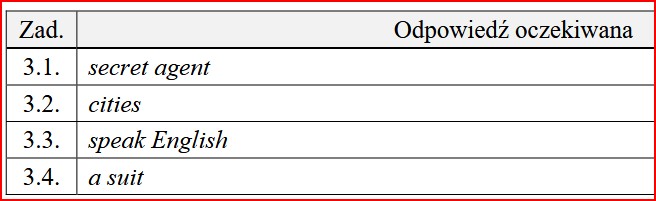
Zadanie 3
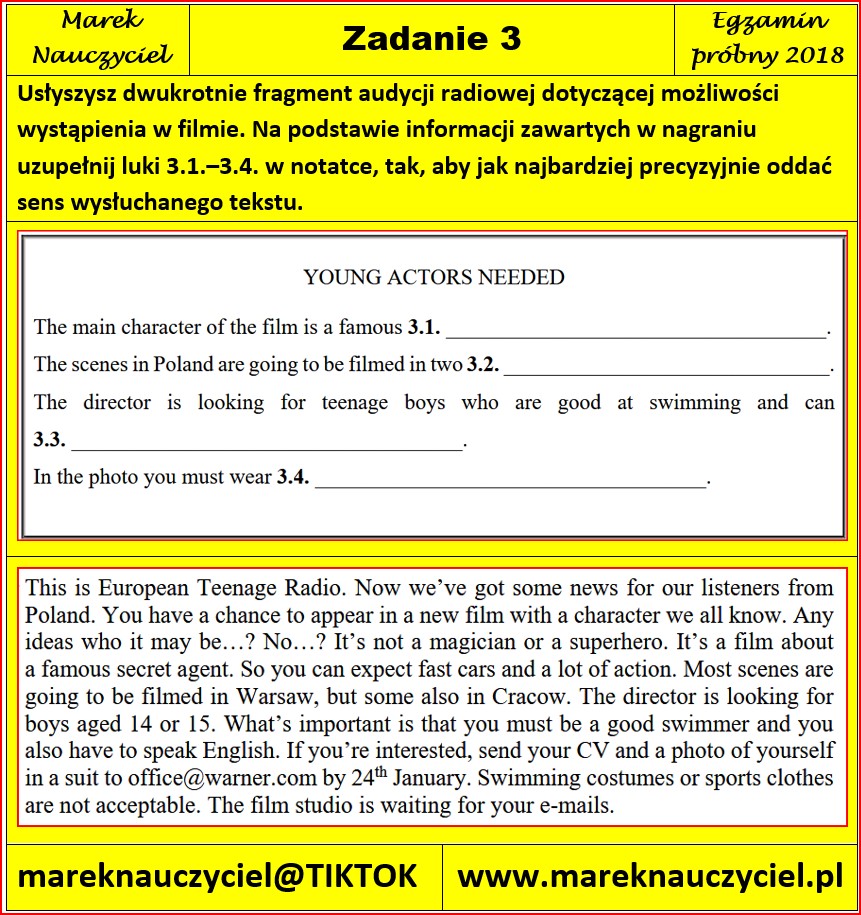
Categories
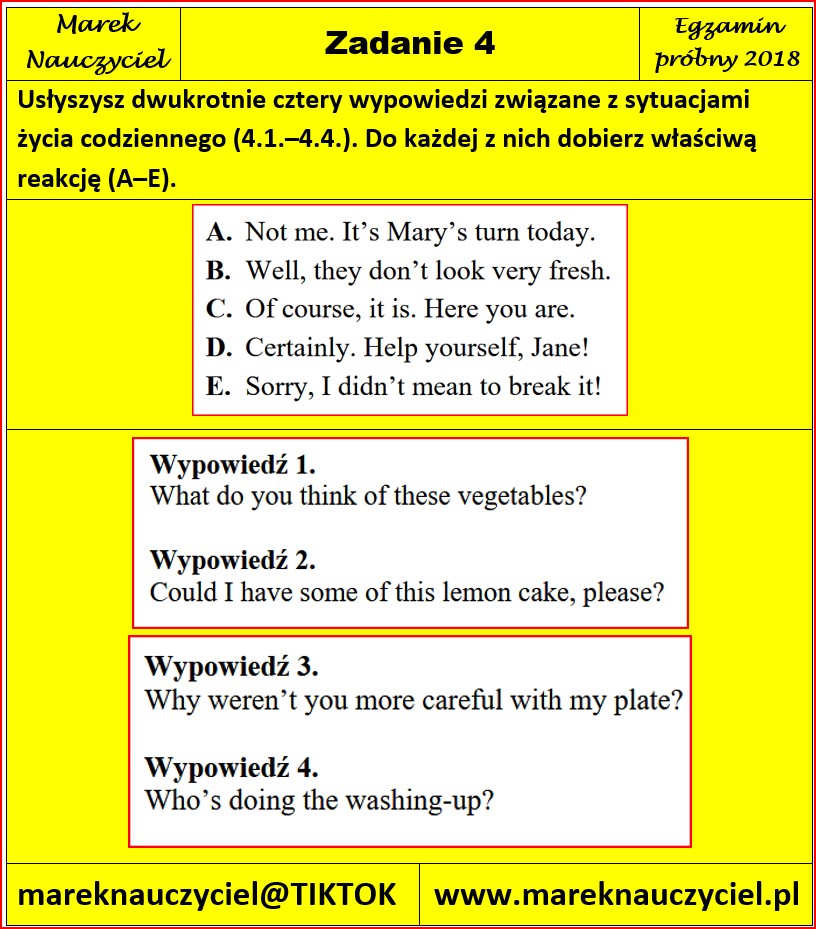
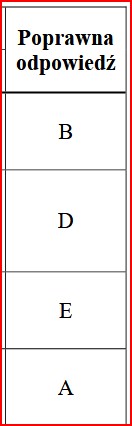
Zadanie 4
Categories
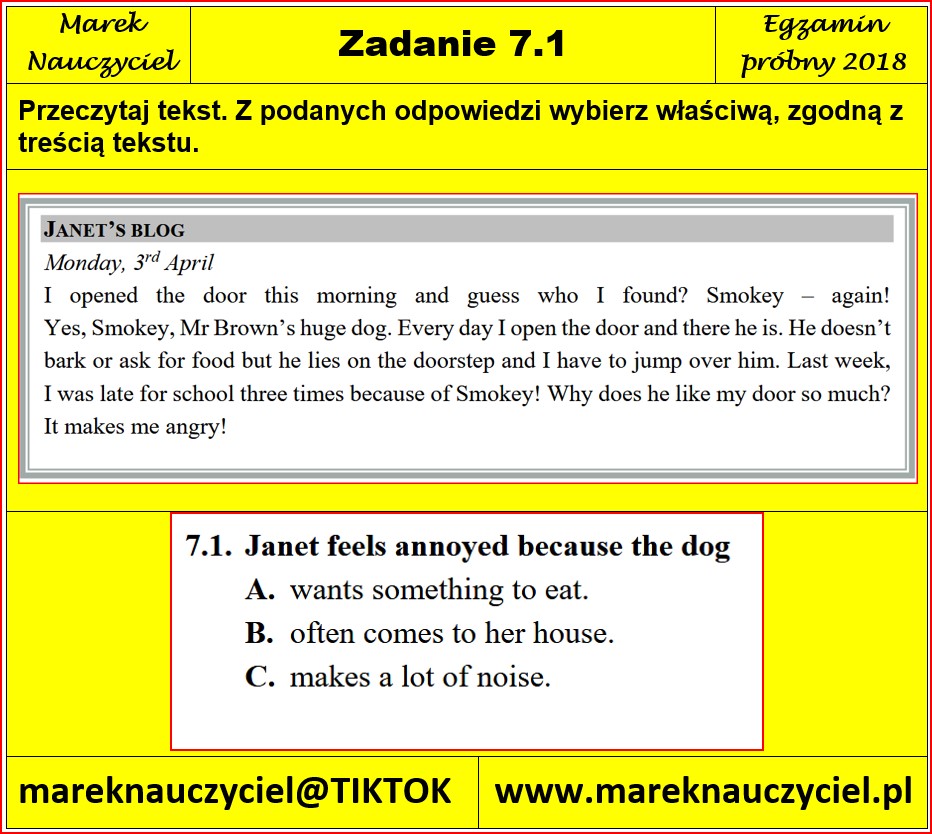
Zadanie 7.1
Categories
Zadanie 7.2
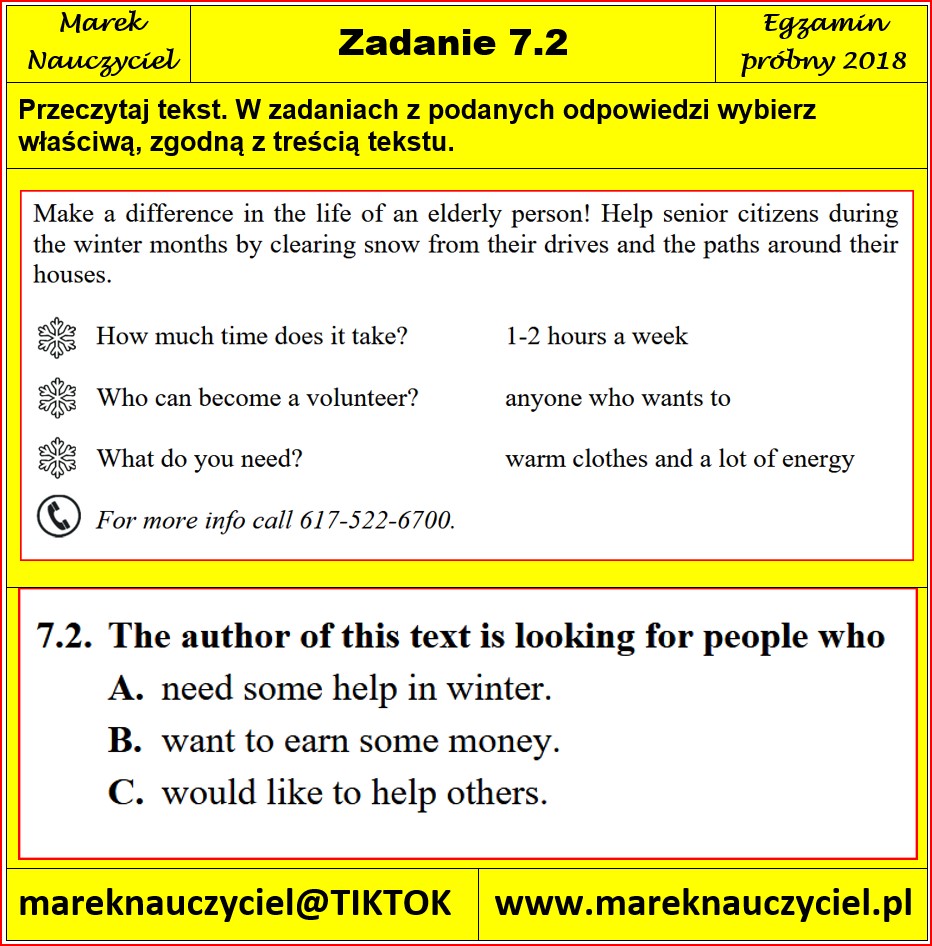
Categories
Zadanie 7.3
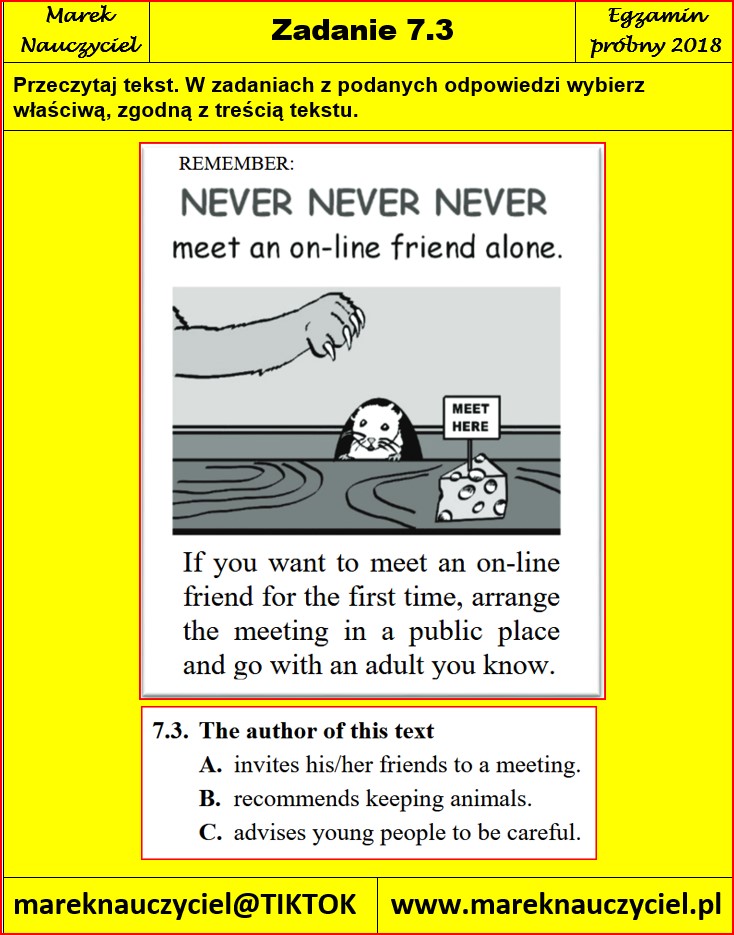
Categories
Zadanie 7.4
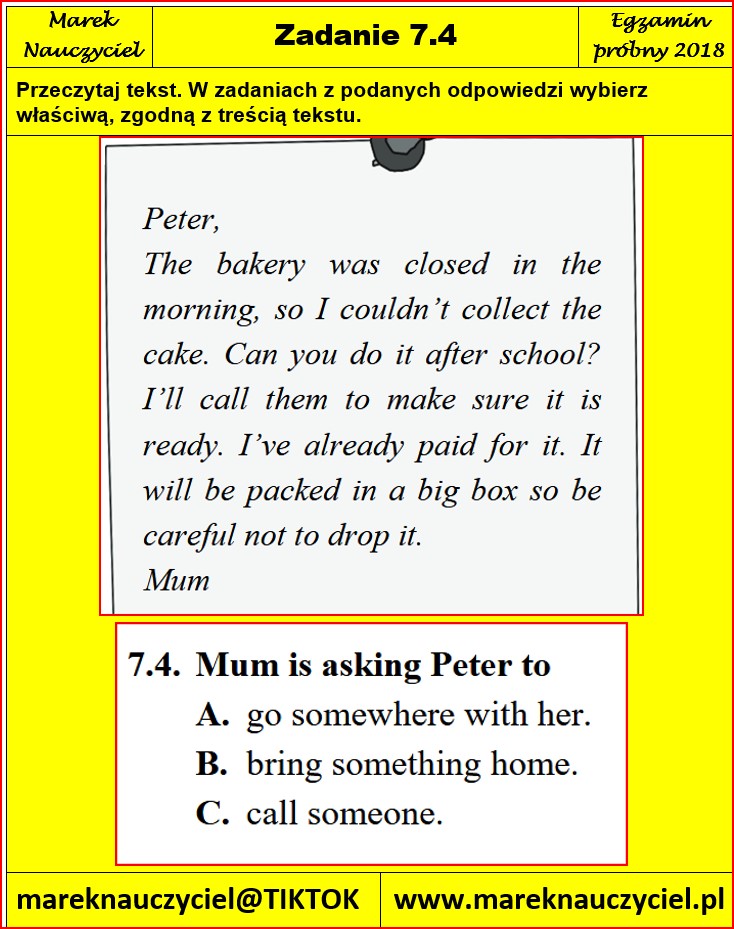
Categories
Zadanie 8
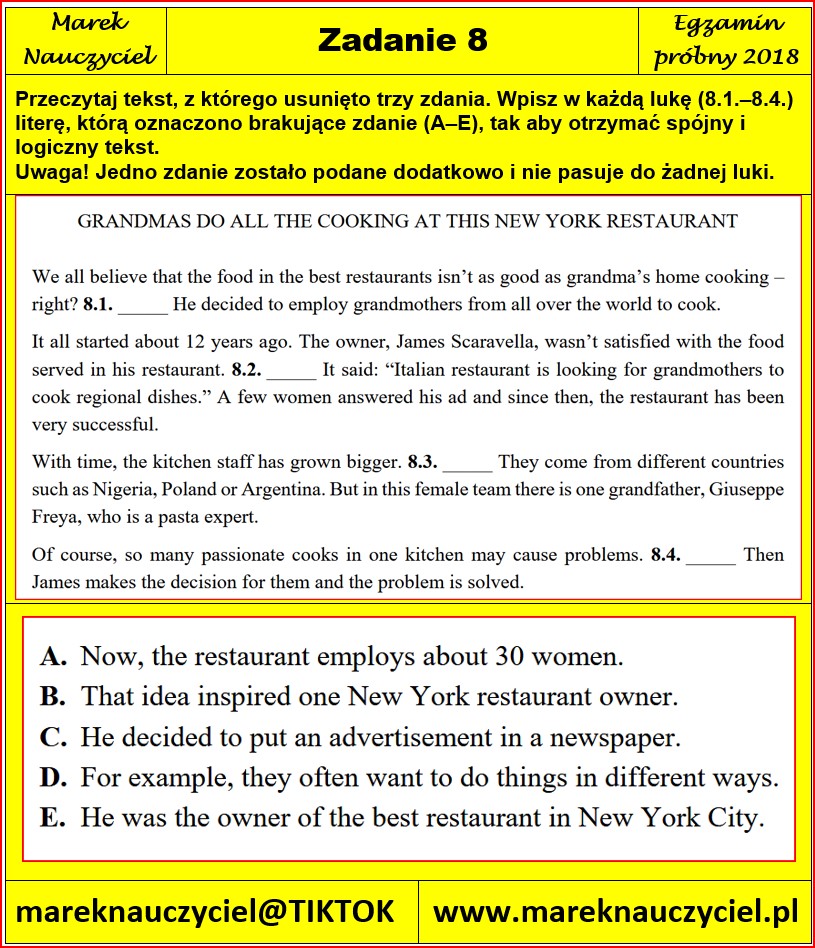
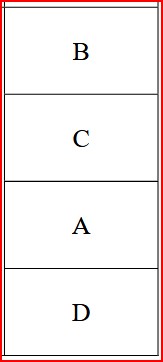
Categories
Zadanie 9
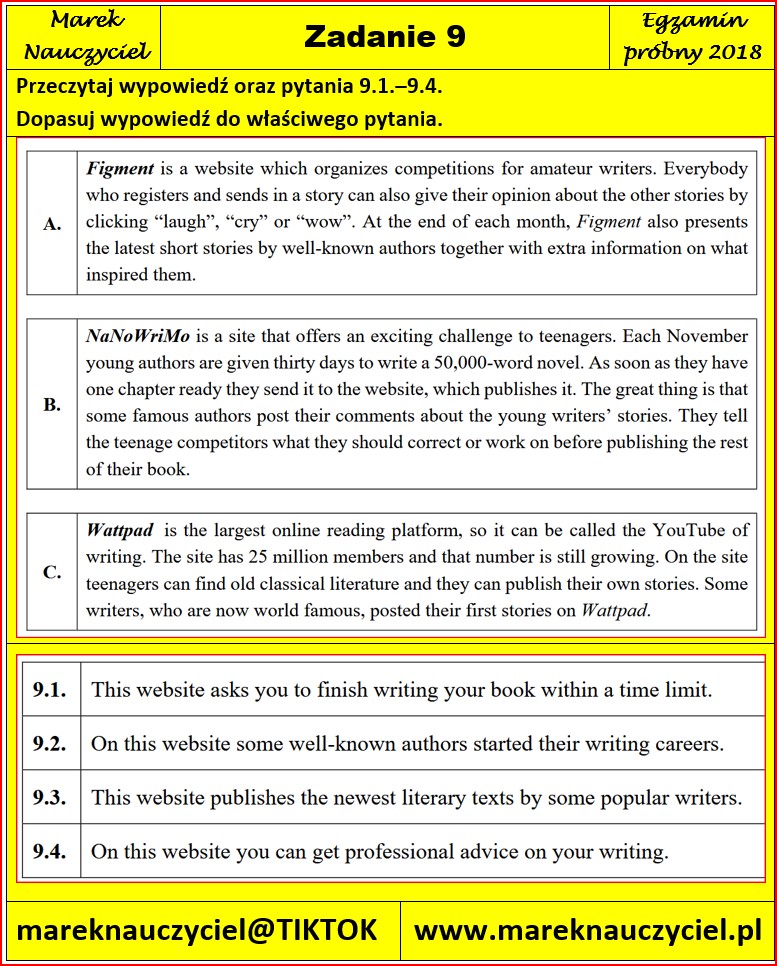
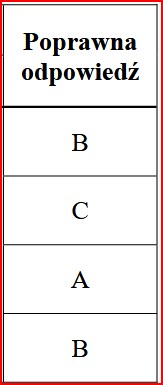
Categories
Zadanie 10
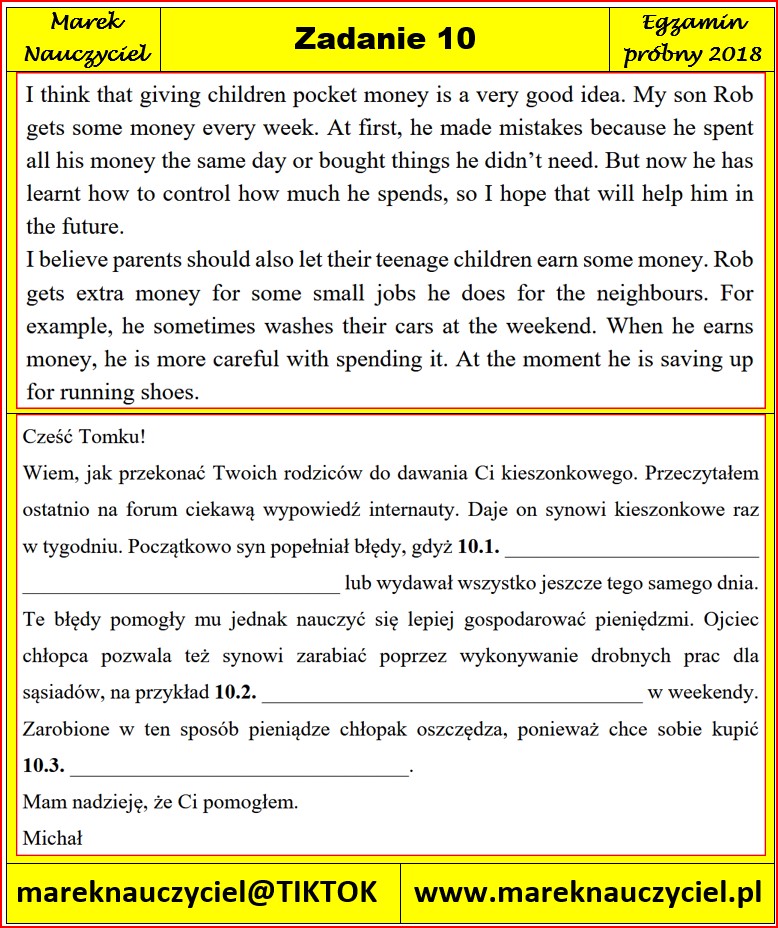
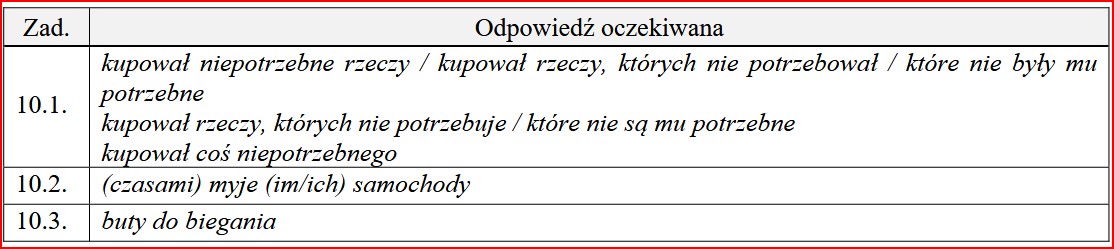
Categories
Zadanie 11
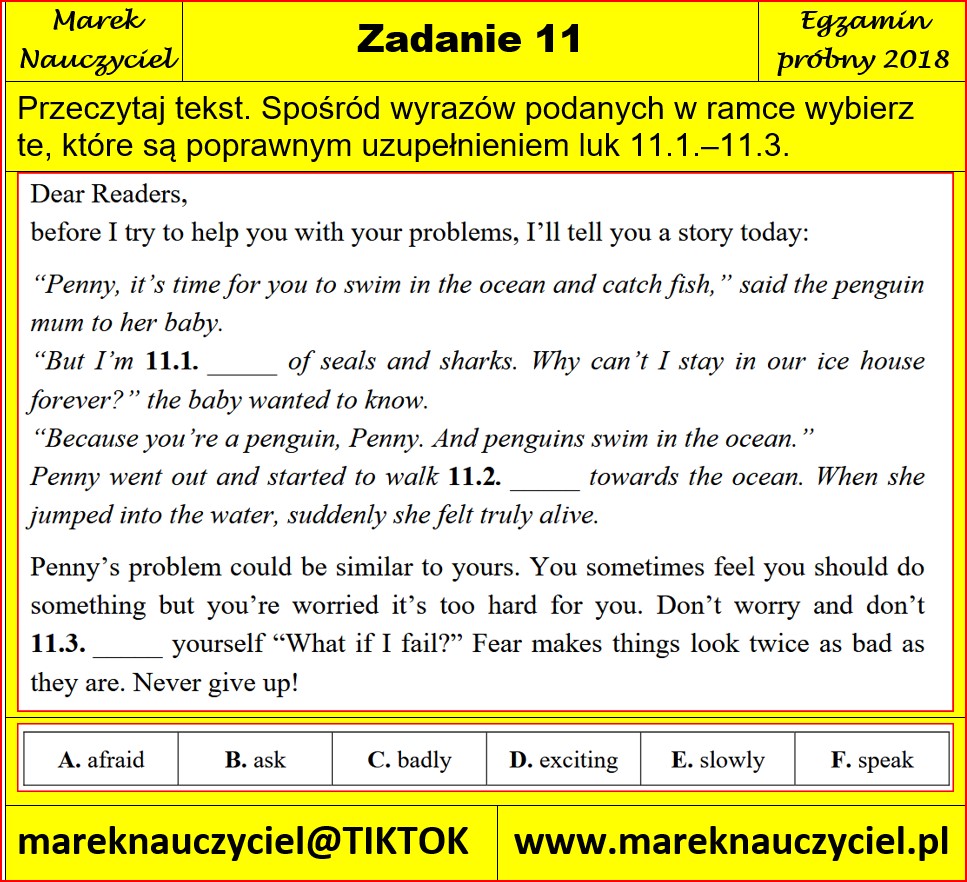
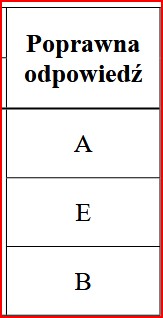
Categories
Zadanie 12
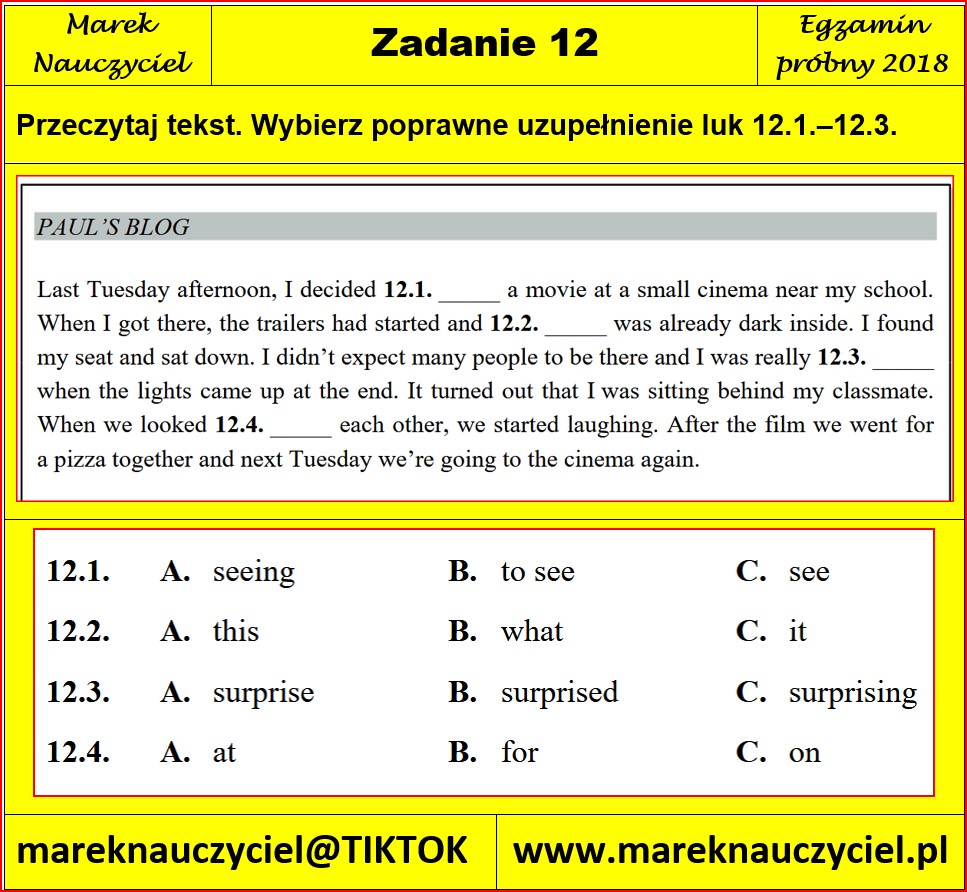
Categories
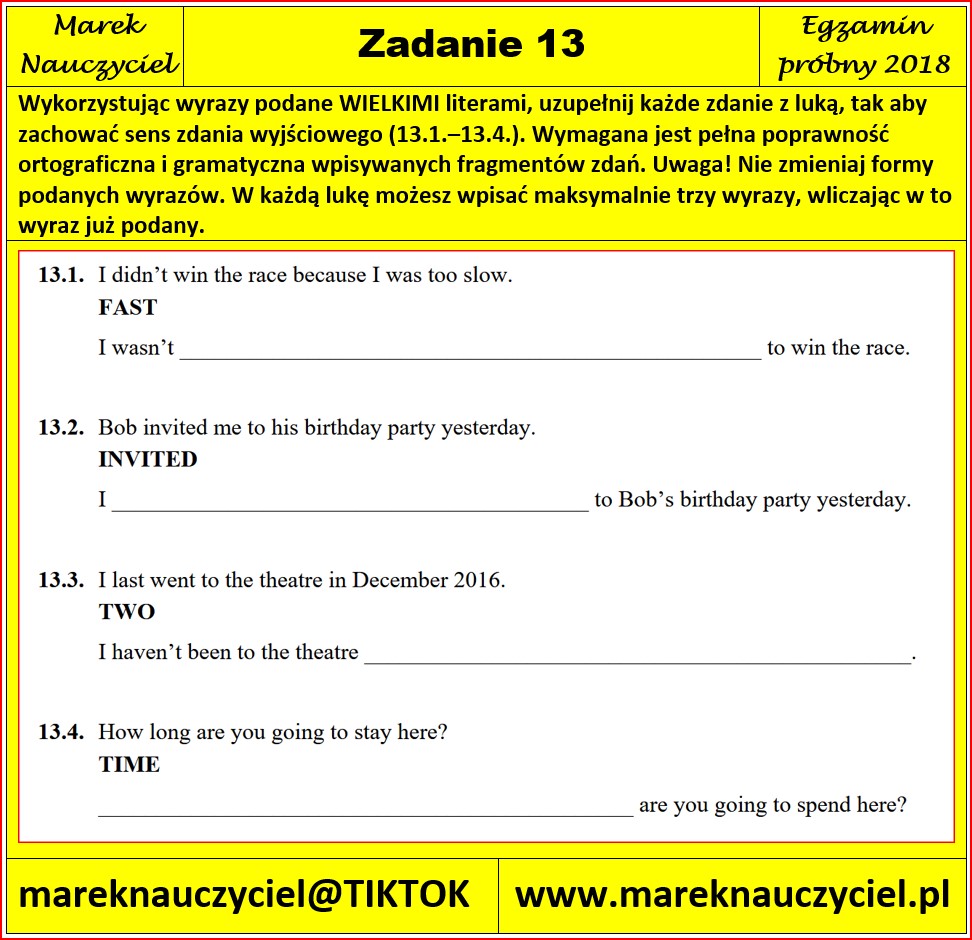
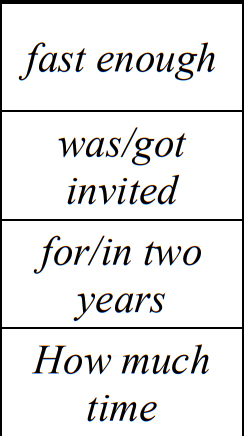
Zadanie 13
Categories
Zadanie 14
Categories
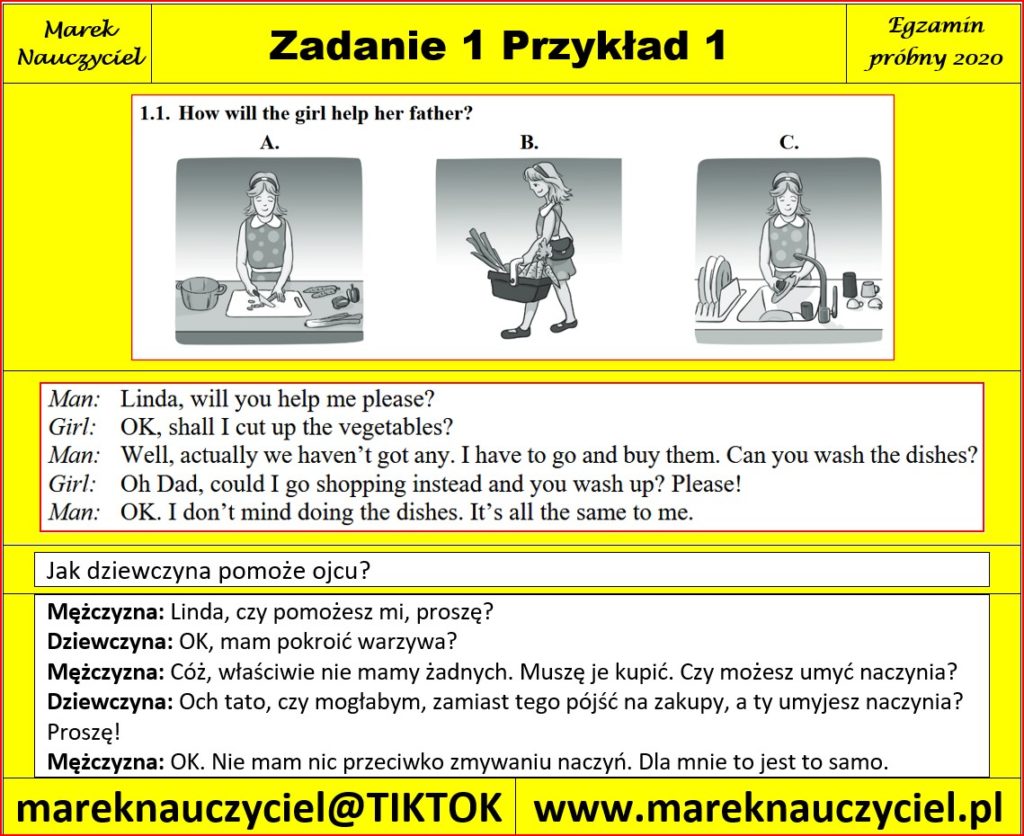
Zadanie 1 Przykład 1
Categories
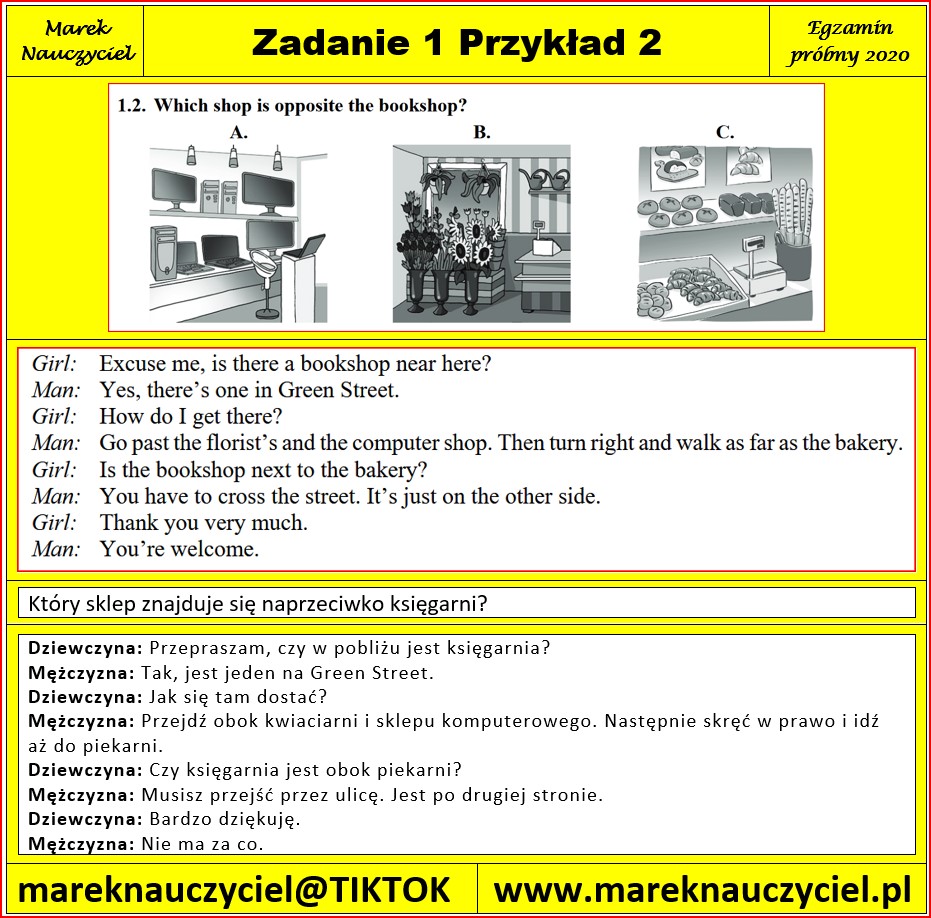
Zadanie 1 Przykład 2
Categories
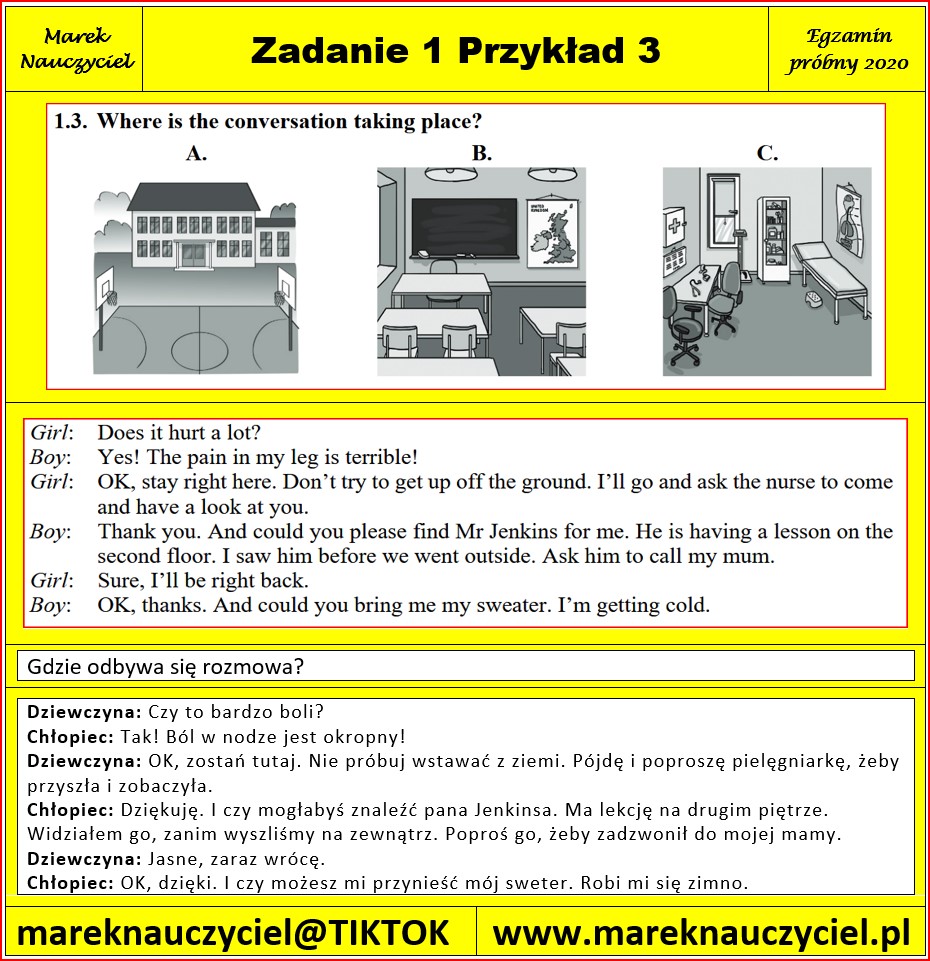
Zadanie 1 Przykład 3
Categories
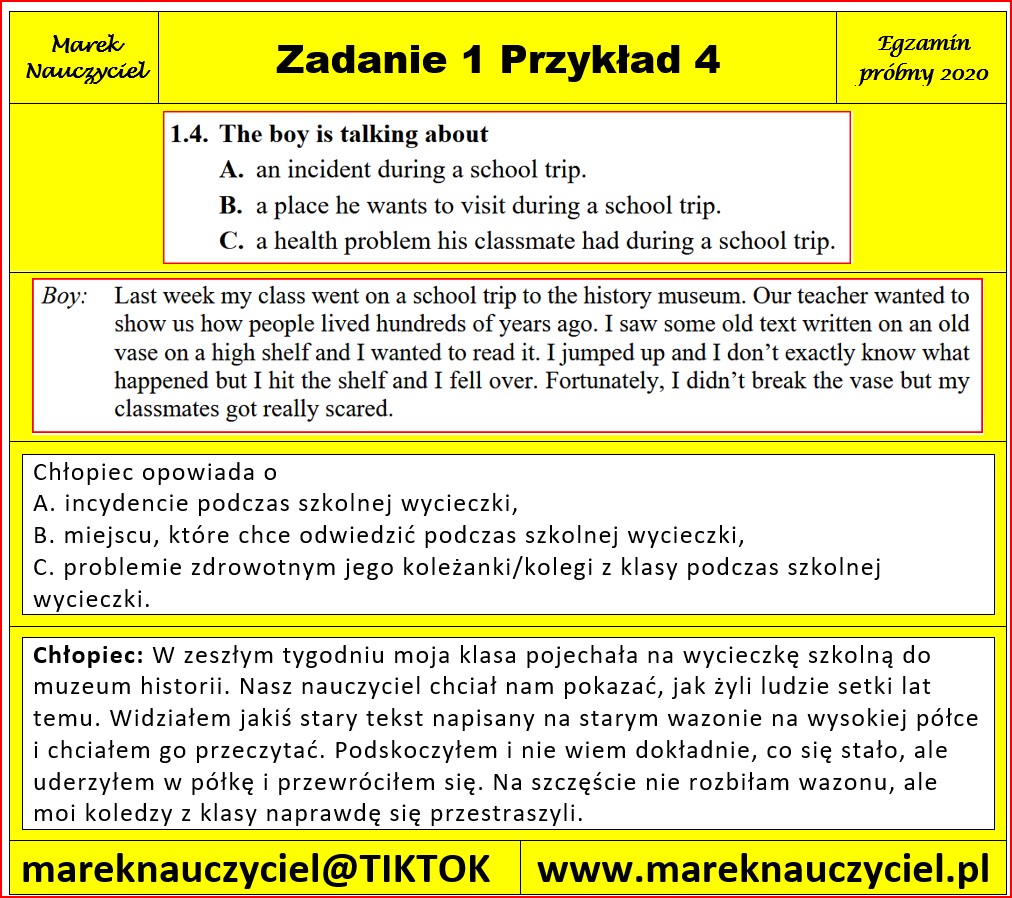
Zadanie 1 Przykład 4
Categories
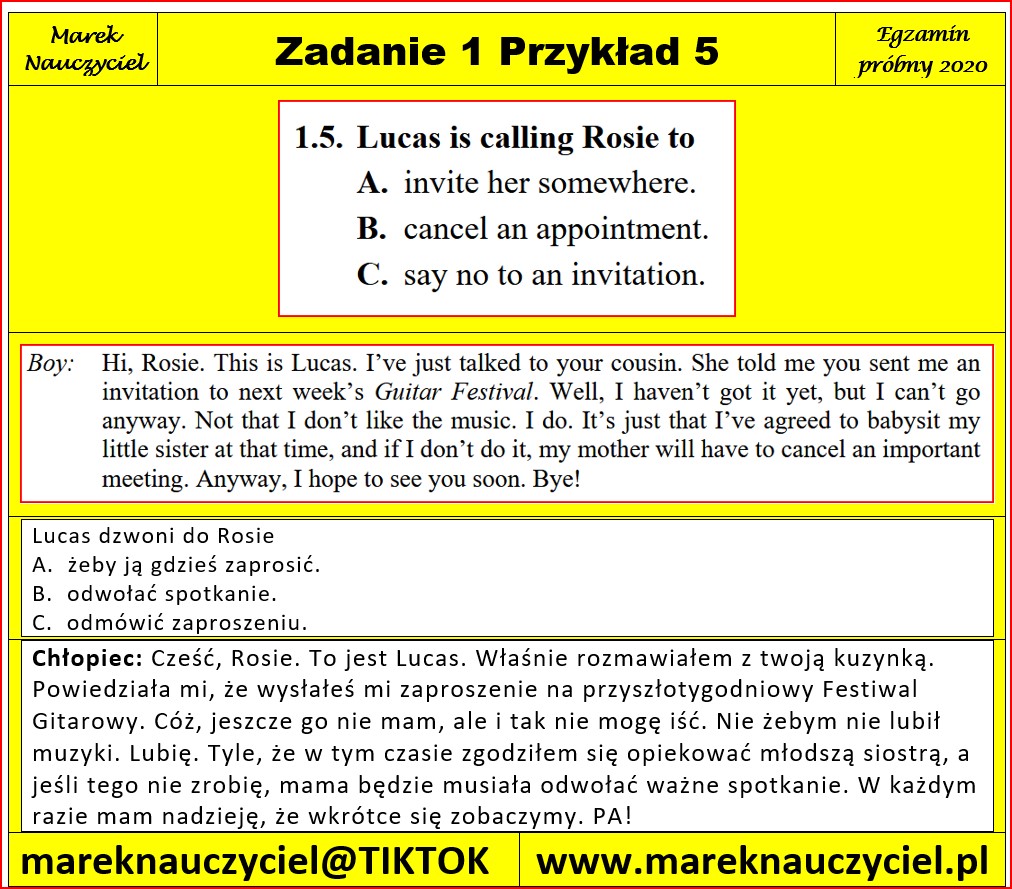
Zadanie 1 Przykład 5
Categories
Zadanie 2.1
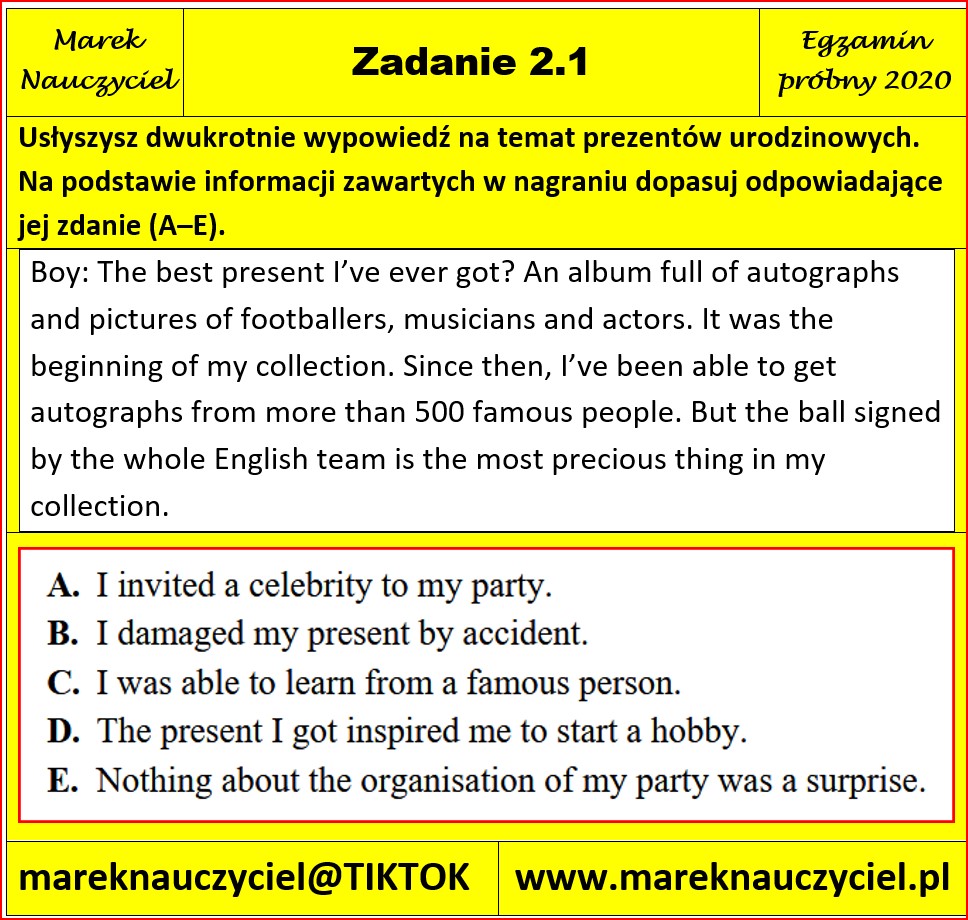
Categories
Zadanie 2.2
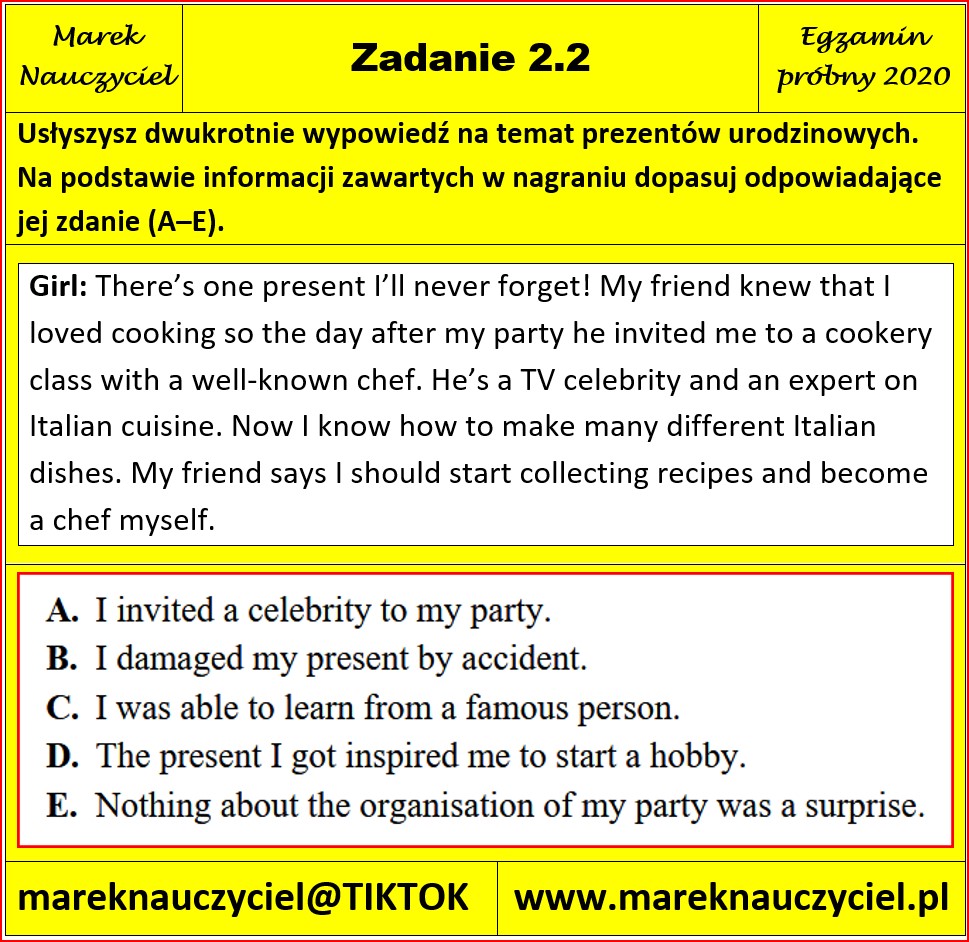
Categories
Zadanie 2.3
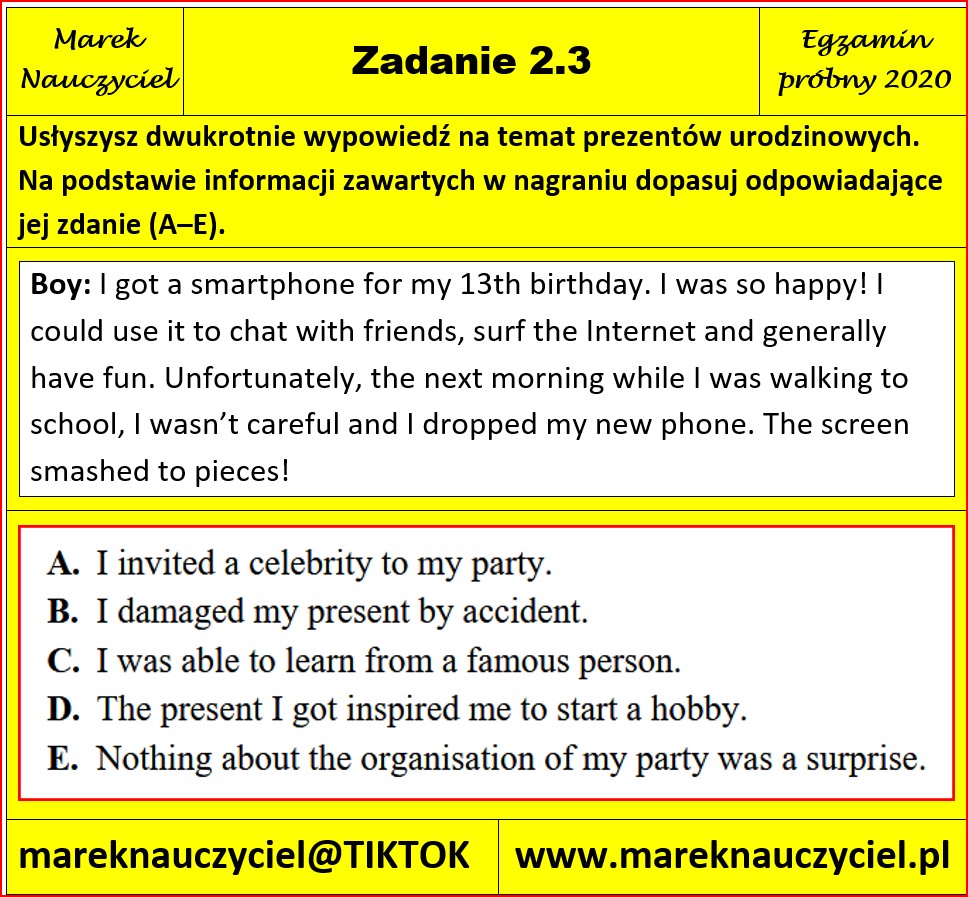
Categories
Zadanie 2.4
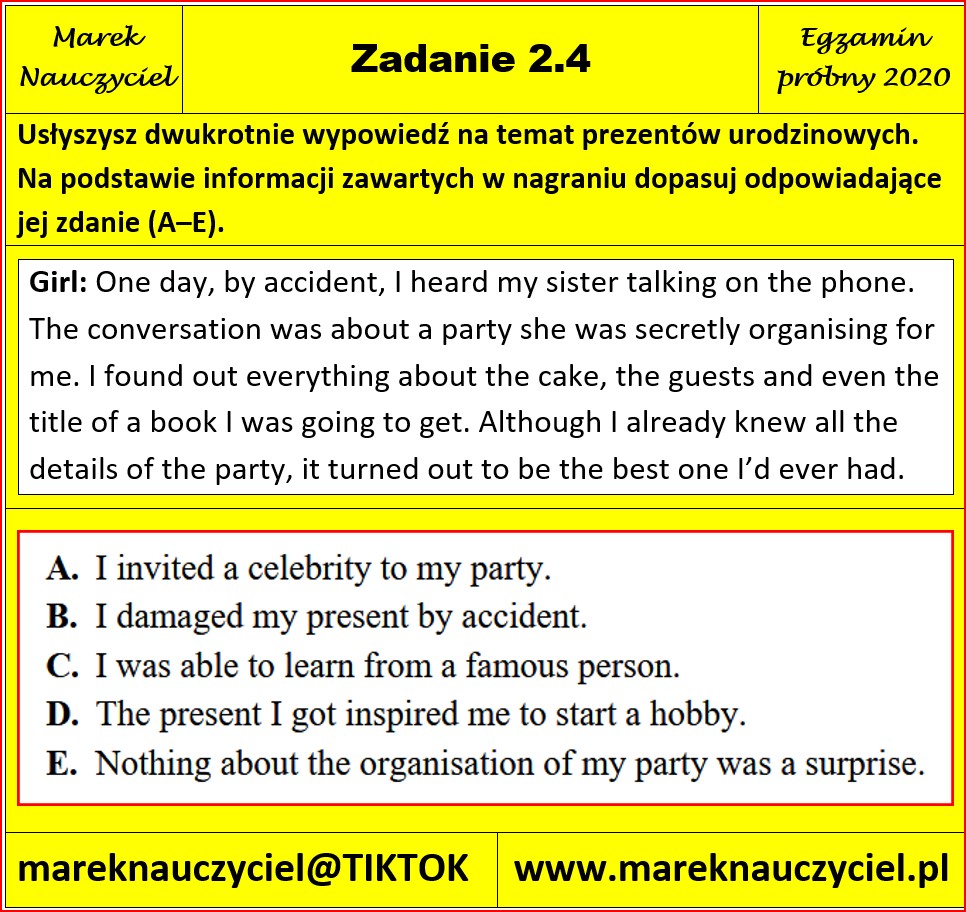
Categories
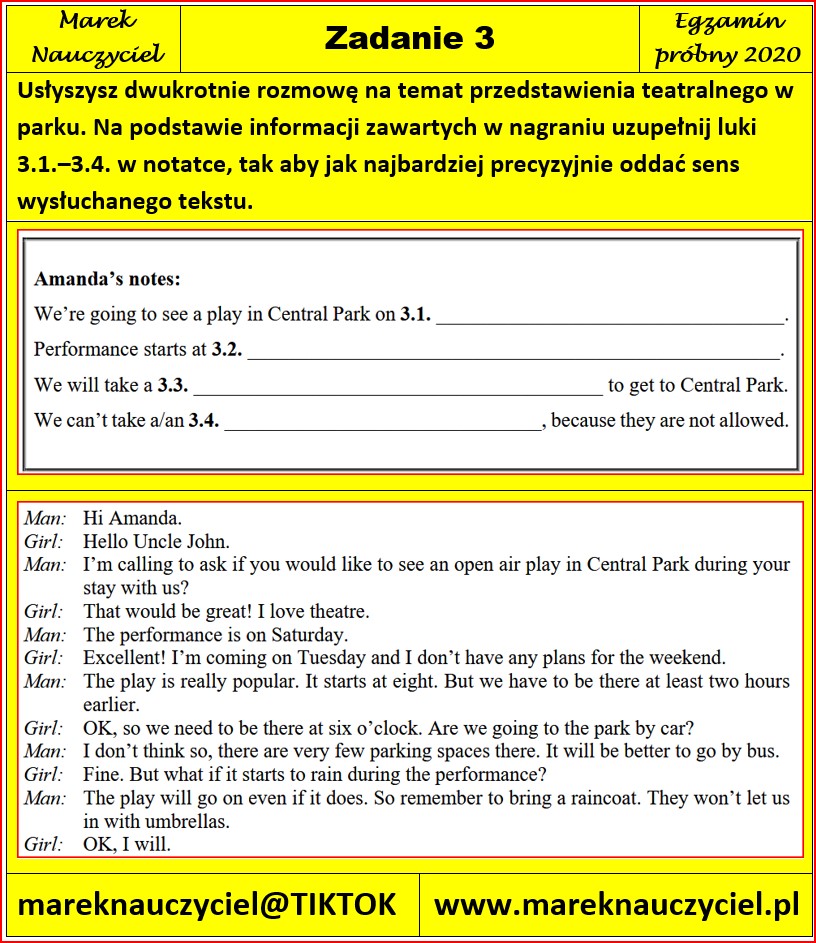
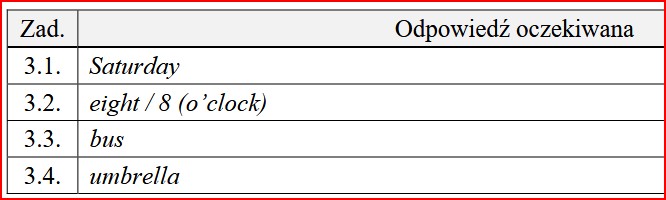
Zadanie 3
Categories
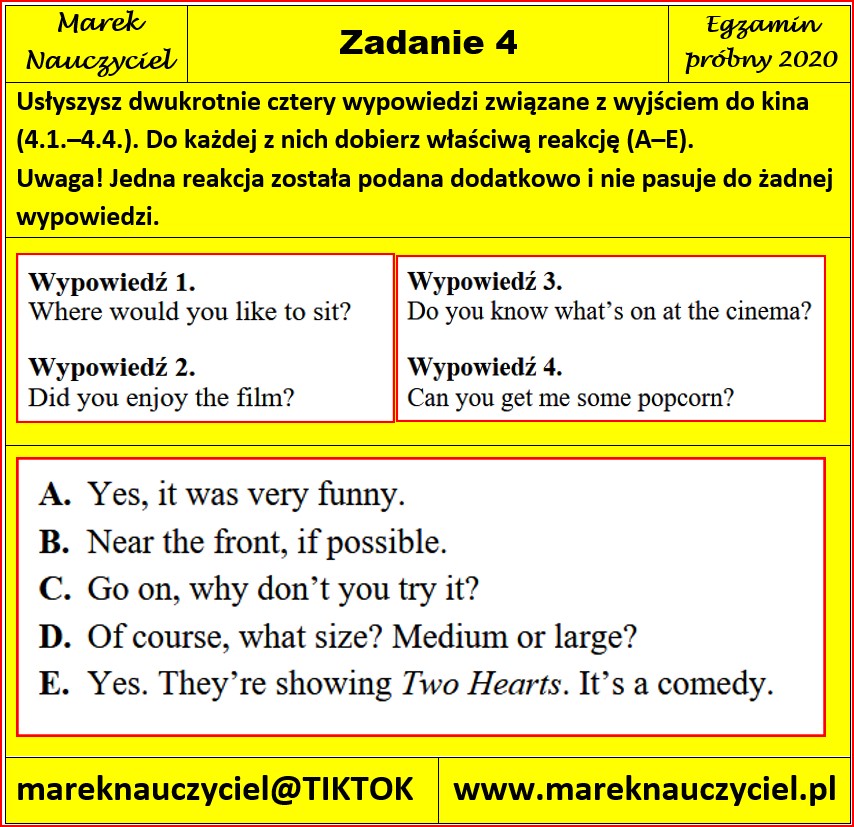
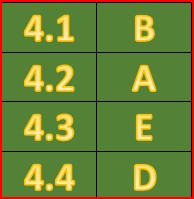
Zadanie 4
Categories
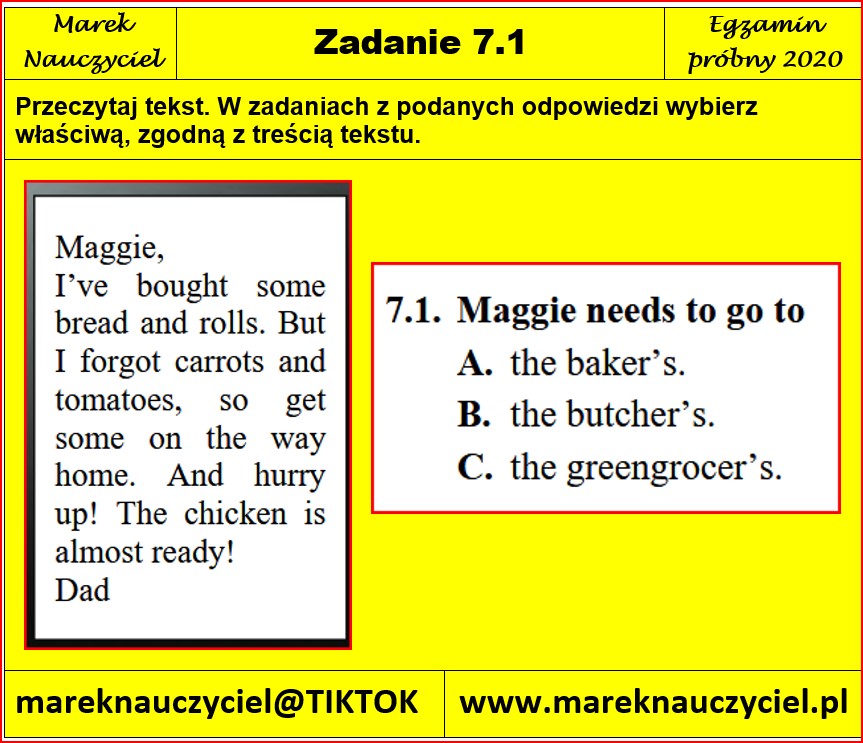
Zadanie 7.1
Categories
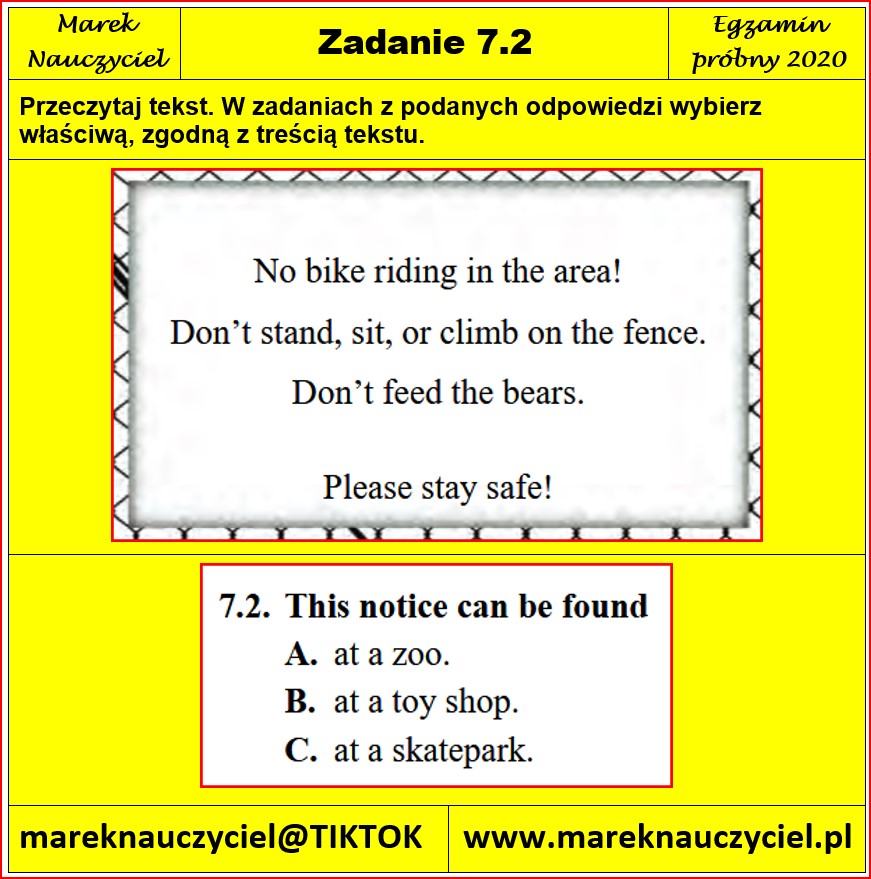
Zadanie 7.2
Categories
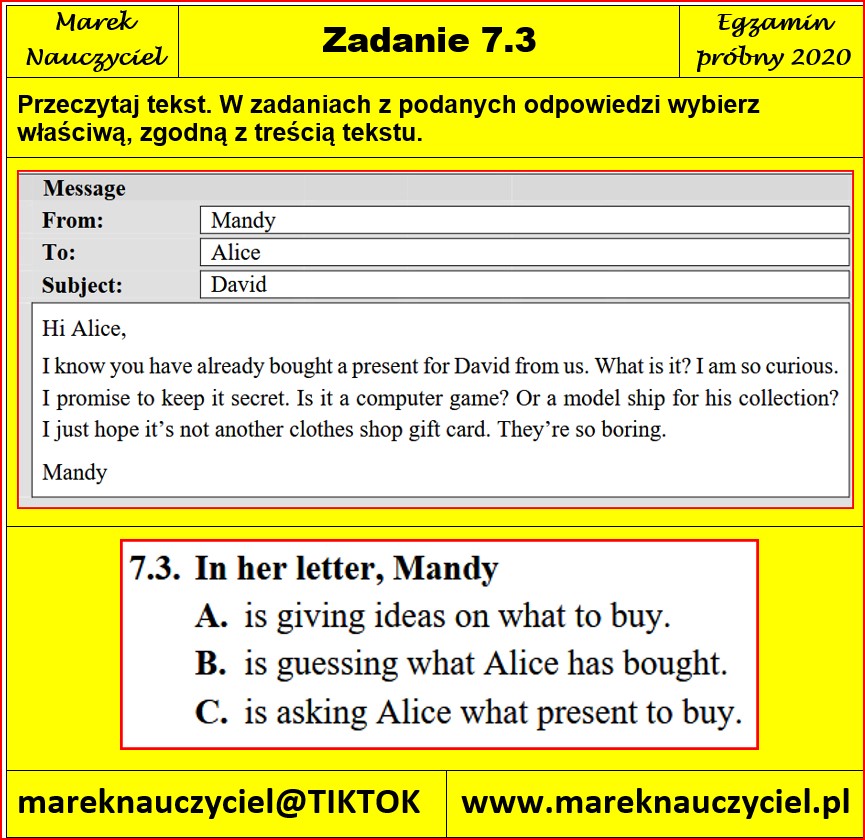
Zadanie 7.3
Categories
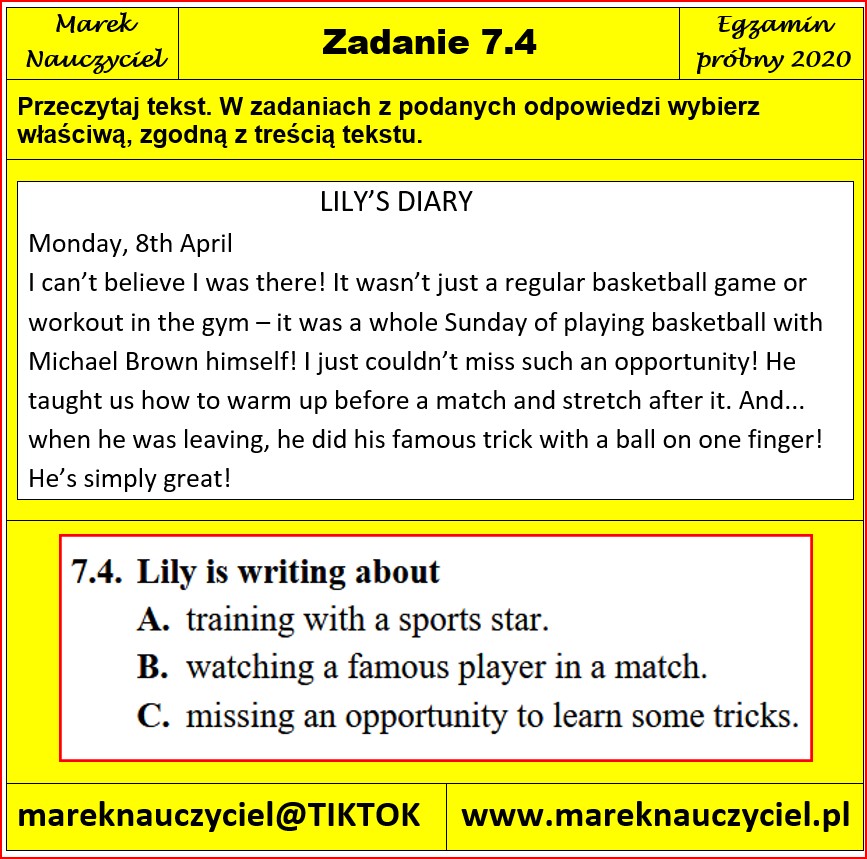
Zadanie 7.4
Categories
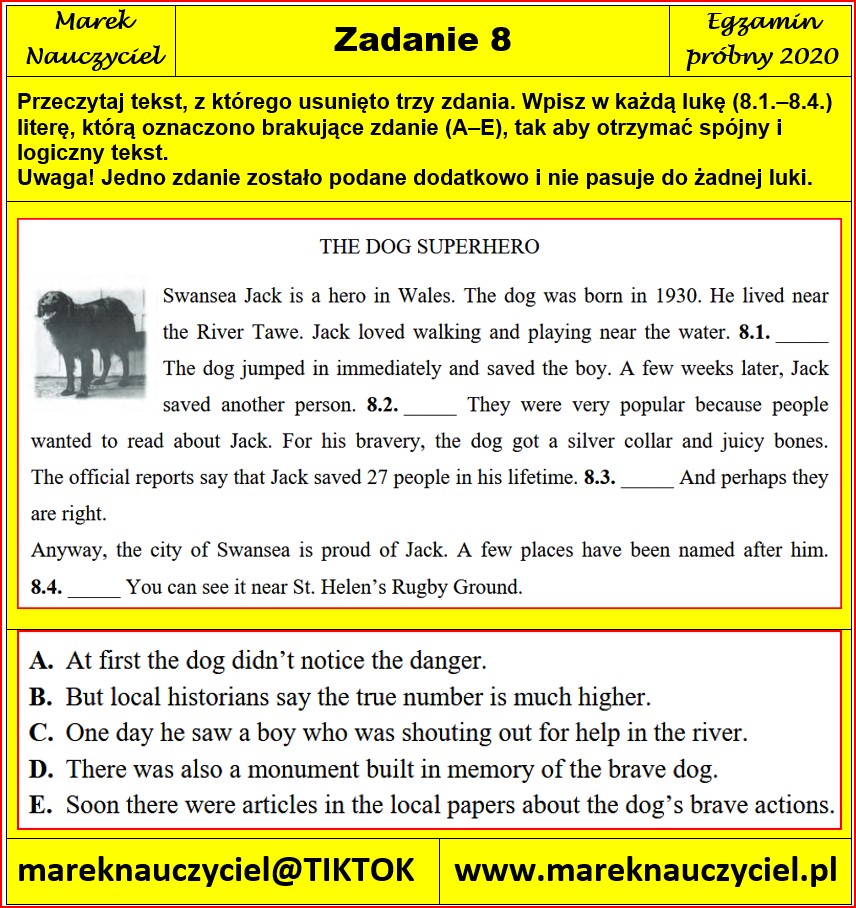
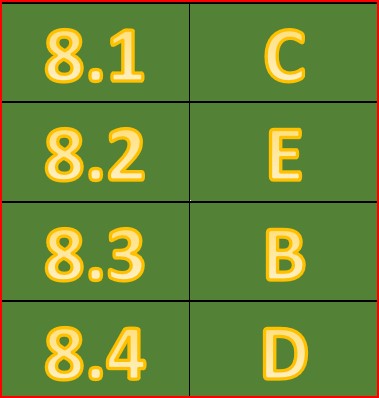
Zadanie 8
Categories
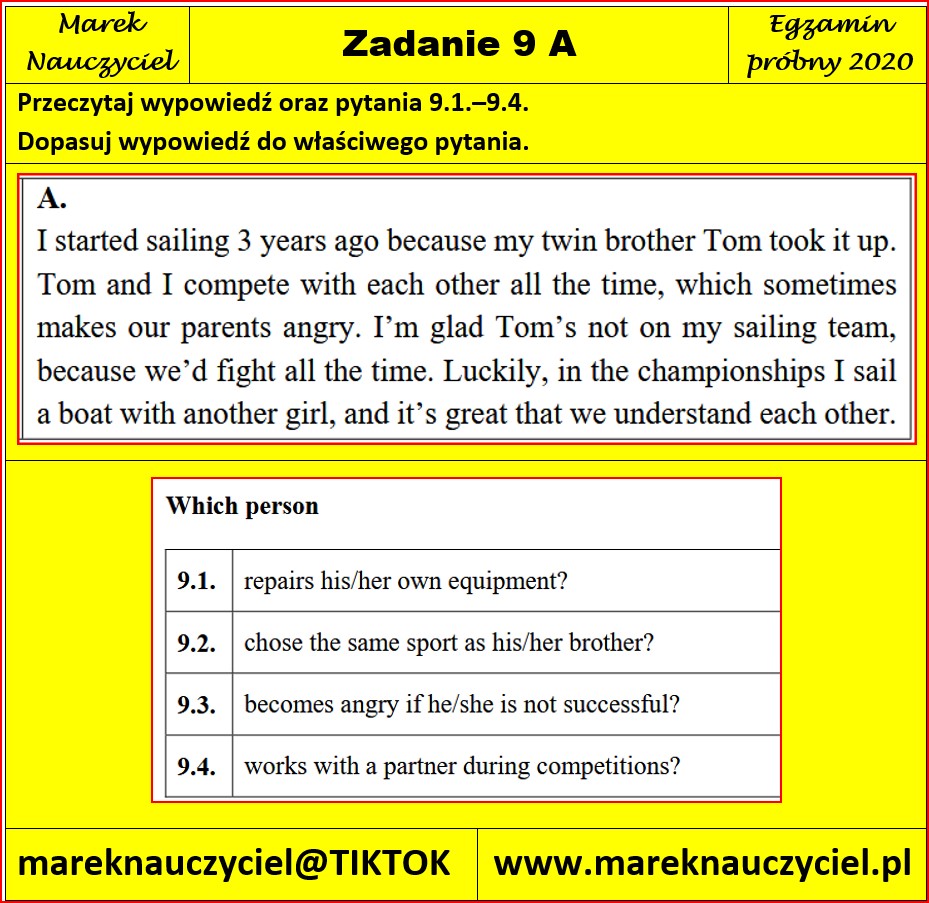
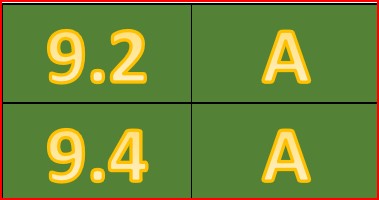
Zadanie 9A
Categories
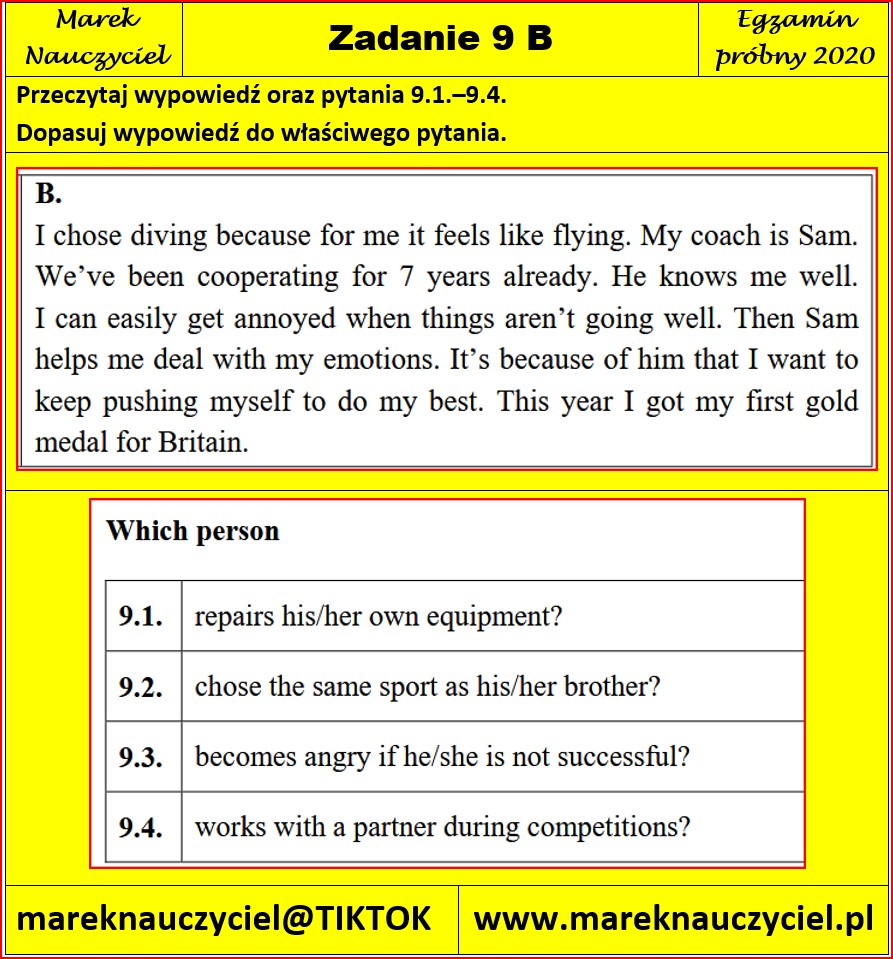
Zadanie 9B

Categories
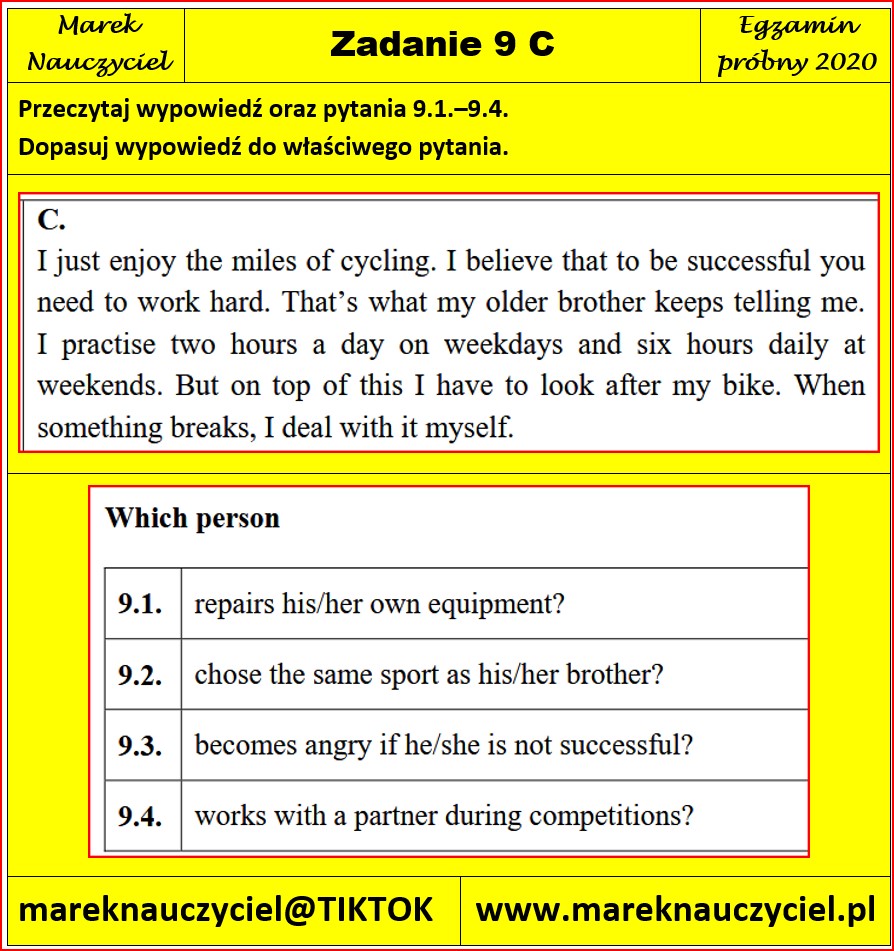
Zadanie 9C

Categories
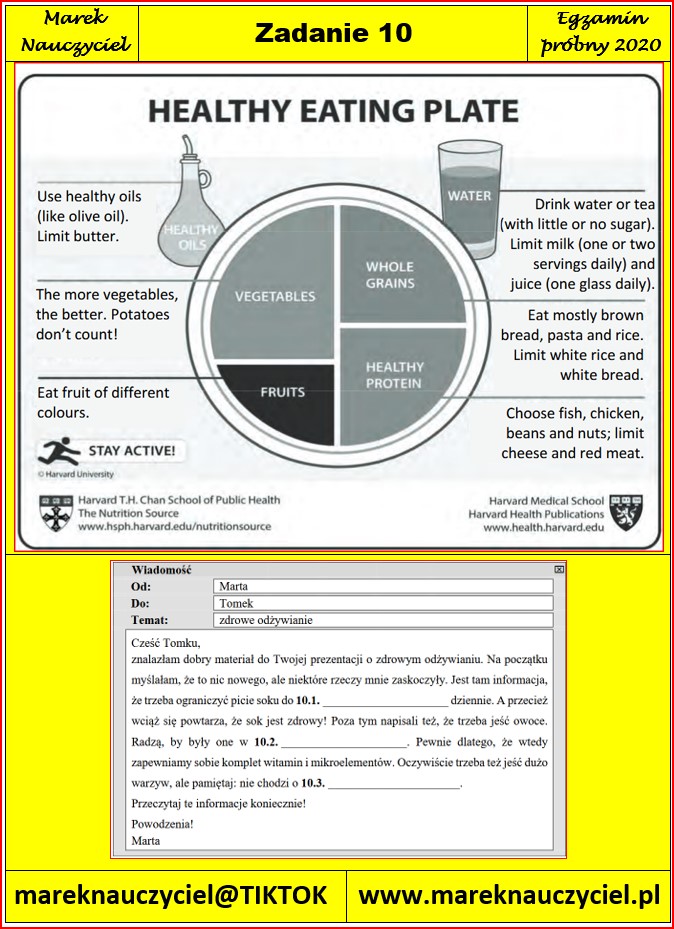
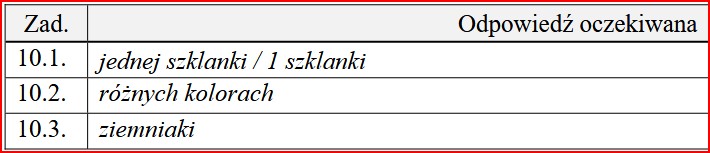
Zadanie 10
Categories
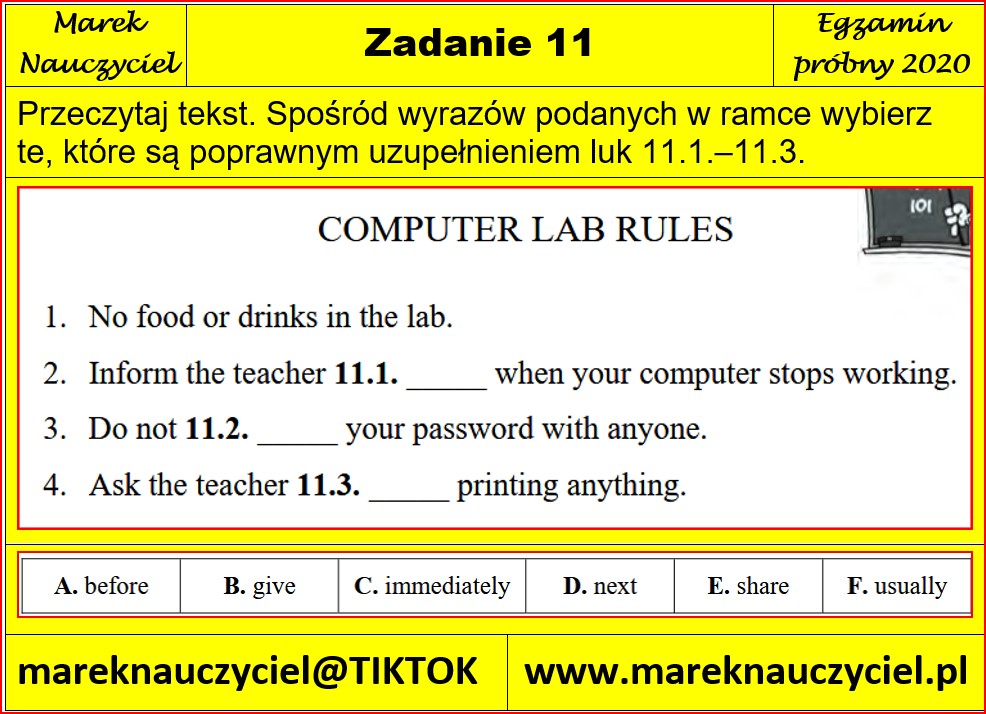
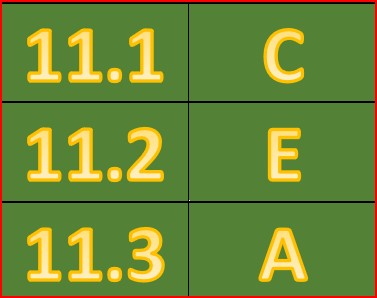
Zadanie 11
Categories
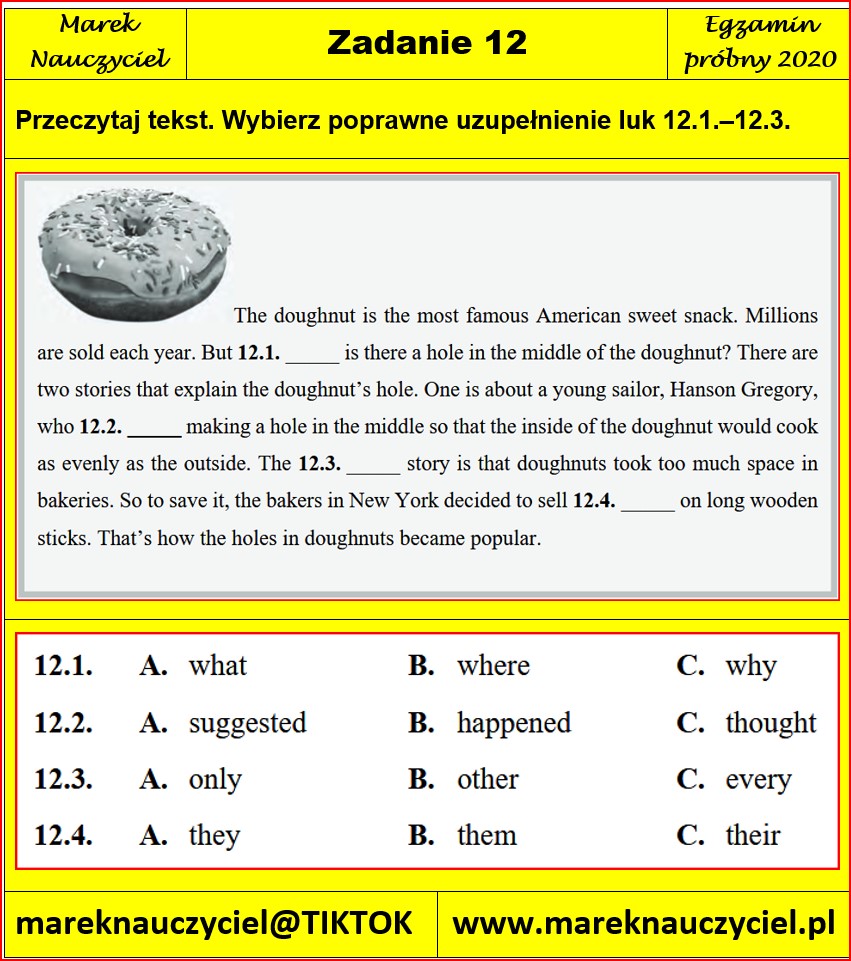
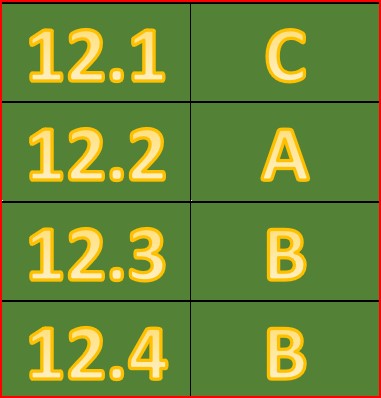
Zadanie 12
Categories
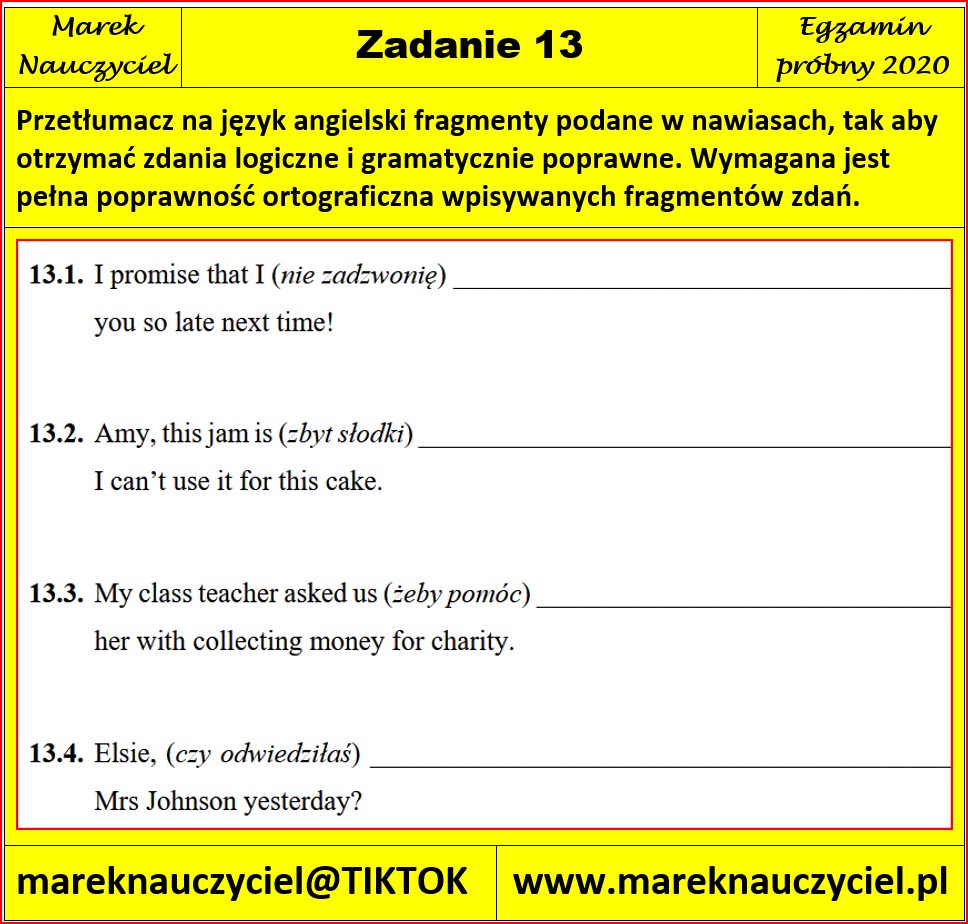
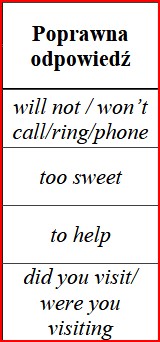
Zadanie 13
Categories
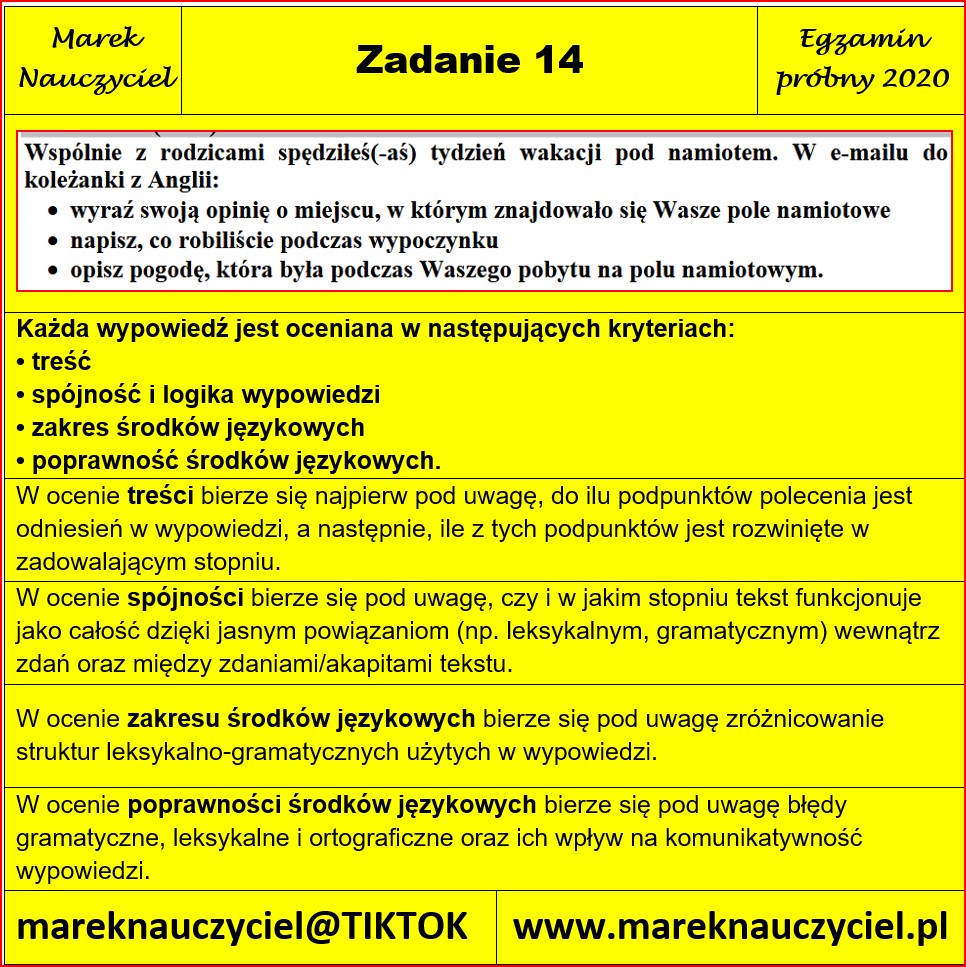
Zadanie 14
Categories
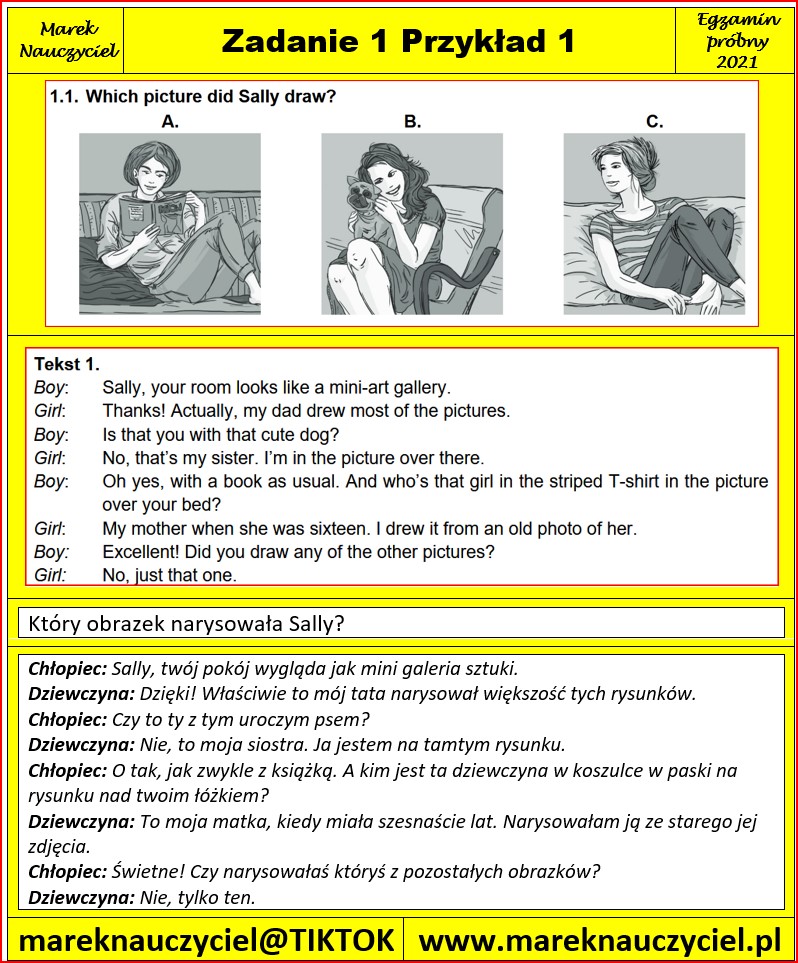
Zadanie 1 Przykład 1
Categories
Zadanie 1 Przykład 2
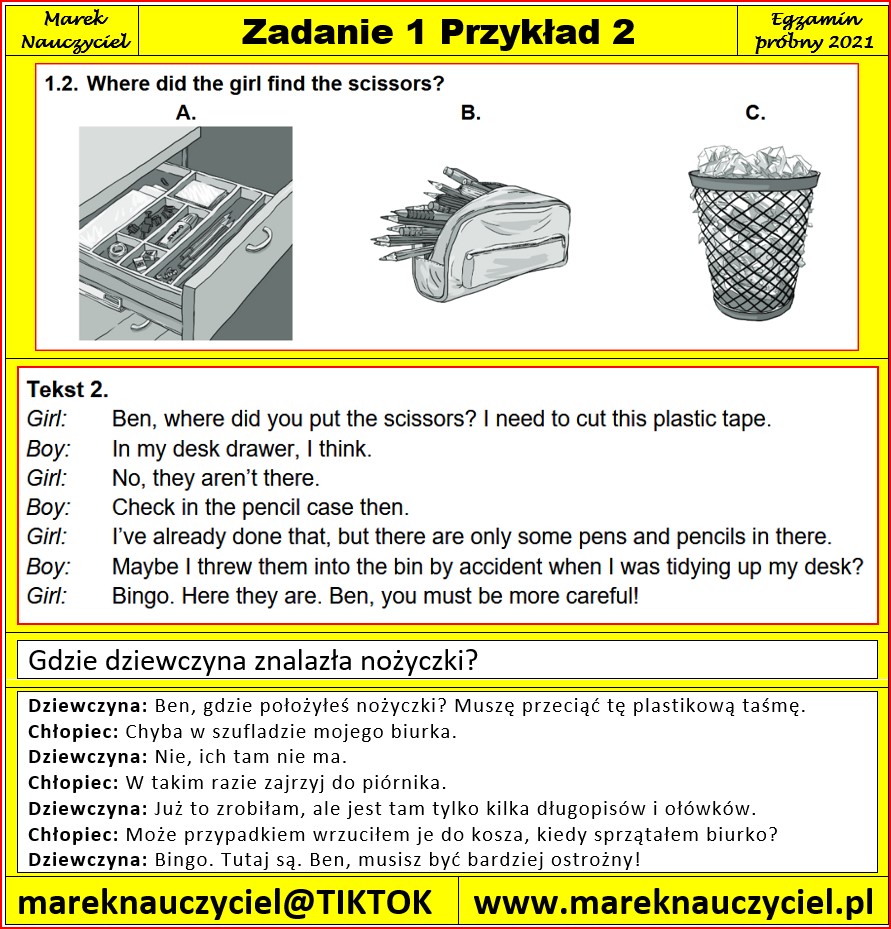
Categories
Zadanie 1 Przykład 3
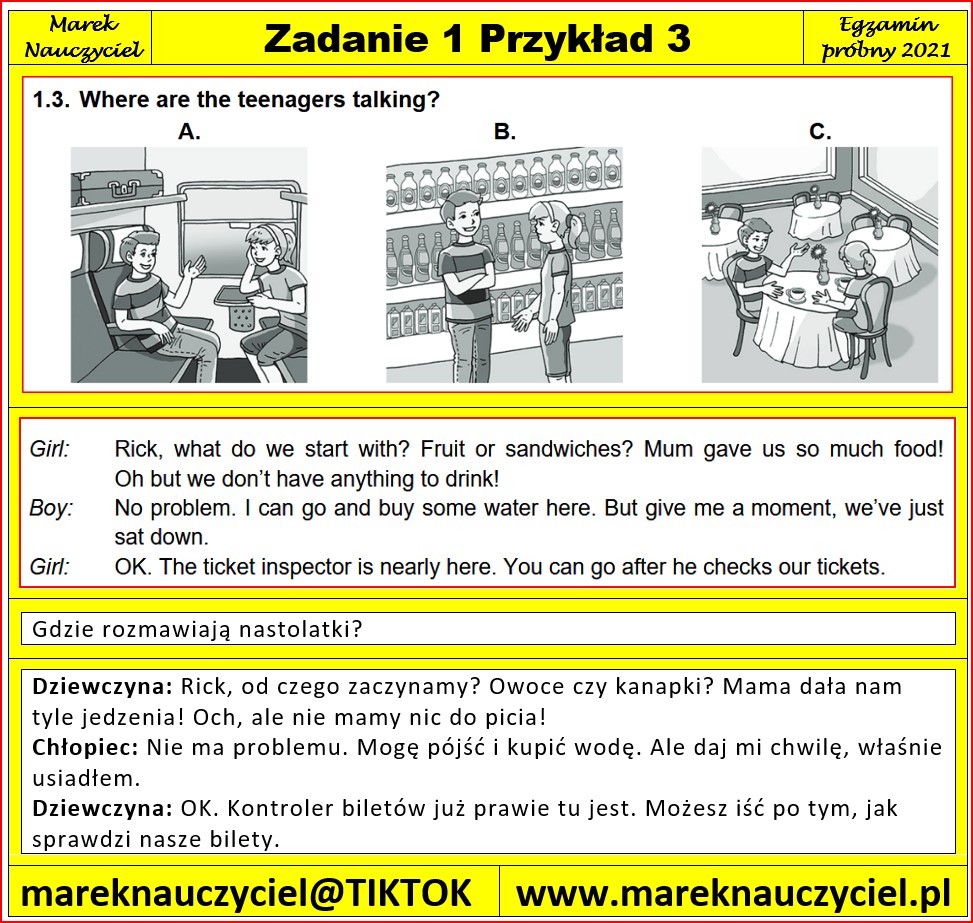
Categories
Zadanie 1 Przykład 4
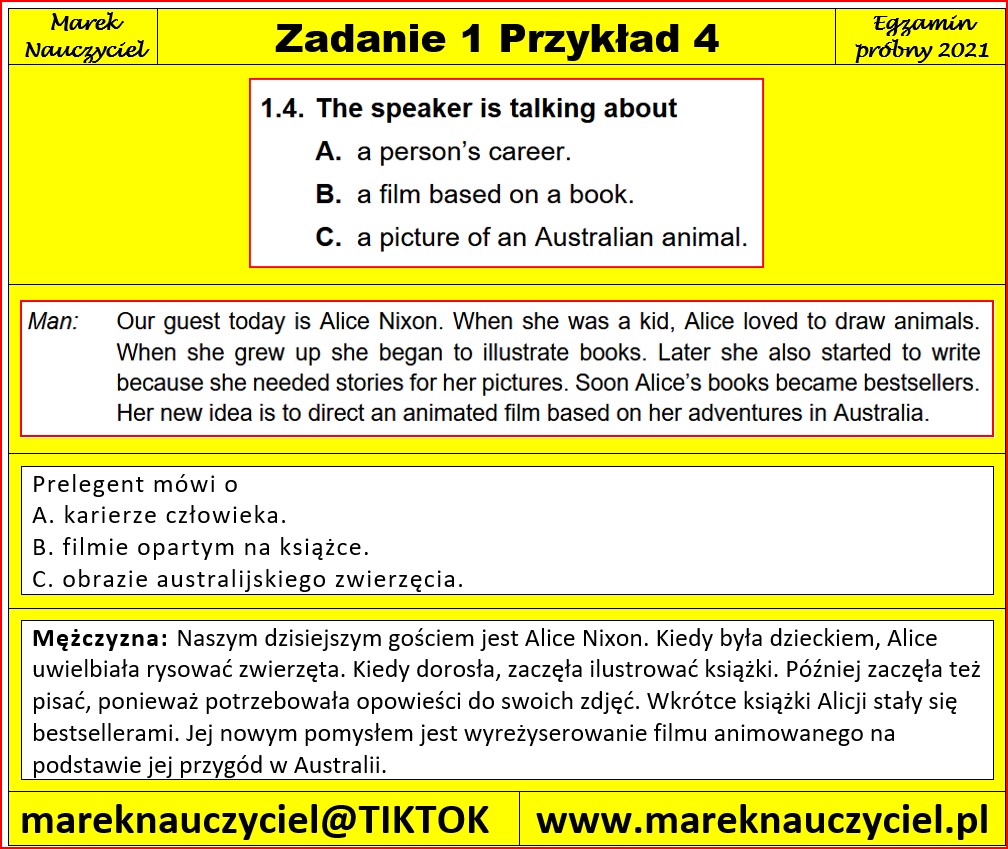
Categories
Zadanie 1 Przykład 5
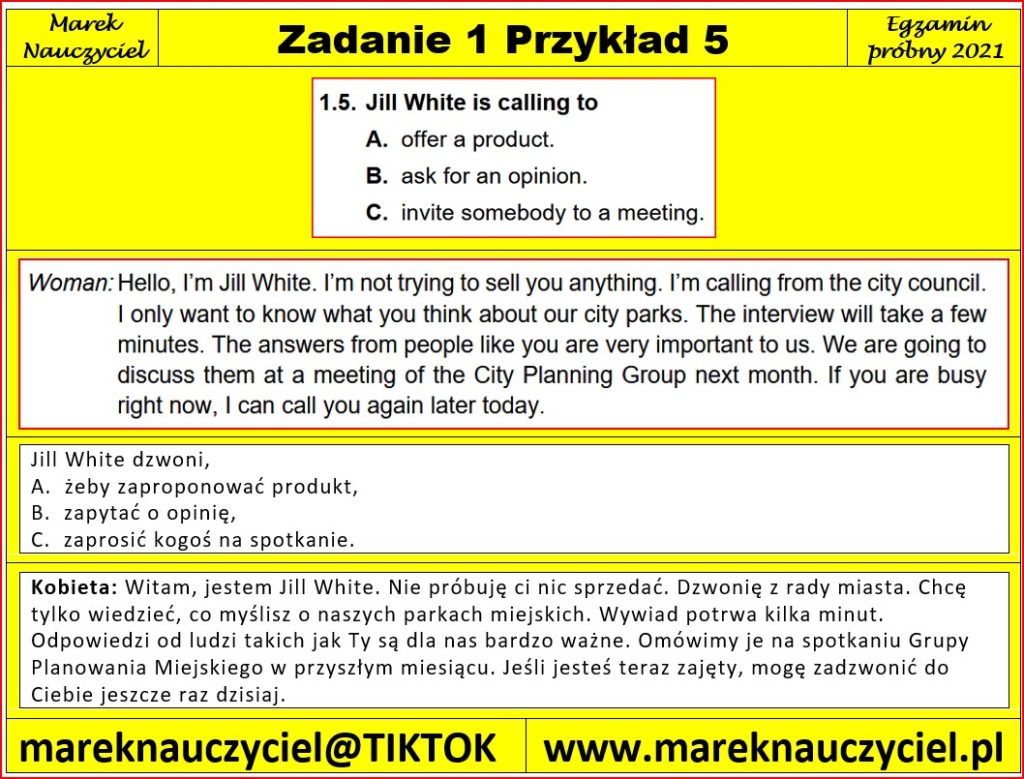
Categories
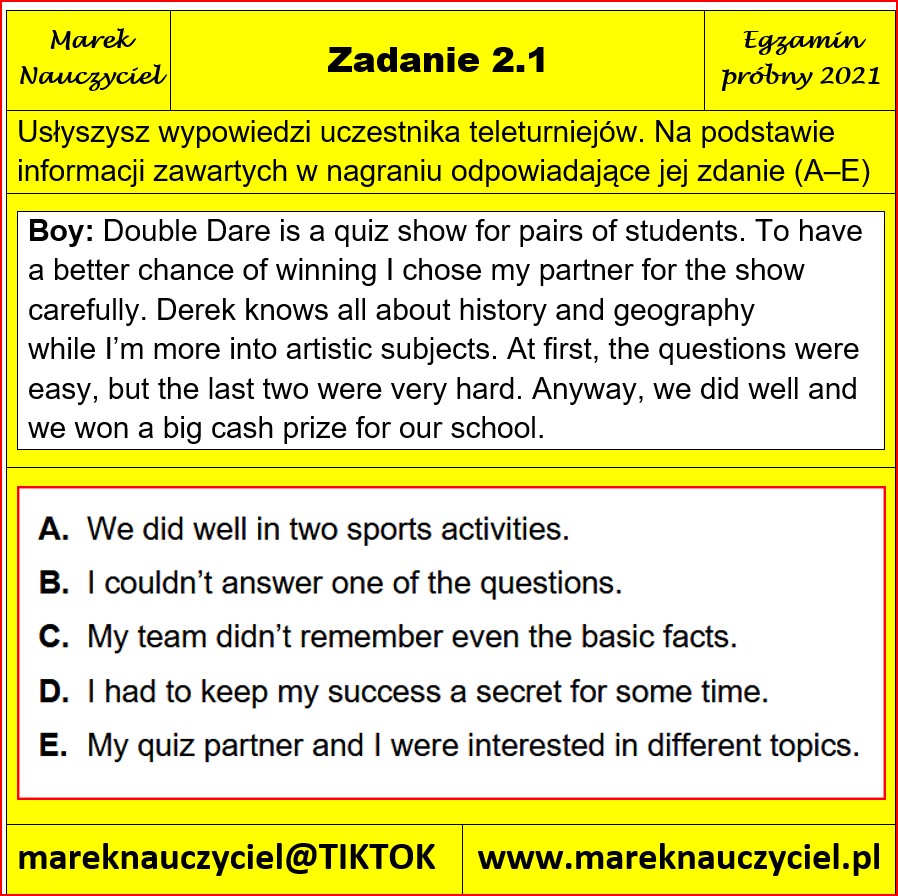
Zadanie 2.1
Categories
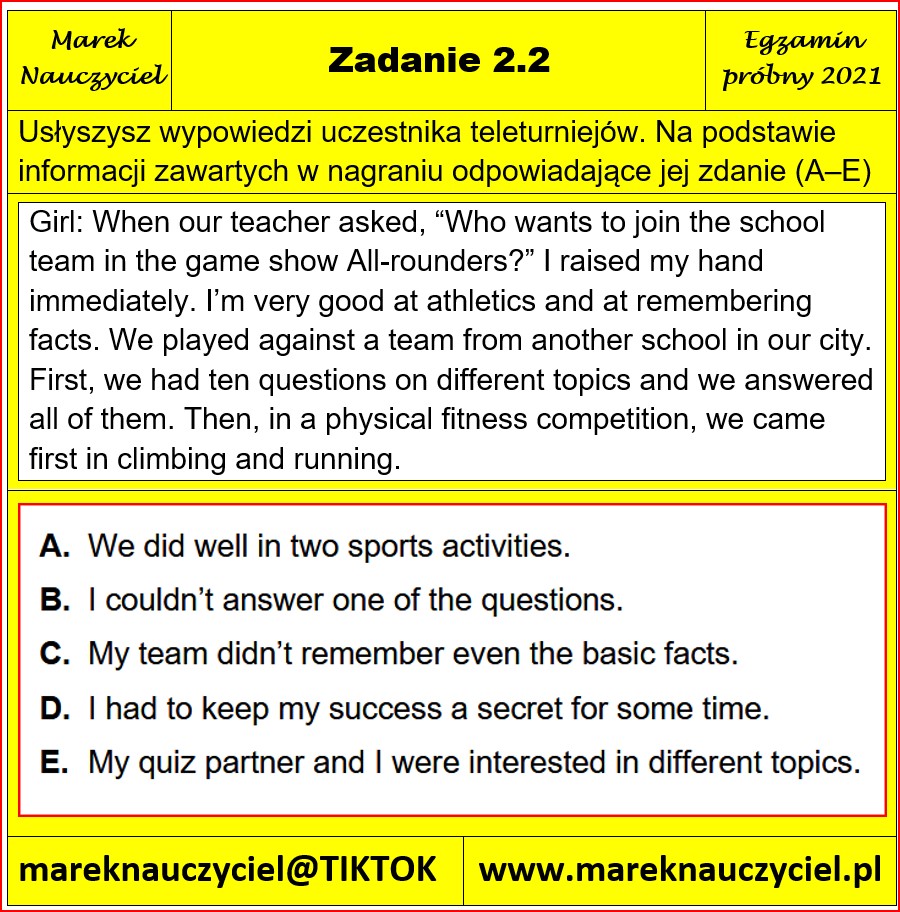
Zadanie 2.2
Categories
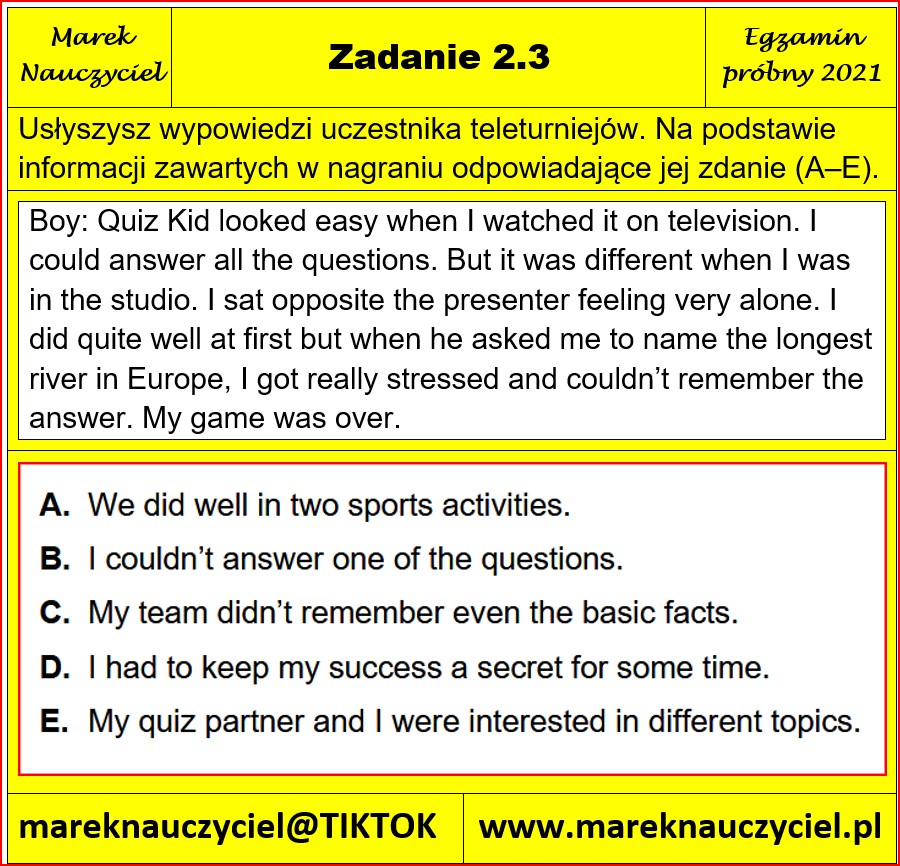
Zadanie 2.3
Categories
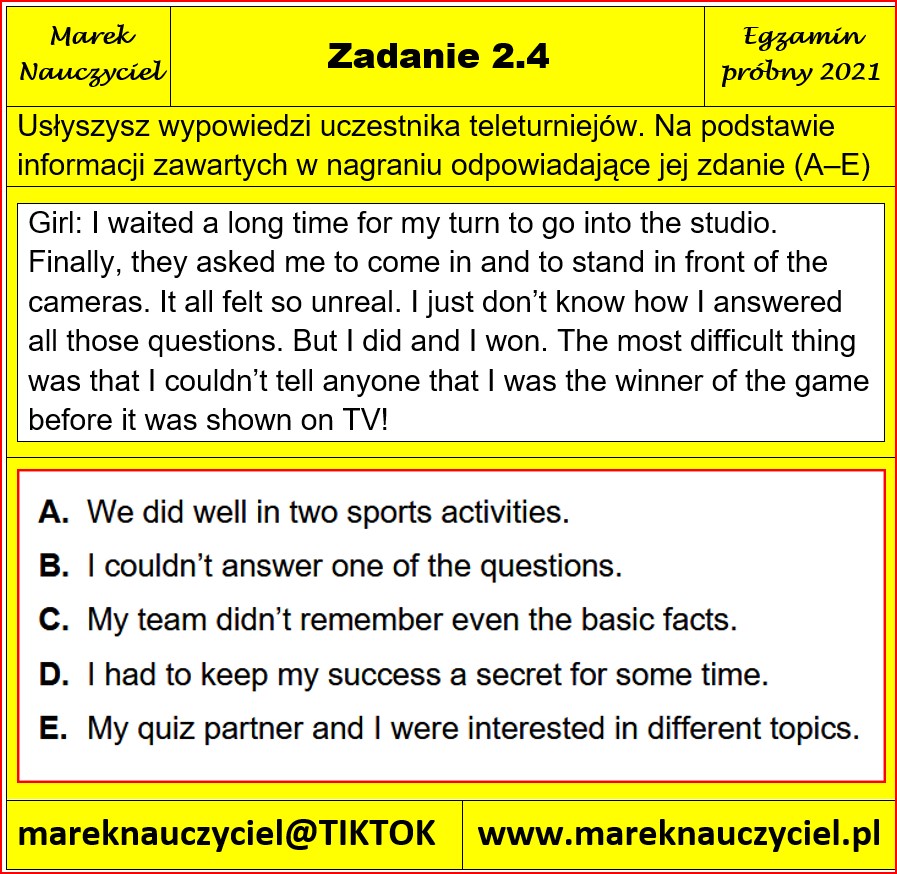
Zadanie 2.4
Categories
Zadanie 3
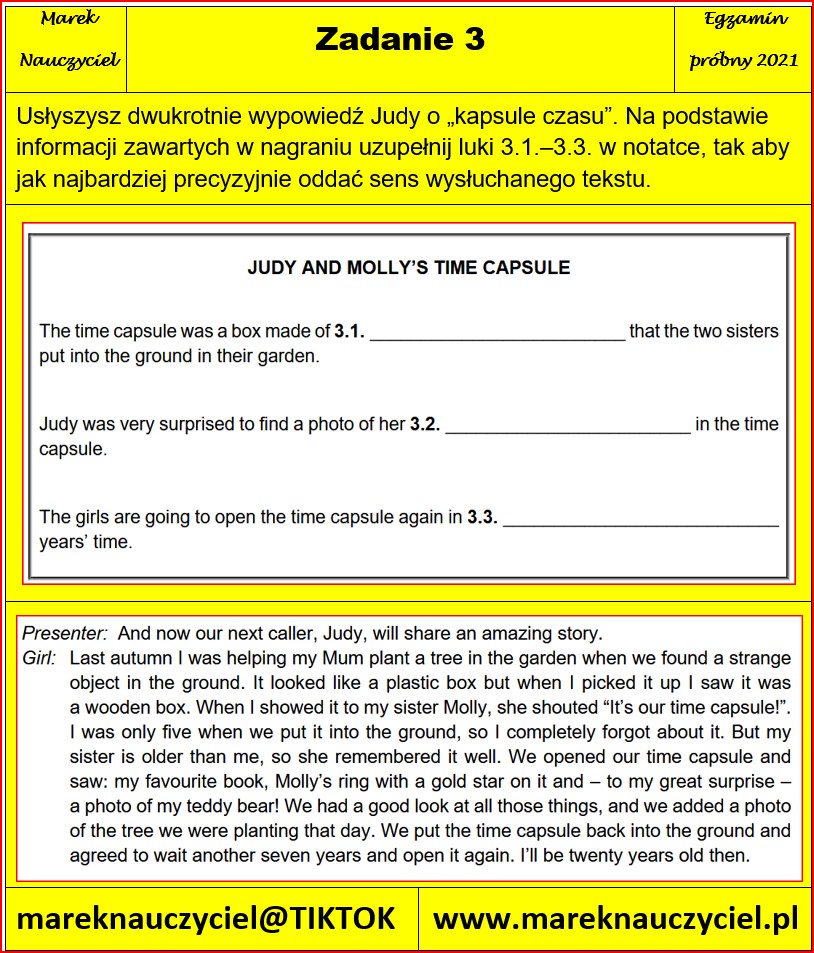
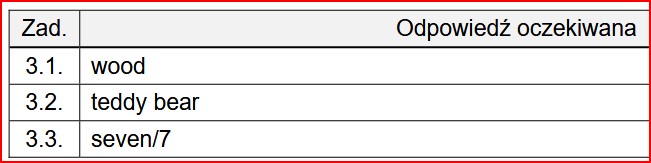
Categories
Zadanie 4
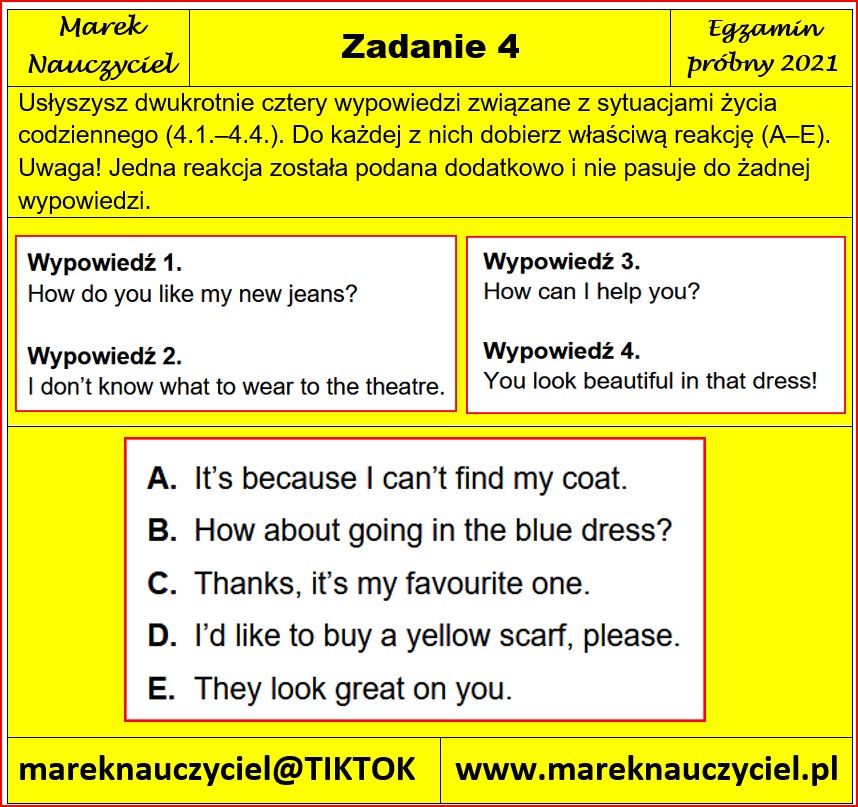
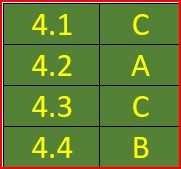
Categories
Zadanie 5
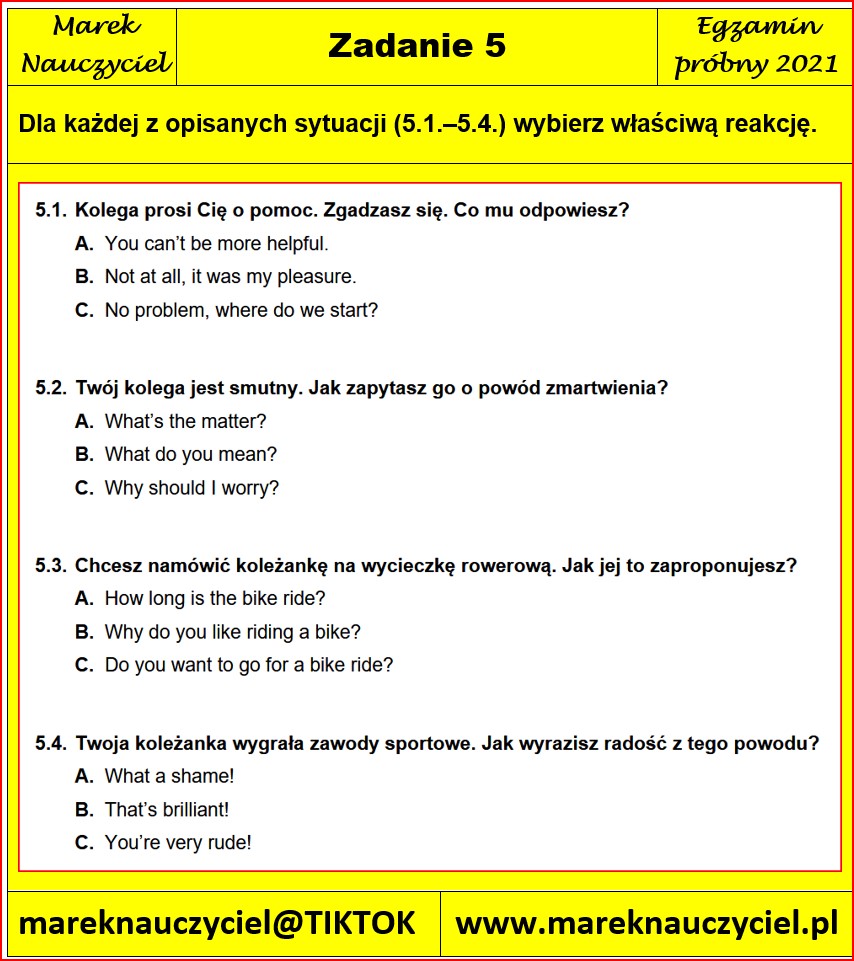
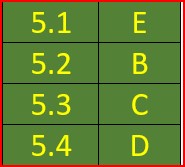
Categories
Zadanie 6
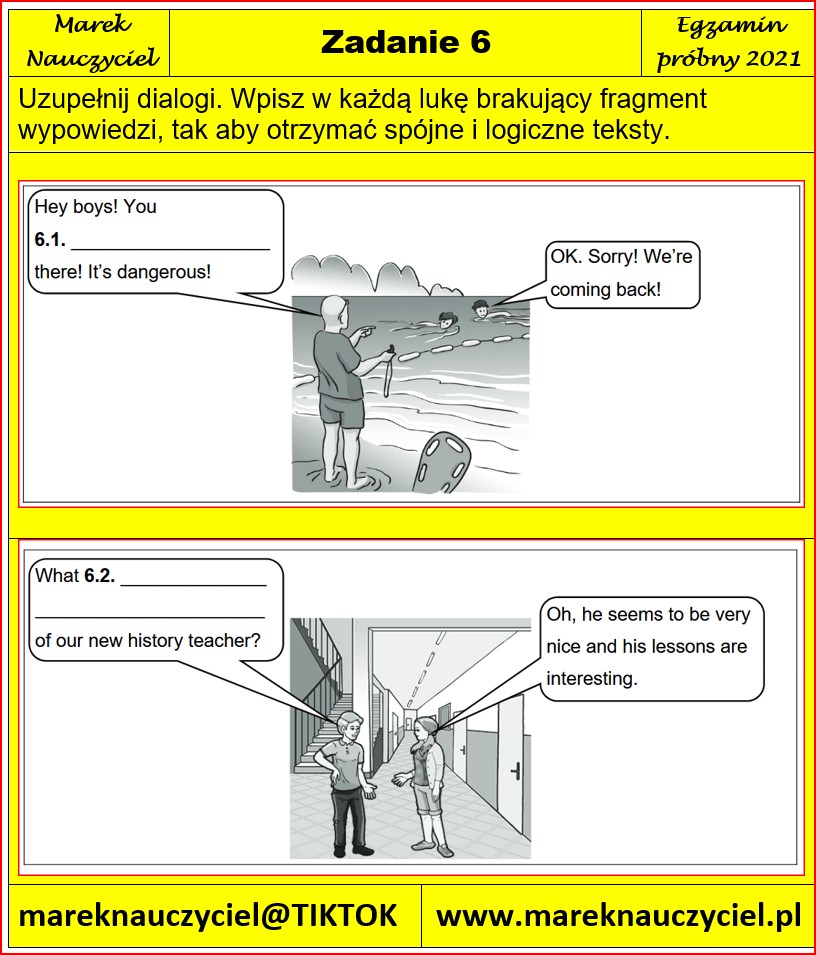

Categories
Zadanie 7.1
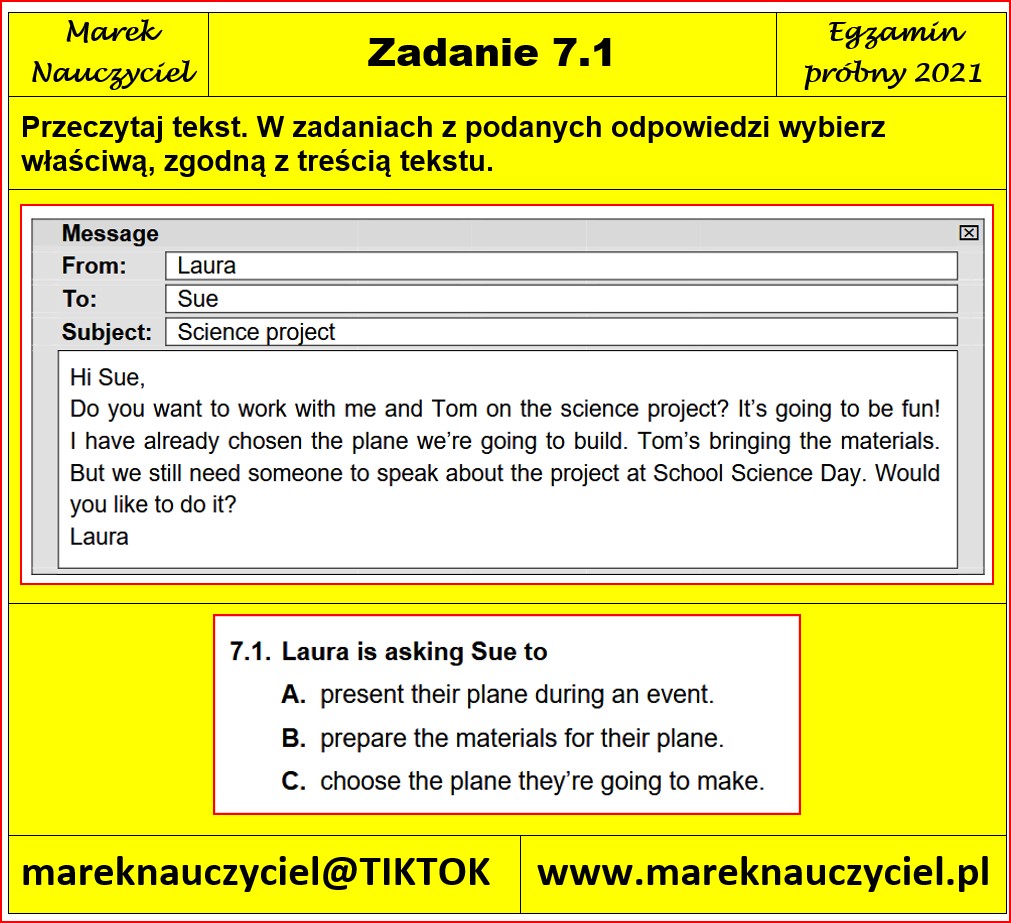
Categories
Zadanie 7.2