
Categories
Category: Lekcje klasa 4
Categories
People and places
Klasa 4
Vocabulary (1)
Categories
Dni tygodnia
Klasa 4
Categories
WELCOME Numbers 1-20
Klasa 4
Categories
WELCOME – Plural Nouns
Klasa 4
1. Regular Plural (liczba mnoga regularna)
Większość rzeczowników w liczbie mnogiej tworzymy przez dodanie końcówki -s.
| Liczba pojedyncza | Liczba mnoga |
|---|---|
| a cat | cats |
| a book | books |
| a dog | dogs |
| a pen | pens |
Zasady dodawania końcówki
a) Dodajemy -s (większość rzeczowników):
- cat → cats
- car → cars
- toy → toys
b) Dodajemy -es, gdy rzeczownik kończy się na: -s, -ss, -sh, -ch, -x, -z
- bus → buses
- class → classes
- brush → brushes
- watch → watches
- box → boxes
c) Gdy rzeczownik kończy się na spółgłoskę + y → zamieniamy y na i i dodajemy -es
- baby → babies
- city → cities
- family → families
(Ale jeśli przed „y” jest samogłoska, dodajemy tylko -s: boy → boys, day → days)
d) Niektóre rzeczowniki kończące się na -f lub -fe → zamieniamy na -ves
- leaf → leaves
- knife → knives
2. Irregular Plural (liczba mnoga nieregularna)
Niektóre rzeczowniki mają zupełnie inną formę w liczbie mnogiej – trzeba je zapamiętać na pamięć!
| Liczba pojedyncza | Liczba mnoga |
|---|---|
| a man | men |
| a woman | women |
| a child | children |
| a foot | feet |
| a tooth | teeth |
| a mouse | mice |
| a person | people |
| a fish | fish (bez zmiany!) |
| a sheep | sheep (bez zmiany!) |
Przykłady zdań
- I have two cats and one dog. (regular)
- There are five children in the park. (irregular)
- She has white teeth. (irregular)
- Look at those boxes! (regular)
- Three mice are in the kitchen. (irregular)
1 cat – 2 cats
1 toy – 2 toys
1 bus – 2 buses
1 class – 2 classes
1 brush – 2 brushes
1 watch – 2 watches
1 box – 2 boxes
1 baby – 2 babies
1 city – 2 cities
1 family – 2 families
1 boy – 2 boys
1 day – 2 days
1 leaf – 2 leaves
1 knife – 2 knives
1 man – 2 men
1 woman – 2 women
1 child – 2 children
1 foot – 2 feet
1 tooth – 2 teeth
1 mouse – 2 mice
1 person – 2 people
1 fish – 2 fish
1 sheep – 2 sheep
Categories
WELCOME – colours
Klasa 4
Categories
Alphabet
Klasa 4
Categories
Welcome
Klasa 4
Buzz Lightyear – kosmiczny ranger-zabawka z filmów “Toy Story” (Pixar)
Kapitan Jack Sparrow – ekscentryczny pirat z serii “Piraci z Karaibów”, grany przez Johnny’ego Deppa
Hermiona Granger – jedna z głównych bohaterek serii “Harry Potter”, najzdolniejsza uczennica swojego rocznika
Luke Skywalker – główny bohater oryginalnej trylogii “Gwiezdnych wojen”, młody Jedi
Categories
Leprechauns
Klasa 4
Leprechauns are small magic people from Ireland. They wear green jackets, green hats, and they have beards.
People say leprechauns like to play tricks. They also keep gold in a pot at the end of the rainbow.
If you see a rainbow, you can imagine a leprechaun hiding nearby. Leprechauns are a symbol of good luck.
Questions
Where are leprechauns from?
What colour clothes do leprechauns wear?
What do leprechauns have on their faces?
What do leprechauns like to do?
Where do they keep their gold?
What can you imagine when you see a rainbow?
What are leprechauns a symbol of?
Answers
They are from Ireland.
They wear green clothes (green jackets and green hats).
They have beards.
They like to play tricks.
They keep their gold in a pot at the end of the rainbow.
You can imagine a leprechaun hiding nearby.
They are a symbol of good luck.
Categories
Ireland
Klasa 4
Ireland is an English-speaking country. Its national colour is green and its national symbol is the shamrock leaf. The capital city of Ireland is Dublin. St Patrick’s Cathedral is in Dublin. St Patrick is the patron saint of Ireland.
People celebrate St Patrick’s Day on 17th March. They dress in green and there are parades and parties. There is a lot of food and drink. People sing and play music. You can hear bagpipes.
Hurling is a popular sport in Ireland. It is very old – about 3000 years old. You need a stick, a ball and a goal. The ball can move at over 100 kilometres per hour. Sometimes players wear helmets to protect their heads.
Does your country have a patron saint? Does it have a national colour or symbol? What sport is popular in your country?
Słownictwo
English-speaking country — kraj anglojęzyczny
national colour — kolor narodowy
national symbol — symbol narodowy
shamrock — koniczynka
capital city — stolica
cathedral — katedra
patron saint — święty patron
celebrate — świętować
parade — parada
bagpipes — dudy
hurling — hurling (irlandzki sport)
stick — kij
goal — bramka
helmet — kask
protect — chronić
Gramatyka
Present Simple – fakty i informacje
Tekst opisuje fakty, dlatego używa Present Simple:
- Ireland is…
- People celebrate…
- The ball can move…
Czasownik „can” – umiejętność / możliwość
The ball can move… — piłka może się poruszać
„can” + czasownik podstawowy
- can move, can hear
There is / There are
There is a lot of food — jest dużo jedzenia
There are parades — są parady
Trudności w wymowie
Ireland — /ˈaɪə.lənd/ — pierwsza sylaba jak „aj”
Dublin — /ˈdʌb.lɪn/ — „u” jak w „cup”
shamrock — /ˈʃæm.rɒk/ — „sh” jak w „sz”, ale krótkie „a”
cathedral — /kəˈθiː.drəl/ — trudne „th” (język między zęby)
patron — /ˈpeɪ.trən/ — „ei” jak „ej”
bagpipes — /ˈbæɡ.paɪps/ — „bag” jak „beg”, „pipes” jak „pajps”
hurling — /ˈhɜː.lɪŋ/ — „hɜː” jak długie „her”
Ważne informacje kulturowe
Irlandia jest nazywana zieloną wyspą — dlatego zielony to kolor narodowy.
Shamrock (koniczynka) to symbol szczęścia i Irlandii.
St Patrick’s Day to bardzo radosne święto — ludzie ubierają się na zielono.
Hurling to jeden z najszybszych sportów na świecie.
W Irlandii często gra się na dudach — charakterystyczny dźwięk.
Categories
The United Kingdom
Klasa 4
The United Kingdom is a country made of four parts: England, Scotland, Wales and Northern Ireland.
Each part has its own capital city:
England – London
Scotland – Edinburgh
Wales – Cardiff
Northern Ireland – Belfast
People who live in the United Kingdom are British. They can also be English, Scottish, Welsh or Irish.
Each part of the UK looks different:
- England is mostly flat. There are many villages, small houses and gardens.
- Scotland has castles, lakes and high mountains.
- Wales has green mountains, blue lakes and long valleys.
- Northern Ireland is across the sea. Its capital city has big buildings and beautiful public gardens.
Categories
A postcard
Klasa 4
Pocztówka od Emily
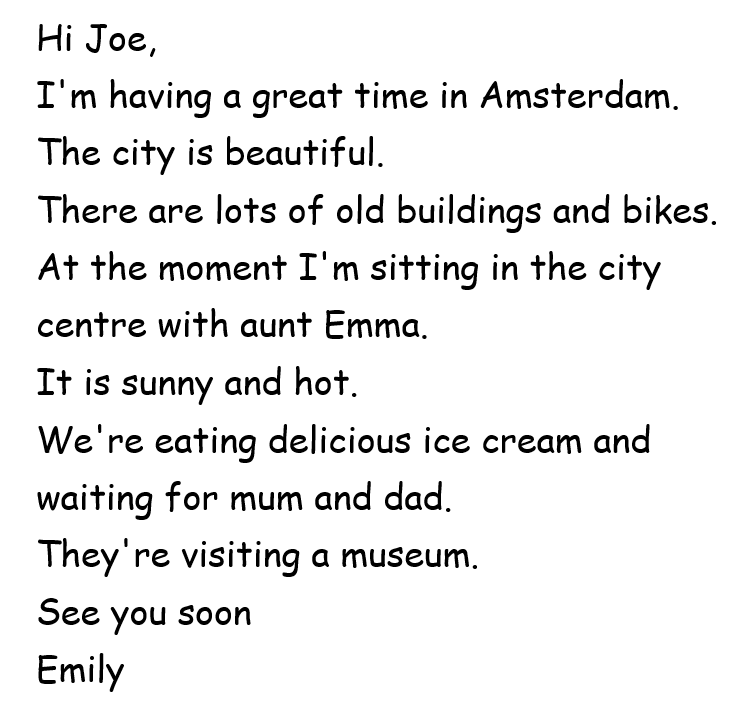
Co to jest postcard?

Najważniejsze informacje z pocztówki
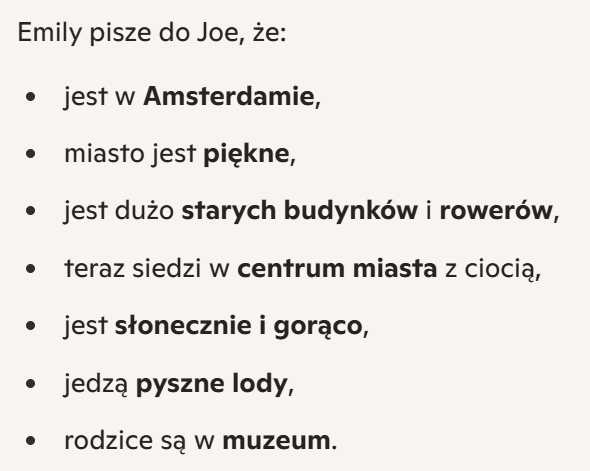
Useful words (ważne słowa z tekstu)
city – miasto
beautiful – piękne
old buildings – stare budynki
bikes – rowery
city centre – centrum miasta
sunny – słonecznie
hot – gorąco
ice cream – lody
museum – muzeum
aunt – ciocia
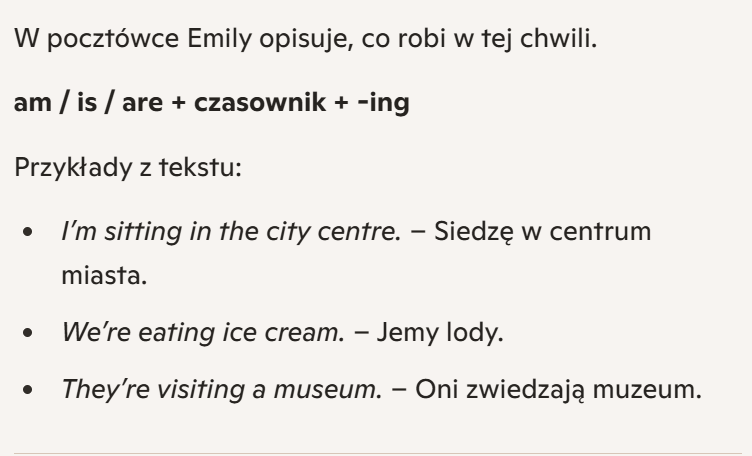
Present Continuous – co się dzieje TERAZ
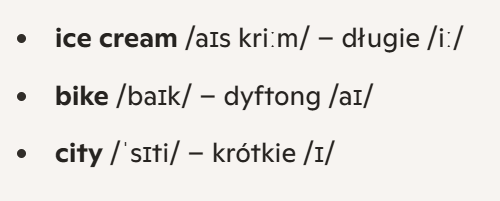
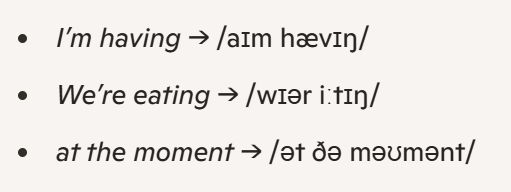
Trudności w wymowie
Długie i krótkie samogłoski
Połączenia wyrazów
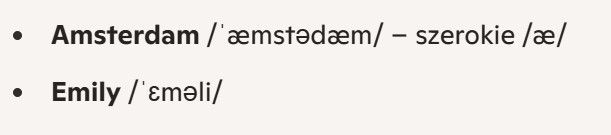
Nazwy własne
Categories
On holiday in Scotland (2)
Klasa 4 Dialogi – potrzebne słownictwo, gramatyka i wymowa
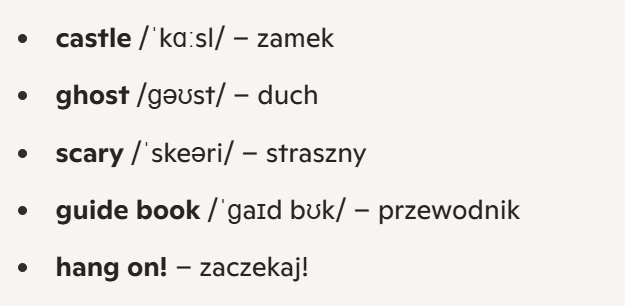
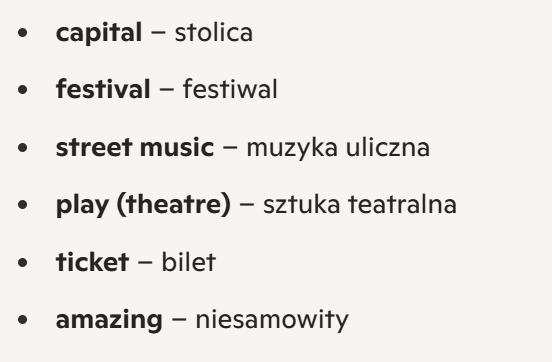
Słownictwo z dialogów
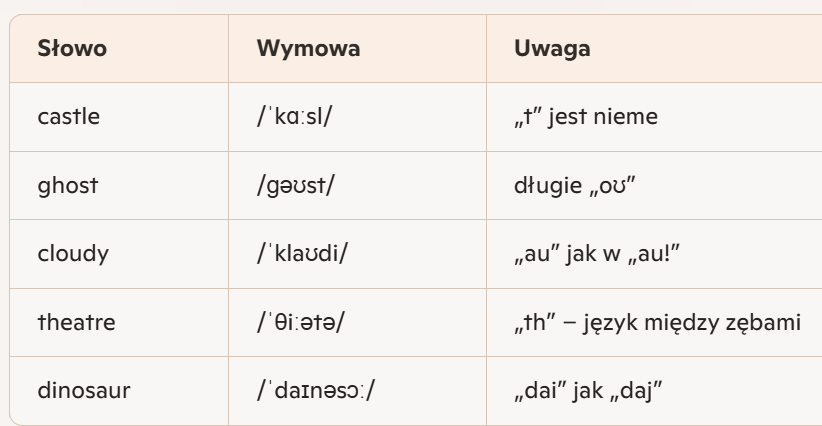
Zamki i strachy
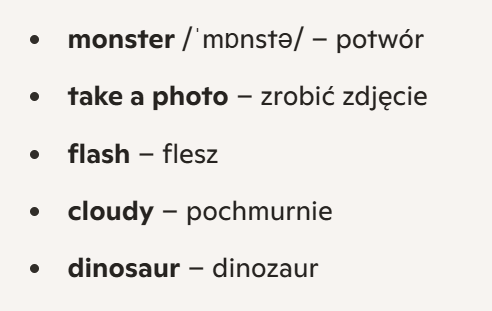
Potwory i pogoda
Miasto i festiwal
Gramatyka użyta w dialogach
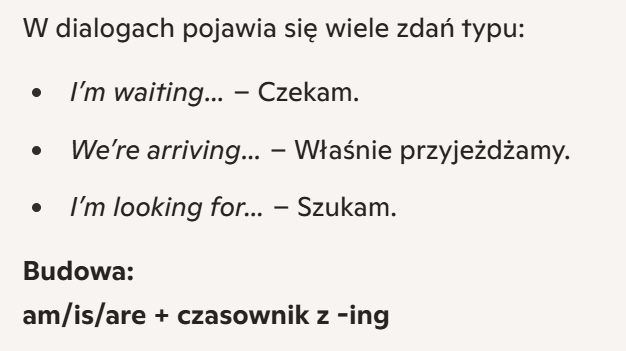
Present Continuous – czynności TERAZ
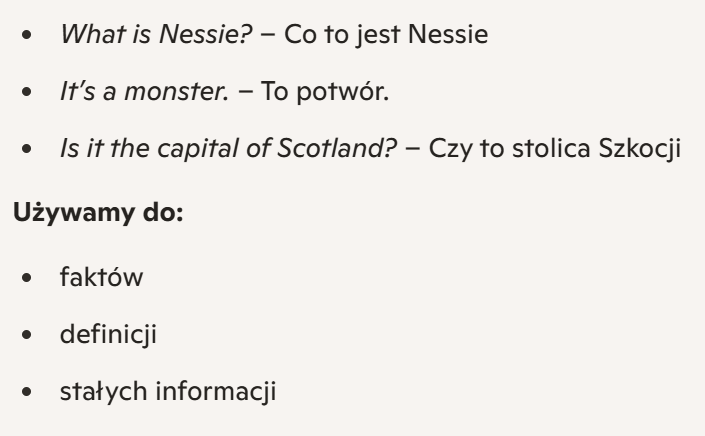
Present Simple – fakty i definicje
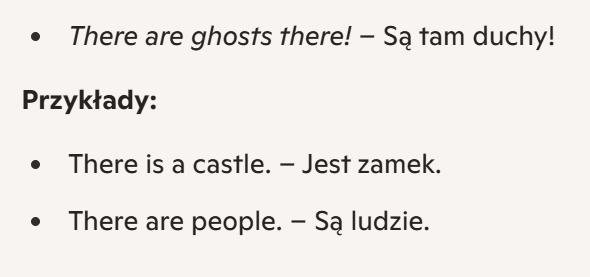
There is / There are – „jest / są”
Tryb rozkazujący (imperative)
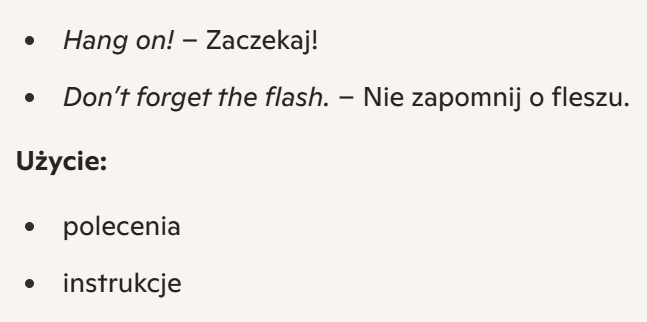
Wymowa
Wymowa – ważne słowa
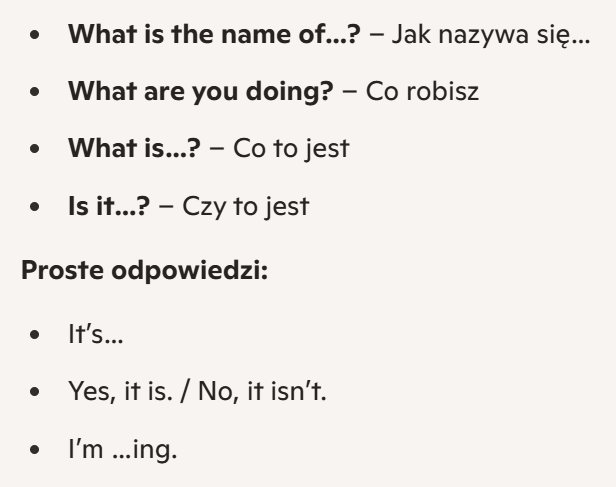
Przydatne pytania
Pytania z dialogów
Categories
On holiday in Scotland
Klasa 4
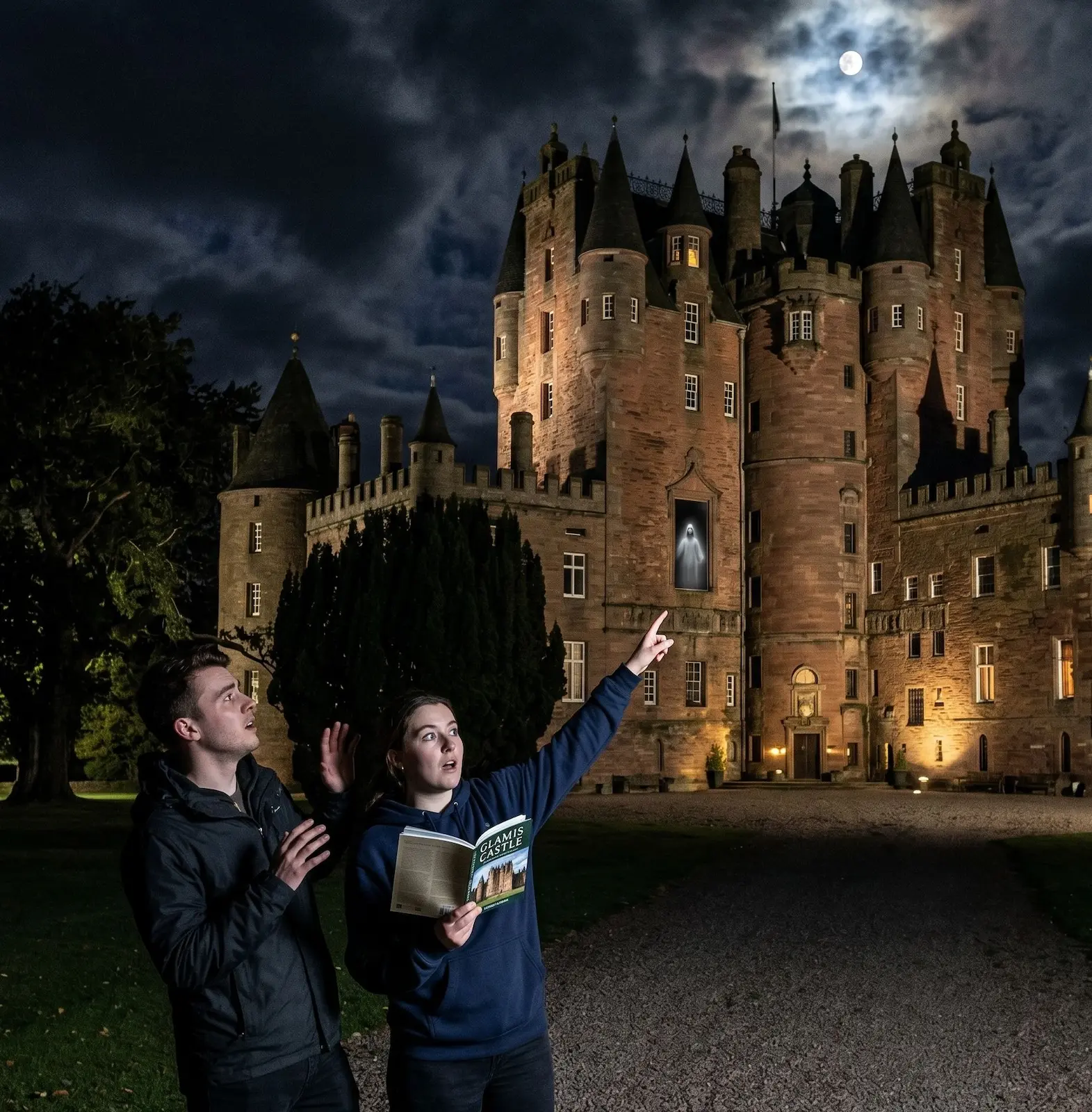
What is the name of this castle?
- What is the name of this castle?
- Hang on! I’m looking for it in the guide book. It’s Glamis castle. There are ghosts there!
- No way! That’s scary.
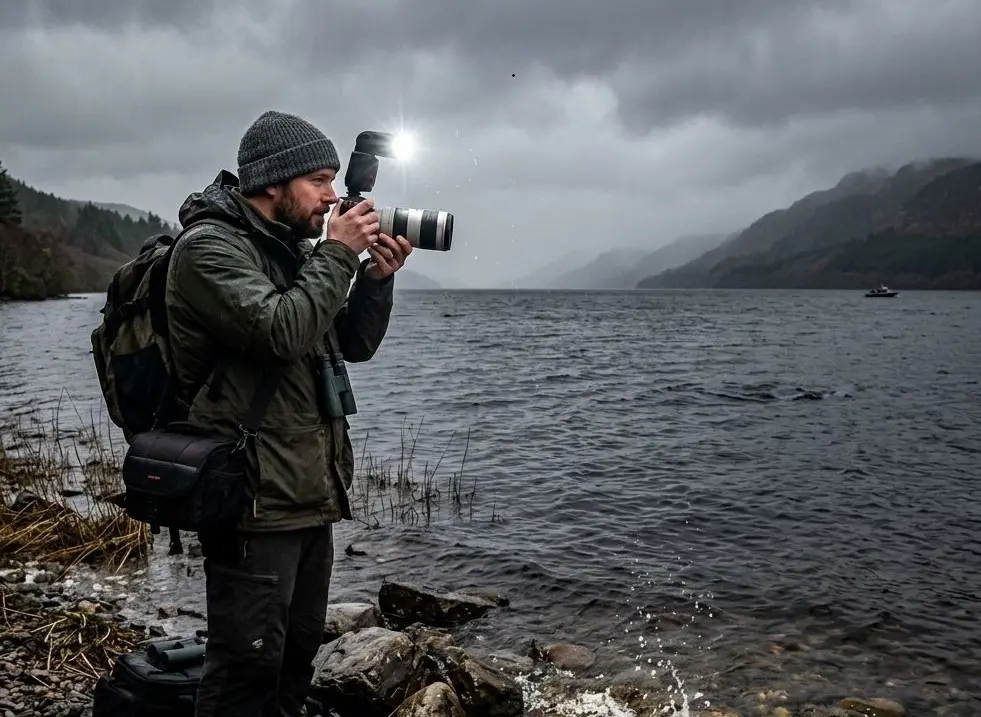
What are you doing?
- What are you doing now?
- I’m waiting to take a photo of Nessie.
What is Nessie? - It’s a monster that lives here in Loch Ness.
- Cool! Maybe it’s a dinosaur! Don’t forget the flash. It’s very cloudy today.
- Good idea.
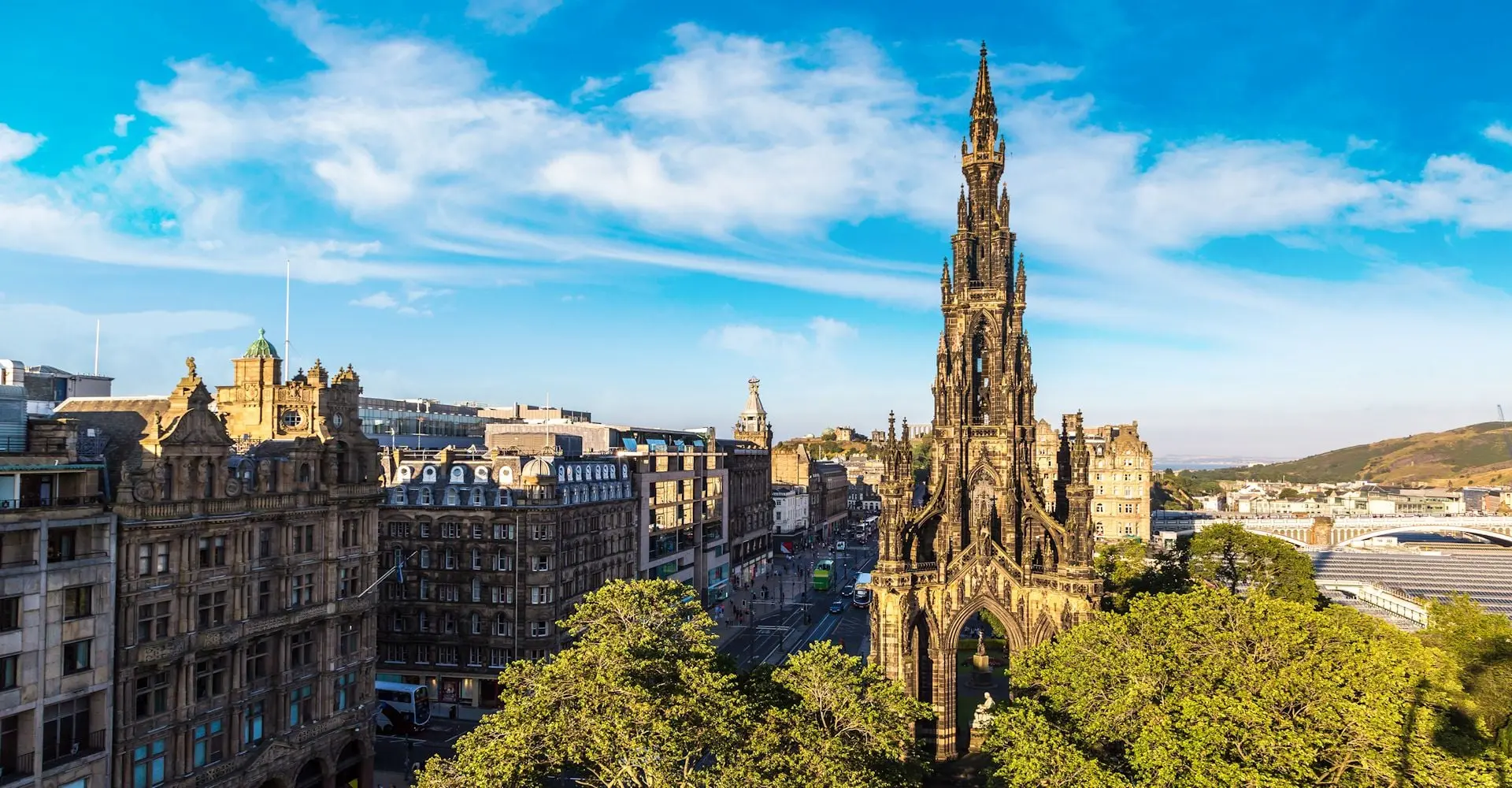
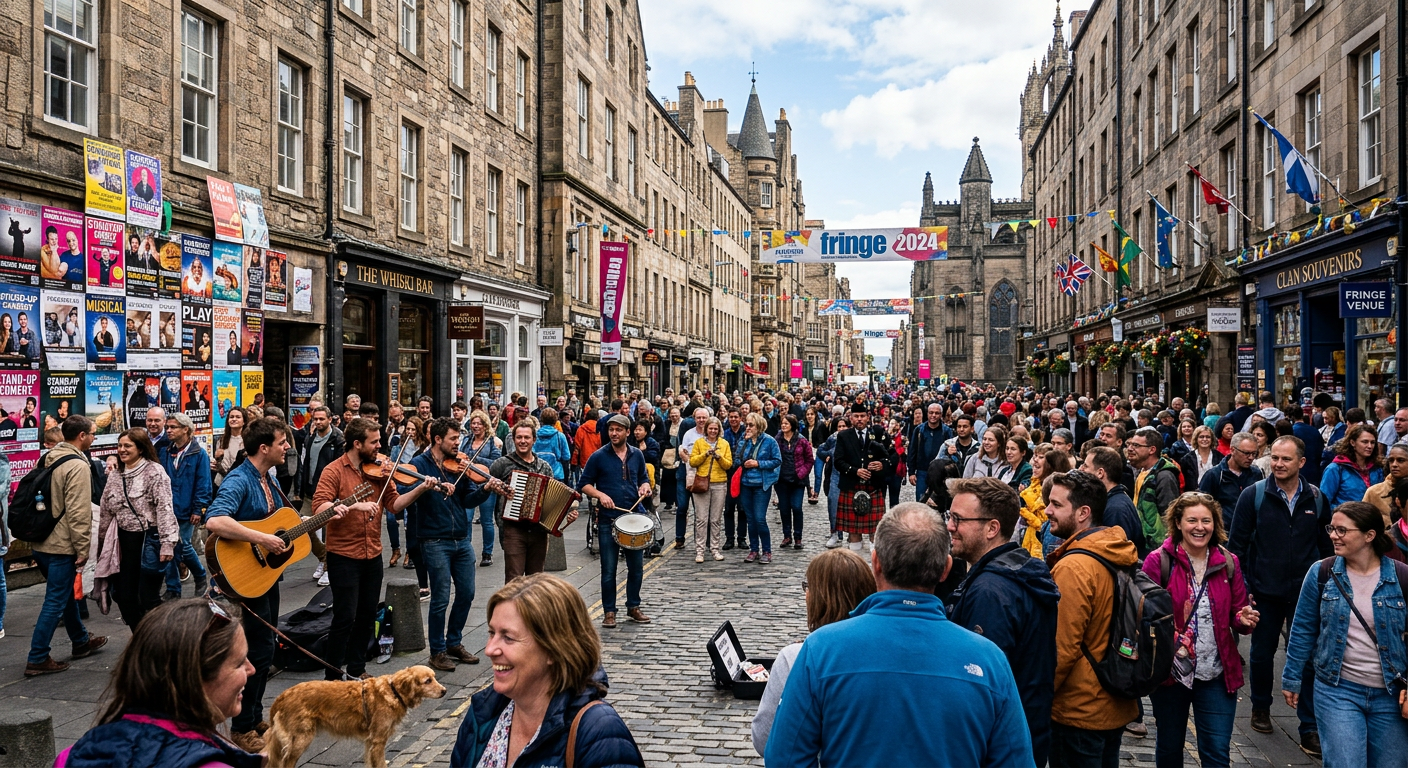
We’re arriving in Edinburgh now.
We’re arriving in Edinburgh now.
Is it the capital of Scotland?
Yes, it is. The Edinburgh Festival is happening here at the moment.
Brilliant! We can see plays, listen to street music and watch films here.
I know. It’s absolutely amazing! Look. I’ve got a ticket for the theatre.
You lucky thing!
Categories
Holiday snapshots
Klasa 4

A Trip to New York City!
John’s Holiday in New York

Welcome to Manhattan!
My name is John and I am on holiday in New York with my family. We are staying in a hotel in Manhattan. There are tall skyscrapers everywhere.


Central Park
In the centre of New York there is a big park called Central Park. I am looking at it at the moment from my hotel room. There is a lake, a zoo and two ice-skating rinks.

Sunny Day in the Park
It is a sunny day and lots of people are jogging there right now.
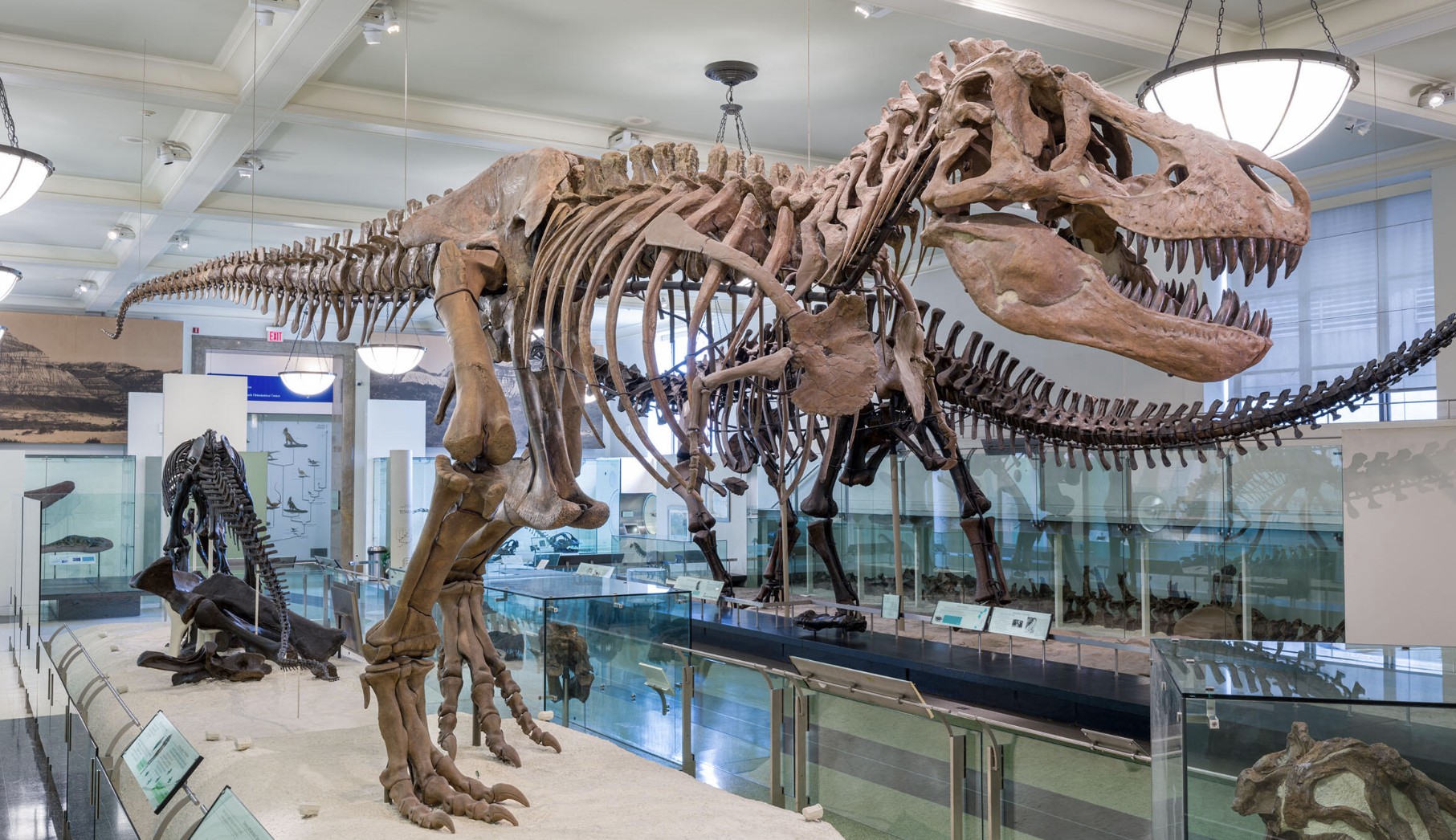
Monsters from the Past!
My favourite place in New York is the American Museum of Natural History. There are dinosaur skeletons in it

The Space Ball
There is also an Earth and Space theatre. It looks like a ball.
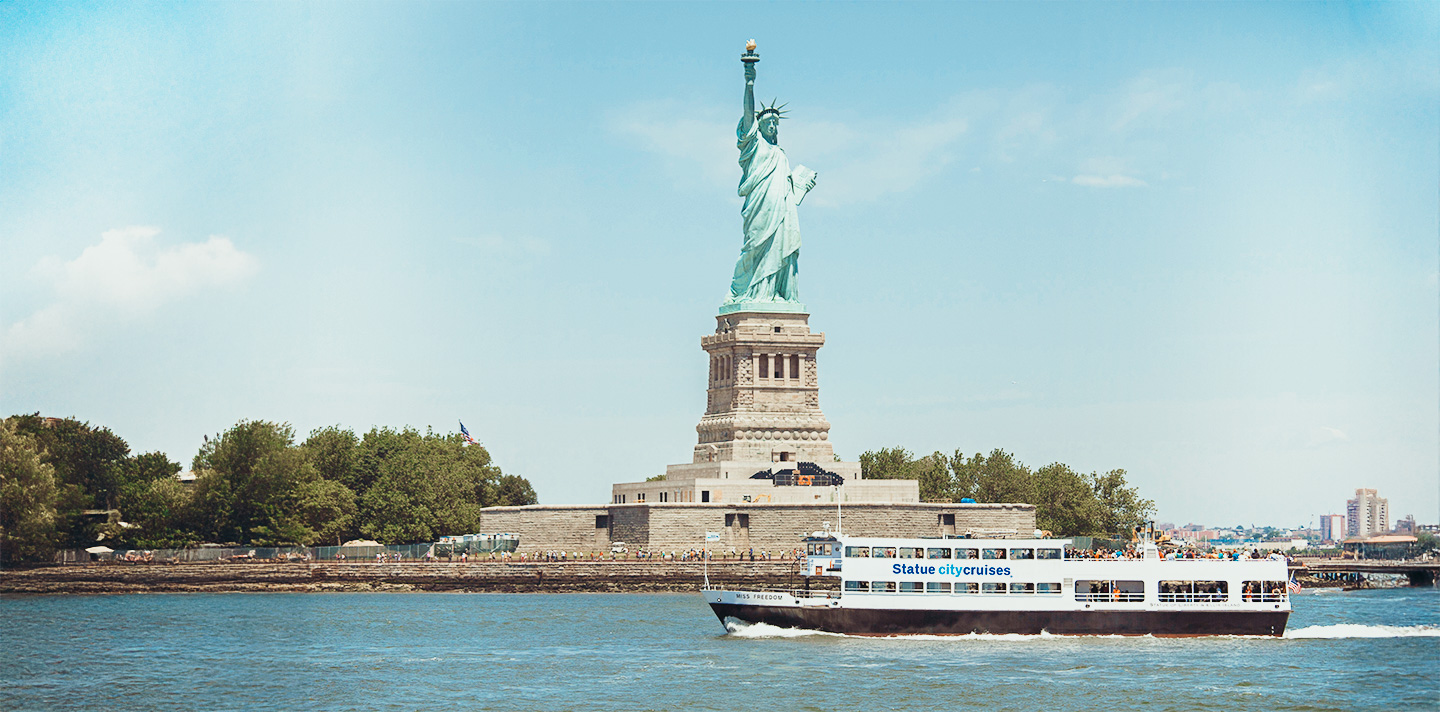

Icons of New York
You can also see the Statue of Liberty in the port, and Times Square in the centre of New York.

Broadway Adventure!
The theatres are also great here. We have got tickets to see a play at a Broadway theatre tomorrow. I can’t wait!
Klasa 4
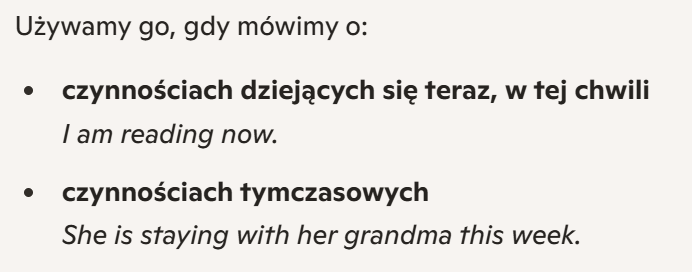
Kiedy używamy Present Continuous?
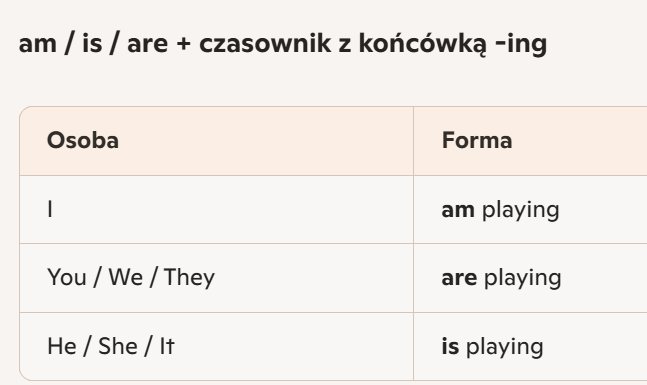
Jak budujemy zdania twierdzące?
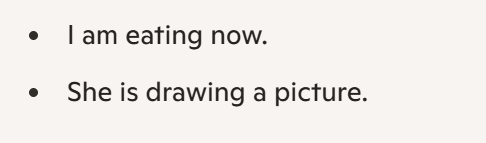
Przykłady
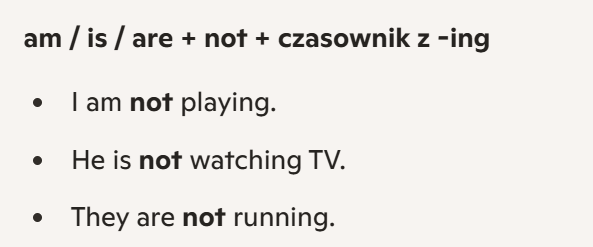
Jak budujemy zdania przeczące?
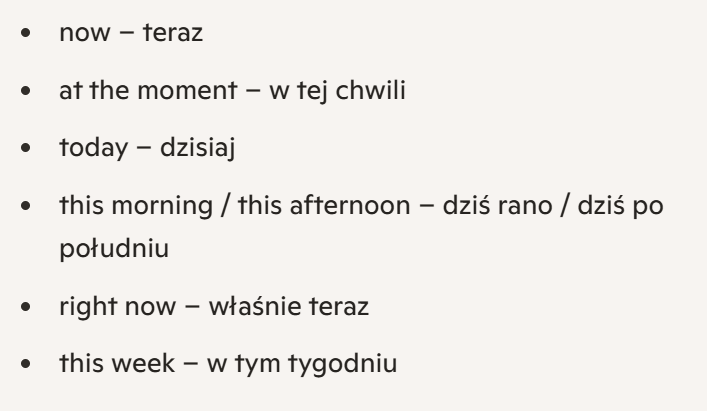
Wyrażenia czasu używane z Present Continuous
Klasa 4
Lekcja angielskiego
The Amazing Journey:
The Answer to the Puzzle
1. Słowniczek – Trudne wyrazy +
Pieceskawałki, elementy (np. puzzli)
Puzzleukładanka, zagadka
Cavejaskinia
Backpackplecak
Foggymgliście
Islandwyspa
Gold boxzłota skrzynka
Legendary medallionlegendarny medalion
Explorersodkrywcy
2. Zdania warte zapamiętania +
-
“We’ve got all the pieces.”Mamy wszystkie elementy – przydatne, gdy coś kompletujemy.
-
“Let’s do the puzzle.”Ułóżmy puzzle / Rozwiążmy zagadkę – propozycja wspólnej czynności.
-
“Don’t worry.”Nie martw się – pocieszenie kogoś.
-
“You’re great explorers.”Jesteście świetnymi odkrywcami – pochwała.
3. Zagadnienia z gramatyki +
Present Continuous
Czas teraźniejszy ciągły – opisuje czynności dziejące się w tej chwili.
- “I’m packing our backpack.” (Pakuję nasz plecak)
- “It’s raining.” (Pada deszcz)
- “What are you doing?” (Co robicie?)
Have got
Służy do określania posiadania.
- “We’ve got all the pieces.” (Mamy wszystkie elementy)
Konstrukcja “Let’s”
Służy do proponowania wspólnych działań.
- “Let’s do the puzzle.” (Ułóżmy puzzle)
4. Wymowa – na co uważać? +
Island
/ˈaɪlənd/ (aj-lend)
Litera „s” jest niema!
Puzzle
/ˈpʌzl/ (pazl)
Krótkie „a”
Pieces
/ˈpiːsɪz/ (pi-syz)
Długie „i”
Mountain / Cave / Rain
—
Zwróć uwagę na czystość samogłosek
5. Pytania sprawdzające zrozumienie +
Mają wszystkie elementy układanki (puzzle).
Mapa prowadzi do jaskini Eagle Rock (Eagle Rock cave).
Susie pakuje plecak.
Jest deszczowo (raining) i mgliście (foggy).
Ponieważ mieszka na tej wyspie.
Znajdują złotą skrzynkę (gold box).
Pojawia się Gordon.
Znajduje się tam legendarny medalion Sethenca.
Nazywa je wielkimi odkrywcami (great explorers).
“The Amazing Journey: The Answer to the Puzzle”.
They have all the pieces of the puzzle.
The map shows the way to the Eagle Rock cave.
She is packing their backpack.
It is raining and foggy.
Because he lives on that island.
She finds a gold box.
Gordon is waiting for them there.
It is the legendary medallion of Sethenca.
He says they are great explorers.
The title is “The Amazing Journey: The Answer to the Puzzle”.
Categories
On your marks… – grammar
Klasa 4
Przysłówki częstotliwości
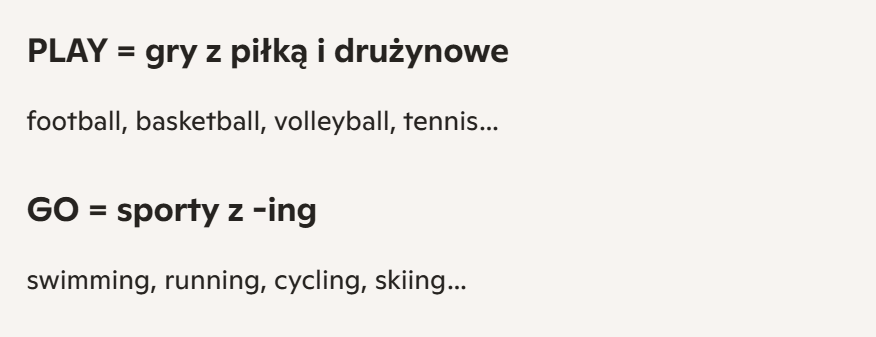
PLAY vs GO – kiedy używamy którego?
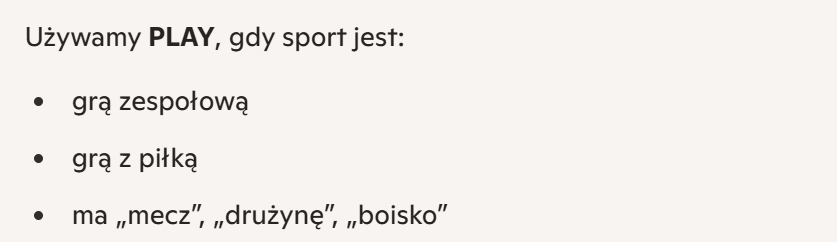
PLAY + gry zespołowe / sporty z piłką
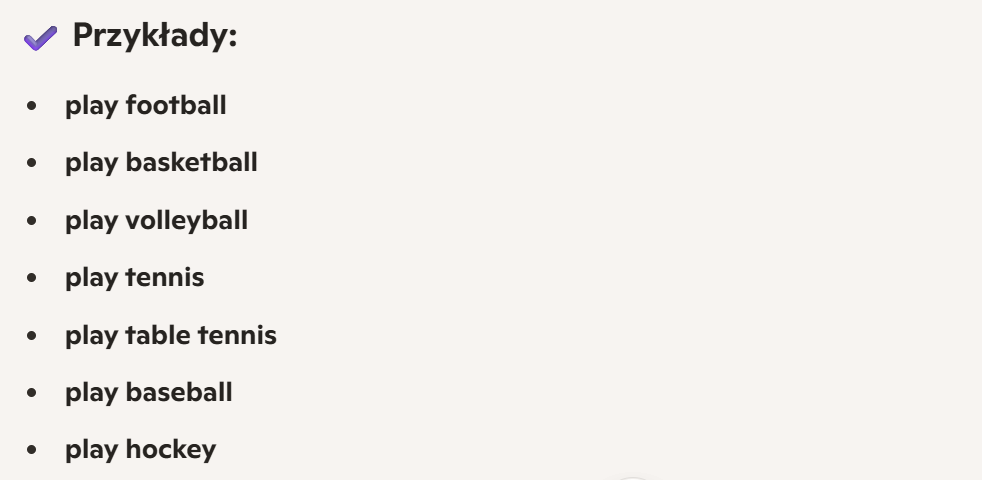
Przykłady
GO + sporty zakończone na -ing
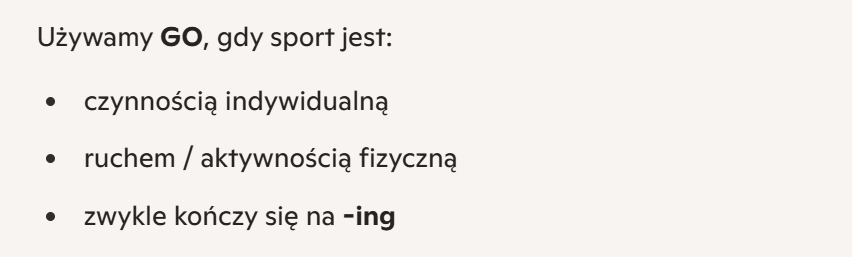
Przykłady
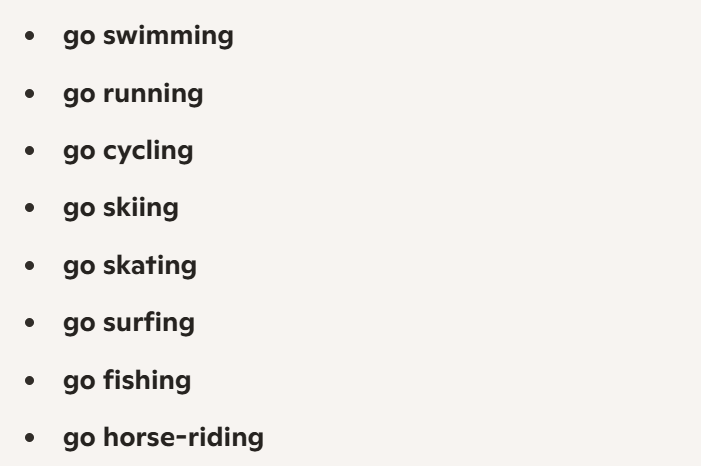
Super prosto
Miejsce przysłówków w zdaniu
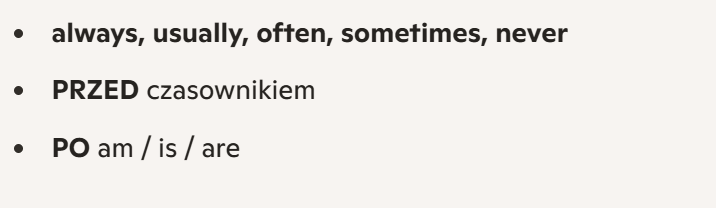
(przysłówki = słowa typu: always, usually, often, sometimes, never)
Gdzie stoi przysłówek?
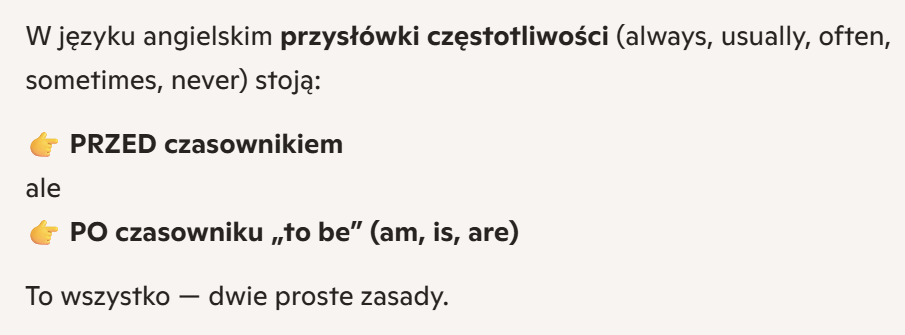
Zasada 1: PRZED czasownikiem

Przykłady
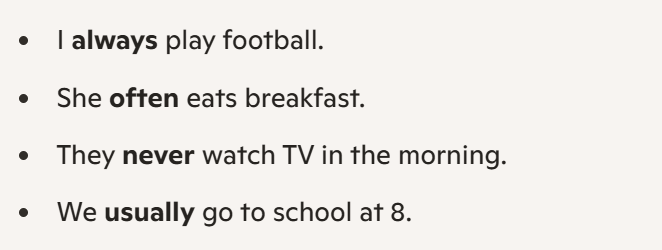
Zasada 2: PO „to be” (am, is, are)
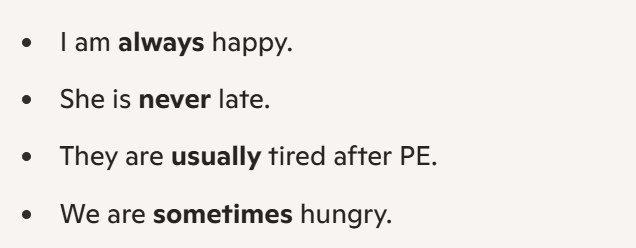
Super Simple
Przysłówki + przeczenie

Zwykłe czasowniki (play, eat, go…)
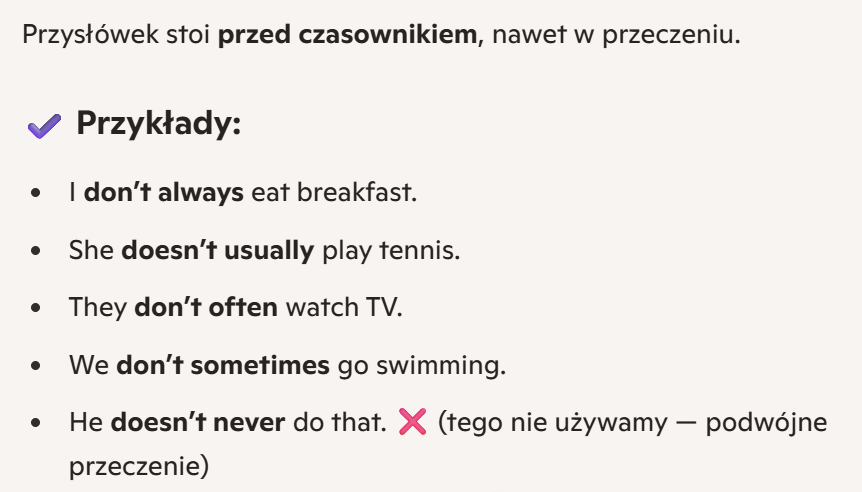
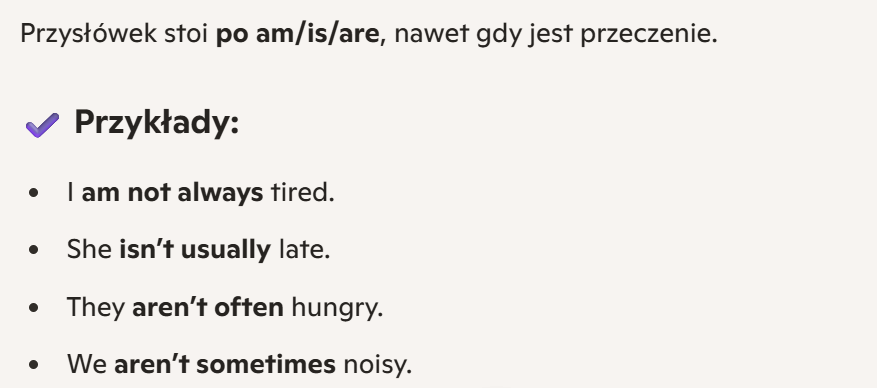
Przysłówek stoi po am/is/are, nawet gdy jest przeczenie.
Categories
I love football
Klasa 4
Zadanie 2
Zadanie 3
Zadanie 4
Zadanie 5
Zadanie 6
Zadanie 8
Categories
On your marks…
Klasa 6
Categories
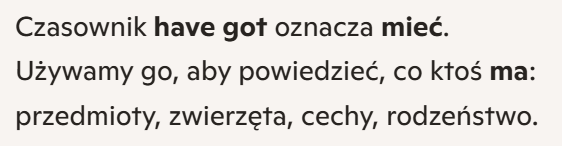
Have got – wyrażanie posiadania
Klasa 4 – język angielski
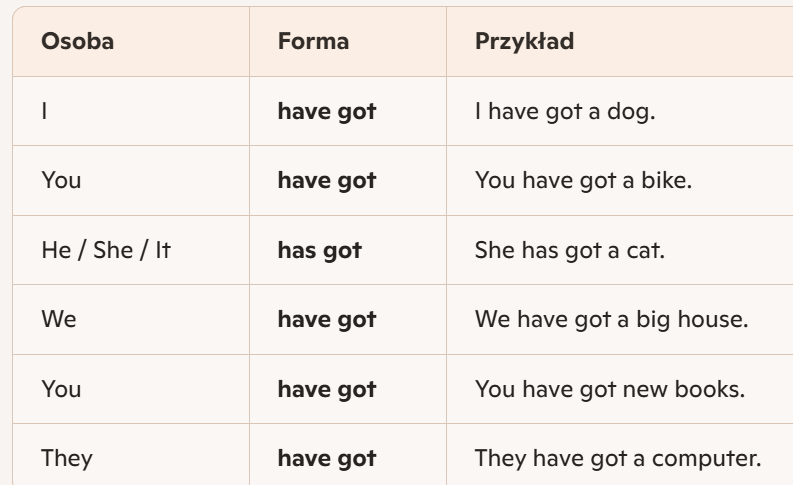
1. Formy have got
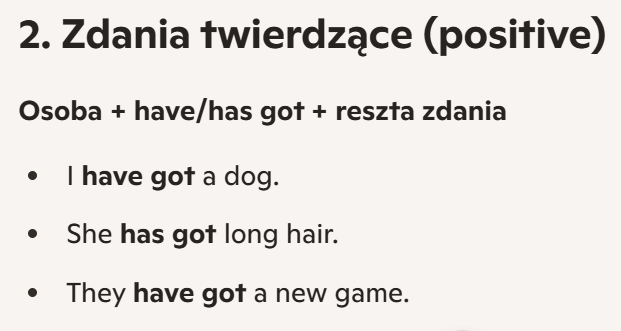
2. Zdania twierdzące (positive)
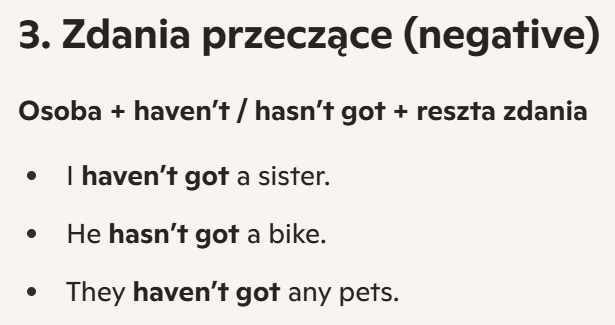
3. Zdania przeczące (negative)
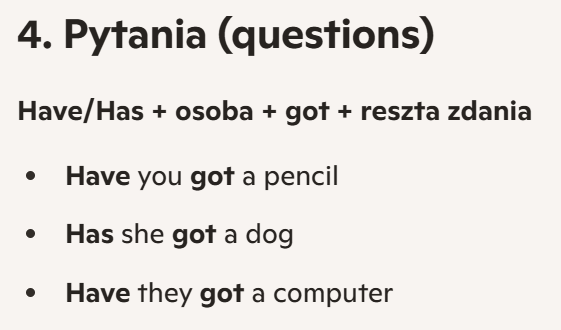
4. Pytania (questions)
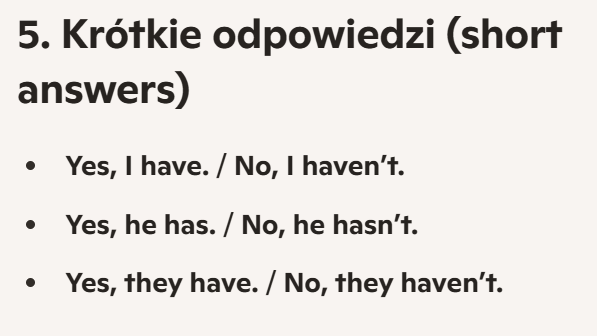
5. Krótkie odpowiedzi (short answers)
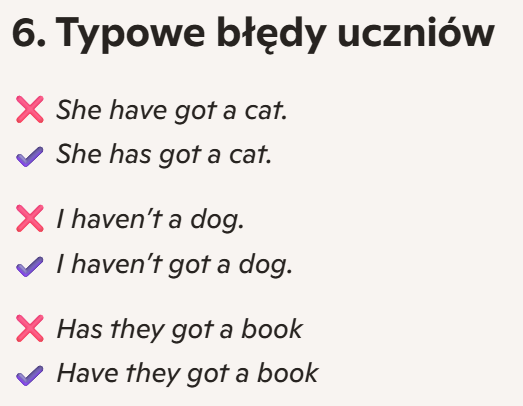
6. Typowe błędy uczniów
Categories
Present Simple – czasownik to be
Klasa 4 – język angielski
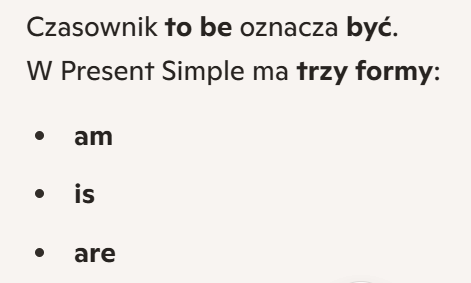
1. Formy czasownika to be
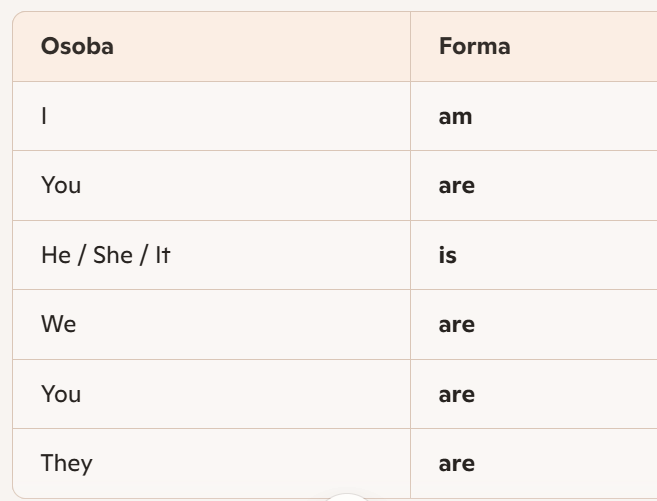
Zdania twierdzące (positive)
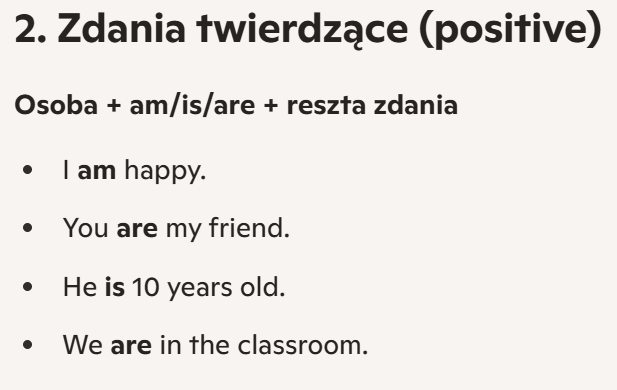
Zdania przeczące (negative)
Pytania (questions)
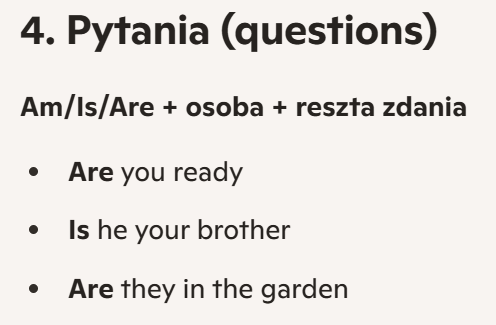
Krótkie odpowiedzi (short answers)
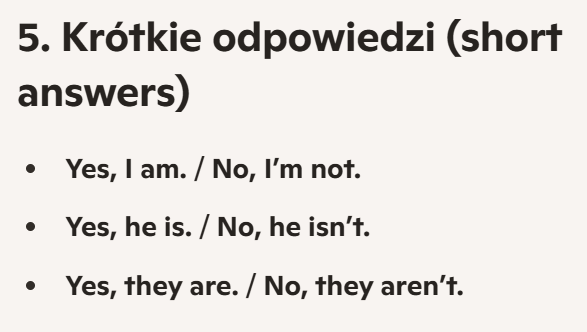
Typowe błędy
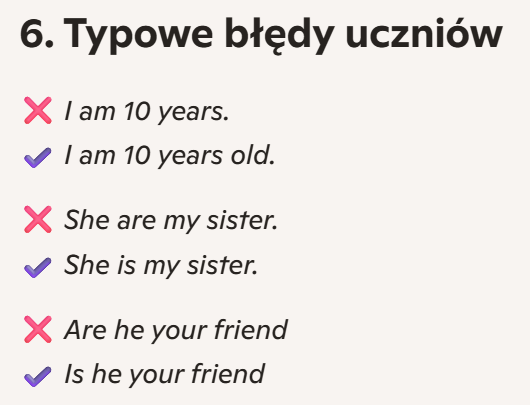
Kiedy używamy?
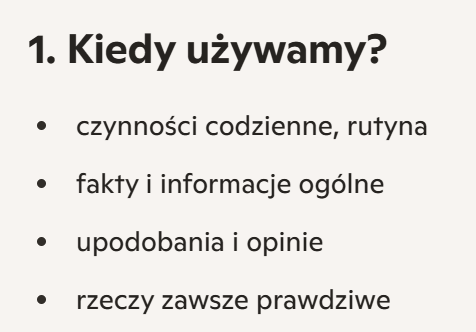
Budowa zdań
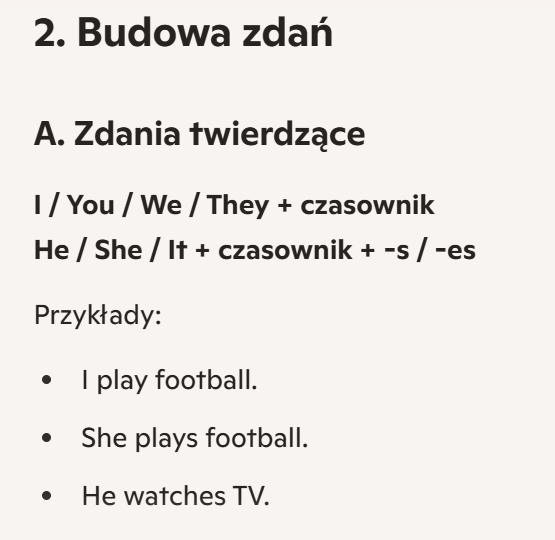
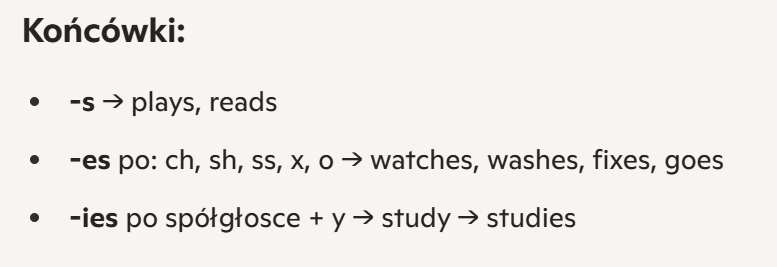
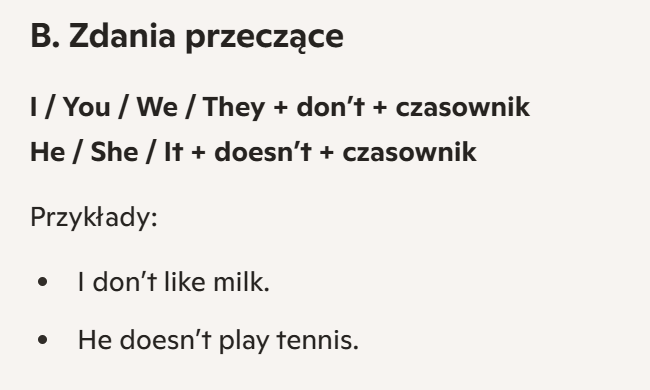
B. Zdania przeczące
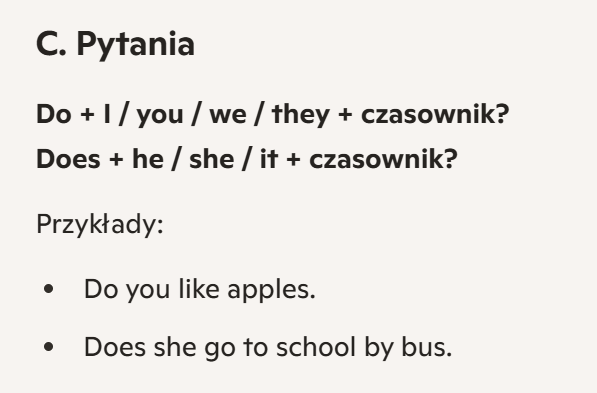
C. Pytania
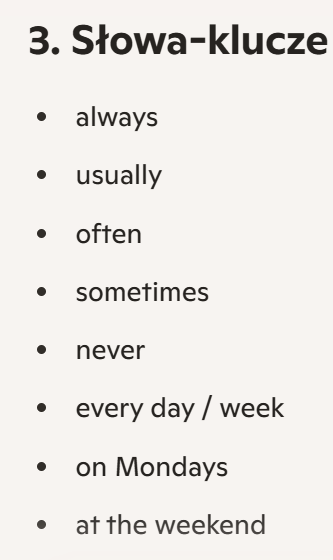
Słowa-klucze (time expressions)
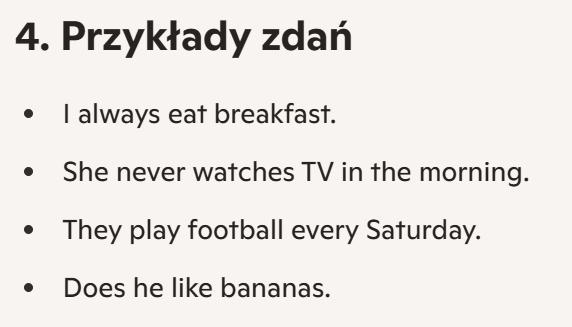
Przykłady zdań
Categories
Klasa 4 Writing
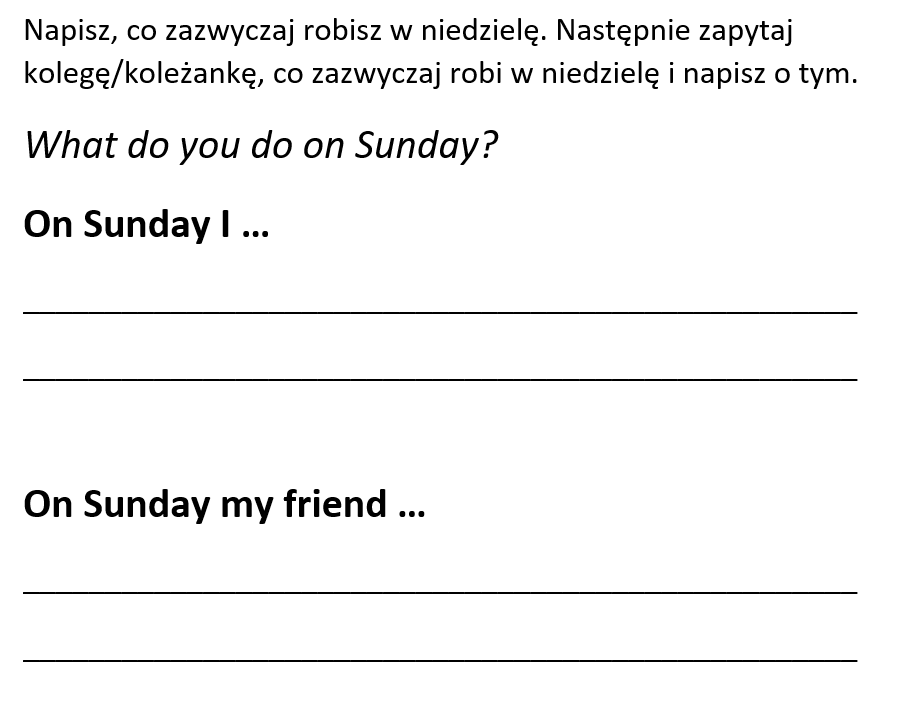
On Sunday I… / On Sunday my friend… – piszemy o niedzielnych zwyczajach
Categories
Present Simple
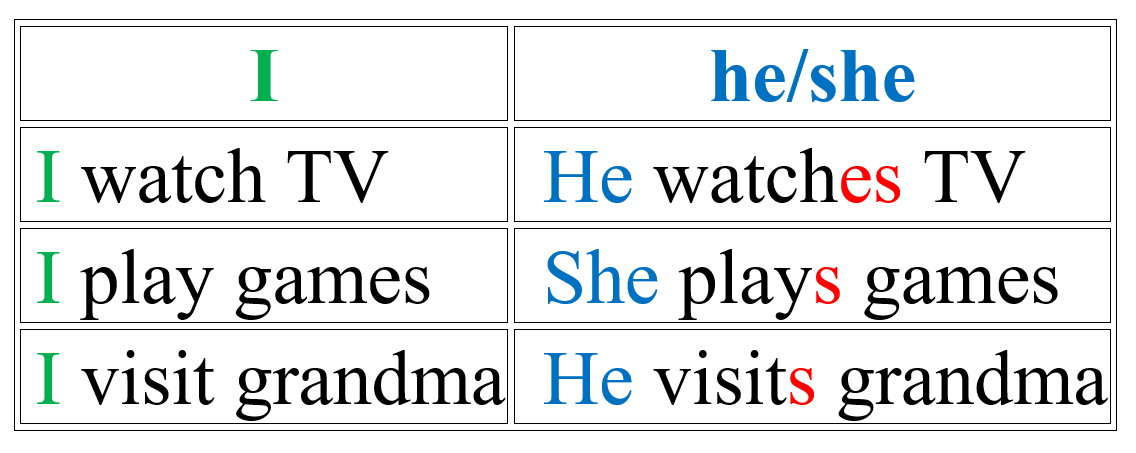
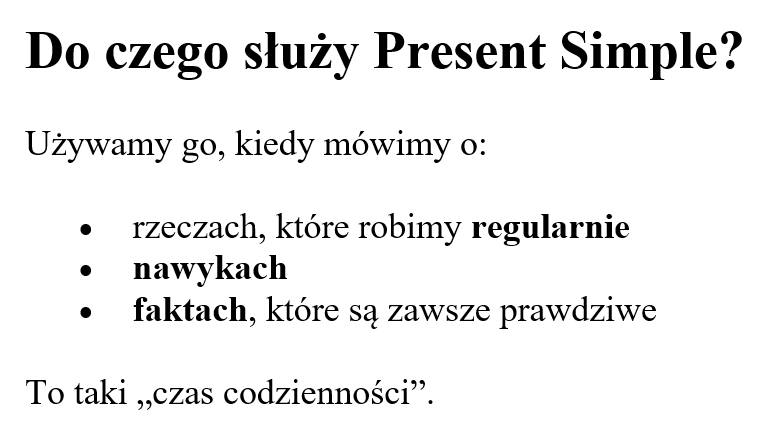
Do czego służy Present Simple
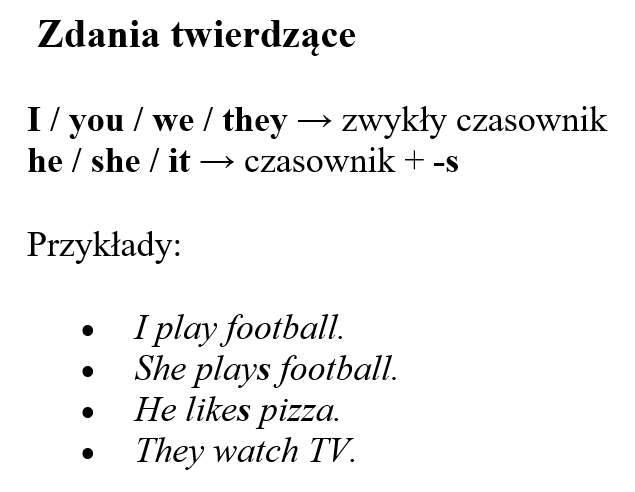
Jak tworzymy zdania?
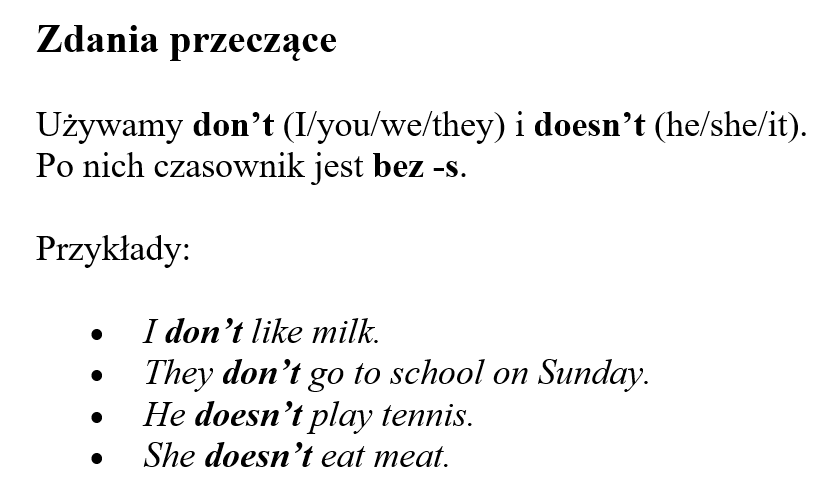
Zdania przeczące
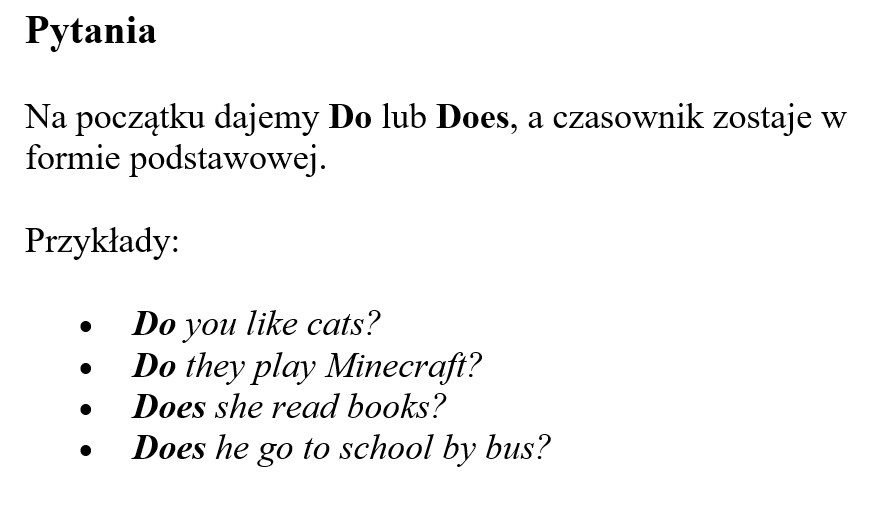
Pytania
Ćwiczenia interaktywne
Categories
Klasa 4 Unit 6
WORD LIST 6
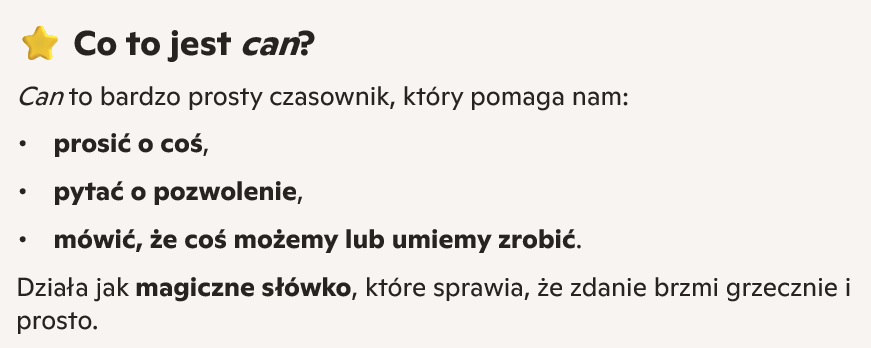
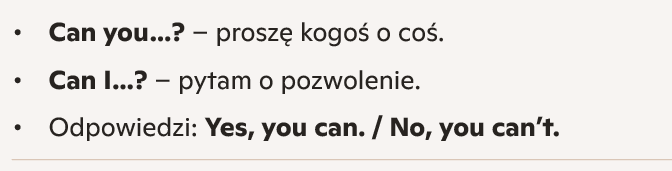
Co to jest can?
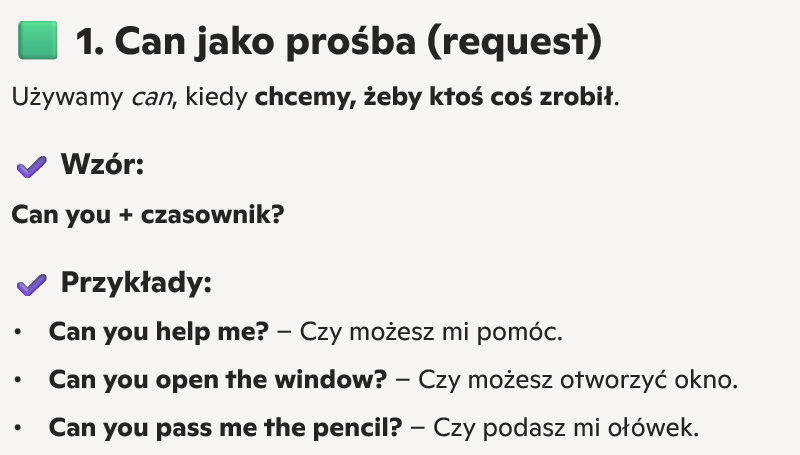
Can jako prośba (request)
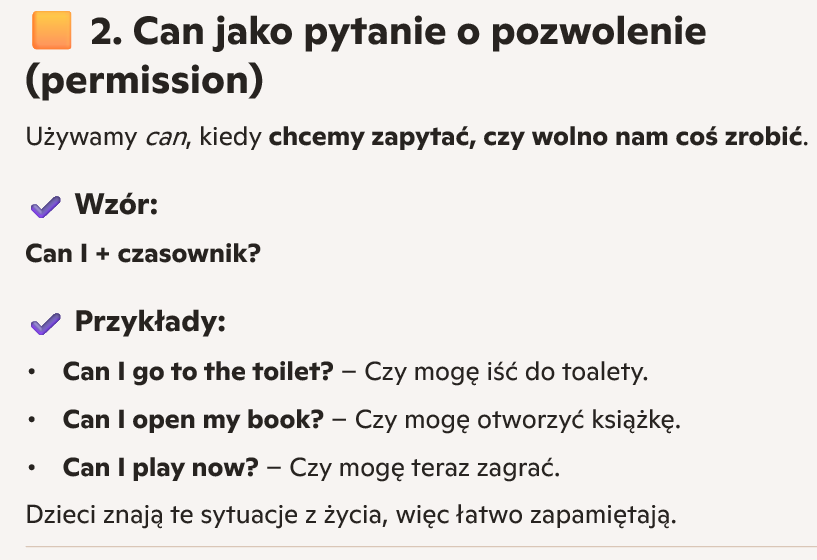
Can jako pytanie o pozwolenie (permission)
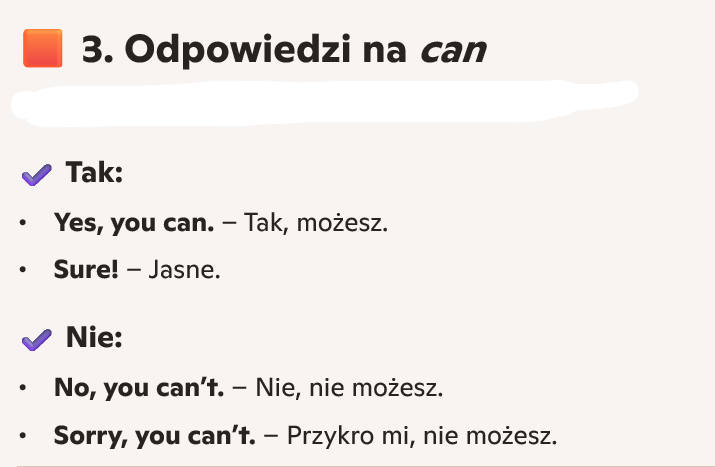
Odpowiedzi na can
Superproste podsumowanie
Karta: 1 / 30
…
Kliknij szare pole, aby zmienić widok (EN / PL / Obie)
Categories
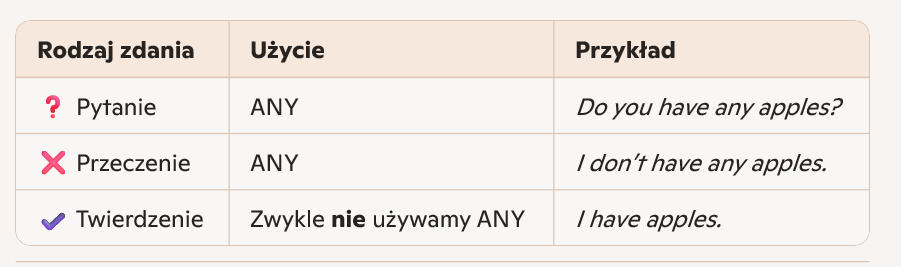
Klasa 4 – any
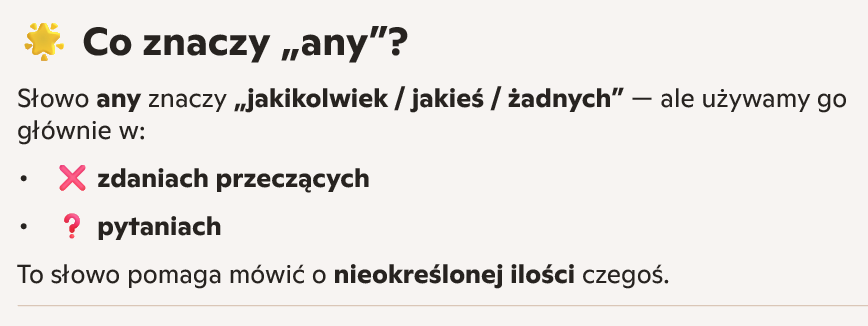
Co znaczy „any”?
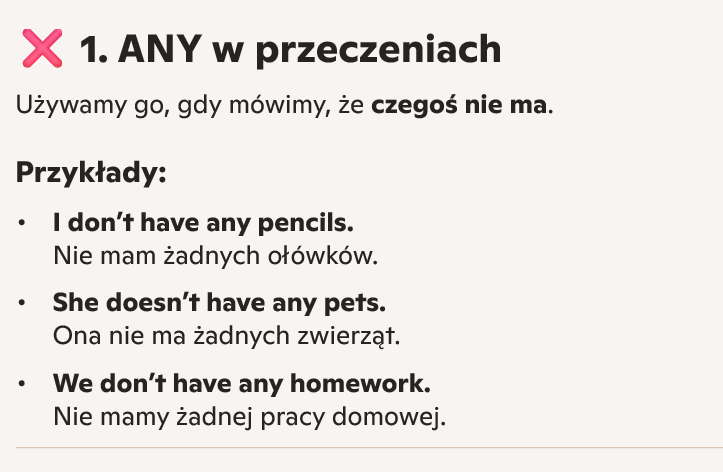
ANY w przeczeniach
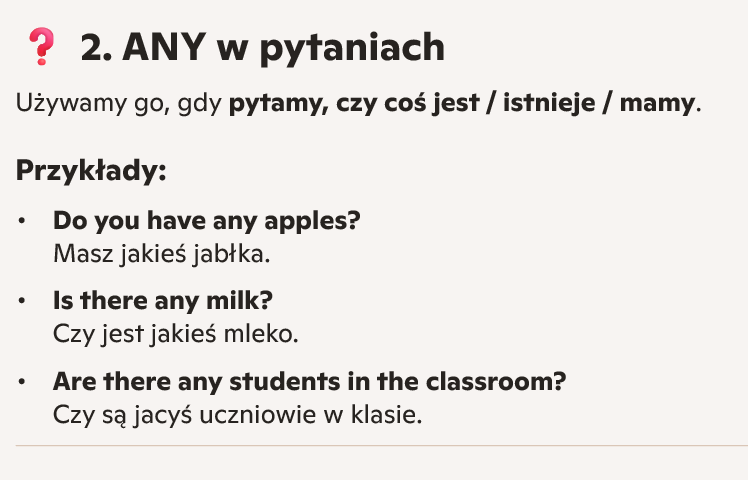
ANY w pytaniach
Porównanie
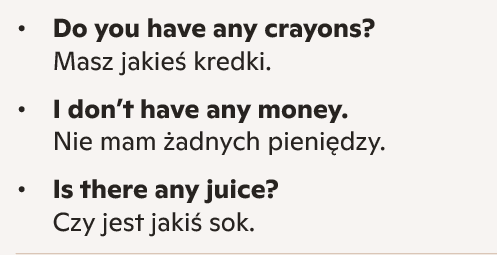
Przykłady
Categories
Klasa 4 Unit 5
a/an some
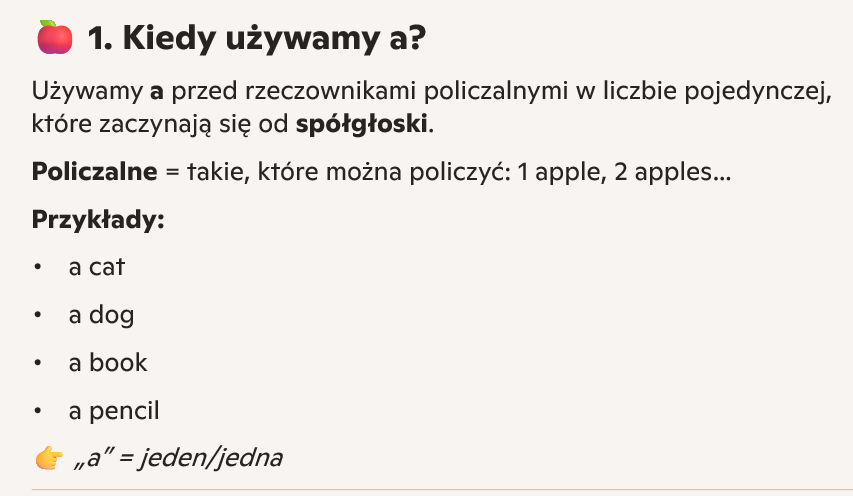
Kiedy używamy a?
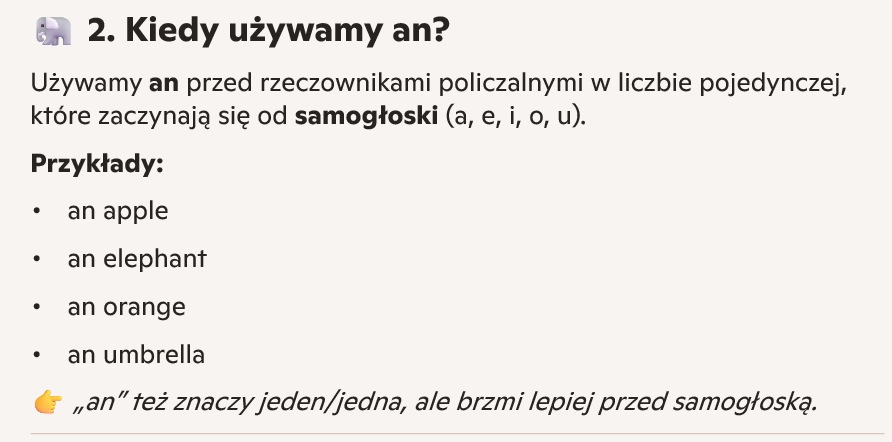
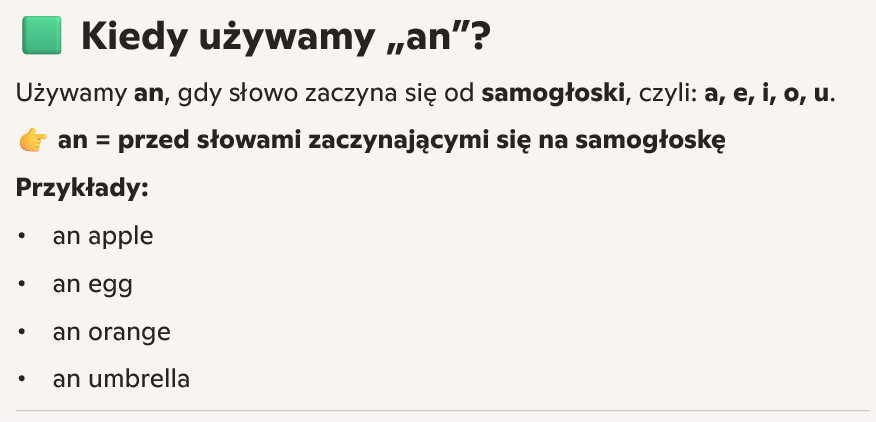
Kiedy używamy an?
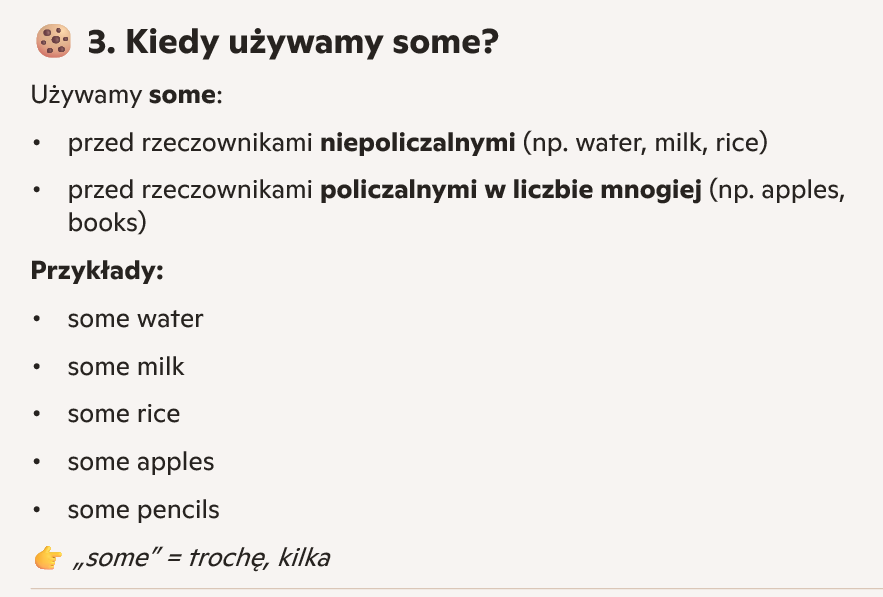
Kiedy używamy some?
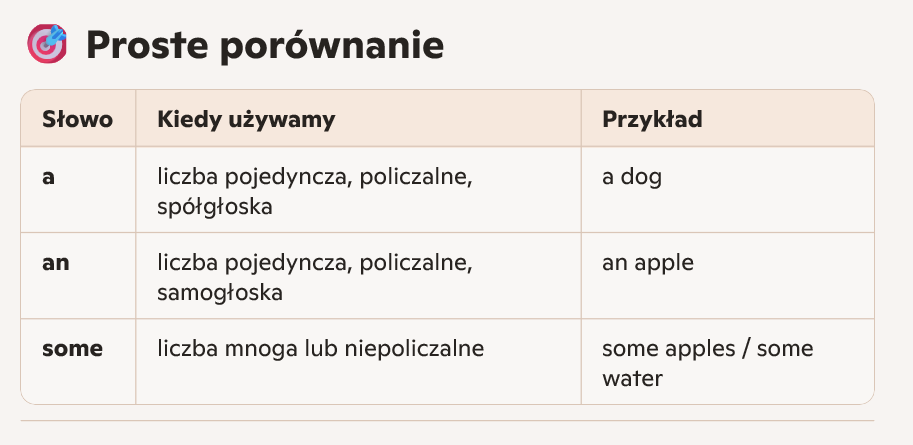
Proste porównanie
Categories
Klasa 4 Unit 5
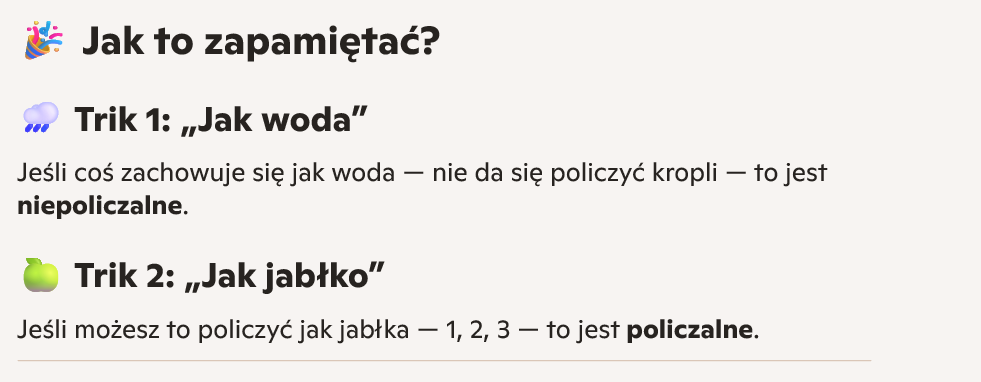
Rzeczowniki policzalne i niepoliczalne
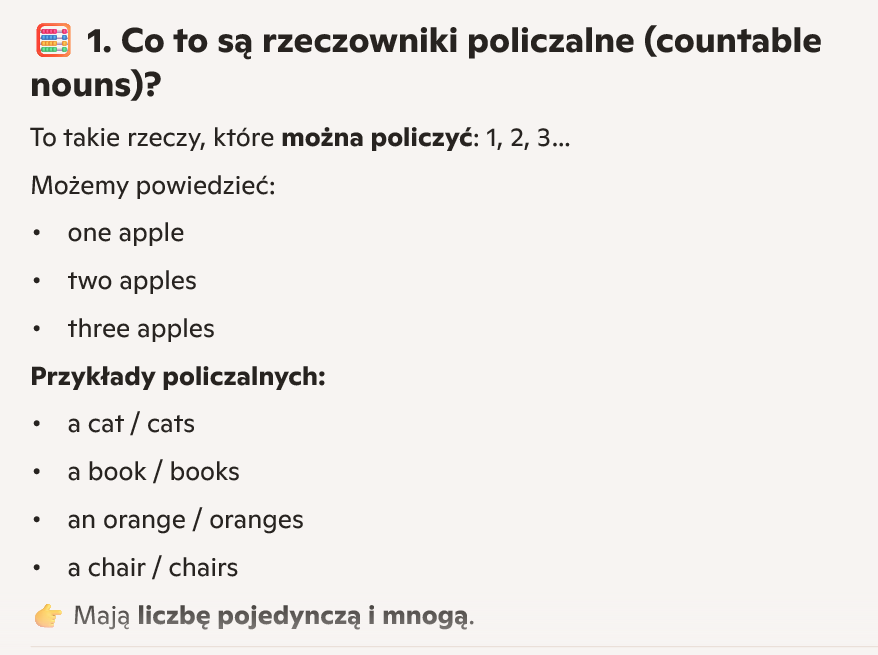
Co to są rzeczowniki policzalne (countable nouns)?
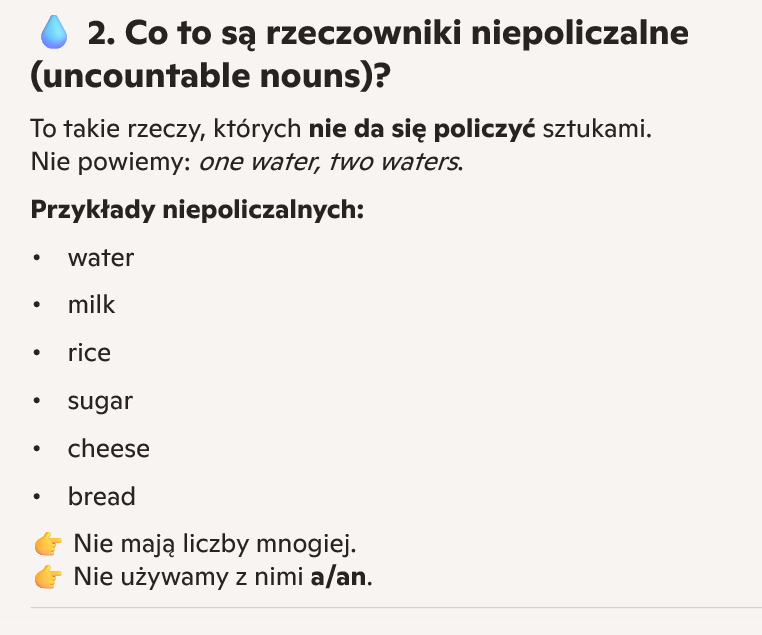
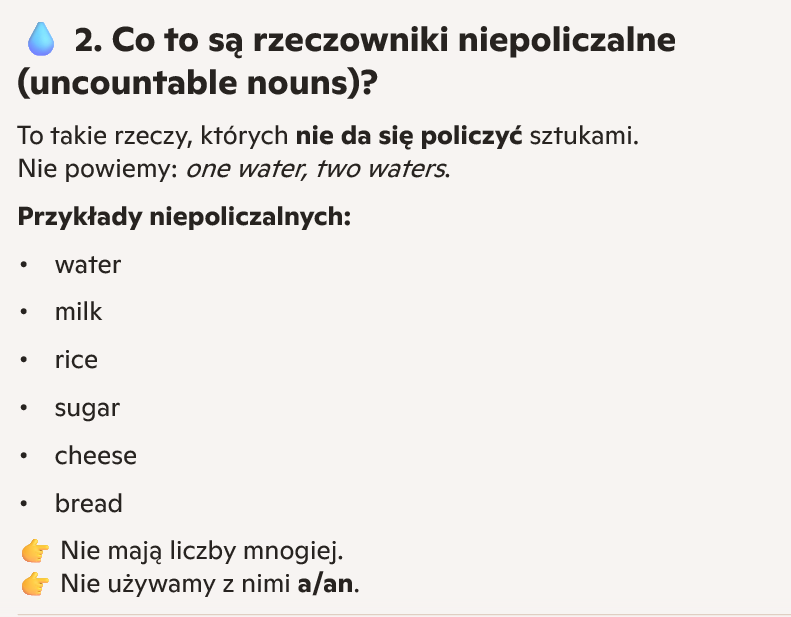
Co to są rzeczowniki niepoliczalne (uncountable nouns)?
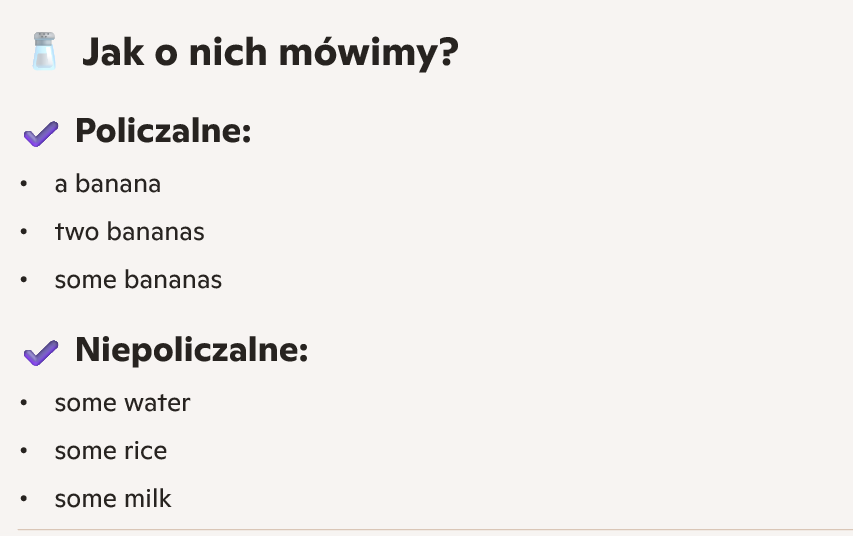
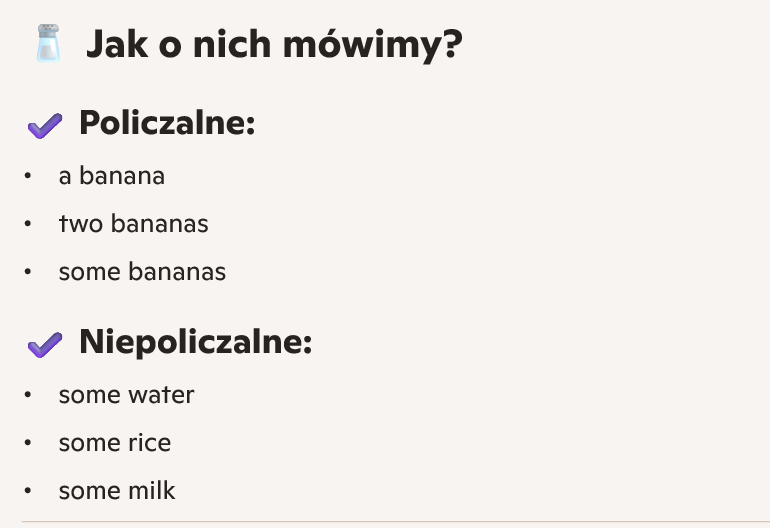
Jak o nich mówimy?
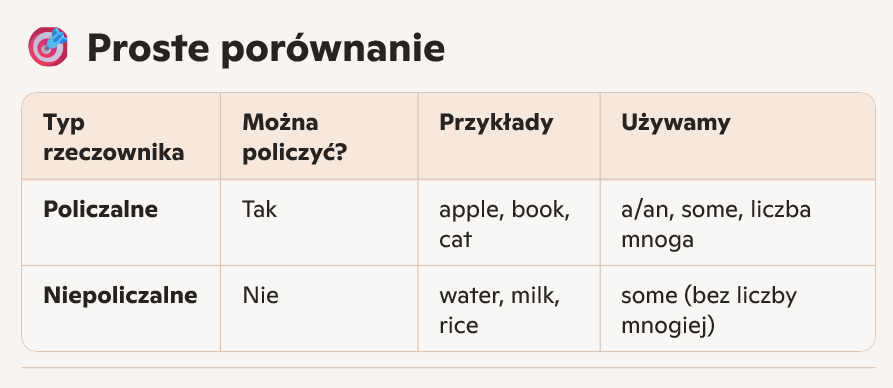
Proste porównanie
Jak o nich mówimy?
Proste porównanie
Jak to zapamiętać?
Categories
WORD LIST 5
Klasa 4
Categories
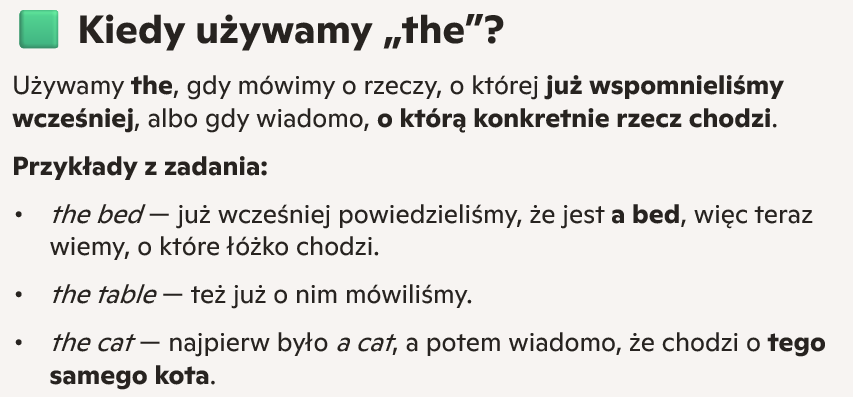
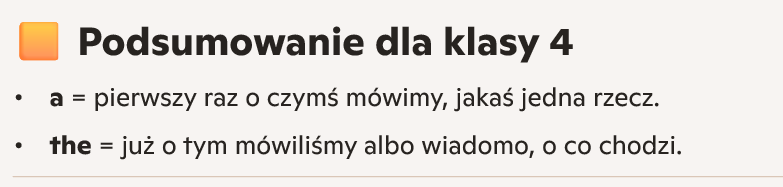
Klasa 4 “a/an” -“the”
Kiedy używamy „a”
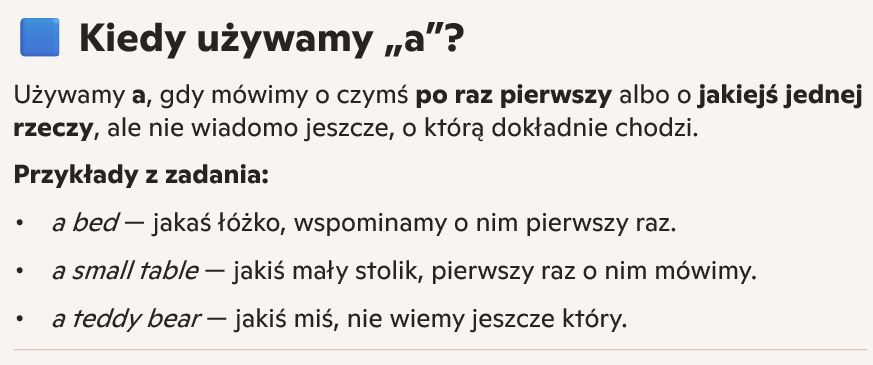
Kiedy używamy “an” zamiast “a”
Kiedy używamy „the”?
Podsumowanie dla klasy
Ćwiczenie: Wybierz poprawną odpowiedź (a / an / the)
Kliknij “Sprawdź”, aby zobaczyć, czy odpowiedź jest poprawna!
Categories
Klasa 4 Unit 4
Zadanie 6 strona 51
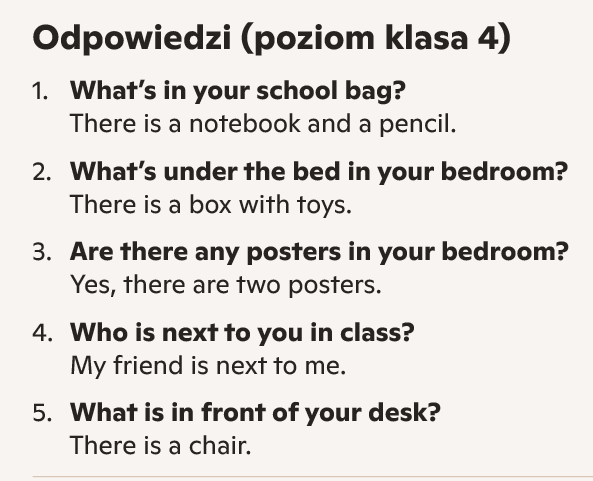
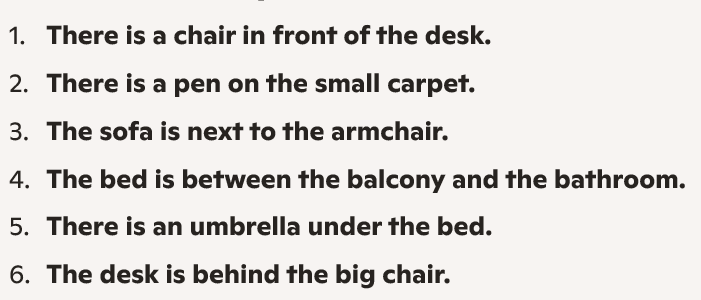
Zadanie 8 strona 51
Categories
Klasa 4 WORD LIST 4 Phrase Book
Categories
Klasa 4 WORD LIST 4
Categories
There is / There are
Klasa 4
Gramatyka w pigułce: There is / There are
Konstrukcji tych używamy, gdy chcemy powiedzieć, że coś gdzieś się znajduje (lub nie).
1. Kiedy używamy której formy?
- There is – używamy, gdy mówimy o jednej rzeczy (liczba pojedyncza).
- Przykład: There is a book on the desk. (Na biurku jest książka).
- Skrót: There’s a book…
- There are – używamy, gdy mówimy o dwóch lub więcej rzeczach (liczba mnoga).
- Przykład: There are three apples in the bag. (W torbie są trzy jabłka).
- Uwaga: Tej formy nie skracamy w twierdzeniach.
2. Pytania (Inwersja)
W pytaniach zamieniamy słowa miejscami. Is / Are wędruje na sam początek:
- Is there a dog in the garden? (Czy w ogrodzie jest pies?)
- Are there any pencils in your case? (Czy w Twoim piórniku są jakieś ołówki?)
3. Krótkie odpowiedzi
Nie odpowiadamy samym “Yes” lub “No”. Używamy pełnej krótkiej formy:
| Pytanie | Twierdząca odpowiedź | Przecząca odpowiedź |
| Is there…? | Yes, there is. | No, there isn’t. |
| Are there…? | Yes, there are. | No, there aren’t. |
4. Ważne słówka: A / AN / SOME / ANY
- A / AN – używamy tylko z There is (liczna pojedyncza).
- There is a cat. / There is an orange.
- SOME – używamy w twierdzeniach z There are (oznacza “kilka/trochę”).
- There are some books.
- ANY – używamy w pytaniach i przeczeniach z There are.
- Are there any students? / There aren’t any toys.
Zapamiętaj!
Zawsze patrz na pierwsze słowo po konstrukcji.
- There is a chair and four tables. (Mimo że mebli jest dużo, pierwszym słowem jest “a chair”, więc używamy is).
Categories
Liczba mnoga
Klasa 4
Angielski: Liczba Mnoga
Naucz się tworzyć liczbę mnogą w prosty sposób!
Jak tworzymy liczbę mnogą?
1. Zasada ogólna: Dodajemy końcówkę -s
- day + s → days
- book + s → books
- minute + s → minutes
2. Słowa syczące: Dodajemy końcówkę -es
(Dla słów kończących się na: s, x, ch, sh)
- bus + es → buses
- box + es → boxes
- watch + es → watches
3. Podstępne “y”: Zamieniamy na i + es
(Jeśli przed “y” jest spółgłoska)
- family y → families
- library y → libraries
- country y → countries
Sprawdź się! 🧠
Jak brzmi liczba mnoga słowa: box?
Podsumowanie
Pamiętajcie, drodzy uczniowie! Większość słów w języku angielskim po prostu “lubi się” z literką -s. Jednak gdy słowo syczy (jak wąż 🐍) lub kończy się na spółgłoskę i -y, musimy zastosować specjalne zasady. Powodzenia w nauce!
Categories
What’s the weather like ?
Jaka jest pogoda?
Pytanie wprowadzające:
“What’s the weather like today?”
(Jaka jest dzisiaj pogoda?).
Materiał został zaczerpnięty z zadania 4 na stronie 97 podręcznika.
- Gra: Wordwall – “Spin the wheel” (Zakręć kołem)
- Jaka jest pogoda?
Prezentacja nowego materiału
Wprowadzenie pytania “What’s the weather like?”
Nauczyciel pisze pytanie na tablicy. Tłumaczy je i prosi uczniów o powtórzenie chórem, a potem indywidualnie.
Wprowadzenie słownictwa (rainy, cloudy, windy, foggy, snowy, sunny, stormy, cold, warm, hot).
Tłumaczenie zdań
Materiał został zaczerpnięty z zadania 6 na stronie 97 podręcznika.
Take your umbrella because England is a rainy country.
Weź swoją parasolkę, ponieważ Anglia to deszczowy kraj.
Hurray! It’s a snowy day! Let’s make a snowman.
Hura! To śnieżny dzień! Zróbmy bałwana.
I can’t see anything because it’s very foggy.
Nic nie widzę, bo jest bardzo mglisto.
Where are my gloves? It’s very cold. Gdzie są moje rękawiczki? Jest bardzo zimno.
The sky looks black and cloudy. The weather is too bad to go out.
Niebo wygląda na czarne i zachmurzone. Pogoda jest zbyt zła, żeby wyjść.
We always go to the beach on a hot summer day.
Zawsze jeździmy na plażę w upalny letni dzień.