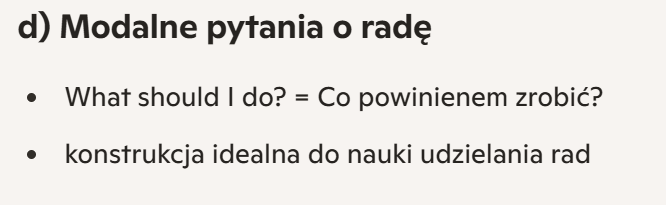
Modal verbs to specjalne czasowniki, które dodajemy przed czasownikiem głównym, żeby wyrazić m.in.: umiejętność, możliwość, przypuszczenie, obowiązek, pozwolenie lub radę.
Najważniejsza zasada: po modal verb czasownik główny jest zawsze w formie podstawowej (bez “to”).
✅ She can swim. ❌ She can to swim. / She cans swim.
Podstawowe modal verbs dla klasy 7
CAN / CAN’T – umiejętność i możliwość
I can ride a bike. (Umiem jeździć na rowerze.)
He can’t speak French. (On nie umie mówić po francusku.)
MUST / MUSTN’T – obowiązek i zakaz
You must do your homework. (Musisz odrobić pracę domową.)
You mustn’t talk during the test. (Nie wolno ci rozmawiać podczas testu.) – to jest zakaz, nie brak obowiązku!
SHOULD / SHOULDN’T – rada
You should eat vegetables. (Powinieneś jeść warzywa.)
You shouldn’t eat too much sugar. (Nie powinieneś jeść za dużo cukru.)
MAY / MIGHT – przypuszczenie, pozwolenie
It may rain tomorrow. (Może jutro padać.)
May I open the window? (Czy mogę otworzyć okno? – grzeczna prośba)
HAVE TO – obowiązek (z zewnątrz)
I have to wear a uniform at school. (Muszę nosić mundurek – to zasada szkoły, nie moja decyzja.)
MUST vs. MUSTN’T vs. DON’T HAVE TO
Forma
Znaczenie
You must go.
Musisz iść (obowiązek)
You mustn’t go.
Nie wolno ci iść (zakaz!)
You don’t have to go.
Nie musisz iść (masz wybór)
Charakterystyczne cechy modal verbs
Nie dodajemy -s w 3. osobie liczby pojedynczej: She cans → She can
Pytania tworzymy przez inwersję (bez “do/does”): Can you help me?
Saxon genitive (nazywany też “‘s genitive”) to sposób pokazywania przynależności (czyj to jest?) w języku angielskim. Używamy go głównie, gdy mówimy o ludziach, zwierzętach (rzadziej o rzeczach).
Budowa (forma)
1. Liczba pojedyncza → rzeczownik + ‘s
Tom’s book → książka Toma
2. Liczba mnoga zakończona na -s → tylko apostrof ‘
the students’ books → książki uczniów
3. Liczba mnoga nieregularna (bez -s) → ‘s
the children’s toys → zabawki dzieci
4. Imiona kończące się na -s → można dodać samo ‘ albo ‘s
Chris’ car / Chris’s car → samochód Chrisa
Przykłady zdań
Angielski
Polski
This is Anna’s cat.
To jest kot Anny.
My sister’s room is blue.
Pokój mojej siostry jest niebieski.
The dog’s tail is long.
Ogon psa jest długi.
My parents’ house is big.
Dom moich rodziców jest duży.
Mr. Smith’s car is new.
Samochód pana Smitha jest nowy.
Ważna różnica: ‘s (‘s) vs of
Saxon genitive → dla ludzi i zwierząt: the boy’s bike (rower chłopca)
of → dla rzeczy: the color of the car (kolor samochodu), a nie the car’s color
Prosta zasada
👉 Właściciel + ‘s + rzecz posiadana np. Mark’s phone = telefon Marka
Saxon Genitive — Koło Fortuny
Kliknij „Losuj imię” i „Losuj przedmiot”, a potem wpisz zdanie w formie dopełniacza saksońskiego (np. Jenny’s brush) i jego polskie tłumaczenie.
I live with my parents and my younger sister. She is twelve and I often help her with homework. My mum is very kind and I talk to her every day. My dad likes animals and we have a dog. We love him very much and he always plays with us. I take him for a walk after school.
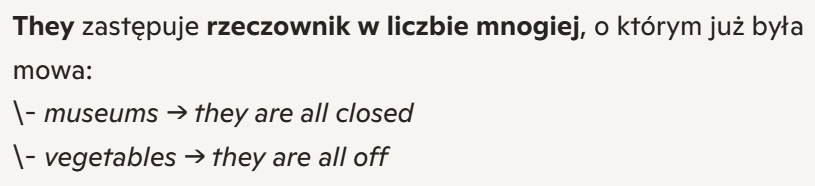
To zaimki, które zastępują konkretną osobę, rzecz lub grupę – wiemy dokładnie, o kim lub o czym mówimy.
Liczba pojedyncza:
I – ja
you – ty
he – on
she – ona
it – ono (dla rzeczy/zwierząt)
Liczba mnoga:
we – my
you – wy
they – oni/one
Przykłady:
Tom is my friend. He plays football. (He = Tom)
My sister is smart. She likes math. (She = moja siostra)
I have a dog. It is brown. (It = pies)
W każdym zdaniu zaimek zastępuje konkretną osobę lub rzecz, którą wcześniej wymieniliśmy.
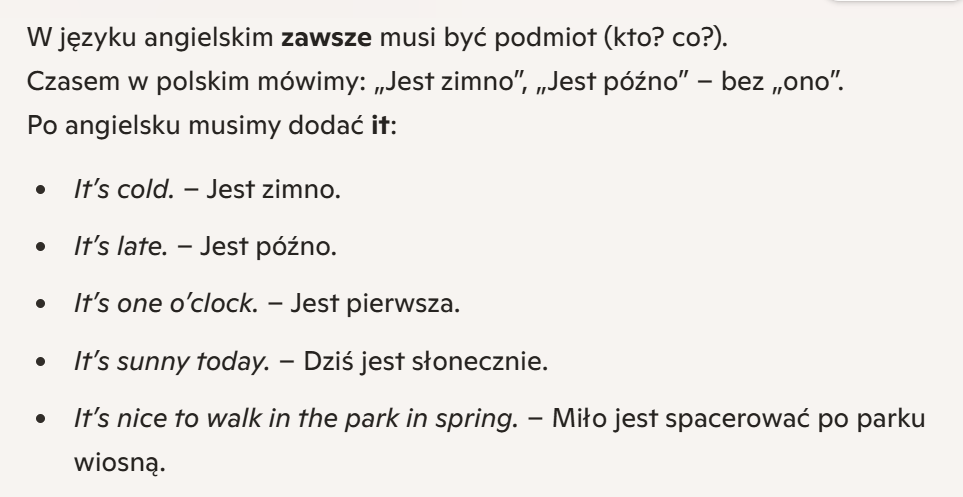
Impersonal pronoun (zaimek nieosobowy)
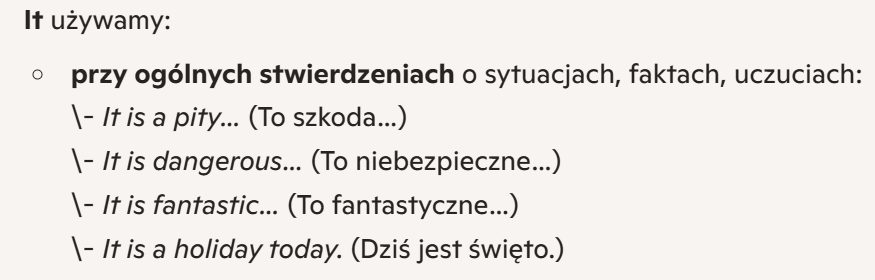
To specjalne użycie słowa it, które NIE zastępuje żadnej konkretnej osoby ani rzeczy. Używamy go, gdy mówimy ogólnie o:
1. Pogodzie:
It is raining. (Pada.)
It’s cold today. (Dziś jest zimno.)
2. Czasie:
It is 5 o’clock. (Jest piąta.)
It’s Monday. (Jest poniedziałek.)
3. Odległości:
It is 10 kilometers to school. (Do szkoły jest 10 km.)
4. Ogólnych stwierdzeniach:
It is important to study. (Ważne jest, żeby się uczyć.)
Kluczowa różnica
Personal “it”
Impersonal “it”
Zastępuje konkretną rzecz
Nic konkretnego nie zastępuje
I have a cat. It is black. (it = kot)
It is snowing. (it = nic, tylko gramatyka wymaga podmiotu)
Zapamiętaj 💡
W angielskim zdaniu zawsze musi być podmiot – dlatego przy pogodzie, czasie czy odległości “sztucznie” wstawiamy it, mimo że nie ma ono żadnego znaczenia – pełni tylko funkcję gramatyczną.
The Statue of Liberty is a famous statue on an island in New York. It is a symbol of freedom and one of the most well‑known sights in the USA. You can take a ferry to see it up close.
Times Square
Times Square is a very bright and busy place in the centre of New York. There are big advertisements, lights, and many tourists. It is very crowded, especially at night.
Central Park
Central Park is a huge park in the middle of New York City. There are trees, lakes, and paths where people walk, relax, or ride bikes. It is a quiet place in a very busy city.
Empire State Building
The Empire State Building is a tall skyscraper and one of the most famous buildings in New York. There is an observation deck at the top, and you can see a beautiful view of the whole city. It is a popular tourist attraction.
Brooklyn Bridge
The Brooklyn Bridge is a famous bridge that connects Manhattan and Brooklyn. Many people walk or bike across it to see the beautiful view of the city. It is one of the most iconic landmarks in New York.
Broadway
Broadway is a famous street in New York known for its theatres and musicals. You can watch many popular shows there. It is one of the most exciting places for entertainment in the city.
The Big Apple
“The Big Apple” is a nickname for New York City. People use it to show that the city is important, exciting, and full of life. It is one of the most well‑known nicknames in the world.
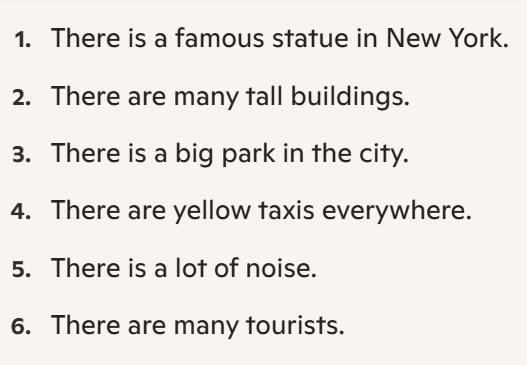
New York City is one of the most famous cities in the world. It is a huge and very busy place with tall buildings, bright lights, and people from many countries. The city is known for its yellow taxis, crowded streets, and famous places like the Statue of Liberty, Times Square, and Central Park.
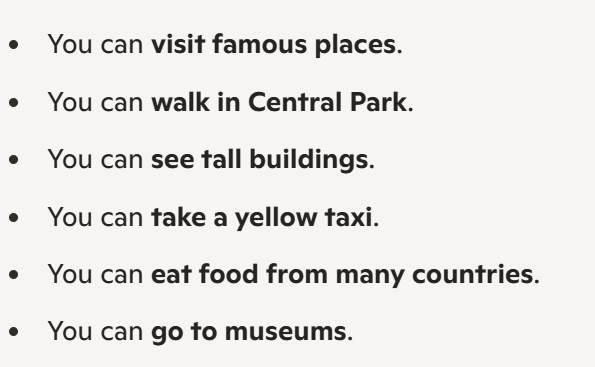
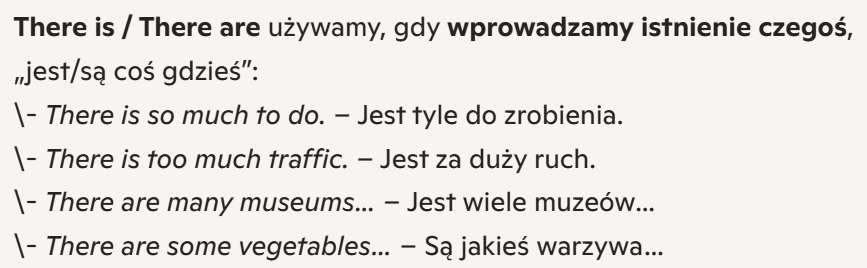
There are many attractions in New York. You can visit museums, walk in a big park, see skyscrapers, or try food from around the world. There is always something happening in the city, and it is full of energy and interesting things to see.
New York is different from most cities because it is very modern, very fast, and full of life. Many tourists visit it every year because there are so many things to do and explore.
Co można robić w Nowym Jorku?
MODELE ZDAŃ
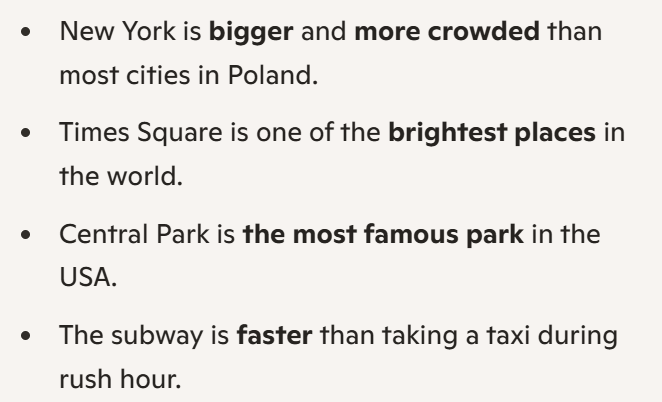
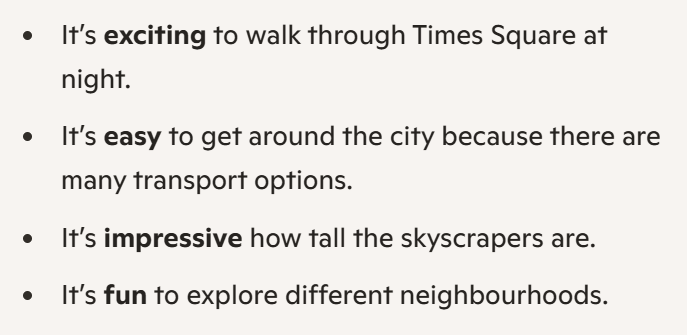
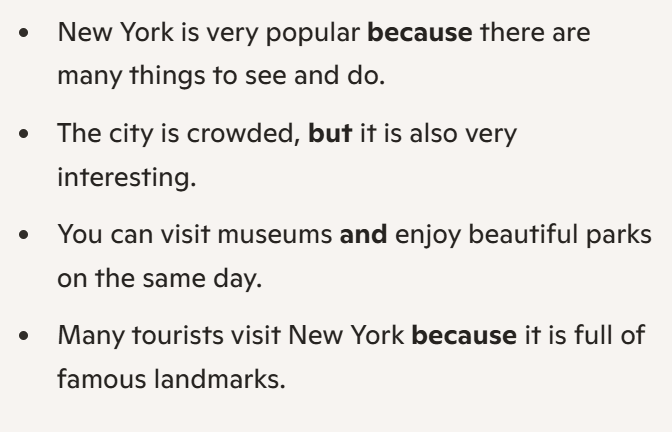
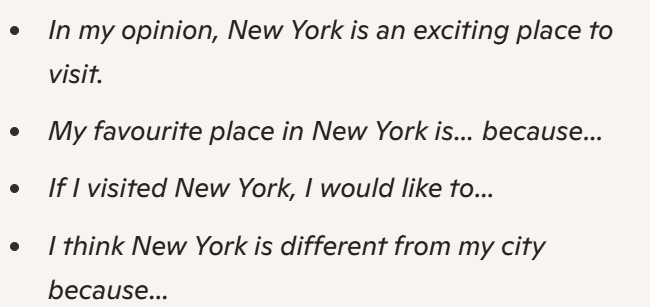
SIMPLE SENTENCEOpisywanie miastaTHERE IS / THERE ARETHERE IS / THERE ARE – bardziej rozbudowaneCzynności – YOU CAN…Porównania – COMPARATIVES / SUPERLATIVESOpisywanie wrażeń – IT’S…Łączenie zdań – BECAUSE / AND / BUTMini‑modele do krótkich wypowiedzi ustnych
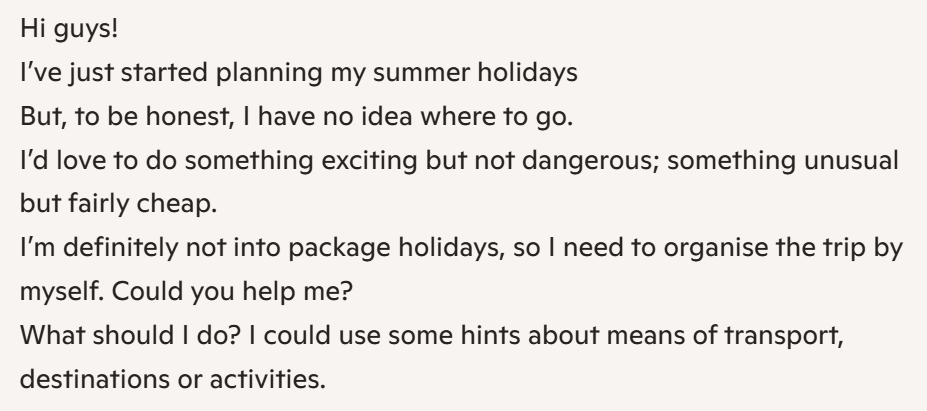
Manchester is an increasingly cool place to live or to visit. Now, getting around has never been easier thanks to more and more means of transport. A fantastic website, Transport for Greater Manchester (tfgm.com), will help you get to where you need to go. The website will tell you about the latest delays caused by accidents or road works. It will even tell you when there is a big football match so you can avoid traffic jams. And don’t forget that you can travel by bus or bike all-round the city centre. Isn’t that a cool way to arrive at the match?
Manchester has a great bus service, with buses covering the city centre as well as nearby towns. You can use the website’s Route Explorer to help you plan your bus route. Just type in where you want to go and you will see your choices. It will also tell you where the buses link up with trains and trams.
If you want to get fit, how about cycling? A new bike scheme, introduced in 2017, allows you to register using an app. After that, you just pick up one of the many bikes that you’ll find on the streets and ride it to wherever you want to go. Then you just leave it for the next cyclist to pick up. For you and for them, it’s very cheap, and it’s very convenient!
Tłumaczenie
Poruszanie się po Manchesterze
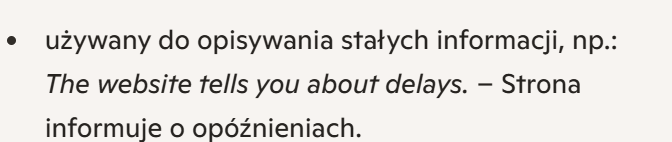
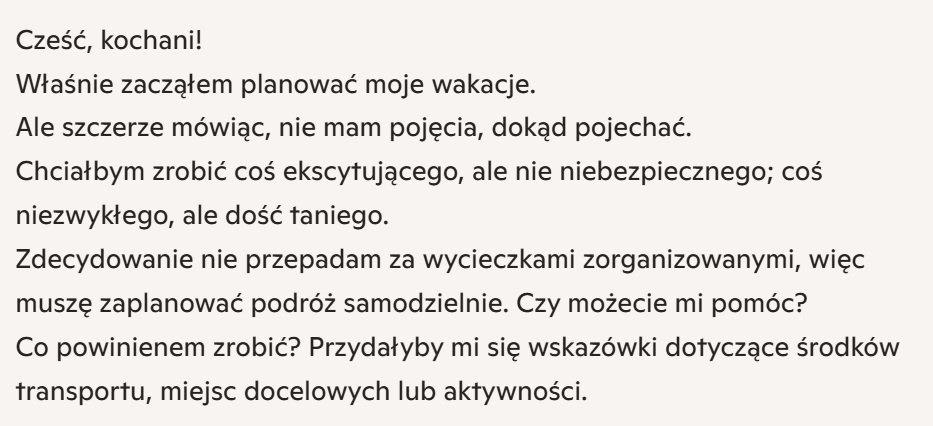
Manchester staje się coraz fajniejszym miejscem do życia lub odwiedzenia. Teraz poruszanie się po mieście jest łatwiejsze niż kiedykolwiek dzięki coraz większej liczbie środków transportu. Fantastyczna strona internetowa Transport for Greater Manchester (tfgm.com) pomoże ci dotrzeć tam, gdzie potrzebujesz. Strona poinformuje cię o najnowszych opóźnieniach spowodowanych wypadkami lub robotami drogowymi. Powie ci nawet, kiedy odbywa się duży mecz piłkarski, abyś mógł uniknąć korków. A nie zapominaj, że możesz podróżować autobusem lub rowerem po całym centrum miasta. Czy to nie świetny sposób, żeby dotrzeć na mecz?
Manchester ma świetną komunikację autobusową, a autobusy obsługują zarówno centrum miasta, jak i pobliskie miasteczka. Możesz skorzystać z Route Explorera na stronie, aby zaplanować swoją trasę autobusową. Wpisz tylko, dokąd chcesz jechać, a zobaczysz dostępne możliwości. Strona pokaże ci także, gdzie autobusy łączą się z pociągami i tramwajami.
Słownictwo potrzebne do zrozumienia tekstu
Transport i miastoKomunikacja miejskaInternet i aplikacje
Gramatyka w tekście
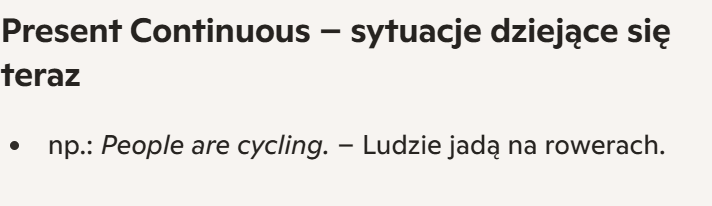
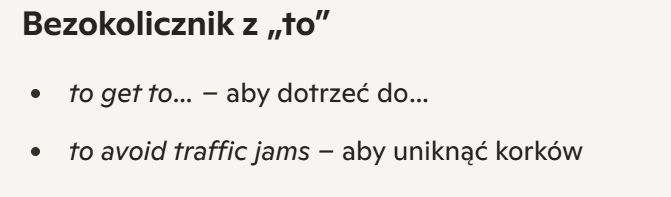
Present Simple – fakty i działanie usługPresent Continuous – sytuacje dziejące się terazBezokolicznik z „to”Typowe zwroty z tekstu
Trudności w wymowie w tekście
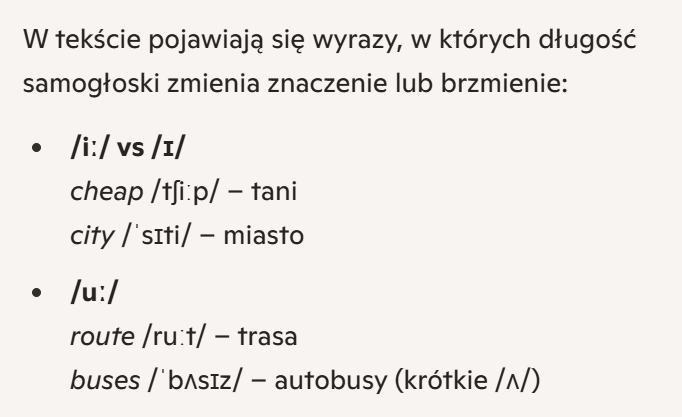
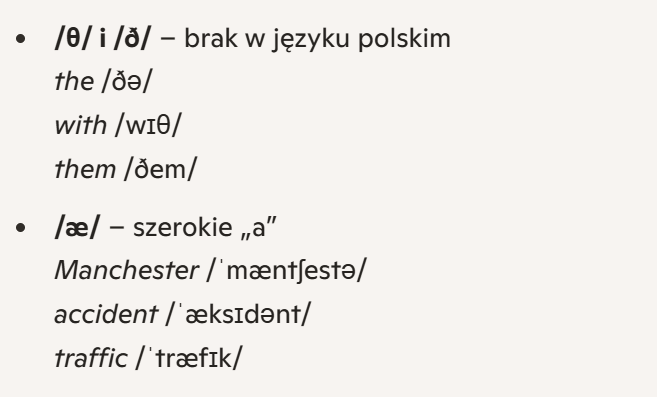
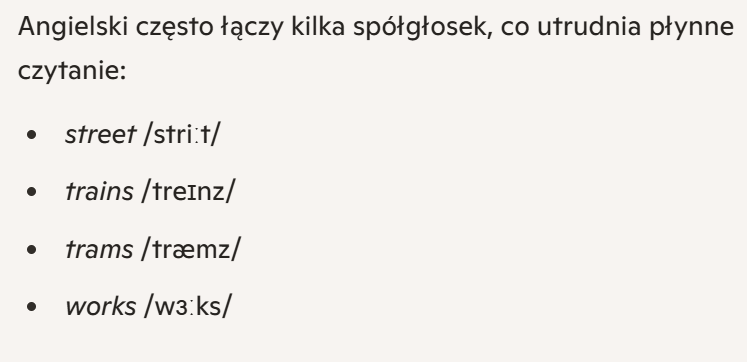
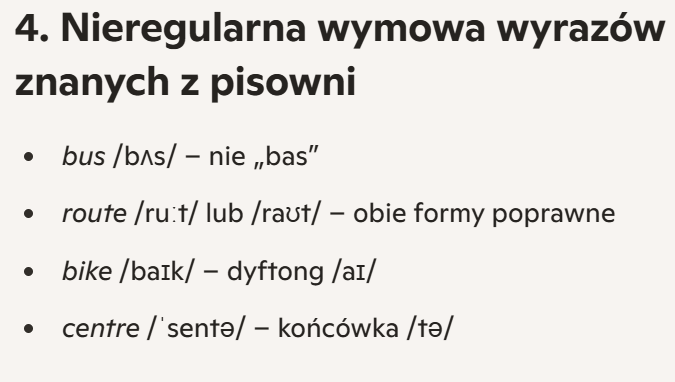
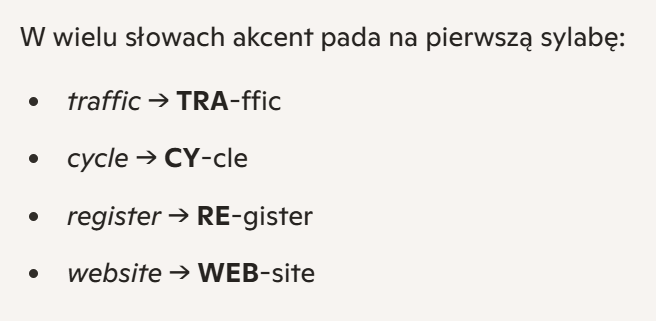
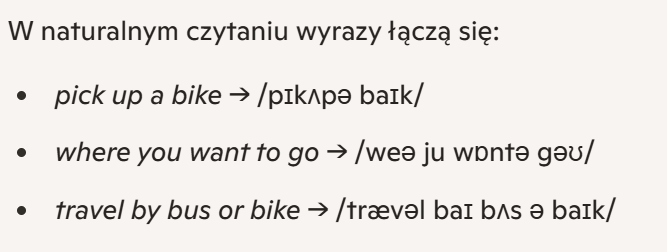
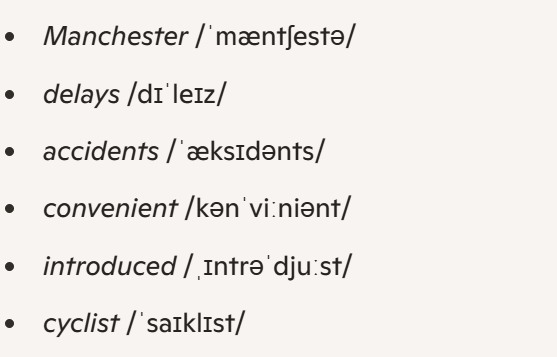
Samogłoski długie i krótkieGłoski trudne dla PolakówPołączenia spółgłoskoweNieregularna wymowa wyrazów znanych z pisowniAkcent wyrazowyŁączenie wyrazów w mowie (connected speech)Trudne słowa z tekstu – wymowaKrótkie wyrażenia językowe
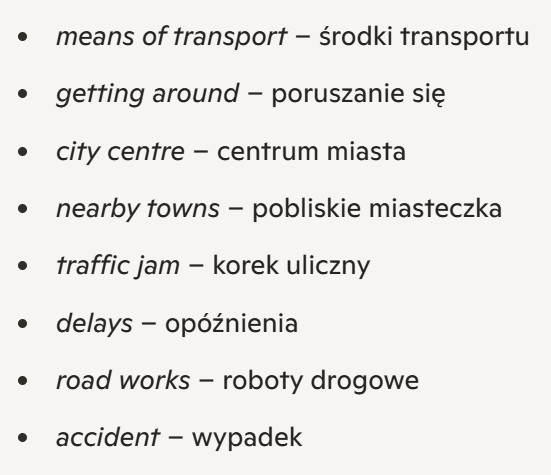
getting around – poruszanie się
means of transport – środki transportu
a fantastic website – fantastyczna strona internetowa
the latest delays – najnowsze opóźnienia
caused by accidents – spowodowane wypadkami
caused by road works – spowodowane robotami drogowymi
avoid traffic jams – unikać korków
a big football match – duży mecz piłkarski
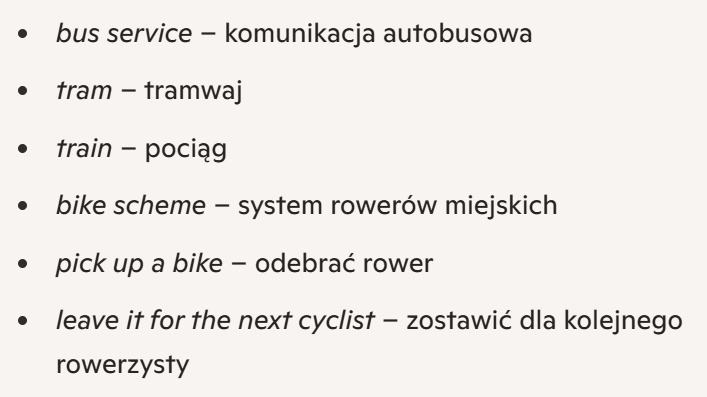
travel by bus – podróżować autobusem
travel by bike – podróżować rowerem
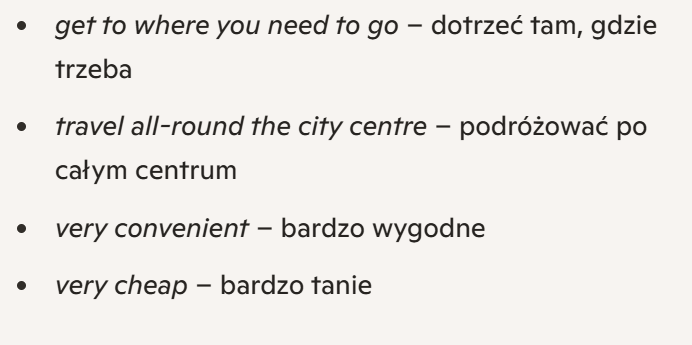
all-round the city centre – po całym centrum miasta
a great bus service – świetna komunikacja autobusowa
covering the city centre – obejmująca centrum miasta
nearby towns – pobliskie miasteczka
plan your route – zaplanować trasę
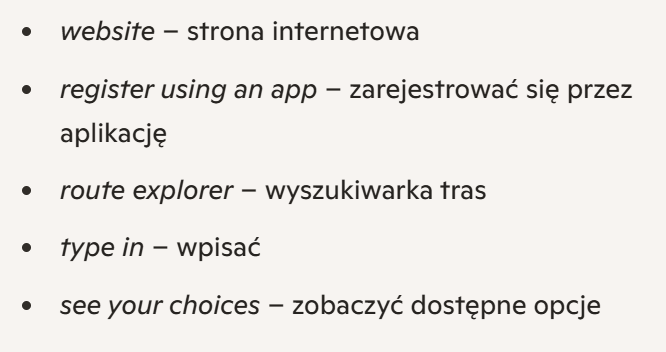
route explorer – wyszukiwarka tras
type in where you want to go – wpisz, dokąd chcesz jechać
see your choices – zobacz swoje możliwości
link up with trains – łączyć się z pociągami
link up with trams – łączyć się z tramwajami
get fit – nabrać kondycji
a new bike scheme – nowy system rowerowy
introduced in 2017 – wprowadzony w 2017 roku
register using an app – zarejestrować się przez aplikację
pick up a bike – odebrać rower
on the streets – na ulicach
ride it wherever you want – jechać, dokąd chcesz
leave it for the next cyclist – zostawić dla kolejnego rowerzysty
very convenient – bardzo wygodne
very cheap – bardzo tanie
get to where you need to go – dotrzeć tam, gdzie trzeba
find information quickly – szybko znaleźć informacje
avoid busy areas – unikać zatłoczonych miejsc
arrive at the match – dotrzeć na mecz
many bikes available – wiele dostępnych rowerów
helpful transport tools – pomocne narzędzia transportowe
choose the best route – wybrać najlepszą trasę
find the nearest stop – znaleźć najbliższy przystanek
check for delays – sprawdzić opóźnienia
move around the city easily – łatwo poruszać się po mieście
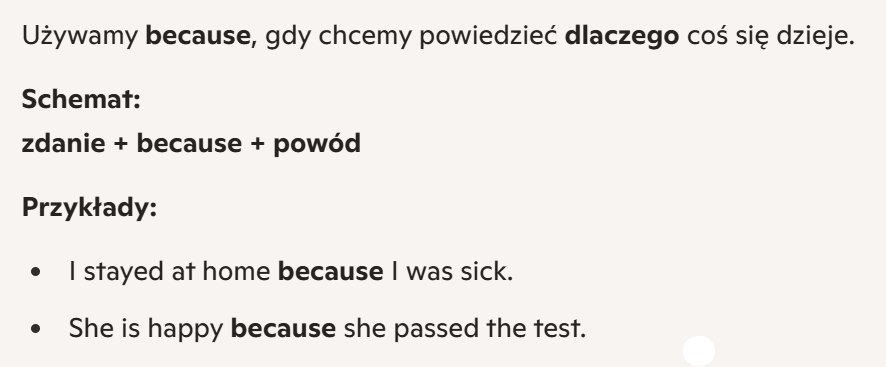
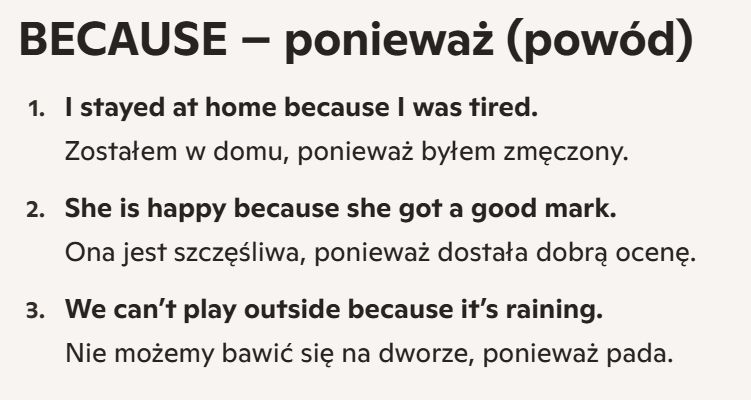
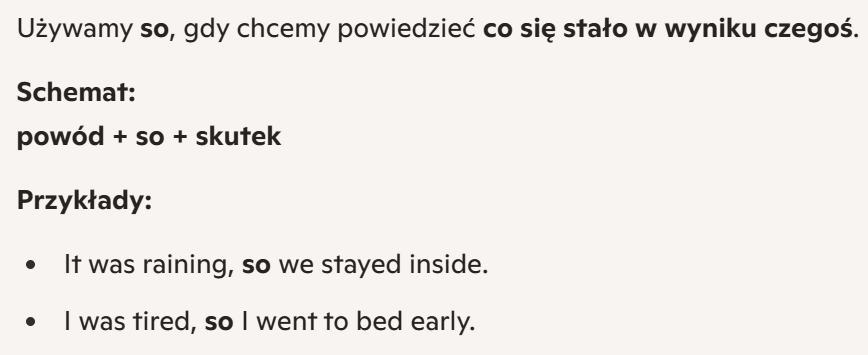
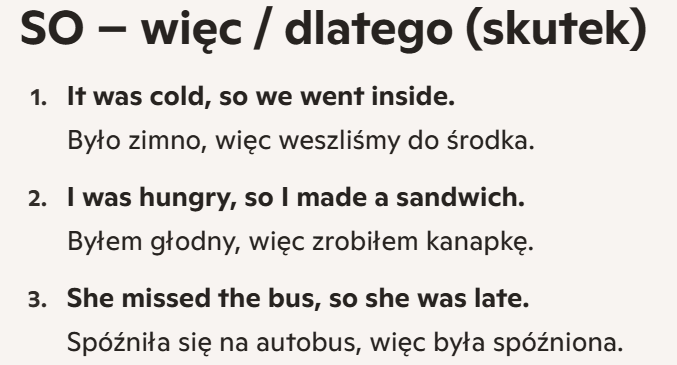
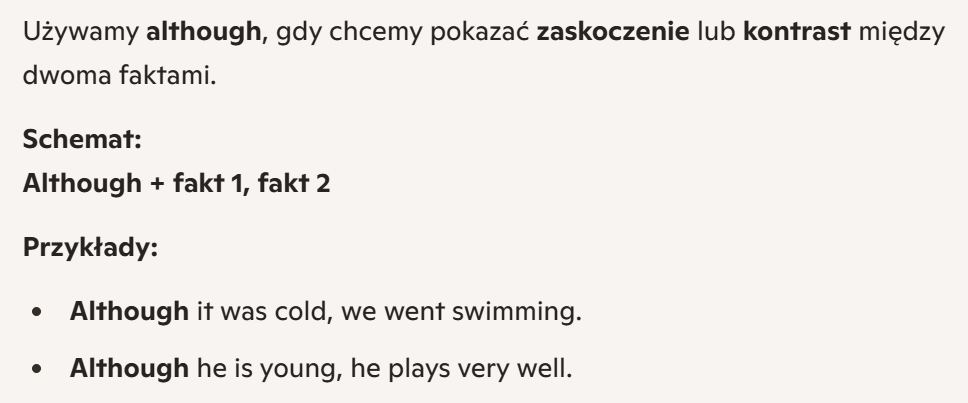
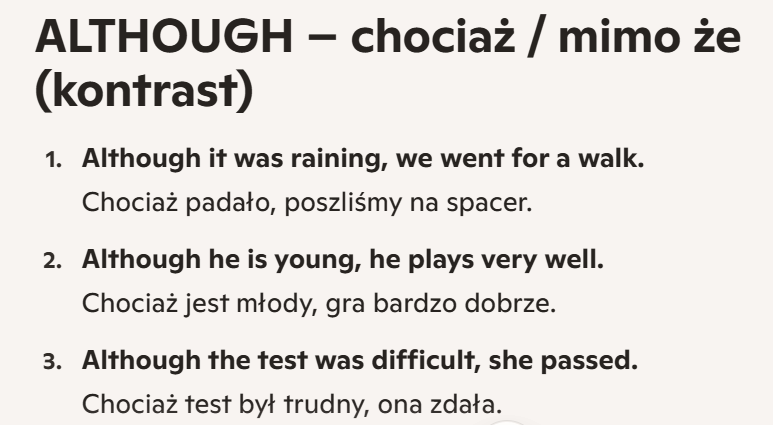
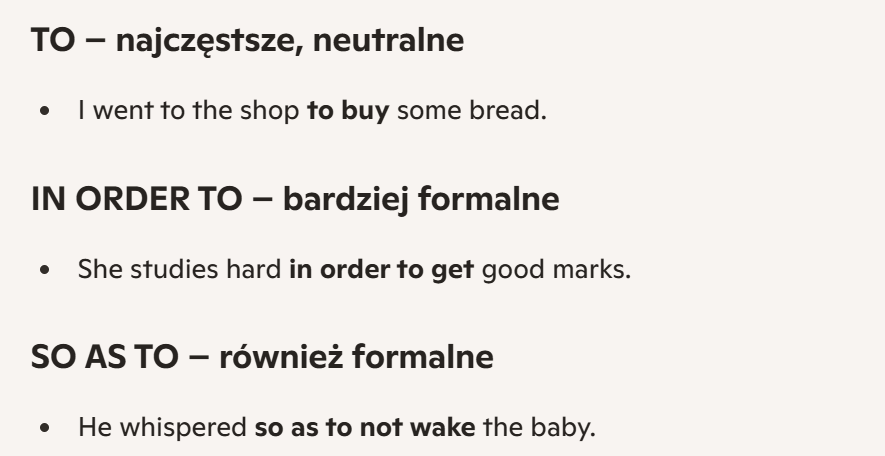
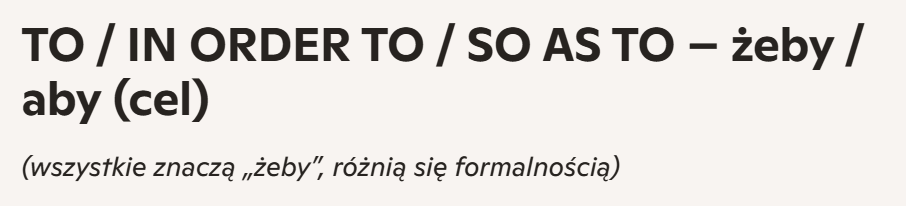
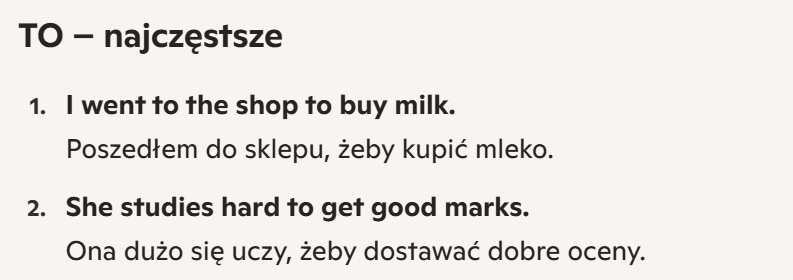
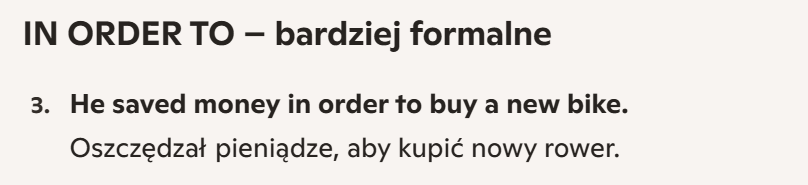
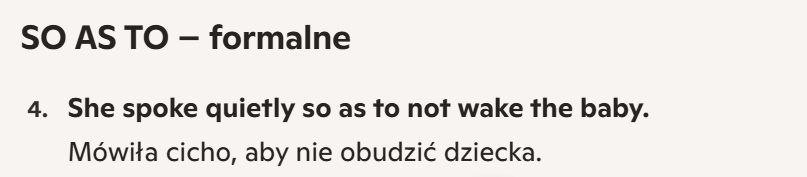
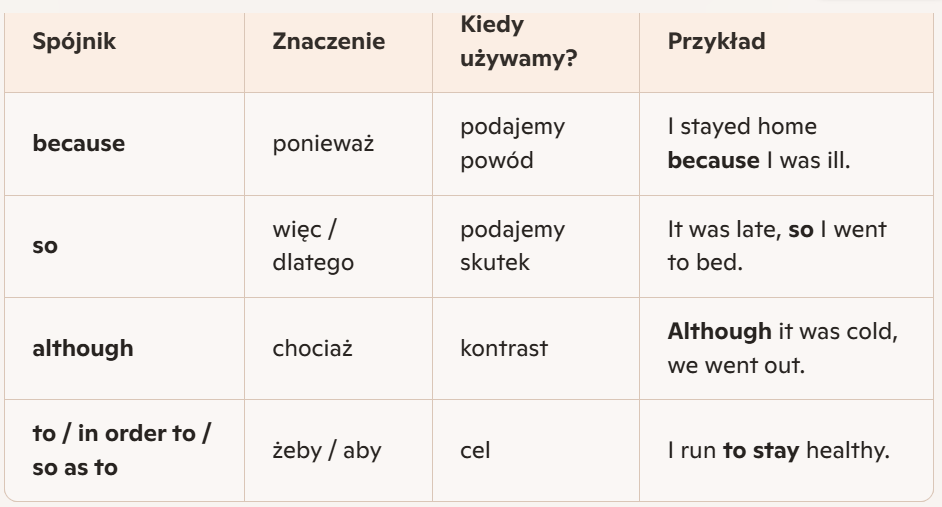
BECAUSE – ponieważ (podaje powód)SO – więc / dlatego (podaje skutek)ALTHOUGH – chociaż / mimo że (kontrast)TO / IN ORDER TO / SO AS TO – żeby / aby (cel)Podsumowanie
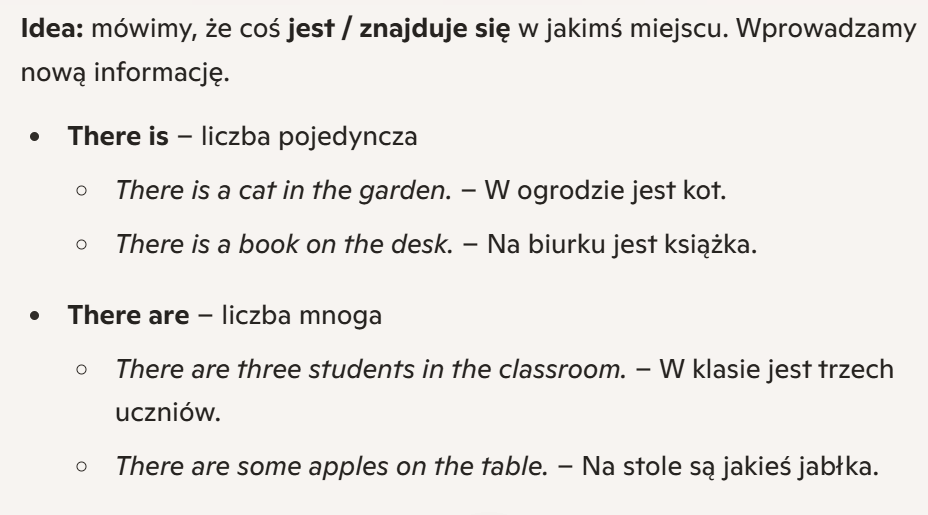
_____ is a pity you can’t stay longer.
OdpowiedźIt is a pity you can’t stay longer.
_____ is so much noise in this room.
OdpowiedźThere is so much noise in this room.
_____ is important to listen carefully in class.
OdpowiedźIt is important to listen carefully in class.
_____ are three new students in our class.
OdpowiedźThere are three new students in our class.
I like these books. _____ are really interesting.
OdpowiedźThey are really interesting.
_____ is too late to start the film now.
OdpowiedźIt is too late to start the film now.
_____ are some sandwiches on the table.
OdpowiedźThere are some sandwiches on the table.
I don’t like these shoes. _____ are too small for me.
OdpowiedźThey are too small for me.
_____ is very cold in this room.
OdpowiedźIt is very cold in this room.
_____ is a supermarket near my house.
OdpowiedźThere is a supermarket near my house.
_____ are a lot of mistakes in your test.
OdpowiedźThere are a lot of mistakes in your test.
I know these boys. _____ are in class 8B.
OdpowiedźThey are in class 8B.
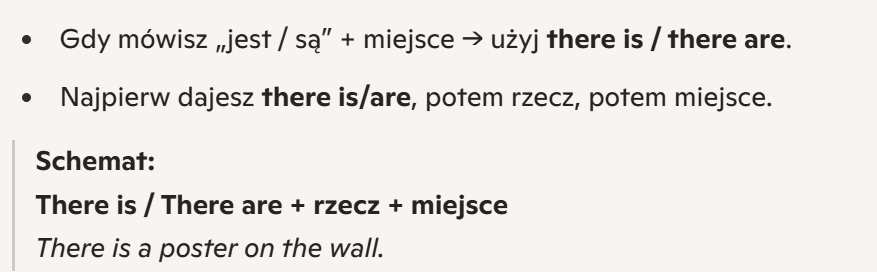
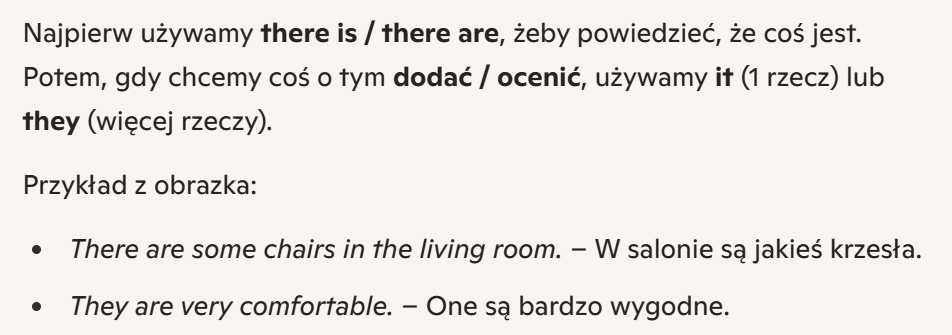
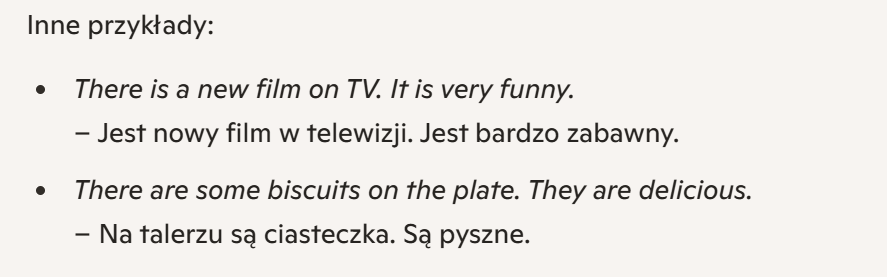
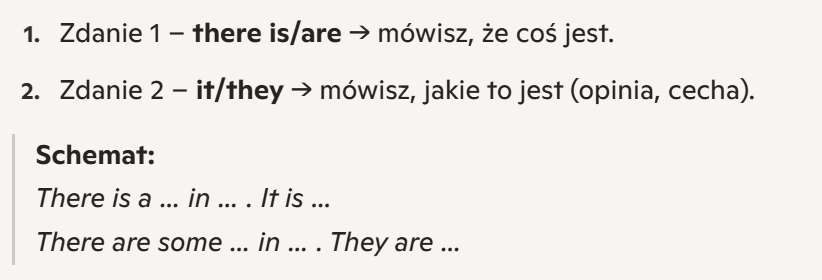
There is / There are vs It / They – Uzupełnij dialog
________ from my aunt’s house in Italy.
Odpowiedź + uzasadnienieThey are from my aunt’s house in Italy. „Photographs” = liczba mnoga → używamy they.
________ a great house!
Odpowiedź + uzasadnienieIt is a great house! Mówimy o jednym domu → it.
________.
Odpowiedź + uzasadnienieIt is. Odpowiadamy na poprzednie zdanie z „it”.
________ three bedrooms in the house.
Odpowiedź + uzasadnienieThere are three bedrooms in the house. Wprowadzamy informację o istnieniu czegoś → there are.
________ all upstairs.
Odpowiedź + uzasadnienieThey are all upstairs. „Bedrooms” = liczba mnoga → zastępujemy je they.
________ also a nice garden around the house.
Odpowiedź + uzasadnienieThere is also a nice garden around the house. Wprowadzamy nowy element (ogród) → there is.
________ a swimming pool too?
Odpowiedź + uzasadnienieIs there a swimming pool too? Pytanie o istnienie czegoś → Is there…?
________ beautiful!
Odpowiedź + uzasadnienieThey are beautiful! „Beaches” (plaże) = liczba mnoga → they.
________ a nice place,
Odpowiedź + uzasadnienieIt is a nice place. „Place” = liczba pojedyncza → it.
but ________ aren’t any discos or cinemas there.
Odpowiedź + uzasadnieniethere aren’t any discos or cinemas there. Mówimy, że czegoś nie ma → there aren’t.
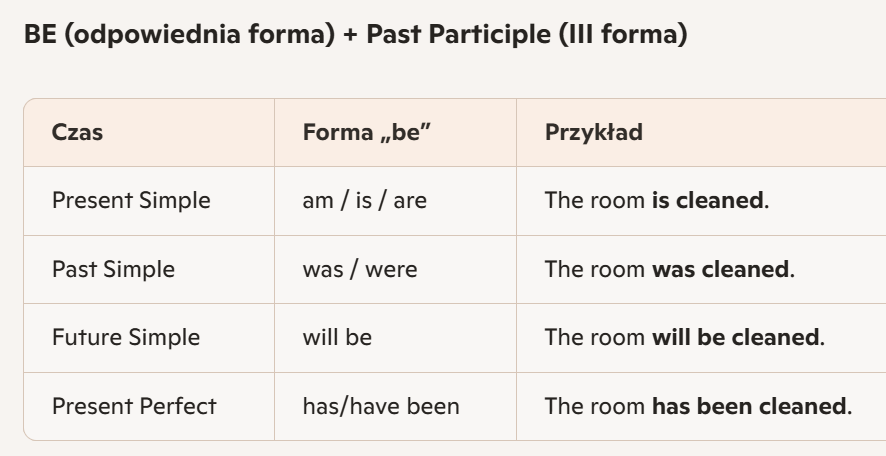
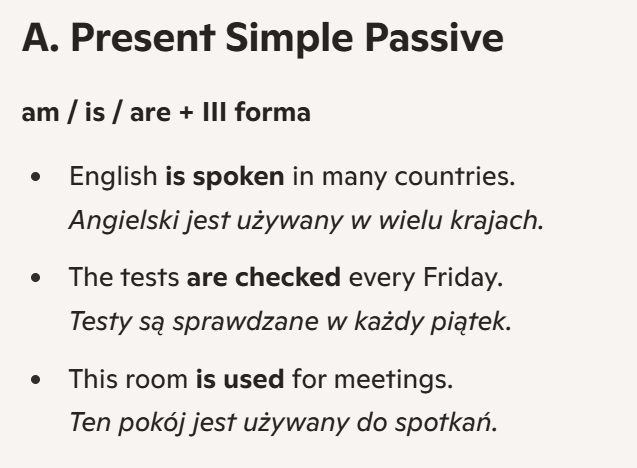
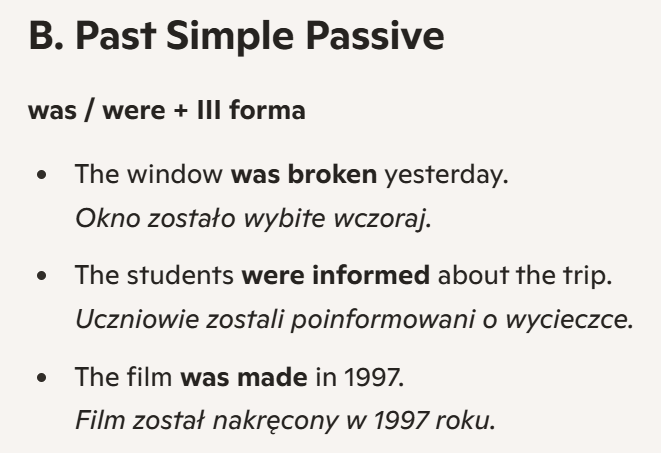
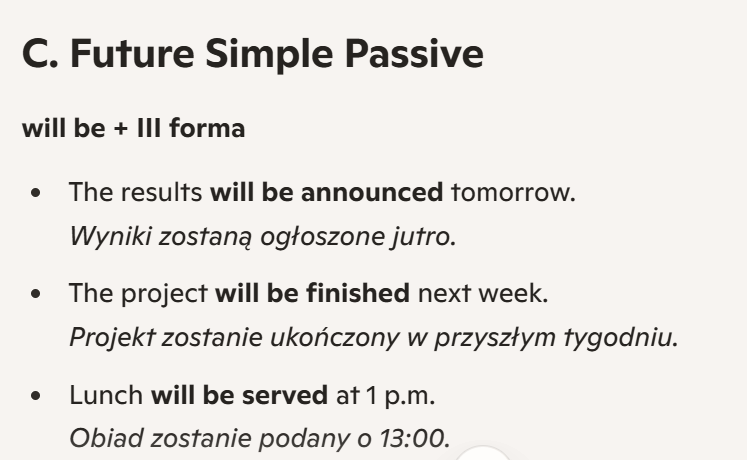
Czasy: Present Simple, Past Simple, Future Simple, Present Perfect
Materiały dla klasy 7 – teoria, przykłady, ćwiczenia
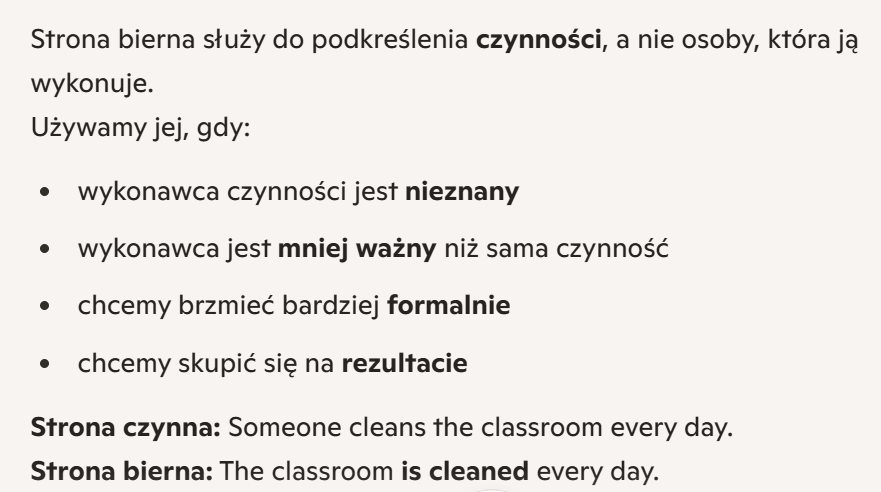
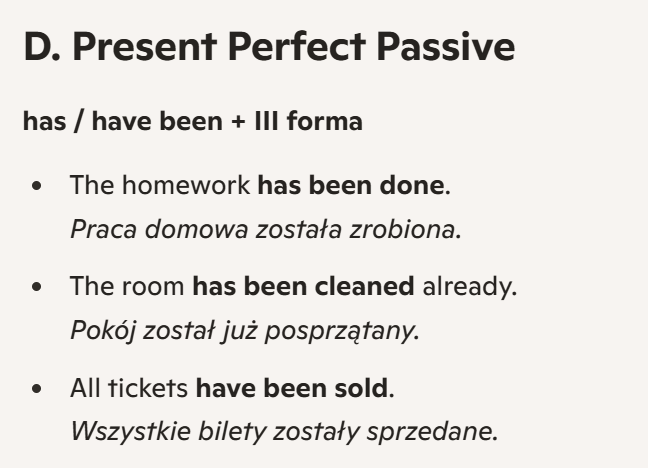
Kiedy używamy strony biernej?Budowa strony biernejPassive Voice w poszczególnych czasach
Ćwiczenie 1 – Zamień na stronę bierną
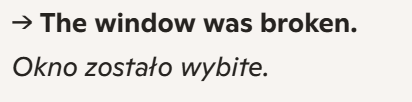
They clean the classroom every day.Oni sprzątają klasę każdego dnia.Someone broke the window. Ktoś wybił okno.They will open the new museum next month.Oni otworzą nowe muzeum w przyszłym miesiącu.They have already finished the project.Oni już skończyli projekt.People speak English all over the world.Ludzie mówią po angielsku na całym świecie.
Ćwiczenie 2 – Uzupełnij formę „be”
The homework ___ checked every Monday. Praca domowa ___ sprawdzana w każdy poniedziałek.
→ is
The cake ___ made yesterday.Ciasto ___ zrobione wczoraj.
→ was
The winners ___ announced tomorrow.Zwycięzcy ___ ogłoszeni jutro.
→ will be
The room ___ already cleaned.Pokój ___ już posprzątany.
→ has been
The tests ___ written last week. Testy ___ napisane w zeszłym tygodniu.
→ were
Ćwiczenie 3 – Wybierz poprawną formę
The film (is made / was made) in 2001.Film został nakręcony w 2001 roku.
→ was made
The results (will be announced / are announced) next Friday. Wyniki zostaną ogłoszone w przyszły piątek.
→ will be announced
English (is spoken / was spoken) in Canada. Angielski jest używany w Kanadzie.
→ is spoken
The project (has been finished / was finished) already. Projekt został już ukończony.
→ has been finished
The room (is cleaned / will be cleaned) every day.Pokój jest sprzątany codziennie.
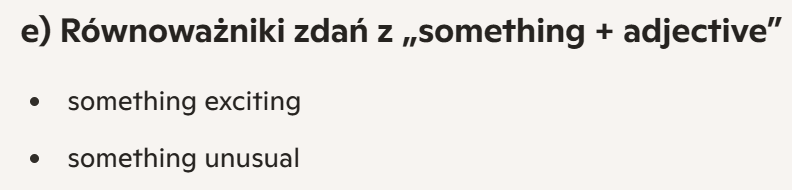
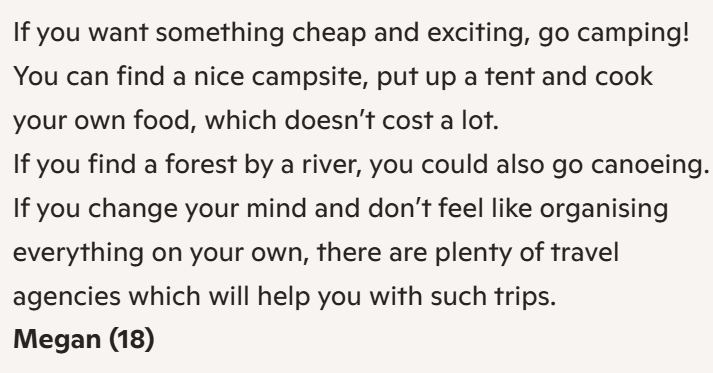
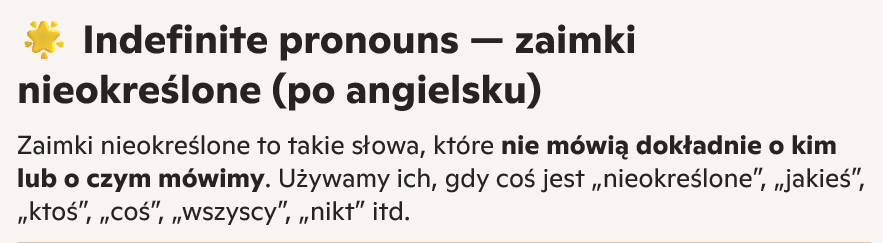
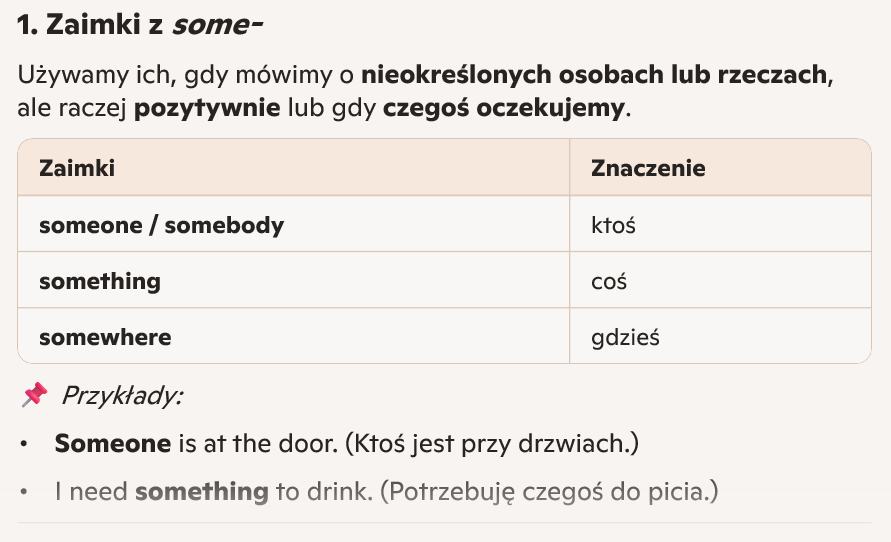
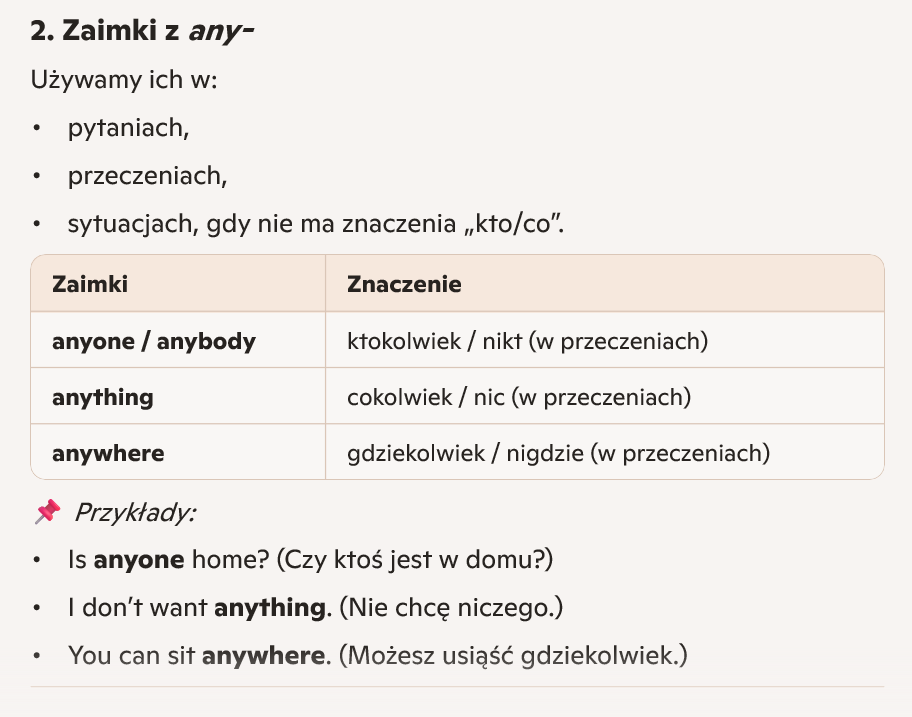
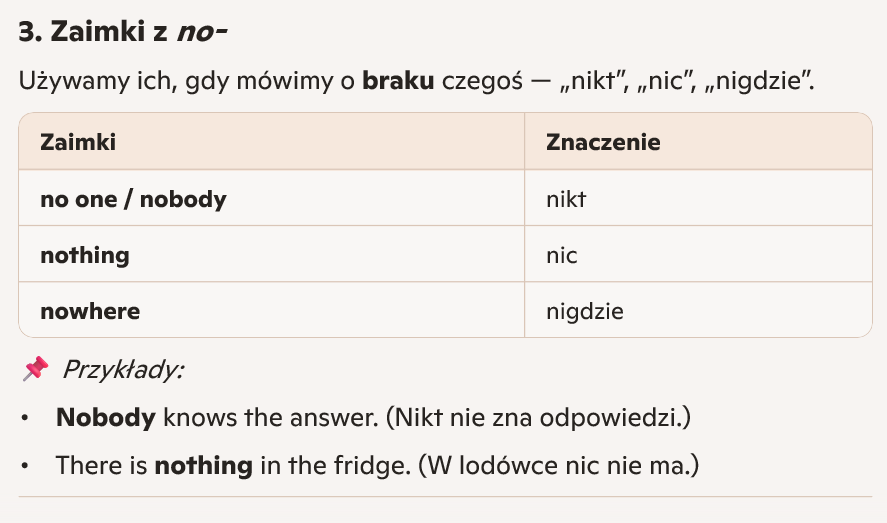
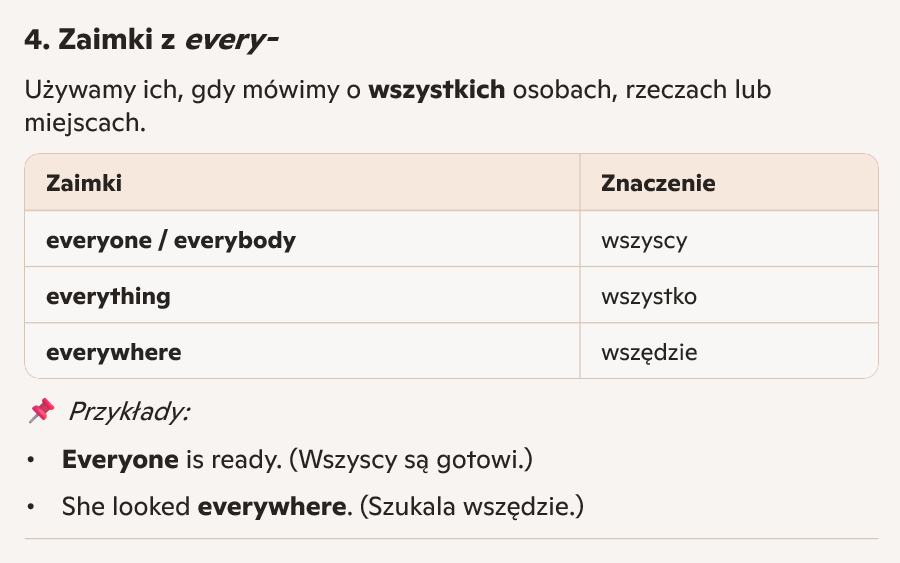
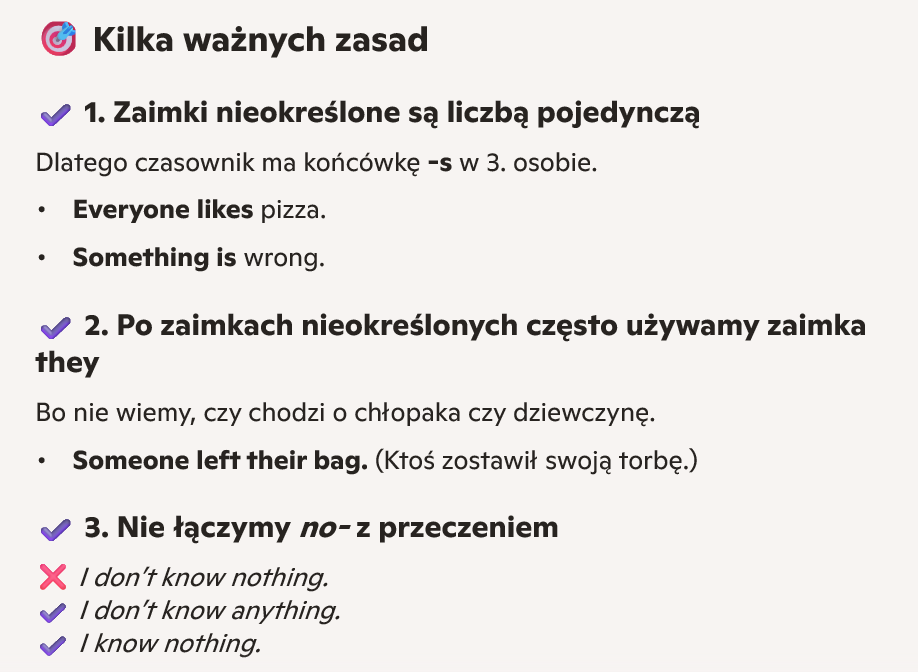
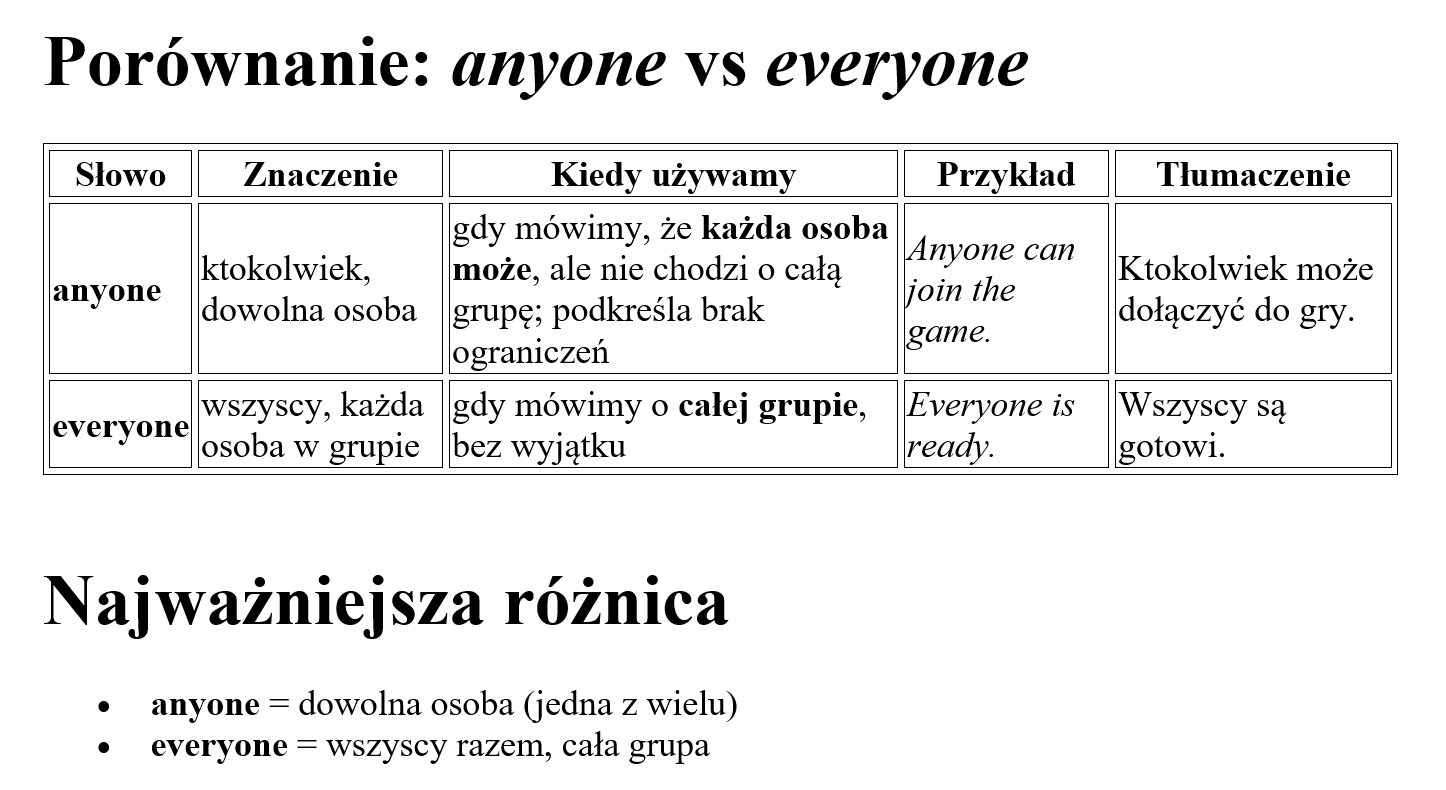
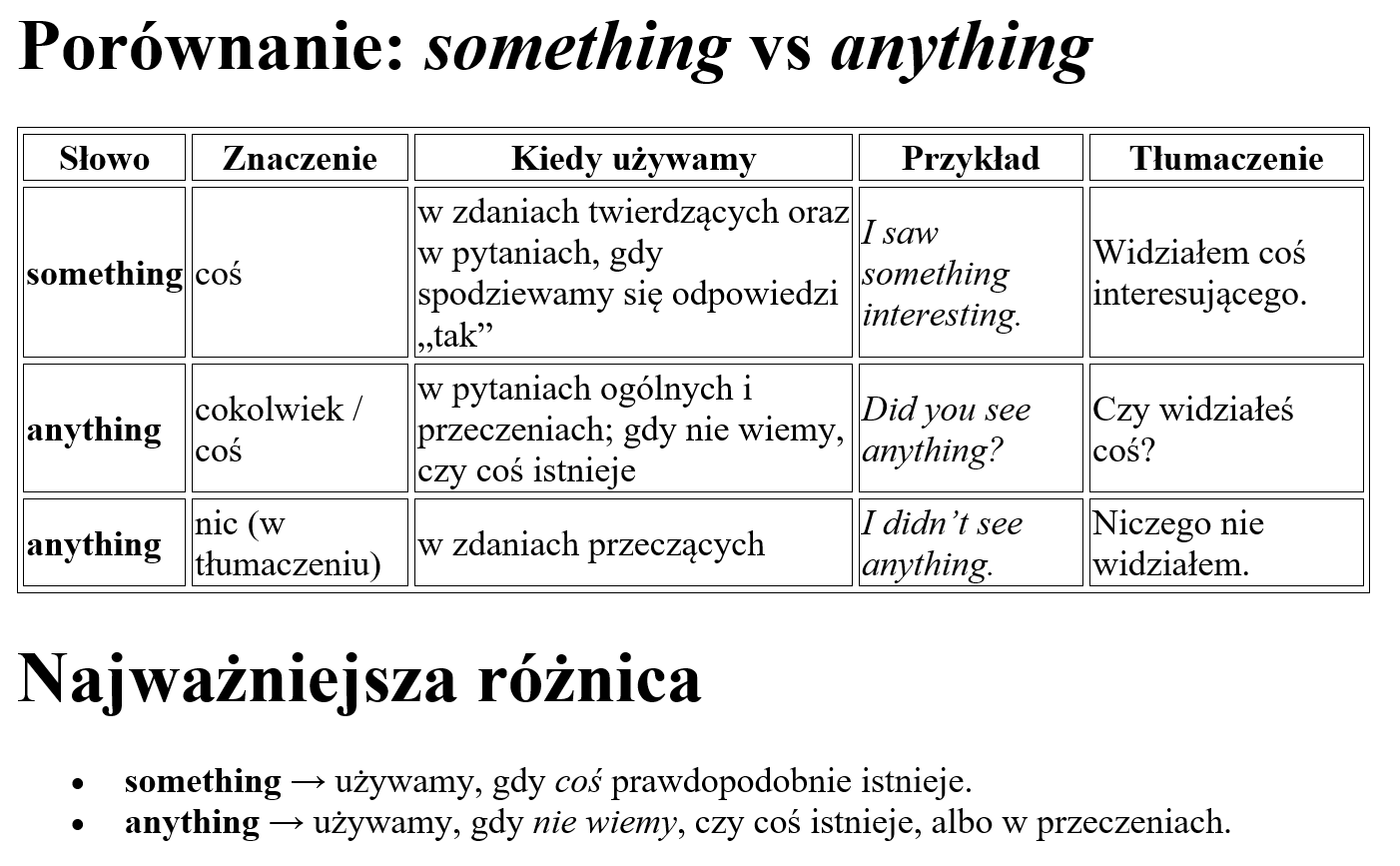
Indefinite pronouns — zaimki nieokreślone (po angielsku)Zaimki z some-Zaimki z any-Zaimki z no-Zaimki z every-Kilka ważnych zasadRóżnica pomiędzy anyone i everyonePorównanie: something vs anything
To provide the best experiences, we use technologies like cookies to store and/or access device information. Consenting to these technologies will allow us to process data such as browsing behavior or unique IDs on this site. Not consenting or withdrawing consent, may adversely affect certain features and functions.
Functional
Always active
The technical storage or access is strictly necessary for the legitimate purpose of enabling the use of a specific service explicitly requested by the subscriber or user, or for the sole purpose of carrying out the transmission of a communication over an electronic communications network.
Preferences
The technical storage or access is necessary for the legitimate purpose of storing preferences that are not requested by the subscriber or user.
Statistics
The technical storage or access that is used exclusively for statistical purposes.The technical storage or access that is used exclusively for anonymous statistical purposes. Without a subpoena, voluntary compliance on the part of your Internet Service Provider, or additional records from a third party, information stored or retrieved for this purpose alone cannot usually be used to identify you.
Marketing
The technical storage or access is required to create user profiles to send advertising, or to track the user on a website or across several websites for similar marketing purposes.